
- Release Year: 2010
- Platforms: iPhone, Windows
- Publisher: Focus Multimedia Ltd., Game Factory Interactive Ltd., Legacy Interactive Inc., Russobit-M, S.A.D. Software Vertriebs- und Produktions GmbH
- Developer: Mystery Studio
- Genre: Adventure
- Perspective: 1st-person
- Game Mode: Single-player
- Gameplay: Hidden object, Puzzle elements
- Setting: Belle Époque, City – London
- Average Score: 80/100
Description
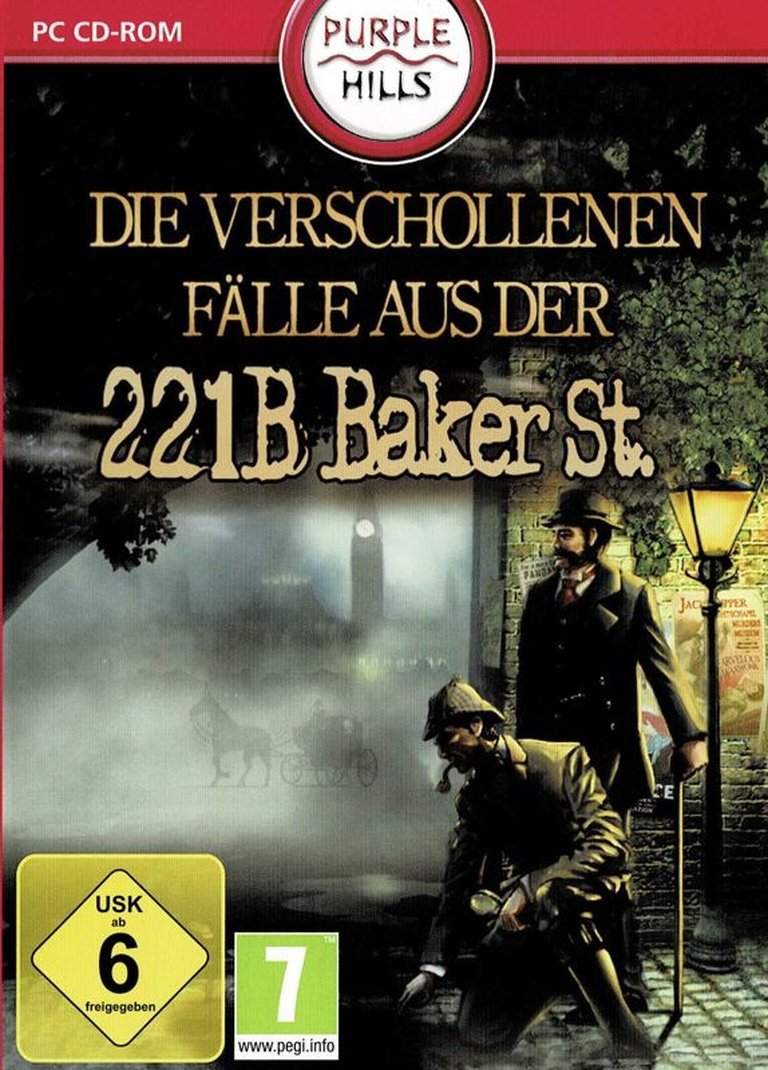
The Lost Cases of 221B Baker St. is a hidden object adventure game where players step into the role of Sherlock Holmes to solve sixteen mysterious cases set in Victorian London. Each case involves exploring detailed scenes to find hidden items, tackling puzzle mini-games like gear assemblies and difference spotting, and using a deduction grid to identify culprits, all inspired by Arthur Conan Doyle’s detective stories.
Gameplay Videos
The Lost Cases of 221B Baker St. Guides & Walkthroughs
The Lost Cases of 221B Baker St. Reviews & Reception
cassandra-morgan.com : I found the game much more interesting than other Sherlock Holmes games… I can’t wait to buy the full version of this game to see what the other cases have to offer.
gamezebo.com (80/100): Armchair sleuths who enjoy HOGs and other head-scratching puzzles will find this detective adventure a gratifying download.
gadgetspeak.com : The mini-games are more challenging than those found in other games of this type. In fact I would say that these mini-games form the best collection I have seen.
The Lost Cases of 221B Baker St.: A Victorian Voyage Through the Golden Age of Casual Adventure
Introduction: The Game is Afoot… Again
In the sprawling ecosystem of video games, few characters have been as perpetually resurrected as Sir Arthur Conan Doyle’s Sherlock Holmes. From text adventures to graphic point-and-click epics, the detective’s deductive prowess has been a siren call for developers across decades. Into this lineage steps The Lost Cases of 221B Baker St., a 2010 hidden object game (HOG) from Mystery Studio and Legacy Interactive, known for its work on licensed casual titles like Murder, She Wrote and CSI: NY. Ostensibly a sequel to 2008’s The Lost Cases of Sherlock Holmes, this title—also marketed as The Lost Cases of Sherlock Holmes 2—does not merely iterate but refines a specific, zeitgeisty formula. It represents a pivotal moment where the burgeoning casual gaming market of the late 2000s/early 2010s collided with beloved literary IP, producing a game that is both deeply derivative and surprisingly polished. This review will argue that The Lost Cases of 221B Baker St. is a masterclass in accessible, themed puzzle design within the HOG genre, successfully translating the feel of Holmesian deduction into a loop of object Hunt, mini-game intervene, and grid-based deduction, even if its narrative ambitions are ultimately subsumed by its mechanical repetitiveness.
Development History & Context: The Casual Crusade
The Studio and the Vision: Mystery Studio, operating under the executive producer Craig Brannon, Ph.D., was a developer steeped in the “casual” market. Their pedigree, as seen in the MobyGames credits linking them to Murder, She Wrote and House M.D. games, reveals a specialization in adapting existing media properties into accessible, often hidden-object-centric, experiences. The vision for The Lost Cases was thus clear: leverage the public domain immortality of Sherlock Holmes to create a low-barrier-to-entry product for the booming “casual” demographic—players often older, less time-rich, and seeking relaxing mental engagement over twitch reflexes or deep narrative immersion. The choice of a first-person, static-scene perspective was the genre standard, allowing for meticulously illustrated tableaus where the core gameplay could flourish.
Technological Constraints and Market Landscape: Released in 2010 for Windows (and later iPhone), the game was built for an era of 1.0GHz processors and 512MB RAM. Its graphical style, described in reviews as “an exceptional step up” from its 2008 predecessor, reflects the capabilities of the time: detailed, painterly 2D backgrounds with a warm, sepia-tinged palette evoking gaslit London, but with limited animation and pre-rendered character portraits. The technological constraint was not a limitation but a design pillar; the secret to a good HOG is clutter, and the game’s 60+ locations (from Stonehenge to a music hall) are packed with assorted paraphernalia. This was the peak of the Big Fish Games/Focus Multimedia casual distribution model—a shareware CD-ROM or download, priced at a modest £9.99/$19.99, sold not in brick-and-mortar game stores but at supermarket software racks and online portals. The competition was fierce, with series like Mystery Case Files and Dark Parables dominating the space. The Lost Cases’ key differentiator, as noted by GameZebo, was its “bounty of subgenres” of puzzles and its strong thematic binding.
Narrative & Thematic Deep Dive: Cases Over Canon
Structure as Anthology: The game’s narrative is not a singular, overarching mystery but an anthology of sixteen disconnected “lost cases.” This structure, praised by Cassandra Morgan for allowing completion in short bursts, inherently privileges gameplay over plot. Each case follows a rigid template: Holmes and Watson are visited by a client (often in a beautifully rendered 221B Baker St. sitting room), a crime is described, and the player is dispatched to 3-4 related locations to hunt for clues. The stories are original, penned by Dan Fiorella, and vary from the supernatural (“The Haunting at Marlsbury Castle”) to the historical (“The Return of Jack the Ripper,” featuring H.G. Wells) to the whimsical (“The Pups of Baskerville”). This variety prevents total fatigue but also means no single plot develops beyond a few sentences of exposition. The “game” is afoot, but the why and who are merely conduits to the next hidden object scene.
Character and Dialogue: The game features over 100 characters, including canonical figures like Inspector Lestrade (implied) and creative cameos. The dialogue, delivered with full voice-acting that reviewers consistently highlight as a “real highlight,” is where the Holmesian voice is best captured. The script, while minimal, employs a formality and wit that sells the Victorian setting. The option to enable “minimal dialogue,” noted by Morgan, is a crucial design choice for the casual audience: it respects players who want to skip past narrative to the gameplay, a frank acknowledgment that the story is functional, not foundational. The themes are those of classic detective fiction: justice, deception, and the triumph of rationalism. However, they are never explored; they are simply invoked. The game’s true thematic allegiance is to the process of detection itself—the pleasure of the hunt and the “Aha!” moment of the final grid deduction.
Gameplay Mechanics & Systems: The Deduction Loop
The genius of The Lost Cases lies in its elegant, three-phase gameplay loop, which creates a satisfying rhythm across each ~15-20 minute case.
-
The Hidden Object Hunt (Evidence Gathering): The core activity. The player is presented with a cluttered, first-person scene and a list of 8-14 items. The act of scanning this detailed environment is the primary engagement. Key items are “evidence” and trigger a pop-up with a suspect’s portrait and a brief description—this is the game’s method of introducing persons of interest. Mechanically, the Hint system (Holmes’s pipe) is well-integrated thematically and functionally, with 5 base hints and collectible extras. The optional magnifying glass (a literal lens) is a smart tool for the visually dense scenes. The option for a timed mode adds pressure but is secondary to the relaxed “seeking” pace most players will adopt.
-
The Mini-Game Interlude (Clue Processing): Finding specific evidence or reaching certain locations triggers a self-contained puzzle. This is where the game’s variety shines, as meticulously cataloged in the walkthrough. These include:
- Reassembly Puzzles: Shredded notes (jigsaw), torn posters, broken pottery (from brushing away dirt), shattered records.
- Logic & Spatial Puzzles: Gear-matching, sliding block puzzles (“move stone blocks to free a slab”), pipe connection rotatiles, tile rotation mosaics, clock face matching.
- Pattern Recognition: “Find the differences” between two similar images, matching pairs (envelopes to letters, truffles).
- Sequencing & Codebreaking: Repeating musical sequences, deciphering Greek-letter ciphers, decoding messages via number/word grids.
- Physical Simulation: Pouring liquids to measure precise amounts (baking soda), arranging ornaments on a tree by pattern matching.
These puzzles are not window dressing; they are diegetic. Reassembling a shredded note is Holmes reconstructing a clue. Piecing together a ship in a bottle is examining a model. This integration prevents the mini-games from feeling tacked-on and instead makes them feel like logical extensions of the detective work.
-
The Deduction Board (The Culmination): After all locations are visited, the player returns to 221B Baker St. for the “aha” moment. This is a two-part system:
- The Grid Sorting: Six suspect cards must be arranged on a grid according to categorical clues (e.g., “wears black,” “has a scar,” “is elderly”). This is a simple puzzle of matching descriptors.
- The Memory Elimination: The suspects are displayed with their associated evidence item. One by one, the evidence item on a suspect card is changed (e.g., a “pocket watch” becomes a “candelabra”). The player must recall which suspect originally had which item and eliminate the one with the changed item. This is a clever, if simple, test of attention during the hunt phase. As GameZebo notes, it’s a “Concentration-like memory game” that directly ties the player’s observational skill to the deduction.
Innovation and Flaws: The innovation is in the seamless stitching of these three distinct gameplay types into a single, coherent detective fantasy. The flaw is in repetition. As Just Adventure admits, “by the end of the game… hunting for hidden objects… can feel as though they have run their course.” The item lists are long, and while location randomization (per the walkthrough) helps, the core act of clicking is static. The mini-game variety is the essential spice, but their patterns repeat (multiple jigsaw-style reassemblies, several pipe-connection puzzles). The suspect-elimination mechanic is clever but mechanically shallow. The game lacks a truly branching narrative or consequence; the solution is always fixed. Its “replayability,” as GameZebo sharply observes, is “hurt[ because] items are always in the same place per level.”
World-Building, Art & Sound: Selling the Fantasy
Visual Atmosphere: The game’s greatest asset in selling the Holmesian fantasy is its art direction. The 60+ locations are rendered with a consistent, warm, and detailed illustrative style. From the dusty clutter of a pawn shop to the Gothic grandeur of Marlsbury Castle’s dungeon, each scene is a packed vignette of Victorian life. The color palette is predominantly browns, golds, and muted greens, evoking aged paper and gaslight. Character portraits, used in dialogues and the deduction board, are stylized and expressive, effectively conveying personality. The animation is minimal but effective: Holmes’s pipe emits smoke when used, the magnifying glass zooms, and the final deduction sequences feature animated re-enactments of the crime. The visual cohesion is high, making the world feel explorable and real, even within the HOG’s static frames.
Sound Design and Voice Acting: Here, the game achieves its highest marks. The voice cast, as noted by Hooked Gamers and Adventurespiele, is “lively” and a major selling point. Each character, from a Cockney pub landlord to a aristocratic widow, has a distinct accent and delivery. Holmes’s voice (likely Roger L. Jackson, given his extensive credit list) is suitably crisp and analytical; Watson’s is warmer and more grounded. The score, by SomaTone Interactive Audio, is unobtrusive but thematic—primarily strings and piano, with a haunting, melancholic quality that fits the era. The sound effects (clinking glass, rustling paper, distant carriage wheels) are crisp and add crucial immersion. The audio is not just atmospheric; it provides direct feedback, from the satisfying click of a correct puzzle solution to the ominous swell during a revelation.
Integration: The art and sound work in concert to create the game’s strongest suit: its feeling. For the 15-20 minutes you spend in a case, you believe you are in Victorian London, assisting the world’s first consulting detective. The Hunt phase is made meditative by the ambient score and the gentle sound of clicking. The mini-games are given weight by diegetic sound (the clatter of gears, the scratch of a brush). The deduction finale is punctuated by a musical cue and a tone of triumph. This cohesive audio-visual package is what elevates The Lost Cases from a generic HOG to a genuine, if superficial, Sherlock Holmes experience.
Reception & Legacy: A Niche Success
Critical Reception: The game was well-received within its target niche. The aggregated critic score of 88% on MobyGames (based on four reviews) is telling. Just Adventure awarded a perfect 100%, praising the “interesting storylines, strong voiceovers, and a range of original puzzles.” Adventurespiele (German) gave 4.5/5, lauding its ability to engage all senses and its 6-hour playtime. GameZebo and Hooked Gamers both awarded 80%, calling it a “gratifying download” for “armchair sleuths” and an “intellectual adventure” put together with “great care and love.” The consensus was clear: it was a exceptionally polished, varied, and faithful entry in the casual detective genre.
Commercial and Cultural Legacy: Commercially, its success is evidenced by its distribution through major casual portals like Big Fish Games and its inclusion in the 2011 compilation Seek & Find Adventures 2. Its legacy, however, is more subtle. It did not revolutionize the HOG genre but rather epitomized its peak-of-formula state. It demonstrated that a licensed property, if treated with sufficient care in art, voice, and puzzle integration, could elevate a mechanically simple genre. Its influence can be seen in later Sherlock Holmes casual games that prioritized puzzle diversity over narrative complexity. Furthermore, it exists at a crossroads: just before the mobile free-to-play boom would dilute the premium casual adventure market, it represents a last bastion of the solid, one-purchase, PC-focused hidden object experience. Its place in the broader Sherlock Holmes gaming canon is as a competent, accessible, but ultimately lightweight side-adventure—far from the immersive investigative sims of The Testament of Sherlock Holmes (2012), but perfectly fulfilling its promise as a “casual-adventure.”
Conclusion: The Verdict on Baker Street
The Lost Cases of 221B Baker St. is not a game that aspires to be art. It does not seek to challenge narrative conventions or rewire gameplay paradigms. Instead, it masterfully executes a specific, well-defined promise: to let you feel like Sherlock Holmes for an afternoon. It succeeds through a potent combination of impeccable period atmosphere (thanks to strong art and voice acting), a deceptively clever three-part gameplay loop that ties observation to deduction, and a staggering variety of mini-games that consistently surprise.
Its weaknesses are those of its genre: repetition in the hidden object scenes, a lack of meaningful narrative consequence, and no true replayability. Yet, for the audience it targets—the player with an hour to kill who loves puzzles and Victorian aesthetics—these are minor quibbles. The game’s 88% critic score is deserved. It is a supremely competent, lovingly crafted entry that understands its purpose and executes it with professional finesse.
Final Historical Placement: In the history of video games, The Lost Cases of 221B Baker St. will likely be remembered not as a landmark title, but as a high-water mark for the premium, storybook-style hidden object adventure. It is the apotheosis of the “Find the Hidden Object, Solve the Mini-Game, Deduce the Culprit” formula, binding it so tightly to its thematic skin that the mechanics become indistinguishable from the fantasy. For scholars of casual gaming, it is a essential case study in genre craft. For fans of Sherlock Holmes, it is a delightful, if shallow, dip into the well. And for anyone who has ever squinted at a cluttered screen, mouse cursor poised, waiting for the next “Aha!” moment—this game delivers the game, afoot and well-presented.