
- Release Year: 2008
- Platforms: Windows
- Publisher: Red System Team
- Developer: Red System Team
- Genre: Action
- Perspective: Side view
- Game Mode: Single-player
- Gameplay: Platformer, Puzzle
- Setting: Earth
- Average Score: 50/100
Description
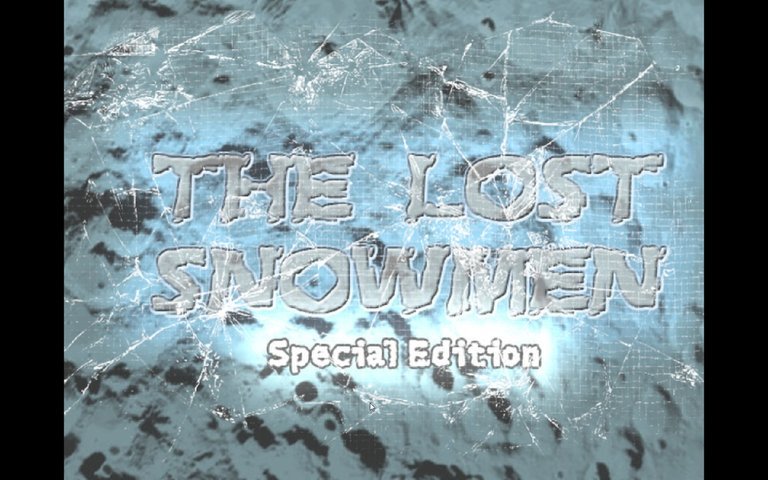
The Lost Snowmen: Special Edition is a 2D puzzle-platformer similar to The Lost Vikings, set on Earth after a spaceship from planet Pectus crashes, leaving alien deserters to be eliminated. Players control three snowmen with unique abilities that can be used on each other to navigate three distinct worlds, collect fuel for the ship, and enjoy a shareware model with free levels and a Relaxation Room mode for intentional deaths.
The Lost Snowmen: Special Edition Reviews & Reception
wired.com : it comes to market with such a low asking price in tow, but a combination of dodgy platforming mechanics and an inane story sees Lost Snowmen melt without a trace.
metacritic.com (50/100): a combination of dodgy platforming mechanics and an inane story sees Lost Snowmen melt without a trace.
The Lost Snowmen: Special Edition: A Frosty Homage to a Bygone Era of Puzzle-Platforming
Introduction: A Niche Treasure Thawed
In the vast, frozen tundra of forgotten indie games, few titles possess the curious blend of earnest ambition and charming idiosyncrasy as The Lost Snowmen: Special Edition. Released in the twilight of the 2000s by the obscure Russian indie collective Red System Team, this title is not merely a game but a deliberate, pixelated love letter to a specific subgenre of puzzle-platformer that peaked in the early 1990s. Explicitly modeled on the legendary The Lost Vikings, it seeks to recapture that magic of managing multiple, specialized characters in intricate, lethal labyrinths. Its existence speaks to a persistent, DIY spirit within game development—one that uses accessible tools like GameMaker to revisit and reinterpret classic design philosophies. This review argues that while The Lost Snowmen ultimately melts under the weight of its own limitations and a lack of polish, it stands as a fascinating, historically significant artifact. It is a testament to the enduring appeal of its core design and a poignant snapshot of the indie game scene on the cusp of the digital distribution revolution, where a small team could craft and distribute a niche homage to a global, if minuscule, audience.
Development History & Context: The Indie Iceberg of 2008
To understand The Lost Snowmen, one must first situate it within the technological and cultural landscape of its creation. The year 2008 sits at a crucial inflection point. The rise of digital storefronts like Steam (which had only recently opened to third-party publishers) and the burgeoning popularity of Xbox Live Arcade had begun to mainstream indie gaming. However, the tools were still maturing. Enter GameMaker, the engine powering The Lost Snowmen. At the time, GameMaker (specifically GameMaker 7/8) was the democratizing force for bedroom coders—a drag-and-drop, yet scriptable, environment that lowered the barrier to entry for 2D games dramatically. Red System Team, a group with no other commercially listed titles on major databases, leveraged this tool not to innovate on genre, but to masterfully emulate a beloved classic.
Their vision was one of pure, unadulterated homage. The choice of The Lost Vikings as a template was telling. That 1992 Blizzard classic was the quintessential multi-character puzzle-platformer, requiring perfect choreography between Erik the Swift, Baleog the Fierce, and Olaf the Stout. By 2008, the genre had fossilized into a niche, with few modern successors. Red System Team’s goal was not to redefine the genre but to prove its timeless mechanics could thrive in a new, whimsical skin. The shareware business model—offering a finite set of levels for free with a payment wall for the full 36-mission experience—was the lifeblood of PC indie distribution then, a direct descendant of the 1990s shareware scene that birthed Doom and Wolfenstein 3D. It was a model built on trust and word-of-mouth, a stark contrast to today’s free-to-play or premium storefront dominance. The game’s “Special Edition” moniker, common in that era, simply denoted the expanded, paid version, differentiating it from any potential free demo or earlier iteration.
Narrative & Thematic Deep Dive: Absurdist Sci-Fi in a Winter Wonderland
The narrative of The Lost Snowmen is a masterclass in economical, absurdist world-building. The premise is delivered in a single, stark paragraph: a spaceship from the icy planet Pectus crashes on Earth. The survivors are not hapless refugees but deserters—snowmen who have had a显然 (obvious) taste of planetary relaxation and refuse to return to their presumably dystopian homeworld. The player commands a “special group” of snowmen tasked with two objectives: eliminate all deserters and collect “pectus fuel units” to repair their own vessel.
This creates a rich, if superficial, thematic dichotomy. The Pectusians are presented as a militaristic, puritanical force (“elite task force”) enforcing galactic law against their own wayward kin. The Earth, meanwhile, is a hostile yet idyllic wilderness populated by aggressive fauna like bears, porcupines, and pandas—a tongue-in-cheek suggestion that the “primitive” natives are just as territorial as the alien invaders. The narrative never delves into the morality of this genocidal cleanup mission; it is a pure, gameplay-driven MacGuffin. The heroes are, functionally, intergalactic janitors and assassins.
The character trio embodies this absurd practicality:
* Lord Fuse: The demolitions expert. His name and unlimited supply of bombs suggest a volatile, perhaps unstable, leader. He represents raw area-of-effect destruction.
* Hill: The melee fighter, described as having “acute indigestion.” This hints at a perpetually grumpy, perhaps physically grotesque (though as a snowman, his form is simple) brute. He is the close-quarters enforcer.
* YoYo: The jockstrap-wearing (based on the WIRED description of headphones) jumper. His name and accessory scream “cool kid” detachment, the agile reconnaissance unit who can access places the others cannot.
Their interactions are purely functional, yet the game’s manual and promotional material imply a camaraderie forged in frosty combat. The true narrative, as in The Lost Vikings, is written not in dialogue but in the silent, lethal ballet of their cooperation. The “Relaxation Room” mode serves as a bizarre, meta-narrative coda: a series of levels where the goal is to intentionally kill your own snowmen. This can be read as a darkly comic acknowledgement of the game’s own repetitive, lethal nature—a space for players to vent their frustration on the very protagonists they’ve beenushing through mazes. It’s a Karoshi-style parody that undercuts the heroic fantasy, reminding players of the expendable, almost tragicomic nature of these frozen soldiers.
Gameplay Mechanics & Systems: The Viking Blueprint, Frosted
Here, The Lost Snowmen reveals its heart and its primary flaws. It is a 2D side-view puzzle-platformer with a heavy emphasis on character-switching puzzles. The core loop is deceptively simple: guide all three snowmen to the level’s exit, typically after completing a series of tasks like activating switches, destroying obstacles, or eliminating enemy deserters.
Character Abilities & Synergy:
* YoYo (The Jumper): His jump is non-negotiable. Vertical progression is locked behind him. His unique “team move,” triggered by punching him, sends him rolling like a bowling ball—a key mechanic for breaking certain weak walls or hitting distant switches.
* Hill (The Brawler): He battles wildlife and deserters in direct melee. His special move, triggered by having a bomb thrown at him, is a high-angled “super jump” launch. This is the primary method for YoYo to reach otherwise inaccessible higher platforms, creating the classic Vikings-style “toss-and-bounce” synergy.
* Lord Fuse (The Demolitionist): He plants bombs to destroy specific blocks or enemies at a distance. His unlimited supply removes resource management, focusing purely on spatial puzzles.
The genius of the Vikings formula, replicated here, is that no single character can progress alone. The level design is a relentless puzzle box where each screen demands a sequence of actions only possible with all three. A ledge requires Fuse to bomb a wall, Hill to super-jump YoYo up, YoYo to roll to a switch, etc.
Systems & Innovations:
* Non-Linear World Map: The 36 levels across three worlds are accessible via a map screen, provided you have collected enough fuel from previous levels. This grants players agency to tackle easier or more familiar puzzles first, a welcome freedom.
* Time Attack & Online Leaderboards: A significant feature for 2008. Players are encouraged to optimize their routes, and the ability to upload times fostered a competitive community focused on speedrunning the puzzle-box levels.
* Built-in Level Editor: This is the title’s most profound and lasting feature. Red System Team included a user-friendly editor, allowing the community to create and share their own puzzles. For a shareware title, this was a massive value-add, theoretically extending the game’s lifespan indefinitely. It positioned the game as a platform for puzzle creation, not just a finite product.
* The Relaxation Room: As described, this suite of levels inverts the objective to “suicide.” It’s a brilliant, darkly humorous palette cleanser that also serves as a sandbox to experiment with the game’s physics and hazards without pressure.
Flaws & Friction:
* “Dodgy Platforming”: As noted by the later Metacritic critic for the Xbox port, the core platforming physics—specifically YoYo’s jump and roll—can feel imprecise. In a game where a single mistimed input means restarting the entire multi-character puzzle, this is a critical flaw. The weight and momentum of the snowmen can be unresponsive.
* Pixel-Perfect Precision Requirements: Many solutions demand exact positioning. Combined with the floaty controls, this can devolve into frustrating trial-and-error rather than satisfying problem-solving.
* Visual Clarity: The WIRED review wished for “more contrast between far background and foreground.” In complex puzzle rooms, discerning which platforms are solid, which are background decoration, and which are bomb-destructible can be difficult, compounding the precision issue.
* Lack of Tutorialization: The special moves (Hill’s bomb-launch, YoYo’s roll) are never explicitly taught in-game. Players must discover them through experimentation or external sources, a significant barrier to entry.
World-Building, Art & Sound: Charming Minimalism
The game’s presentation is a study in minimalist, functional charm. Using the limitations of GameMaker 8, Red System Team crafted a cohesive, whimsical aesthetic.
* Visual Direction: The sprite work is simple but expressive. The three snowmen are tiny, distinct blobs with clear identifiers (Fuse’s goggles, YoYo’s headphones, Hill’s stature). The environments consist of clean, icy blues and whites for Pectus-themed areas and warmer, earthy greens and browns for Earth locales. The “three beautiful worlds” are likely defined by these color palettes and minor tile set variations (ice caves, snowy forests, perhaps alien ruins). The art style prioritizes readability—enemies (deserters, bears, pandas) are clearly defined against the backgrounds, even if the depth perception in the side-view can be tricky.
* Atmosphere: There is no sweeping orchestral score or narrative voice-acting. The atmosphere is generated through the quiet, solitary tension of the puzzles, punctuated by the plink of a bomb plant or the thwump of a super-jump. The sound design is sparse but effective, using basic sound effects for actions and hazards. This minimalism actually enhances the feeling of being small, quiet operatives in a vast, frozen wilderness or a dangerous alien jungle.
* Contribution to Experience: The art and sound do not overwhelm; they serve the puzzles. They create a consistent, slightly silly universe where snowmen with grenades solve environmental conundrums. The lack of musical bombast keeps the player’s focus squarely on the screen and the logical steps required, which is the game’s true “story.”
Reception & Legacy: A Whisper in the Blizzard
The Lost Snowmen: Special Edition existed in a quiet, pre-social media indie ecosystem. Its primary distribution was through the YoYo Games repository and sites like Curly’s World of Freeware. Consequently, its critical reception at launch is virtually non-existent. The WIRED article from August 2008, titled “The Lost Snowmen, An Homage to Vikings,” represents perhaps its most prominent contemporary press. The author’s tone is one of grateful discovery: “Until Blizzard gets its act together… we’ll just have to make do with The Lost Snowmen.” This frames the game not as a competitor, but as a satisfying fan-made placeholder—a respectful, capable tribute from a developer who understood the source material’s DNA.
Its commercial impact was, by modern standards, microscopic. The shareware model meant a tiny fraction of downloaders likely paid for the full game. It was a passion project, not a revenue generator.
The game’s reputation evolved along a bifurcated path. For those who discovered it in the late 2000s/early 2010s via retro gaming forums or archive sites, it gained a cult following as a hidden gem. Its inclusion in the Internet Archive’s “Classic PC Games” collection, donated by Curly’s World of Freeware, cemented its status as a piece of software history worth preserving. However, the 2021 Xbox One port (released under the title Lost Snowmen and included in a “Easy Achievements” package) received a harsh reappraisal. The Metacritic critic review bluntly stated it “melt[s] without a trace” due to “dodgy platforming mechanics and an inane story.” This version, likely a direct port with no modernization, exposed the game’s control quirks to a less forgiving audience expecting contemporary polish.
Its influence is indirect but clear. It is part of the lineage of Lost Vikings spiritual successors that includes Battle Chess (in spirit), Chainsaw Warrior, and more recently, The Coffin of Andy and Leyley. More importantly, it exemplifies the GameMaker indie生态 (ecosystem) of the late 2000s: small teams using accessible tools to create homages, experiments, and niche genre pieces that big studios ignored. The inclusion of a robust level editor anticipates the user-generated content (UGC) focus of later hits like Super Meat Boy (which also had a level editor) and the entire legacy of LittleBigPlanet. It trusted its community to extend the game’s life, a philosophy central to modern indie success.
The existence of sequels/spin-offs—Zombie Snowmen (2011) and a 2022 mobile game Lost Snowmen—proves the IP held some latent appeal for its creators, though none achieved the notoriety of the original Special Edition.
Conclusion: A Preserved Relic, Not a Lost Classic
The Lost Snowmen: Special Edition is not a forgotten masterpiece. By any objective measure of its era, it is a flawed, imprecise, and aesthetically simple game. Its platforming can be maddening, its presentation quaint, and its narrative paper-thin. Yet, to dismiss it is to overlook its quiet triumph. It is a perfectly functional tribute that captures the essential, delightful puzzle of its idol. It succeeded in its primary goal: to deliver a Lost Vikings-like experience for playersstarving for one.
Its place in video game history is not as a genre-redefining innovator but as a valuable data point in the democratization of game development. It shows what was possible with GameMaker, shareware distribution, and a clear-eyed vision of a classic design. It is a game born of nostalgia and technical constraint, which in turn shaped its charmingly rigid puzzle design. The level editor grants it an immortality that many polished, larger-budget titles lack; community maps are its true epilogue.
For the historian, it is a snapshot of 2008 indie gaming: earnest, niche, distributed via humble downloads, and built on a foundation of love for the 16-bit era. For the player, it is a curio—a game to be appreciated for its ambition and its faithful replication of a beloved formula, but one that must be approached with patience for its mechanical imperfections. It is a lost snowman, yes, but one that has been found, preserved, and remains a testament to the enduring, icy grip of a great puzzle-platforming idea. It deserves not a place in the canon of greats, but a honoured spot in the annex of fascinating, frostbitten tributes.