
- Release Year: 2012
- Platforms: Windows
- Publisher: Focus Multimedia Ltd.
- Genre: Adventure, Special edition
- Perspective: 1st-person
- Game Mode: Single-player
- Gameplay: Hidden object, Mini-games, Puzzle elements
- Setting: Oceania
Description
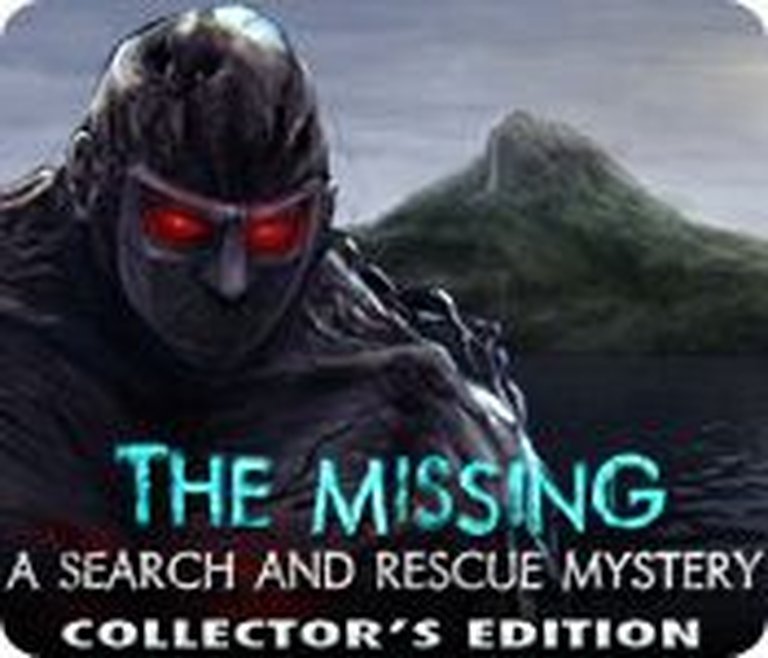
In ‘The Missing: A Search and Rescue Mystery (Collector’s Edition)’, players take on the role of a rescuer investigating the disappearance of a group of students and their professor during weather research on a remote Pacific island. This hidden object adventure unfolds across diverse locations—including lighthouses, swamps, and underwater stations—combining puzzle-solving, mini-games, and point-and-click exploration to uncover the truth behind the vanishing team.
The Missing: A Search and Rescue Mystery (Collector’s Edition) Free Download
The Missing: A Search and Rescue Mystery (Collector’s Edition) Guides & Walkthroughs
The Missing: A Search and Rescue Mystery (Collector’s Edition) Reviews & Reception
jayisgames.com : The mini-games and puzzles are the best part of The Mission: A Search and Rescue Mystery.
gamrgrl.com : The mission starts well, ominously bringing to life the desolate and menacing, yet undeniably beautiful, islands with a real sense of urgency.
The Missing: A Search and Rescue Mystery (Collector’s Edition): Review
Introduction
The Pacific Ocean’s treacherous waters set the stage for The Missing: A Search and Rescue Mystery (Collector’s Edition), a 2011 hidden object adventure from Sulus Games, published by Big Fish Games. As a pilot tasked with rescuing a stranded professor and his students, players descend upon a remote archipelago shrouded in mystery. Yet, while the game opens with cinematic promise—a seaplane battered by storm, a sinister cage, and cryptic radio calls—it ultimately becomes a cautionary tale of squandered potential. Though its atmospheric art and intricate puzzles briefly enthrall, the narrative’s premature revelations and mechanical simplicity relegate it to the “so-so” zone of casual gaming. This review dissects its legacy, dissecting how a game with a gripping premise falters in execution, yet remains a poignant artifact of early 2010s hidden-object zeitgeist.
Development History & Context
Sulus Games, a developer specializing in casual adventures, crafted The Missing within the booming hidden-object genre of the late 2000s and early 2010s. Published by Big Fish Games—a titan of the casual market known for its subscription model and point-and-click hybrids—the game exemplified the era’s formula: accessible puzzles, low barriers to entry, and digital distribution via platforms like Big Fish’s proprietary manager. Technically, it embraced modest constraints: fixed/flip-screen visuals, first-person navigation, and CD-ROM distribution for the 2012 Collector’s Edition, which bundled a prequel chapter, wallpapers, concept art, and a strategy guide. Its vision was to merge mystery-adventure sensibilities with the genre’s signature gameplay, yet the team prioritized production polish over narrative depth, reflecting the industry’s shift toward cinematic presentation over complex storytelling. The gaming landscape at the time was saturated with similar titles, making The Missing a competent but unremarkable entry in a crowded field.
Narrative & Thematic Deep Dive
The plot hinges on a compelling premise: meteorology Professor Kelvin and four students vanish from a Pacific island after a distress call. As the search-and-rescue pilot, players uncover that Kelvin’s research into harnessing weather energy has awakened a malevolent entity. Tragically, the narrative wastes its intrigue by revealing the villains—a greedy industrialist and a supernatural creature—within the first hour. This early disclosure deflates the mystery, reducing subsequent chapters to a perfunctory scavenger hunt. Characters remain paper-thin: the pilot is a silent protagonist, while the missing students and Professor Kelvin exist as names on notes and radio static. Dialogue is minimal, conveyed through fragmented journal entries and environmental clues, with no voice acting to deepen immersion. Themes of environmental exploitation and ancient legacies are hinted at—Kelvin’s research disrupts the island’s elemental balance—but they’re underbaked, serving as window dressing rather than meaningful commentary. The prequel chapter in the Collector’s Edition, detailing Kelvin’s early discovery of the islands, adds context but fails to salvage the main storyline’s rushed pacing.
Gameplay Mechanics & Systems
The Missing’s core loop revolves around exploration, hidden-object scenes, and puzzle-solving, but its mechanics lack depth. The 100+ screens of Toto and Fog Islands are traversed via point-and-click navigation, with the cursor changing to indicate interactive zones (e.g., a magnifying glass for zoomable areas, a hand for collectibles). Sparkling hotspots streamline gameplay but strip away challenge. Hidden-object scenes—just 14 in the base game—feature randomized lists of mundane items (drills, wrenches, binoculars) and occasional twists like silhouette-based searches or flashlight-lit darkness. These scenes are enjoyable but repetitive, compounded by their static nature. Puzzles, numbering a dozen, range from trivial pattern-matching exercises to one standout mirror-impression challenge. Most rely on codes scavenged from notes, and the ability to skip them undermines tension. The 56 energy crystals scattered as collectibles add a superficial side quest but little engagement. The UI is functional: a journal maps objectives and clues, while a rechargeable hint button points to pending tasks. Yet, the absence of progression systems or meaningful inventory puzzles relegates the experience to passive problem-solving. Combat is non-existent; the “weapon” obtained mid-game is used once in a scripted finale, highlighting a missed opportunity for tension.
World-Building, Art & Sound
The game’s greatest strength lies in its world-building and aesthetic. Toto and Fog Islands blend ancient ruins, scientific outposts (a lighthouse, ice station, underwater lab), and indigenous architecture into a cohesive, albeit underutilized, setting. The Oceania-inspired locale feels lived-in, with crumbling statues, overgrown jungles, and storm-lashed shores evoking a sense of isolation. Art direction prioritizes realism: lush forests, detailed interiors, and dynamic weather effects (lightning, rain, wind tunnels) create palpable atmosphere. Ambient animations—swinging doors, flickering lights, debris falling from the sky—add life, though static scenes limit interactivity. Sound design complements the visuals: a soulful, intense soundtrack swells during tense moments, while environmental cues (creaking wood, dripping water) heighten immersion. The first-person perspective is framed by thematic borders (e.g., scuba goggles when underwater), enhancing immersion. Yet, the world’s potential is unrealized; players can’t engage deeply with the environment, and the ancient lore feels like a backdrop rather than an integral mystery.
Reception & Legacy
At launch, The Missing received mixed-to-positive reviews, with critics praising its art and sound but criticizing its simplicity. JayIsGames noted its “moodiness” and “challenging puzzles” but lamented the story’s predictability, while Adventure Gamers deemed it a “hackneyed” entry that “skids into the dreaded so-so zone.” Commercially, it performed adequately as a Big Fish title, leveraging the platform’s audience. The Collector’s Edition, priced at $13.99 for subscribers, added a prequel chapter and extras but failed to elevate the core experience. Over time, the game has faded into genre obscurity, remembered as a competent but uninnovative example of early 2010s hidden-object adventures. Its legacy is primarily as a stepping stone for Sulus Games, which later released the sequel The Missing: Island of Lost Ships (2012). While it influenced few subsequent titles, it remains a study in genre conventions—highlighting how atmospheric polish can’t compensate for shallow mechanics or narrative cohesion.
Conclusion
The Missing: A Search and Rescue Mystery (Collector’s Edition) embodies the strengths and limitations of its era. Its breathtaking art, evocative sound, and intriguing premise draw players into a world brimming with potential. Yet, the narrative’s premature unraveling and gameplay’s lack of depth prevent it from transcending its genre trappings. The prequel chapter and extras in the Collector’s Edition add value but can’t salvage the main adventure’s flaws. As a historical artifact, it reflects Big Fish Games’ dominance of the casual market and Sulus Games’ niche in polished, if formulaic, adventures. For genre enthusiasts, it offers a pleasant diversion; for critics, it’s a cautionary tale of wasted potential. In the annals of video game history, The Missing lands safely but not memorably—an island enigma resolved with a shrug, not a revelation.