
- Release Year: 2003
- Platforms: Windows
- Publisher: Electronic Arts, Inc.
- Genre: Compilation
- Game Mode: LAN, Online PVP, Single-player
- Average Score: 87/100
Description
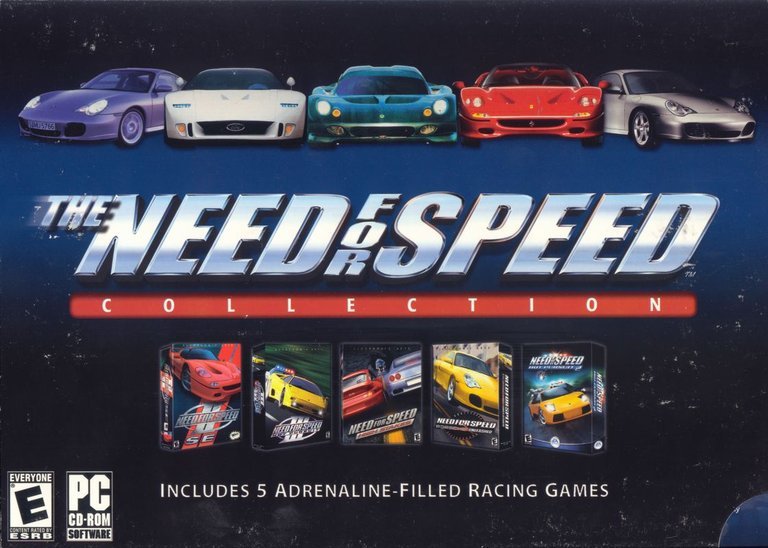
The Need for Speed: Collection is a compilation of five classic racing games from the Need for Speed series, released in 2003 by Electronic Arts. It includes Need for Speed II: Special Edition, Need for Speed III: Hot Pursuit, Need for Speed: High Stakes, Need for Speed: Porsche Unleashed, and Need for Speed: Hot Pursuit 2, offering players a mix of high-speed street racing, police pursuits, and exotic car showcases across various environments.
The Need for Speed: Collection Cracks & Fixes
The Need for Speed: Collection Reviews & Reception
mobygames.com (84/100): A compilation of some of the favorite Need for Speed games out there.
metacritic.com (82/100): Great compilation of Need For Speed games, varying…
ebay.com (96/100): Great nostalgia games. Awesome quality played these games as a kid and with modern patches holy cow this is awesome playing the games with my Xbox Controller really good quality can’t really find these games anymore…
The Need for Speed: Collection Cheats & Codes
Need for Speed 3: Hot Pursuit (PC)
Enter one of the following codes at any menu before starting a race to activate the corresponding cheat function.
| Code | Effect |
|---|---|
| madland | All cars are fast in single race mode |
| ckjones | Colored cars mode |
| merc | Mercedes CLK GTR bonus car |
| dcop | Diablo pursuit car |
| elninor | El Niño bonus car |
| ecop | El Niño pursuit car |
| empire | Empire City track |
| allcars | Enable all cars |
| gofast | Fast car in single race mode |
| newcars | Jaguar XJR-15 and all secret police pursuit cars |
| jag | Jaguar XJR-15 bonus car |
| bullhorn | Police yell comments during chase |
| rushhour | Race with more traffic on the road |
| macr | All pursuit mode cars |
| go09 | 65 Mustang |
| go10 | 66 Chevy Pickup |
| go05 | 71 Plymouth Cuda |
| go04 | BMW 5 Series |
| go13 | Caprice Classic Taxi |
| go03 | Cargo Truck |
| go14 | Chevy Cargo Van |
| go17 | Crown Victoria Cop Car |
| go08 | Ford Fullsize Van |
| go06 | Ford Pickup with Camper Shell |
| go19 | Grand Am Cop Car |
| go07 | Jeep Cherokee |
| go21 | Knock Out Loser Truck |
| go01 | Mazda Miata |
| go18 | Mitsubishi Eclipse Cop Car |
| go11 | Range Rover |
| go20 | Range Rover Cop Car/Ranger Vehicle |
| go12 | School bus |
| go16 | Sedan |
| go02 | Toyota Landcruiser |
| go00 | Volvo Convertible |
| go15 | Volvo Station Wagon |
Need for Speed: Most Wanted (PC)
Enter one of the following codes at the start screen.
| Code | Effect |
|---|---|
| burgerking | Unlocks the Burger King Challenge |
| castrol | Unlocks a Castrol SYNTEC themed Ford GT |
| givemethegto | Unlocks the Pontiac GTO (Demo) |
Need for Speed: Most Wanted (PlayStation 2)
Enter one of the following codes at the start screen.
| Code | Effect |
|---|---|
| Up, Down, Up, Down, Left, Right, Left, Right | Unlocks the Burger King Challenge |
| Left, Left, Right, Right, Up, Down, Up, Down | Unlocks a Castrol SYNTEC themed Ford GT |
| Up, Up, Down, Down, Left, Right, Up, Down | Extra Marker for Shop |
| L1, R1, R1, R1, Right, Left, Right, Down | Unlocks the Porsche Cayman S (Demo) |
Need for Speed: Most Wanted (Xbox & Xbox 360)
Enter one of the following codes at the start screen.
| Code | Effect |
|---|---|
| LT, RT, RT, RT, Right, Left, Right, Down | Unlocks the Porsche Cayman S (Demo) |
| Up, Down, Up, Down, Left, Right, Left, Right | Unlocks the Burger King challenge |
| Left, Right, Left, Right, Up, Down, Up, Down | Unlocks a Castrol SYNTEC themed Ford GT |
| Up, Up, Down, Down, Left, Right, Up, Down | Free upgrades |
Need for Speed: Most Wanted (GameCube)
Enter one of the following codes at the start screen.
| Code | Effect |
|---|---|
| Up, Down, Up, Down, Left, Right, Left, Right | Unlocks the Burger King challenge |
| Left, Right, Left, Right, Up, Down, Up, Down | Unlocks a Castrol SYNTEC themed Ford GT |
| Up, Up, Down, Down, Left, Right, Up, Down | Free upgrades |
Need for Speed: Underground (GameCube)
While in the Main Menu Screen, enter code:
| Code | Effect |
|---|---|
| Right, Z, Left, R, Z, L, Y, X | All Drag Tracks |
| Left, Left, Left, Left, Right, X, R, Y | All Drift Tracks |
| Up, X, X, X, R, Down, Down, Down | All Sprint Tracks |
| Down, R, R, R, X, X, X, Z | All Circuit Tracks |
Need for Speed: Underground (PC)
At the main menu, select the ‘Statistics’ option, then press [Delete] or [Backspace] to return to the main menu. Then, type one of the following codes to activate the corresponding cheat function:
| Code | Effect |
|---|---|
| gimmesomecircuits | All Circuit tracks |
| gimmesomedrag | All Drag tracks |
| driftdriftbaby | All Drift tracks |
| gimmesomesprints | All Sprint tracks |
| slidingwithstyle | Drift physics in all modes |
| allmylvloneparts | Level 1 performance upgrades |
| seemylvl1parts | Level 1 visual upgrades |
| allmylvl2parts | Level 2 performance upgrades |
| seemylvl2parts | Level 2 visual upgrades; no vinyls |
| 350350z | 350Z |
| 667tiburon | Tiburon |
| 77peugeot | Peugeot |
| 899eclipse | Eclipse |
| 119focus | Focus |
| 371impreza | Impreza |
| 222lancer | Lancer |
| 777rx7 | RX7 |
| 221miata | Miata |
| 334mygolf | Golf |
| 922sentra | Sentra |
| 893neon | Neon |
| 111skyline | Skyline |
| 2000s2000 | S2000 |
| 889civic | Civic |
| 228supra | Supra |
| 240240sx | 240SX |
| 342integra | Integra |
| givemenismo | Nismo |
| 239celica | Celica |
| 973rsx777 | RSX |
| gimmeppablo | Petey Pablo |
| needmylostprophets | Lost Prophets |
| gotcharobzombie | Rob Zombie |
| havyamystikal | Mystikal |
The Need for Speed: Collection: A Retrospective on a Racing Legacy
Introduction
The Need for Speed: Collection is more than just a compilation—it’s a time capsule of one of gaming’s most influential racing franchises. Released in 2003, this anthology bundles five pivotal titles from the late ’90s and early 2000s, offering a snapshot of how Need for Speed evolved from a realistic driving simulator into a cultural phenomenon. For historians and enthusiasts, this collection is a treasure trove, showcasing the series’ transition from exotic car fantasies to underground street racing rebellions. This review will dissect the collection’s significance, its gameplay mechanics, and its enduring legacy in the racing genre.
Development History & Context
The Need for Speed franchise was born in 1994, developed by EA Canada (formerly Distinctive Software), a studio with deep roots in racing games like Stunts and Test Drive II. The original Need for Speed was a collaboration with Road & Track magazine, emphasizing realism with accurate car physics and commentary from automotive experts. By the late ’90s, the series had shifted gears, embracing arcade-style gameplay and introducing police pursuits—a defining feature that would become synonymous with the franchise.
The Need for Speed: Collection was released in 2003, a time when racing games were transitioning from closed-circuit tracks to open-world environments. The collection includes:
– Need for Speed II: Special Edition (1997)
– Need for Speed III: Hot Pursuit (1998)
– Need for Speed: High Stakes (1999)
– Need for Speed: Porsche Unleashed (2000)
– Need for Speed: Hot Pursuit 2 (2002)
These titles span the pre-Underground era, a period where Need for Speed was still rooted in exotic cars and police chases rather than the tuner culture that would dominate later entries. The collection’s release coincided with the rise of The Fast and the Furious franchise, which would heavily influence Need for Speed: Underground (2003) and subsequent titles.
Narrative & Thematic Deep Dive
Unlike later Need for Speed games, the titles in this collection are light on narrative, focusing instead on pure racing adrenaline. However, they do establish key themes that would define the series:
- The Thrill of the Chase: Hot Pursuit and Hot Pursuit 2 introduced the cop vs. racer dynamic, a gameplay loop that would become a staple. Players could switch between outrunning the law or enforcing it, adding a layer of strategy and replayability.
- High Stakes, High Rewards: High Stakes introduced a damage system and pink slip races, where losing a race could mean losing your car. This added a gambling-like tension to the gameplay.
- Exotic Fantasies: Porsche Unleashed was a love letter to Porsche enthusiasts, offering a historical tour of the brand’s vehicles from the 1950s to 2000. It was less about street racing and more about automotive appreciation.
While these games lack the cinematic storytelling of later entries like Most Wanted or Carbon, they laid the groundwork for the series’ identity: speed, style, and rebellion.
Gameplay Mechanics & Systems
The Need for Speed: Collection showcases the evolution of the series’ gameplay mechanics:
Core Gameplay Loops
- Police Pursuits: Hot Pursuit and Hot Pursuit 2 perfected the cat-and-mouse chase, with cops using roadblocks, spike strips, and helicopters to stop racers. The AI was aggressive but predictable, making evasion a skill-based challenge.
- Damage System: High Stakes introduced visual and mechanical damage, where crashes could deform your car and affect performance. This added a layer of realism and consequence to races.
- Car Customization: While limited compared to later titles, High Stakes allowed players to upgrade engines, tires, and suspensions, a precursor to the deep customization of Underground.
Innovations & Flaws
- Multiplayer Modes: The collection includes split-screen and LAN multiplayer, a rarity in modern racing games. However, the lack of online play (a limitation of the era) dates these titles.
- AI Behavior: The AI in Hot Pursuit 2 was notoriously rubber-banding, with cops magically catching up regardless of the player’s speed. This could be frustrating but also added to the arcadey charm.
- Track Design: The tracks in Need for Speed II and Hot Pursuit were scenic but linear, lacking the open-world freedom of later games. However, their shortcuts and hidden paths encouraged replayability.
World-Building, Art & Sound
The Need for Speed: Collection is a visual and auditory time capsule of late ’90s and early 2000s gaming:
Visual Direction
- Exotic Locales: The games feature international tracks set in North America, Europe, and Asia, each with distinct aesthetics. Hot Pursuit 2’s over-the-top environments (e.g., coastal highways, desert canyons) were a highlight.
- Car Models: The polygon-heavy but detailed car models hold up surprisingly well, especially in Porsche Unleashed, which featured meticulously recreated Porsches.
- UI Design: The futuristic HUDs and menu screens reflect the era’s obsession with cyberpunk aesthetics, a stark contrast to the gritty realism of later Need for Speed games.
Sound Design
- Engine Roars: The car sounds were a standout feature, with each vehicle having a distinct engine note. Porsche Unleashed’s realistic exhaust tones were particularly impressive.
- Music: The soundtracks were a mix of licensed rock and electronic tracks, though not as iconic as the hip-hop and electronic beats of Underground. Hot Pursuit 2 introduced EA Trax, a feature that would become a series staple.
Reception & Legacy
At the time of release, the Need for Speed: Collection was well-received by critics and fans, though it was overshadowed by the hype surrounding Need for Speed: Underground. The collection’s titles were praised for their arcade-style fun and police chase mechanics, but criticized for their lack of innovation compared to newer racing games.
Critical Reception
- Need for Speed III: Hot Pursuit (1998) holds an 84% on Metacritic, with critics praising its police chase mechanics and multiplayer modes.
- Hot Pursuit 2 (2002) received mixed reviews, with critics noting its improved visuals but repetitive gameplay.
Legacy
The Need for Speed: Collection is a historical artifact, representing the series’ transition from realistic racing to arcade thrills. It laid the foundation for:
– Police chases as a core gameplay mechanic.
– Car customization, which would become a series staple.
– The cop vs. racer dynamic, later perfected in Hot Pursuit (2010) and Rivals.
While the collection is not as remembered as later entries, it remains a crucial piece of racing game history, offering a glimpse into the evolution of Need for Speed.
Conclusion
The Need for Speed: Collection is a must-play for racing game historians and fans of the franchise’s early days. While it lacks the narrative depth and open-world freedom of later titles, it captures the pure, unadulterated thrill of high-speed chases and exotic car fantasies. The collection’s police pursuit mechanics and arcade-style gameplay remain influential, and its visual and auditory design is a nostalgic trip back to the late ’90s.
Final Verdict: 8/10 – A time capsule of racing excellence, essential for understanding the roots of Need for Speed.
For modern players, the collection may feel dated, but for those who lived through the era, it’s a reminder of why Need for Speed became a legend.