
- Release Year: 2011
- Platforms: Macintosh, Windows
- Publisher: 1C-SoftClub, Crimson Cow GmbH, Focus Home Interactive SAS
- Developer: Péndulo Studios, S.L.
- Genre: Adventure
- Perspective: Third-person
- Game Mode: Single-player
- Gameplay: Graphic adventure, Point and select, Puzzle elements
- Setting: 1950s, City – Los Angeles
- Average Score: 83/100
Description
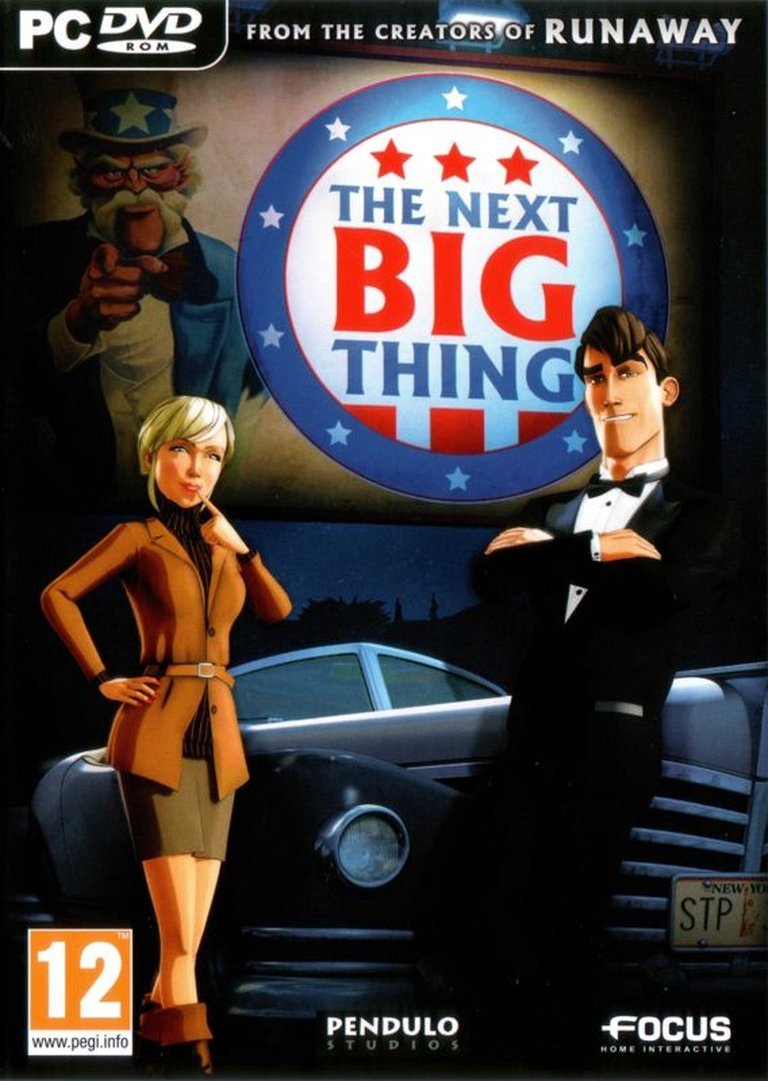
The Next Big Thing is a graphic adventure game set in an alternate 1950s Los Angeles where humans, monsters, and robots coexist. Players control reporters Liz Allaire and Dan Murray as they uncover a kidnapping conspiracy tied to the movie industry, featuring hand-drawn backgrounds, cel-shaded 3D characters, and puzzle-solving gameplay. The duo’s love-hate dynamic and a narrator-driven plot add humor and intrigue to this point-and-click adventure.
Gameplay Videos
Where to Buy The Next Big Thing
The Next Big Thing Free Download
The Next Big Thing Cracks & Fixes
The Next Big Thing Patches & Updates
The Next Big Thing Guides & Walkthroughs
The Next Big Thing Reviews & Reception
metacritic.com (75/100): A prime example of what a graphic adventure should be.
gamepressure.com (84/100): The next thing by Pendulo Studios.
gamesreviews2010.com (90/100): A hilarious adventure you won’t forget.
The Next Big Thing: A Comprehensive Retrospective
Introduction
The Next Big Thing (2011) is a point-and-click adventure game developed by Péndulo Studios, a Spanish studio renowned for its work in the genre. Positioned as a spiritual successor to Hollywood Monsters (1997), the game blends classic adventure mechanics with a unique narrative set in an alternate 1940s Hollywood where monsters and humans coexist. This review delves into the game’s development, narrative, gameplay, reception, and legacy, offering a detailed analysis of its place in video game history.
Development History & Context
Péndulo Studios began developing The Next Big Thing in the late 2000s, initially intending to create a high-definition remake of Hollywood Monsters. However, the team recognized significant flaws in the original game, particularly its “male chauvinist” portrayal of female characters and outdated puzzle design. The project evolved into a reimagining rather than a direct sequel, with a focus on modernizing the gameplay and narrative.
Key figures in the development included writer Josué Monchan and project lead Ramón Hernáez, who crafted a 500-page script emphasizing dialogue and character depth. The game’s protagonist, Liz Allaire, was designed as a feminist counterpoint to the original game’s submissive female lead, drawing inspiration from Katharine Hepburn’s role in Bringing Up Baby and other iconic characters.
The game was developed over 18 months by a team of 12–15 people, using an upgraded version of the engine from Runaway: A Twist of Fate. Péndulo Studios prioritized graphical fidelity, billing The Next Big Thing as the first 1080p graphic adventure game. The art direction maintained the studio’s signature 2.5D style, blending hand-drawn backgrounds with cel-shaded 3D characters.
Narrative & Thematic Deep Dive
The Next Big Thing is set in an alternate 1940s Hollywood where monsters are real and act in films. The story follows reporters Liz Allaire and Dan Murray as they uncover a conspiracy involving mind control and political manipulation. The narrative is driven by a narrator, whose appearance is likened to Sean Connery, who guides the player through the plot.
Characters and Themes
- Liz Allaire: A young, eccentric journalist with a complex personality, described as suffering from multiple psychic pathologies. Her character is a deliberate departure from traditional female roles in adventure games.
- Dan Murray: A veteran sportswriter with a cynical and arrogant demeanor, serving as a foil to Liz’s idealism.
- William A. FitzRandolph: The antagonist, a monster businessman using brain implants to control others for political gain.
The game explores themes of prejudice and racism through the metaphor of monsters facing societal bias, drawing parallels to the X-Men comics. The narrative also delves into the dynamics of power and control, with FitzRandolph’s mind control scheme serving as a critique of political manipulation.
Gameplay Mechanics & Systems
The Next Big Thing is a traditional point-and-click adventure game with a linear narrative structure. The gameplay revolves around exploring environments, interacting with characters, and solving puzzles. The game features three difficulty modes, with the lowest offering a hint system and hotspot highlighting.
Puzzle Design
Puzzles in The Next Big Thing primarily involve item combination and environmental interaction. The game includes minigames and conversation-based puzzles, though some critics found the puzzles either too easy or illogical. The inventory system was streamlined compared to Hollywood Monsters, reducing the number of items to manage.
User Interface
The game’s interface is designed for mouse control, with hotkeys for inventory and options. The narrator provides hints, and a task menu tracks solved and unsolved objectives. The UI is intuitive, though some critics noted that the touchscreen controls in the iOS port were imprecise.
World-Building, Art & Sound
The game’s setting is a richly detailed alternate 1940s Hollywood, blending classic film noir aesthetics with fantastical elements. The art style combines hand-drawn backgrounds with cel-shaded 3D characters, creating a visually striking cartoon-like aesthetic. The sound design features a jazzy soundtrack and voice acting that enhances the game’s comedic and dramatic tones.
Atmosphere and Tone
The game’s tone is a mix of humor and drama, with a strong emphasis on character-driven storytelling. The alternate Hollywood setting allows for creative liberties, such as monsters acting in films and robots serving as security. The narrative’s blend of comedy and social commentary adds depth to the game’s world.
Reception & Legacy
The Next Big Thing received generally favorable reviews, with critics praising its graphics, characters, and story. However, the game was a commercial failure upon its initial release, leading Péndulo Studios to rethink its approach to game development. The iOS port saw more success, though it received mixed reviews due to control issues.
Critical Reception
Critics lauded the game’s visuals and narrative but criticized its brevity and puzzle design. The game’s humor and character interactions were highlights, though some found the puzzles either too simple or overly complex. The game’s reception in Spain was particularly strong, where it won awards for Best Sound, Best Graphics, and Best Script.
Legacy
Despite its commercial struggles, The Next Big Thing is remembered as a unique entry in the adventure game genre. Its blend of humor, social commentary, and innovative storytelling has influenced subsequent games, though Péndulo Studios shifted toward more dramatic narratives in later titles like Yesterday.
Conclusion
The Next Big Thing is a bold and ambitious game that pushes the boundaries of the adventure genre. Its rich narrative, memorable characters, and innovative gameplay mechanics make it a standout title, despite its commercial challenges. The game’s legacy is one of creativity and risk-taking, reflecting Péndulo Studios’ commitment to storytelling and artistic expression.
Final Verdict: The Next Big Thing is a must-play for fans of adventure games, offering a unique blend of humor, drama, and social commentary. While its puzzles and brevity may not appeal to all players, its narrative depth and visual style make it a memorable experience.