
- Release Year: 2010
- Platforms: Linux, Macintosh, Windows
- Publisher: Dmytry Lavrov
- Developer: Alexey Lavrov, Dmytry Lavrov
- Genre: Action
- Perspective: 1st-person
- Game Mode: Single-player
- Gameplay: Music, rhythm, Shooter
- Setting: Futuristic, Sci-fi
- Average Score: 67/100
Description
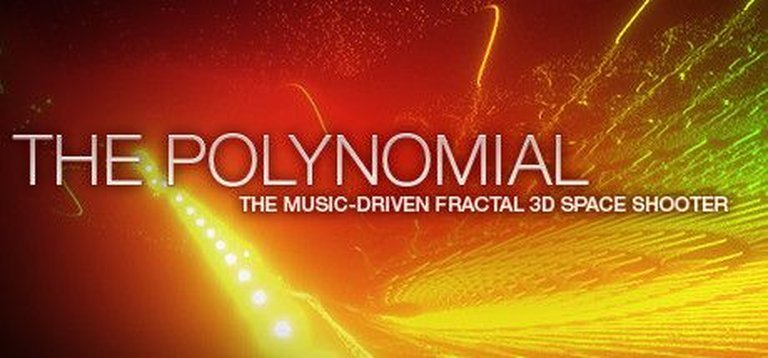
The Polynomial: Space of the Music is a 3D space shooter set in a sci-fi galaxy filled with mathematically generated, visually stunning environments whose animations are driven by the player’s chosen music. Players pilot a ship through immersive fractal worlds, battling swarms of odd creatures, collecting power-ups like faster bullets and autoaim, and interacting with friendly ghosts for repairs and boosts, while aiming to rack up high scores across 38 levels or custom-created realms, with options for exploration without enemies.
Gameplay Videos
Where to Buy The Polynomial: Space of the Music
PC
The Polynomial: Space of the Music Reviews & Reception
metacritic.com (70/100): Unique and beautiful, but barely a game.
steambase.io (73/100): Mostly Positive
The Polynomial: Space of the Music: Review
Introduction
Imagine hurtling through an infinite fractal cosmos where every bass drop warps reality into pulsating nebulae of color, and your ship’s laser fire syncs to the rhythm of your favorite track—welcome to The Polynomial: Space of the Music, a 2010 indie gem that blurs the line between space shooter, music visualizer, and interactive art installation. Released amid the early indie explosion on platforms like Steam, this solo-developed title by Dmytry Lavrov captured a niche but fervent audience, spawning a sequel in 2016 and earning a cult status for its audacious fusion of procedural mathematics and auditory ecstasy. As a game historian, I’ve seen countless titles chase immersion, but few deliver it as viscerally and affordably ($6.99 on Steam today). My thesis: The Polynomial isn’t just a game—it’s a revolutionary sensory experiment that prioritizes hypnotic exploration and musical synergy over narrative depth or mechanical complexity, cementing its place as a pioneer in music-driven procedural generation.
Development History & Context
The Polynomial emerged from the bedroom-coding ethos of the late 2000s indie scene, spearheaded by Russian developer Dmytry Lavrov, who handled game code and visuals alongside his brother Alexey Lavrov (visuals and music composition with T.K.). Self-published with a tiny credits list of 11—bolstered by open-source libraries like GLFW for OpenGL, GLee for extensions, and ALURE for audio—this was no AAA production but a passion project leveraging accessible tech to push boundaries. Initial release dates vary across sources (May 28, 2009 per Wikipedia; October 2010 for Windows/Mac/Linux on MobyGames), reflecting its evolution from free demos to full Steam launch amid the digital distribution boom.
The era was ripe: Post-World of Goo (2008) and pre-Minecraft (2011), indies were democratizing tools like OpenGL 2.1 and GLSL shaders, enabling solo devs to craft visually stunning experiences on modest hardware (1GHz CPU, 256MB VRAM minimum). Lavrov’s vision crystallized around fractals—mathematical equations generating infinite, organic geometries—animated in real-time to music spectra, a novel twist on rhythm games like Audiosurf (2008) or shooters like Geometry Wars. Constraints like no dedicated physics engine or multiplayer forced focus on core strengths: procedural generation and user music import (playlists, mic input). In a landscape dominated by narrative-heavy epics (Mass Effect 2, 2010) and multiplayer frenzy (Call of Duty: Black Ops), The Polynomial stood out as a minimalist rebellion, embodying the “artgame” ethos that would flourish in the 2010s indie renaissance.
Narrative & Thematic Deep Dive
Don’t expect a sprawling sci-fi epic with branching plots or memorable characters—The Polynomial has none. There is no dialogue (save minor voice acting credits to S.J., likely ambient effects), no protagonists beyond your anonymous ship, and no plot beyond “survive the galaxy’s swarms.” Instead, it thrives on abstract, emergent storytelling: you pilot a lone vessel through procedurally birthed universes, battling “odd creatures” (Pac-Man-esque foes) while allying with ethereal “ghosts” that monsters devour. Power-ups manifest as floating bonuses, wormholes as portals to nowhere, flowers as serene collectibles—symbolizing harmony amid chaos.
Thematically, it’s a meditation on mathematical sublime and synesthesia. Fractals evoke the universe’s infinite complexity (Mandelbrot-inspired infinities pulsing to basslines), turning gameplay into a philosophical fly-through of cosmic order. Music isn’t backdrop; it’s the conductor—your playlist dictates animations, transforming hostile arenas into symphonies of light. Themes of exploration vs. destruction shine: crank difficulty to “insane” for bullet-hell frenzy, or zero it for pacifist drifting, pondering existence amid blooming geometries. Ghosts represent fragile beauty (protect them from eaters for boosts), underscoring balance—kill too aggressively, and serenity shatters; explore mindfully, and euphoria unfolds. In an era of lore-heavy games, this void is its strength: a canvas for personal reverie, where your Spotify queue authors the “narrative.”
Gameplay Mechanics & Systems
At its core, The Polynomial is a free-flight 1st-person space shooter with endless scoring loops, but its innovations lie in music integration and customization. Core Loop: Spawn in one of 38 hand-picked arenas (or custom fractals via built-in editor), evade/shoot infinite enemy waves, collect ghosts (repairs/speed), flowers/wormholes (points), and power-ups (faster bullets, auto-aim, boosts). No levels or bosses—sessions end by death, quit, or crash (from entity overload on high scores).
Combat & Progression: Single enemy type (swarming 3D blobs) keeps it arcade-simple, but hordes scale with difficulty (none to insane), demanding spatial awareness in 6DOF flight. Keyboard/mouse or joystick input feels responsive, with momentum-based physics evoking surfing fractal “waves.” Progression is score-driven: an innovative multi-tier system tallies actions over 1/5/20/60-minute windows (kills, saves, collects), rewarding sustained performance without restarts—screw up early? Grind on for recovery. Leaderboards track variants (e.g., deaths, flowers-only), fostering replayability.
UI & Systems: Spartan but functional—minimal HUD (health, score multipliers, music viz), radial menus for arenas/visualizers. Flaws: Repetitiveness (one enemy design, no variety) wears thin post-novelty; no tutorials bury depth. Strengths: Editor lets you tweak fractal params (astronomical combos), export images; 4 visualizers + post-processing (anaglyph 3D, shaders) make it a sandbox. Non-shooter mode unlocks pure exploration. Overall, mechanics prioritize flow-state immersion over twitch mastery—brilliant for short bursts, shallow for marathons.
- Power-Ups: Bullet speed, auto-aim, thrust—stack for chaos.
- Scoring Nuances: Continuous timers encourage balance; high-diff multipliers amplify risks.
- Customization: Music analysis (bass-driven anims), playlist editor, mic reactivity.
World-Building, Art & Sound
The Polynomial‘s universe is no hand-crafted galaxy but a procedural marvel: 38 arenas + infinite customs, forged from fractal equations yielding “visually intensive 3D spaces.” Worlds pulse with geometry—spiraling vortices, particle storms, Christmas-tree filigrees—morphing to music’s FFT (bass warps scales, highs spark blooms). Atmosphere? Pure psychedelia: neon tracers streak voids, death screens explode in glitch-art splendor. Art direction leverages OpenGL for hardware-agnostic beauty (though Intel HD struggles), with post-FX like bloom and distortion amplifying trippiness. It’s not realistic sci-fi but abstract expressionism—arenas as living Mandelbrot zooms, your ship a conductor’s baton.
Sound design elevates it: 50-minute OST by Alexey Lavrov/T.K. (electronic pulses, ambient swells—trailers showcase fragments) pairs flawlessly, but user music import is genius—drop dubstep for throbbing hellscapes, classical for serene drifts, mic for live reactivity. No SFX overload; lasers/gunfire subtly rhythm-sync. Together, they forge total synesthesia: visuals breathe to audio, creating euphoria that outshines static viz apps like Milkdrop. Contribution to experience? Immersive transcendence—arenas feel alive, personal, infinite.
Reception & Legacy
Launch reception was solid but polarized: 72% critic average (MobyGames: IMG 78/100 for modding joy; GameZebo/Eurogamer 70/100, praising prettiness but decrying “lack of purpose”/”self-medicated bliss”). Players averaged 3.6/5 (Moby), 5.8/10 (Metacritic, mixed: “breathtaking visuals” vs. “boring Pac-Man shooter”), 73% Mostly Positive (Steam, 498 reviews). Niche appeal shone—audiophiles raved (“perfect music companion”), shooters balked (“no content”). Commercially modest (40+ Moby collectors), but demos hooked explorers.
Legacy endures: First in “Polynomial series” (sequel 2016 expands), it influenced music-procedural hybrids (Beat Hazard, Riff Racer) and artgames (Proteus). Groups like Moby’s “Games with music-based procedural generation” cement its trailblazing. Reputation evolved from “pretty screensaver” to “essential visualizer”—Steam peaks praise customization; modern playthroughs evoke VR precursors. Industry impact: Validated solo-dev fractals, prefiguring No Man’s Sky‘s procs and rhythm-shooters like Beat Saber. Cult status assured via Steam sales, YouTube vids (e.g., Bohemian Rhapsody syncs).
Conclusion
The Polynomial: Space of the Music distills gaming to its purest sensory essence: fractal infinities dancing to your soundtrack, where shooting is optional and scores secondary to awe. Lavrov’s vision—flawed by repetition, elevated by boundless creativity—shines as an indie triumph, outpacing contemporaries in innovation if not depth. Exhaustive customization, hypnotic art-sound fusion, and procedural freedom earn it a definitive 8.5/10—not a timeless shooter, but an essential artifact in video game history’s experimental wing. For music lovers, explorers, or fractal fetishists, it’s eternal bliss; others, demo first. In the cosmos of games, it remains a radiant anomaly.