
- Release Year: 1997
- Platforms: Windows
- Publisher: Sierra On-Line, Inc.
- Developer: Yosemite Entertainment
- Genre: Role-playing, RPG
- Perspective: Side view
- Game Mode: MMO, Online PVP
- Gameplay: Character Creation, Class selection, Combat, Massively Multiplayer, Tactical fighting
- Setting: Fantasy
- Average Score: 54/100
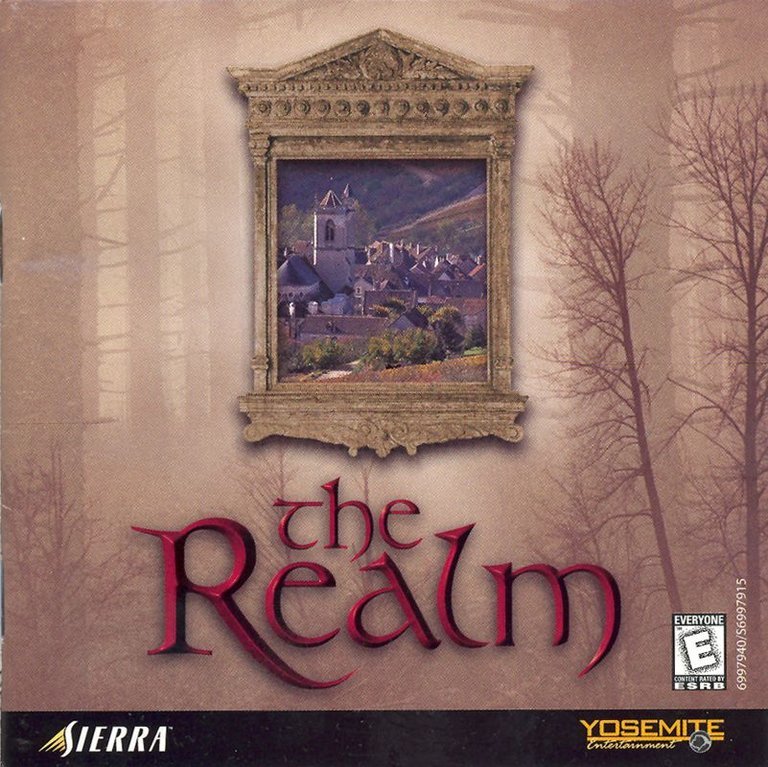
Description
The Realm is one of the earliest massively multiplayer online role-playing games (MMORPGs), originally launched in 1996 by Sierra On-Line. Set in a fantasy world, players create characters from classes like thief, adventurer, wizard, or warrior, customizing their appearance and engaging in real-time combat. The game features cartoonish battles, where skirmishes play out in a tactical screen, and the winner claims the loser’s possessions. As a pioneering title in the genre, it blends persistent online gameplay with a side-view perspective, offering a mix of exploration, combat, and social interaction in a shared virtual realm.
Where to Buy The Realm
PC
The Realm Guides & Walkthroughs
The Realm Reviews & Reception
en.wikipedia.org (85/100): A triumphant return to form for the series.
mobygames.com (40/100): The Realm is one of the first Massive Multiplayer Online Role Playing Games.
patpend.net (37/100): Great game. Download a demo at Realmserver.com!
The Realm Cheats & Codes
SNES
Hold Up + X + B + R + Start at the title screen until the screen fades.
| Code | Effect |
|---|---|
| Up + X + B + R + Start | Unlimited energy during the game. Press Start + Select during gameplay to jump to the next level. |
SNES (Game Genie Codes)
Enter codes using a Game Genie or Pro Action Replay device.
| Code | Effect |
|---|---|
| C9E4-3DA7 | Unlimited Ammo |
| C2EB-4F15 | Unlimited Health |
| C236-1DFE | Unlimited Lives |
| ED66-C54F | Mostly Invulnerable & Stage Select Enabled |
| C928-4DA7 C92D-1DD7 |
Invulnerable After Being Hit Once |
| 2DCB-1FD7 01CB-1F07 82C3-1FA7 FAC3-14D7 10CB-C407 |
Hit Enemies From Anywhere |
| DDED-1739 DDED-1D39 DDE7-1FC9 |
Moon Jump |
The Realm: A Pioneering MMORPG and Its Enduring Legacy
Introduction
The Realm (1997) is a landmark title in the history of massively multiplayer online role-playing games (MMORPGs). Developed by Yosemite Entertainment and published by Sierra On-Line, it emerged during a pivotal era when online gaming was transitioning from text-based MUDs (Multi-User Dungeons) to graphical, persistent worlds. While overshadowed by later giants like Ultima Online and EverQuest, The Realm carved its niche as one of the first graphical MMORPGs, blending Sierra’s signature point-and-click adventure mechanics with the social and exploratory depth of online role-playing. This review explores The Realm’s development, gameplay, cultural impact, and its unusual journey through multiple ownership changes, revealing why it remains a fascinating artifact of gaming history.
Development History & Context
The Birth of a Genre
The Realm was conceived in 1994, a time when the internet was still in its infancy for most consumers. Sierra On-Line, fresh off the success of its Quest for Glory and King’s Quest series, sought to adapt its adventure game expertise to the burgeoning online space. Initially, the project was intended to be an online Quest for Glory spin-off, but the studio pivoted to create an original IP under the leadership of Stephen Nichols and Janus Anderson. Nichols, a veteran of The Sierra Network (an early online gaming service), envisioned a game that merged the inventory systems of Sierra’s adventures with the persistent worlds of MUDs.
Technological Constraints and Innovations
Built using Sierra’s Creative Interpreter (SCI) engine—a toolset designed for 2D point-and-click adventures—The Realm faced significant technical limitations. The game’s cel-animated graphics, hand-drawn and digitally scanned, were a far cry from the 3D environments of EverQuest (1999). Yet, these constraints fostered creativity:
– Turn-Based Combat: Unlike real-time MUDs, The Realm used a turn-based system, making it accessible to players with slow dial-up connections.
– Instanced Battles: It pioneered the use of instances, isolating combat encounters in separate screens to prevent disruption in the open world.
– Accessibility: Sierra emphasized compatibility with third-party accessibility software, making it one of the first MMORPGs playable by disabled gamers.
A Troubled Launch
The Realm entered beta in 1996 and launched commercially in May 1997. However, Sierra’s marketing was lackluster. Instead of retail distribution, the game relied on demo discs and word-of-mouth, limiting its reach. By 1999, Sierra sold the title to Codemasters, which rebranded it as The Realm Online. Subsequent ownership changes—including a 2003 acquisition by Norseman Games, a family-run Michigan studio—led to a fragmented development history. Despite these challenges, the game persisted, with servers remaining active into the 2020s under various operators, including Rat Labs and Digital Alchemy.
Narrative & Thematic Deep Dive
A High Fantasy Sandbox
The Realm’s setting is a generic high-fantasy world inspired by Dungeons & Dragons and The Lord of the Rings, populated by elves, giants, humans, and monstrous creatures. However, its narrative strength lies not in scripted quests but in emergent storytelling driven by player interactions. The game’s lore is minimal, with no overarching plot; instead, it encourages players to forge their own legends through exploration, trade, and conflict.
Character Creation and Progression
Players choose from four classes:
– Warrior: Melee-focused, excelling in direct combat.
– Adventurer: A hybrid class balancing combat and exploration.
– Wizard: Magic-users with powerful spells but weak defenses.
– Thief: Stealthy characters specializing in pickpocketing and traps.
The character creation system is notoriously unforgiving. Poorly allocated attribute points can permanently cripple a character’s potential, a design choice that reflects the game’s hardcore MUD roots. Progression is tied to experience points (XP) earned through combat, with “build points” spent on skills like swordsmanship or spellcasting.
Social Dynamics: Guilds, Theft, and Griefing
The Realm’s most compelling narratives emerge from its player-driven economy and social systems:
– Trading: The lack of a formal auction house forces players to rely on drag-and-drop bartering, fostering trust-based relationships (and scams).
– Guilds: Players form alliances for protection and resource-sharing, mirroring real-world social structures.
– Adversarial Play: Thieves can pickpocket or steal from houses, while warriors and wizards engage in PvP (Player vs. Player) combat for loot. This design choice—intentionally controversial—created a living, unpredictable world where paranoia and camaraderie coexist.
Themes of Community and Survival
At its core, The Realm explores themes of community resilience and adaptation. The game’s longevity, despite its outdated mechanics, stems from its ability to foster deep social bonds. As noted by longtime player Steve Murphy in Atlas Obscura, the game’s leisurely pace and text-heavy interactions made it a haven for players with disabilities or those seeking a less competitive alternative to modern MMOs.
Gameplay Mechanics & Systems
Core Gameplay Loop
- Exploration: The world is divided into static, interconnected screens (e.g., forests, dungeons, towns). Players navigate by clicking edges of the screen, evoking the grid-based movement of classic adventures.
- Combat: Battles are turn-based and initiated by clicking enemies. Combatants are transported to a separate tactical screen, where attacks and spells are selected from menus. The winner loots the loser’s inventory—a brutal but effective incentive for caution.
- Economy: Rare items dropped by monsters drive the economy. The scarcity-based system encourages player-run auctions and black markets.
UI and Accessibility
The interface is a hybrid of point-and-click adventure and MUD:
– Inventory Management: Items are stored in a grid-based backpack, reminiscent of King’s Quest.
– Chat System: Multiple channels (global, private, guild) facilitate communication.
– Housing: Every player starts with a personal house, which can be visited (or robbed) by others.
Flaws and Frustrations
- No Quest Journal: The absence of structured quests leaves newcomers directionless.
- Griefing: The lack of robust moderation tools at launch led to rampant theft and harassment, requiring ad-hoc solutions from the community.
- Server Instability: Early versions suffered from frequent crashes, a common issue in 1990s online games.
World-Building, Art & Sound
Visual Design: A Cartoonish Fantasy
The Realm’s art style is whimsical and dated, with hand-drawn, cel-animated sprites that lack the polish of contemporary 2D games like Chrono Trigger. Characters and environments are static and grid-based, with minimal animation (e.g., a two-frame walk cycle). Despite its crudeness, the art has a charming, DIY aesthetic that evokes nostalgia for early internet culture.
Sound and Music
Composed by Chance Thomas (Lord of the Rings Online), the soundtrack is minimalist but atmospheric, featuring MIDI-based fantasy themes that loop during exploration. Sound effects are functional but unremarkable, with text-based combat descriptions (e.g., “Baerf fled like a scared dog”) providing most of the auditory flavor.
Atmosphere: A Digital Time Capsule
Playing The Realm today is like stepping into a 1996 internet café. The game’s clunky UI, slow-paced combat, and reliance on text reflect an era when online gaming was a novelty rather than a mainstream phenomenon. Its persistence—despite technological obsolescence—speaks to the power of community over graphics or mechanics.
Reception & Legacy
Critical and Commercial Reception
- Initial Reviews: PC Player (Germany) gave it a 40%, criticizing its lack of structured quests and comparing it unfavorably to Ultima Online.
- Player Sentiment: User scores on MobyGames average 3.1/5, with praise for its social depth but frustration over its outdated design.
- Commercial Performance: At its peak, The Realm boasted 25,000 accounts (30% of the 1997 MMO market). By 2004, subscriptions dropped to 6,000, and by 2008, peak concurrent players hovered around 100–200.
Cultural Impact and Influence
- Pioneering Features:
- First MMORPG with instances (a mechanic later adopted by World of Warcraft).
- Early accessibility focus, setting a precedent for inclusive design.
- Player-driven economy, influencing later games like EVE Online.
- Enduring Community: Despite its niche status, The Realm cultivated a devoted fanbase. Private servers and revival projects (e.g., The Realm Reawakened) demonstrate its lasting appeal.
- Historical Significance: As one of the oldest continuously operating MMORPGs, it serves as a living museum of early online gaming, offering insights into the social dynamics of virtual worlds before 3D graphics dominated.
Conclusion: A Flawed but Foundational Masterpiece
The Realm is not a “great” game by modern standards. Its clunky controls, repetitive combat, and sparse content pale beside contemporary MMORPGs. Yet, its historical importance and cultural resonance are undeniable. It represents a transitional moment in gaming—when developers were still figuring out how to translate the magic of tabletop RPGs and MUDs into graphical, persistent online spaces.
For historians, The Realm is a time capsule of the mid-1990s internet: a world where text-based interactions, player trust, and emergent storytelling mattered more than polygons or voice chat. For players, it remains a nostalgic refuge, a place where the pace is slow, the stakes are personal, and the community feels like family.
Final Verdict: The Realm is a 7/10—a flawed but fascinating relic that laid the groundwork for the MMORPGs we know today. Its legacy isn’t in its mechanics but in its proof that virtual worlds could be more than just games—they could be homes.
Further Reading:
– The Game Archaeologist: Steve Nichols’ The Realm Online Debriefing (Engadget)
– It’s a Mystery Who’s Running One of the Oldest Multi-Player Online Fantasy Games (Atlas Obscura)
– Developer Interview – Steve Nichols of Sierra’s The Realm Online (MobyGames)