
- Release Year: 2013
- Platforms: Windows
- Genre: Adventure
- Perspective: 3rd-person
- Game Mode: Single-player
- Gameplay: Graphic adventure, Inventory, Point and select
- Setting: Contemporary
- Average Score: 96/100
Description
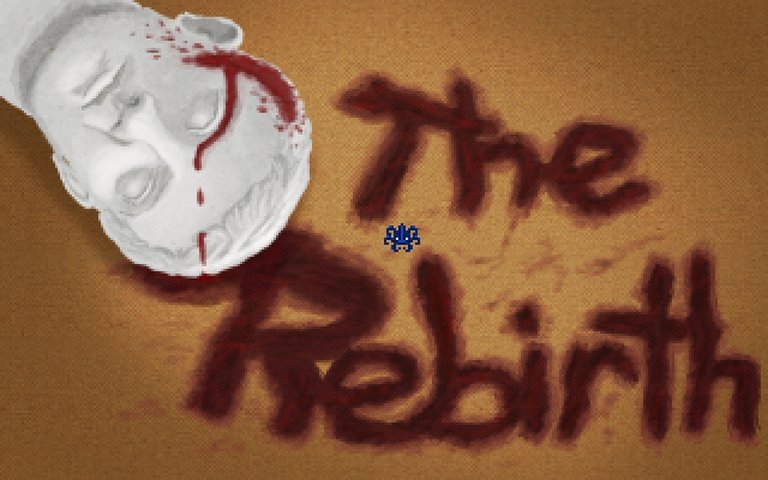
The Rebirth is a free, short 2D click-and-point adventure game set in a contemporary government building. Players control a nameless official who, after receiving a phone call from his pregnant wife and witnessing the announcement of a peace treaty on TV, finds himself and his assistant locked inside by emergency shutters, leading to a brief, inventory-based puzzle experience designed for the ROW 8 Competition.
The Rebirth Reviews & Reception
metacritic.com (92/100): Final Fantasy VII Rebirth is one of the finest games in Square Enix’s entire history.
reddit.com : this is, by all means, a masterpiece of a game.
ign.com : Rebirth is an amazing journey despite that.
inverse.com (100/100): It’s quite simply the best Final Fantasy game in two decades.
The Binding of Isaac: Rebirth: A Definitive Review
Introduction: The genesis of a cult phenomenon
In the vast landscape of independent gaming, few titles have achieved the mythical status of The Binding of Isaac: Rebirth. Born from the unlikely fusion of a religious parable, a game jam deadline, and the technical constraints of Adobe Flash, this 2014 remake-cum-sequel transcended its humble origins to become a cornerstone of the modern roguelike genre. Its developer, Edmund McMillen, channeled a deeply personal, often unsettling childhood into a game that is simultaneously a scatological comedy and a profound tragedy. This review will argue that Rebirth is not merely a successful indie title but a pivotal work of game design—a brutally difficult, endlessly creative, and thematically rich experience that redefined what a “roguelike” could be for a mass audience. Its legacy is evident in the legion of “Isaac-likes” that followed, and its DNA—procedural generation, synergistic item systems, and permadeath—has become a blueprint for modern roguelites. While an obscure 2013 adventure game titled The Rebirth (Moby ID: 200013) exists, the term “Rebirth” in contemporary gaming discourse unequivocally refers to McMillen’s masterpiece, and this analysis will focus exclusively on that seminal title.
Development History & Context: From Flash limitation to renaissance
The Binding of Isaac originally emerged in 2011 from a game jam following the success of McMillen’s Super Meat Boy. Created with Florian Himsl in Adobe Flash, its rapid development and lo-fi aesthetic were direct products of the technology and ethos of its time. The game’s unexpected popularity on Steam revealed a hunger for its unique blend of The Legend of Zelda’s top-down exploration and punishing roguelike structure, wrapped in a narrative of religious horror inspired by McMillen’s own upbringing. However, Flash’s technical limitations soon became a bottleneck. As McMillen detailed in a postmortem, expanding the game with a second expansion, Wrath of the Lamb, was possible, but further growth was untenable.
Enter Nicalis, a publisher/developer known for bringing cult indie titles like Cave Story to consoles. Tyrone Rodriguez’s offer to port Isaac to consoles was contingent on rebuilding the game from the ground up. McMillen, wary of business dealings after Super Meat Boy, deferred to Nicalis on the business side but insisted on a complete overhaul. Thus, The Binding of Isaac: Rebirth was announced in late 2012 as a “remake” with 16-bit style graphics and all the content cut from the original Flash version. The vision was explicitly to create a definitive, polished edition that could live on modern consoles and PC. Development initially targeted the Nintendo 3DS as an homage to Zelda, but Nintendo’s content concerns and hardware limitations led to a pivot toward the PlayStation 4 and Vita, with later ports to Wii U, New 3DS, Xbox One, iOS, and Nintendo Switch—a testament to Nicalis’s porting prowess. The game’s engine, rebuilt for 60 FPS stability, became the foundation for a series of expansions that would more than double the original’s content.
Narrative & Thematic Deep Dive: A basement of biblical proportions
At its surface, Rebirth’s plot is a teeth-grittingly simple retelling of the Binding of Isaac: a mother, hearing “God’s” voice, locks her son in his room to purify him of sin and ultimately plans to sacrifice him. Isaac flees into a monstrous basement. Yet, the genius of the narrative lies not in its premise but in its execution through gameplay and fragmented endings. The story is not told through cutscenes but through environmental storytelling, item descriptions, and 22 distinct endings unlocked by specific achievements. Defeating Mom—whose sprite is literally her giant, stomping legs—triggers a cutscene where a Bible knocks her out, only to reveal her alive behind Isaac. This cyclical, hallucinatory structure implies the entire dungeon crawl is a dying fantasy or a psychological escape from a more terrible reality.
The expansions, particularly Repentance, excavate the subtext. We learn of an absent father, of sustained maternal abuse, and of Isaac’s overwhelming guilt manifesting as the game’s grotesque enemies (many representing sins, childhood fears, or bodily functions). The final ending sees Isaac ascending to Heaven as his life flashes before his eyes, only for the narrator to reveal himself as the father, offering to rewrite the story. This meta-textual layer transforms the game from a simple horror-comedy into a devastating exploration of trauma, narrative agency, and the impossibility of escaping one’s past. The圣经 allegory is not reverent but critical, using its imagery to question blind faith and parental authority. The游戏’s tone masterfully balances juvenile humor (tears as weapons, piles of poop as obstacles) with moments of genuine pathos, making its emotional core as unpredictable and impactful as its item synergies.
Gameplay Mechanics & Systems: The beautiful chaos of synergy
Rebirth’s gameplay is a masterclass in elegant complexity. At its core, it is a top-down, twin-stick shooter where Isaac moves with WASD/left stick and fires tears with the mouse/right stick. The genius lies in the deceptively simple rules that spawn near-infinite complexity:
- Roguelike Foundation: Procedurally generated rooms on a seed-based system, permadeath, and resource management (hearts, bombs, keys, coins) create a tense, resourceful loop. Seeded runs can be shared, but they disable achievements, preserving the purity of the random challenge.
- The Item Ecosystem: This is the game’s beating heart. With over 450 items (160 new to Rebirth), effects range from stat boosts (damage, speed, health) to complete mechanic overhauls (flying, spectral tears, summoning familiars). Items are divided into passive (permanent, stackable) and active (single-use or recharging). The system’s brilliance is in its synergies—combinations that create emergent, often hilarious or overpowered effects. For instance, the Brimstone laser combined with Tech X’s laser grid creates a screen-clearing web; Mom’s Knife with * Epic Fetus* allows remote-controlled explosive deliveries. These aren’t just bonuses; they redefine the player’s relationship with the game’s physics. The thrill of discovering a “build” that trivializes a previously insurmountable challenge is the core dopamine loop.
- Character Progression & Unlocks: Beyond item collection, players unlock 33 characters, each with unique starting stats and mechanics (e.g., Azazel starts with a short-range brimstone laser; Eden has randomized stats per run). Completion Marks track progress, and the sheer number of secrets (like the Keeper, unlocked via an elaborate ARG) rewards obsessive play.
- Cooperative Play: Rebirth introduced local co-op, where a second player controls a “familiar” with the same items as Player 1, costing one heart. This system, expanded to 4-player co-op in Repentance, is mechanically clever but limited—the follower cannot use bombs or carry items, creating a symbiotic but asymmetric relationship.
- UI & Accessibility: The interface is minimalist, a point of contention. Item descriptions are famously cryptic (“???”), forcing players to learn through experimentation or community wikis. This design choice embodies the game’s harsh, unforgiving ethos but creates a significant barrier to entry. The lack of in-game synergy explanations is a deliberate mystery but a genuine flaw for newcomers.
The expansions (Afterbirth, Afterbirth+, Repentance) layered new systems: Greed Mode, new bosses like the Hush, transformations (e.g., the Golem form from collecting 5 mechanical items), and a bestiary. Afterbirth+’s modding support via Lua was a landmark, allowing the community to shape the game’s future, though the API was criticized as underdeveloped.
World-Building, Art & Sound: A profoundly unsettling aesthetic
The game’s world is the basement of Isaac’s home, a Freudian nightmare rendered in a deliberately crude, 16-bit pixel art style. McMillen called the original Flash graphics an “eyesore,” and Rebirth’s visual redesign by Matt Kap and others retained the rough charm but added detail, animation, and a cohesive, grimy palette. The environments are a cascade of filth: Caves filled with rocks and spiders, Depths with sewage, Necropolis with bones, and the infamous Utero, a pulsating, fleshy womb-like chamber dripping with blood and placenta. The art is not just gross; it’s meticulously balanced between cartoonish exaggeration and genuine horror. Enemy designs are iconic mutations of everyday objects (a Gish is a sentient pile of gloop, Dingle is a dangling, screaming head).
The sound design, composed by Ridiculon (Matthias Bossi and Jon Evans), is a soundtrack of unsettling beauty. It shifts from melodic, almost whimsical tunes on the surface floors to droning, industrial ambient noise in deeper layers like Sheol and the Cathedral. The contrast mirrors the narrative descent from childhood innocence to hellish confrontation. The audio cues are critical gameplay information—the shriek of a Knight enemy or the chime of a new item room are as important as visual tells. Together, the audiovisual package creates an atmosphere of pervasive dread that is paradoxically inviting, making each run feel like a descent into a uniquely personal hell.
Reception & Legacy: From niche curiosity to industry titan
At launch, Rebirth was met with universal critical acclaim. Aggregators show scores of 86/100 on PC (Metacritic) and 88/100 on PS4. Reviewers praised its endless replayability, addictive synergy hunting, and dark thematic depth, while criticizing its impenetrable opacity and occasionally unfair RNG. The iOS port received “universal acclaim,” a remarkable feat for a game of its complexity.
Commercially, it was a juggernaut. By July 2015, combined sales of Rebirth and the original Isaac exceeded five million copies. Its success was fueled by the burgeoning Let’s Play culture on YouTube, where the game’s unpredictable nature and dramatic highs made for compelling viewing. More importantly, its influence is immeasurable. It directly inspired a generation of roguelites: Enter the Gungeon, Dead Cells, Wizard of Legend, and countless others adopted its core loop of “one more run” powered by item synergy. The idea that a game could be endlessly replayable through combinatorial explosion rather than pure skill became a genre staple.
The post-launch support was unprecedented for an indie title. The four major expansions added more content than many full games, culminating in Repentance (2021), which integrated the acclaimed fan mod Antibirth and added online co-op. This symbiotic relationship with the modding community—where official expansions often incorporated community ideas—set a new standard for developer-player collaboration. However, the development was not without strife. McMillen’s planned ARG for Afterbirth was partially compromised by data-mining, and the relationship with publisher Nicalis became publicly strained before mending, a cautionary tale about indie-publisher dynamics.
Conclusion: An imperfect, immortal masterpiece
The Binding of Isaac: Rebirth is a game of profound contradictions. It is brutally difficult yet accessible in short bursts; its narrative is a deeply personal tragedy wrapped in juvenile humor; its systems are transparent in their rules but opaque in their interactions. Its flaws—the opaque item descriptions, the occasional “unfair” runs due to poor RNG, the dated control scheme compared to modern twin-stick shooters—are inseparable from its identity. To smooth them over would be to neuter the experience.
Yet, its achievements dwarf its shortcomings. It is a flawless expression of its creator’s vision, a game that uses procedural generation not just for replayability but as a thematic device—each run is a new permutation of Isaac’s trauma. Its influence on game design is comparable to Rogue or Spelunky, democratizing the roguelike and proving that simplicity of control could shelter staggering depth. Nearly a decade after its release, with a dedicated player base still uncovering secrets, it remains a living artifact. It is not just a great roguelike; it is the roguelike that changed everything. In the canon of video game history, The Binding of Isaac: Rebirth stands as a monument to the power of personal, uncompromising indie development—a game that is as much about the player’s relationship with chance and failure as it is about shooting tears at grotesque monsters. It is, unequivocally, an immortal classic.