
- Release Year: 1997
- Platforms: Windows
- Publisher: SouthPeak Interactive LLC
- Developer: Learn Technologies Interactive, Inc., R/GA Interactive
- Genre: Puzzle
- Perspective: Side view
- Game Mode: Single-player
- Gameplay: Energy management, Programming, Puzzle-solving, Robot assembly
- Setting: Futuristic, Sci-fi
- Average Score: 60/100
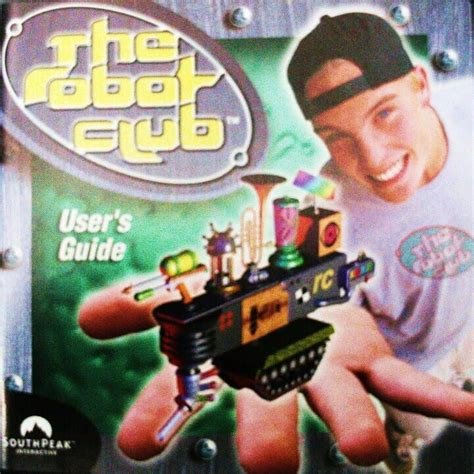
Description
In ‘The Robot Club’, a new college student at Omniscience University discovers a secretive Robot Club and must complete a series of tests to become a member. The game is a puzzle adventure where players assemble and program robots using a simplified LOGO-like language to perform tasks efficiently in a workshop setting. Each mission requires careful component selection and command input to navigate hazards, conserve energy, and avoid enemy robots, with increasing complexity in later levels.
The Robot Club Free Download
The Robot Club Reviews & Reception
mobygames.com (60/100): A new college student of Omniscience stumbles upon the Robot Club and has to undergo tests to join the club and become a fully fledged member.
The Robot Club: A Forgotten Gem of Educational Gaming
Introduction
In the late 1990s, the gaming landscape was dominated by titles that pushed the boundaries of graphics, storytelling, and gameplay mechanics. Amidst this era of innovation, The Robot Club emerged as a unique blend of education and entertainment. Developed by Learn Technologies Interactive and R/GA Interactive, and published by SouthPeak Interactive LLC, this 1997 puzzle game offered players a chance to step into the shoes of a college student at Omniscience University, tasked with joining a secretive Robot Club by solving a series of robotics-based challenges.
The Robot Club is a fascinating artifact of its time, combining the nascent appeal of educational gaming with the burgeoning popularity of full-motion video (FMV) and puzzle-solving mechanics. While it may not have achieved the commercial success or critical acclaim of its contemporaries, its innovative approach to teaching programming logic through gameplay makes it a noteworthy entry in the annals of video game history.
This review aims to provide an exhaustive analysis of The Robot Club, delving into its development history, narrative and thematic elements, gameplay mechanics, world-building, and its lasting legacy. By examining the game through a critical lens, we can appreciate its strengths, acknowledge its flaws, and understand its place in the evolution of educational and puzzle games.
Development History & Context
The Studio and Creators’ Vision
The Robot Club was a collaborative effort between Learn Technologies Interactive and R/GA Interactive. Learn Technologies Interactive, known for their focus on educational software, brought a pedagogical approach to the game’s design. Their goal was to create a game that not only entertained but also educated players in the fundamentals of programming and logical thinking.
R/GA Interactive, on the other hand, contributed their expertise in multimedia and interactive design. Their involvement ensured that the game featured engaging visuals and a cohesive user interface, blending the educational content with an appealing presentation.
The creators’ vision was to bridge the gap between learning and play. By setting the game in a college environment and framing the challenges as tasks to join a secret club, they aimed to make the educational content feel like a natural part of the gaming experience. This approach was innovative for its time, as educational games often struggled to balance fun and learning effectively.
Technological Constraints of the Era
Released in 1997, The Robot Club was developed during a period of rapid technological advancement in the gaming industry. The mid-to-late 1990s saw the transition from 2D to 3D graphics, the rise of CD-ROM as a dominant media format, and the increasing use of FMV in games.
The Robot Club utilized CD-ROM technology to deliver its content, including FMV sequences that introduced missions and provided narrative context. The game’s system requirements reflected the technological standards of the time, with a minimum of a Pentium 75 MHz CPU, 16 MB of RAM, and a 2X CD-ROM drive. These specifications were modest by today’s standards but were typical for mid-to-high-end PCs in the late 1990s.
The game’s use of FMV was a double-edged sword. While it added a layer of immersion and narrative depth, it also presented technical challenges. The FMV sequences required significant storage space and could be demanding on the hardware of the time, potentially leading to performance issues on lower-end systems.
The Gaming Landscape at the Time of Release
The late 1990s were a golden age for puzzle and educational games. Titles like The Incredible Machine, Myst, and Where in the World is Carmen Sandiego? demonstrated the potential of games to engage players intellectually while providing entertainment. The Robot Club entered this landscape with a unique proposition: teaching programming logic through a narrative-driven puzzle game.
The gaming industry was also experiencing a shift towards more immersive storytelling, with games like Final Fantasy VII and Half-Life setting new standards for narrative depth and player engagement. The Robot Club, with its FMV sequences and college setting, attempted to tap into this trend by creating a more immersive and relatable experience for players.
Narrative & Thematic Deep Dive
Plot and Setting
The Robot Club places players in the role of a new college student at Omniscience University. The protagonist stumbles upon the Robot Club, a secretive organization that challenges its members with a series of robotics-based puzzles. To join the club and become a fully fledged member, the player must complete a series of missions compiled into chapters.
The narrative is delivered through FMV sequences featuring live-action actors portraying the members of the Robot Club. These sequences serve as briefings for each mission, providing context and motivation for the player’s actions. The setting of a college campus and the secretive nature of the Robot Club add a layer of intrigue and relatability, making the game’s premise engaging for its target audience of young adults and older children.
Characters and Dialogue
The characters in The Robot Club are primarily the members of the Robot Club, who appear in the FMV sequences. These characters are portrayed as quirky and enthusiastic individuals, each with their own unique personalities and motivations. The dialogue is designed to be engaging and humorous, with a touch of the “MTV-style” aesthetic that was popular at the time.
While the characters are not deeply developed, their interactions and the overall tone of the dialogue contribute to the game’s lighthearted and fun atmosphere. The use of live-action actors in the FMV sequences was a bold choice, and while it may not have aged as gracefully as some other aspects of the game, it added a layer of authenticity and immersion that was innovative for its time.
Underlying Themes
At its core, The Robot Club is about problem-solving, logical thinking, and the joy of creation. The game’s narrative and gameplay mechanics are designed to teach players the fundamentals of programming and robotics in an engaging and interactive way. By framing these educational elements within the context of a secret club and a series of challenges, the game makes learning feel like a rewarding and exciting endeavor.
The themes of teamwork and collaboration are also present, as the player interacts with the members of the Robot Club and competes against their creations. The game encourages players to think creatively and strategically, fostering a sense of accomplishment and mastery as they progress through the challenges.
Gameplay Mechanics & Systems
Core Gameplay Loops
The core gameplay of The Robot Club revolves around assembling and programming robots to complete specific tasks. Each mission takes place in a workshop environment, where the player must first assemble a robot using the correct components. Once the robot is assembled, the player must program it to perform a task, usually involving motion and interaction with the environment.
The programming interface is designed to be accessible and intuitive, using a simplified version of the Turtle LOGO language. Players select components and issue commands, creating a sequence of actions that the robot will execute. The goal is to program the robot to complete the task efficiently, taking the most optimal route and avoiding hazards and enemy robots.
Combat and Character Progression
While The Robot Club is primarily a puzzle game, it does feature elements of combat and competition. Enemy robots and hazards can damage the player’s robot, adding a layer of strategy and risk management to the gameplay. Players must balance the need to complete tasks efficiently with the need to conserve their robot’s energy and avoid damage.
Character progression in The Robot Club is tied to the completion of missions and the acquisition of new components and programming commands. As players progress through the chapters, they unlock new gimmicks and tasks, increasing the complexity and variety of the challenges. This progression system ensures that the game remains engaging and rewarding throughout its duration.
UI and Innovative Systems
The user interface of The Robot Club is designed to be user-friendly and intuitive, with menu structures that guide players through the assembly and programming processes. The game’s use of FMV sequences for mission briefings and narrative delivery is an innovative system that adds a layer of immersion and context to the gameplay.
One of the standout features of The Robot Club is its customization options. Players can customize their robots with trendy stickers and emblems, adding a personal touch to their creations. This feature, while not essential to the gameplay, enhances the player’s sense of ownership and investment in their robot.
World-Building, Art & Sound
Setting and Atmosphere
The setting of The Robot Club is a college campus, with the Robot Club’s workshop serving as the primary location for the gameplay. The workshop is depicted in a 2D side-view perspective, with a fixed/flip-screen visual style that was common in puzzle games of the era. The atmosphere is one of creativity and innovation, with the workshop serving as a hub for the player’s robotics experiments.
The use of FMV sequences for the narrative elements adds a layer of realism and immersion to the setting. The live-action actors and the college environment create a relatable and engaging backdrop for the gameplay, making the player feel like a part of the Robot Club.
Visual Direction
The visual direction of The Robot Club is a blend of 2D renderings and FMV sequences. The robot designs are simple and functional, with a focus on clarity and ease of use. The workshop environment is depicted in a clean and organized manner, with a color palette that is bright and inviting.
The FMV sequences feature live-action actors in a college setting, with a style that is reminiscent of MTV and other youth-oriented media of the time. While the visual quality of these sequences may not hold up to modern standards, they were innovative and engaging for their time, adding a layer of authenticity to the game’s narrative.
Sound Design
The sound design of The Robot Club is functional and unobtrusive, with a focus on providing clear and helpful audio cues. The game features a simple and catchy soundtrack that complements the lighthearted and fun atmosphere. Sound effects are used to provide feedback on the player’s actions, such as the assembly of components and the execution of programming commands.
The FMV sequences feature dialogue and ambient sounds that enhance the immersion and narrative delivery. The voice acting is competent and engaging, with a tone that matches the game’s overall aesthetic.
Reception & Legacy
Critical and Commercial Reception
The Robot Club received a mixed reception upon its release. The game was praised for its innovative approach to educational gaming and its engaging narrative delivery through FMV sequences. However, it was also criticized for its technical limitations and the occasional clunkiness of its gameplay mechanics.
The game’s only recorded critic review comes from Computer Gaming World (CGW), which gave it a score of 60%. The review described the game as “overly chatty and a bit clunky, but budding engineers and logicians could do a lot worse.” This lukewarm reception reflects the game’s status as a niche title that appealed to a specific audience but failed to achieve widespread acclaim.
Commercially, The Robot Club did not achieve significant success. Its educational focus and unique gameplay mechanics limited its appeal to a broader audience, and it remained a relatively obscure title in the gaming landscape of the late 1990s.
Evolution of Reputation
Over the years, The Robot Club has gained a cult following among fans of educational and puzzle games. Its innovative approach to teaching programming logic and its engaging narrative delivery have been recognized as ahead of their time. The game’s use of FMV sequences and its college setting have also been appreciated for their uniqueness and charm.
While The Robot Club may not be remembered as a classic or a groundbreaking title, it has earned a place in the hearts of those who appreciate its blend of education and entertainment. Its legacy is one of innovation and creativity, demonstrating the potential of games to teach and engage players in meaningful ways.
Influence on Subsequent Games
The Robot Club has had a limited but notable influence on subsequent games in the educational and puzzle genres. Its approach to teaching programming logic through gameplay has inspired other titles that seek to make learning fun and interactive. Games like The Robot Factory and Haiku, the Robot can be seen as spiritual successors to The Robot Club, building on its foundations and expanding its ideas.
The game’s use of FMV sequences and its narrative-driven approach to puzzle-solving have also influenced other titles that seek to blend storytelling with gameplay. While The Robot Club may not have been a commercial success, its innovative ideas have left a lasting impact on the gaming industry.
Conclusion
The Robot Club is a fascinating and innovative game that blends education and entertainment in a unique and engaging way. Its narrative-driven approach to puzzle-solving, its use of FMV sequences, and its focus on teaching programming logic make it a noteworthy entry in the annals of video game history.
While the game may not have achieved the commercial success or critical acclaim of its contemporaries, its innovative ideas and engaging gameplay mechanics have earned it a cult following among fans of educational and puzzle games. The Robot Club demonstrates the potential of games to teach and engage players in meaningful ways, and its legacy continues to inspire and influence subsequent titles in the genre.
In the final analysis, The Robot Club is a game that deserves to be remembered and appreciated for its creativity, innovation, and unique approach to educational gaming. It may not be a classic or a groundbreaking title, but it is a fascinating artifact of its time and a testament to the power of games to educate and entertain.