
- Release Year: 2012
- Platforms: Android, Fire OS, iPad, iPhone, Nintendo Switch, Windows
- Publisher: Fireproof Studios Ltd., Team17 Digital Limited
- Developer: Fireproof Games Ltd
- Genre: Puzzle
- Perspective: First-person
- Game Mode: Single-player
- Gameplay: Object manipulation, Point and select, Puzzle
- Setting: Mystery Room
- Average Score: 75/100
Description
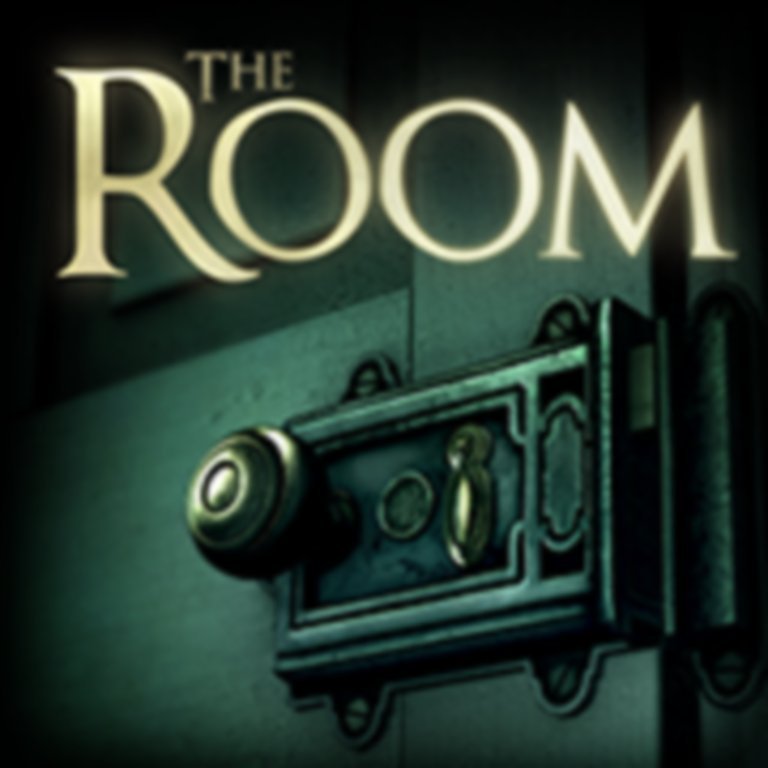
The Room is a first-person puzzle adventure game set in a shadowy, mysterious chamber where the player must solve increasingly complex mechanical puzzles to unlock an elaborate safe-like box at the center, progressing through four chapters of escalating difficulty while manipulating objects in a free-form environment with touch controls for rotation, zooming, and interaction.
Gameplay Videos
Where to Get The Room
PC
Patches & Mods
Guides & Walkthroughs
Reviews & Reception
opencritic.com (76/100): The quality of The Room and the atmosphere it conjures is undeniable.
metacritic.com (74/100): A fantastic puzzle game with a sense of mystery and accomplishment.
slantmagazine.com : The gameplay does not, and without a compelling story the experience ends up being sadly forgettable.
The Room: Review
Introduction
Imagine standing in a dimly lit chamber, your fingers hovering over an ornate, enigmatic box that whispers secrets of forbidden knowledge. This is the seductive pull of The Room, a 2012 puzzle masterpiece from Fireproof Games that transformed the humble mobile touchscreen into a portal of tactile wonder and creeping dread. Released initially for iOS amid the explosive growth of mobile gaming, The Room quickly ascended from indie obscurity to critical darling, earning Apple’s iPad Game of the Year and a BAFTA for Best British Game. Its legacy endures not just as a commercial juggernaut—selling over 6.5 million copies—but as a blueprint for how intimate, physics-driven puzzles could evoke the eerie intimacy of classic escape-room adventures like Myst or The 7th Guest, all while leveraging the iPad’s revolutionary interface. In this exhaustive review, I argue that The Room is a seminal achievement in puzzle design, masterfully fusing immersive mechanics, subtle horror, and minimalist narrative to redefine mobile gaming as an art form worthy of console pedigree.
Development History & Context
Fireproof Games emerged from the ashes of Criterion Studios, where six veterans of the high-octane Burnout series grew disillusioned with the grind of AAA development. In 2008, they founded the studio in Guildford, UK, pivoting to outsourced art assets for titles like LittleBigPlanet, DJ Hero, and Split/Second. By 2012, with mobile gaming’s boom—fueled by the iPhone 4S and iPad 2—they saw an opportunity to craft their debut original IP. Budget constraints (£160,000 for the iPad version) ruled out console ambitions, but co-founders like Barry Meade envisioned a title that embraced mobile’s strengths: intuitive touch controls and short, immersive sessions. “We wanted to make the best iOS game we could, not just port a console game,” Meade later reflected, drawing inspiration from tactile successes like Cut the Rope and Zen Bound.
Development on The Room began in January 2012, helmed by just two core team members—designers Robert Dodd and Mark Hamilton—while the rest of the 14-person studio handled contracts. Built in Unity for its affordability and cross-platform potential, the game drew from Asian puzzle boxes: intricate wooden contraptions with hundreds of steps, blending beauty and bafflement. A physics engine ensured every gear, lever, and panel felt weighted and responsive, mimicking real-world manipulation. Writer Oliver Reid-Smith infused eldritch notes, while composer David Newby scored haunting, minimalist ambiance with FMOD. Technological limits of the era—iPad 2’s lack of advanced gyro support—pushed innovation in touch gestures: swipes to rotate, pinches to zoom, double-taps to focus.
The 2012 gaming landscape was a mobile Wild West: Angry Birds dominated casual play, but premium puzzles like Monument Valley were nascent. The Room launched on September 12, 2012, for iPad (9+ rating), timed perfectly for the post-Infinity Blade hunger for sophisticated iOS fare. A free “Pocket” version followed for iPhone 4S to avoid compatibility backlash, and Android arrived via Humble Bundle in 2013. Ports to PC (2014) and Switch (2018, via Team17) rebuilt controls for mouse and Joy-Con, highlighting mobile’s constraints as features: no controller forced pure tactile intuition.
Narrative & Thematic Deep Dive
At its core, The Room is a tale of hubris and the void, unfolding through fragmented epistles rather than overt dialogue or characters. The player embodies an unnamed protagonist, lured to a shadowy chamber by a letter from “A.S.,” a tormented researcher promising “answers” within a locked safe. As puzzles unlock nested boxes, A.S.’s notes reveal his descent: initial wonder at discovering “Null,” a fifth classical element beyond earth, air, fire, and water—ethereal, invisible matter that bends reality. “Null is the space between,” A.S. writes, his tone shifting from clinical curiosity to frantic ecstasy. Early letters detail experiments with a special lens to perceive Null’s glow, summoning visions of otherworldly geometries and whispers from the abyss.
The narrative eschews traditional arcs for epistolary fragments, a la House of Leaves, building dread through implication. A.S. attempts to invoke the demon Astaroth via Null rituals, blurring science and occultism; his madness manifests in scrawled warnings like “It sees you now” and pleas for the player to flee. No voiced characters or branching paths exist—dialogue is absent, replaced by A.S.’s increasingly unhinged prose, which the player deciphers amid puzzles. Themes probe forbidden knowledge: Null symbolizes the unknown, a power source that reanimates tissue and erases souls, echoing Lovecraftian cosmic horror. The game’s four chapters escalate from isolated box to labyrinthine safe, culminating in an epilogue where the lens shatters, revealing a Null gateway. The protagonist—mirroring A.S.—steps through, implying inescapable corruption.
Subtly, The Room critiques curiosity’s cost: A.S.’s notes warn of Null’s soul-devouring hunger, yet allure the player forward. In sequels (hinted via free 2013 DLC), this expands into multiversal imprisonment, but here it’s intimate—a single room as microcosm for existential unraveling. Flaws emerge in opacity: the story’s vagueness can feel underdeveloped, more atmospheric prop than cohesive plot, yet this restraint amplifies immersion, forcing players to project dread onto the boxes’ cold brass.
Gameplay Mechanics & Systems
The Room‘s genius lies in its deceptively simple core loop: manipulate a first-person puzzle box via point-and-select interface, uncovering mechanisms to access inner chambers. No combat or progression trees clutter the experience—it’s pure deduction, divided into four escalating chapters, each introducing a new box with mounting complexity (2-3 hours total playtime). Start with a tutorial: swipe to rotate the box 360 degrees, pinch to zoom, double-tap to inspect nooks. Inventory (left-screen slots) holds keys, pens, and the Null lens—a game-changer revealing hidden symbols in violet haze.
Mechanics innovate through physics simulation: gears grind with inertial heft, lasers refract realistically, folding keys adapt to locks via trial-and-error. Puzzles blend observation (align Null fragments for codes) and interaction (tilt for marble runs, trace symbols to activate runes). A hint system—vague icons via upper-left query mark—nudges without spoiling, in three escalating steps. UI is minimalist: no HUD overloads the screen; inventory icons glow subtly, and chapter transitions fade seamlessly.
Strengths shine in tactile feedback: touch (or mouse cursor) feels alive, evoking Hellraiser‘s Lament Configuration. Innovations like the lens add layers—manipulate views to reassemble ethereal patterns, rewarding spatial intuition. Character “progression” is box-to-box evolution: Chapter 1 teaches basics (unlocking drawers), Chapter 4 layers gyro-tilt mazes and multi-lock sequences. Flaws? Repetition creeps in—laser alignments and key fittings recur, risking monotony—and logic can veer “video game-y” (brute-force clicking over elegant deduction). On Switch/PC ports, Joy-Con motion controls approximate touch but fatigue hands; touchscreens remain ideal. No replayability beyond speedruns, but the loop’s satisfaction— that “click” of revelation—makes it addictive.
World-Building, Art & Sound
The Room‘s “world” is singular: a fog-shrouded chamber, lit only on the central box, evoking isolation and antiquity. No expansive maps—it’s a claustrophobic diorama, shadows concealing details until the Null lens unveils glowing runes and impossible geometries. Atmosphere builds via implication: the room as prison, boxes as gateways to Null’s realm—a void where time warps and souls dissolve. This micro-scale world-building amplifies intimacy; each chapter’s box evolves from brass safe to crystalline horror, nested infinities suggesting vast, eldritch depths.
Visual direction, powered by Unity, is a triumph: hyper-detailed 3D models boast ornate engravings, reflective metals, and subtle animations (steam hissing from valves, eyes in wood carvings blinking via lens). iOS origins shine in polish—anti-aliased edges, dynamic lighting—while PC/Switch ports upscale to 1080p with enhanced textures. Art style blends Victorian steampunk with cosmic surrealism: boxes gleam like Fabergé eggs corrupted by otherworldly voids.
Sound design elevates immersion: Newby’s score weaves piano motifs and ethereal drones, swelling with tension during puzzles. FMOD handles spatial audio—creaks, clicks, and whispers pan realistically, Null elements humming with low-frequency menace. No voice acting, but subtle effects (distant echoes, heartbeat pulses) heighten dread, making the silence between solves palpably eerie. Collectively, these forge an experience of hushed awe, where art and sound don’t just support puzzles—they ensnare the senses, turning a box into a portal of unease.
Reception & Legacy
Upon iOS launch, The Room exploded: 1.4 million iPad sales by March 2013, topping App Store charts and breaking even in week one. Critics lauded its innovation—Slide to Play (100/100) called it a “beautiful, mysterious game”; Pocket Gamer (9/10) praised conversion of point-and-click fans. MobyGames aggregates 81% (39 critics), with Common Sense Media (100%) hailing touch mastery and suspense. PC (73/100) and Switch (80/100) ports drew mixed notes on controls but affirmed timeless appeal—Nintendo Life (7/10) celebrated its “seminal” status, though shortness irked some (e.g., Trusted Reviews: 4/5, critiquing value).
Commercially, it paved sequels: The Room Two (2013), Three (2015), Old Sins (2018), and VR spin-off (2020), totaling 11.5 million sales by 2016. Reputation evolved from mobile novelty to genre touchstone; early praise for atmosphere overshadowed puzzle critiques, but retrospectives (e.g., TouchArcade, 4/5) emphasize influence on tactile titles like The House of Da Vinci or Gorogoa. Industry impact? It validated premium mobile puzzles, inspiring Unity-based indies and proving small teams (Fireproof’s 22 credits) could rival AAA polish. Drawbacks like brevity persist, but its legacy as a “puzzle box within puzzle boxes” endures, influencing escape-room VR and narrative-driven mobiles.
Conclusion
The Room distills puzzle gaming to its essence: curiosity’s thrill laced with dread, where every twist unveils not just mechanisms, but the fragility of reality. Fireproof’s lean vision—tactile controls, haunting Null lore, exquisite art—overcomes era constraints to deliver unadulterated immersion, flaws like repetition notwithstanding. As the inaugural chapter in a storied series, it earns an indelible place in video game history: a 9/10 triumph, essential for puzzle aficionados, and a reminder that true innovation blooms in confined spaces. If mobile gaming’s golden age sought a crown jewel, this enigmatic box wears it eternally.