
- Release Year: 2012
- Platforms: Windows
- Publisher: Jonas Kyratzes
- Developer: Jonas Kyratzes, Verena Kyratzes
- Genre: Adventure
- Perspective: 1st-person
- Game Mode: Single-player
- Gameplay: Point-and-click, Puzzle elements
- Setting: Fantasy, Political allegory
- Average Score: 90/100
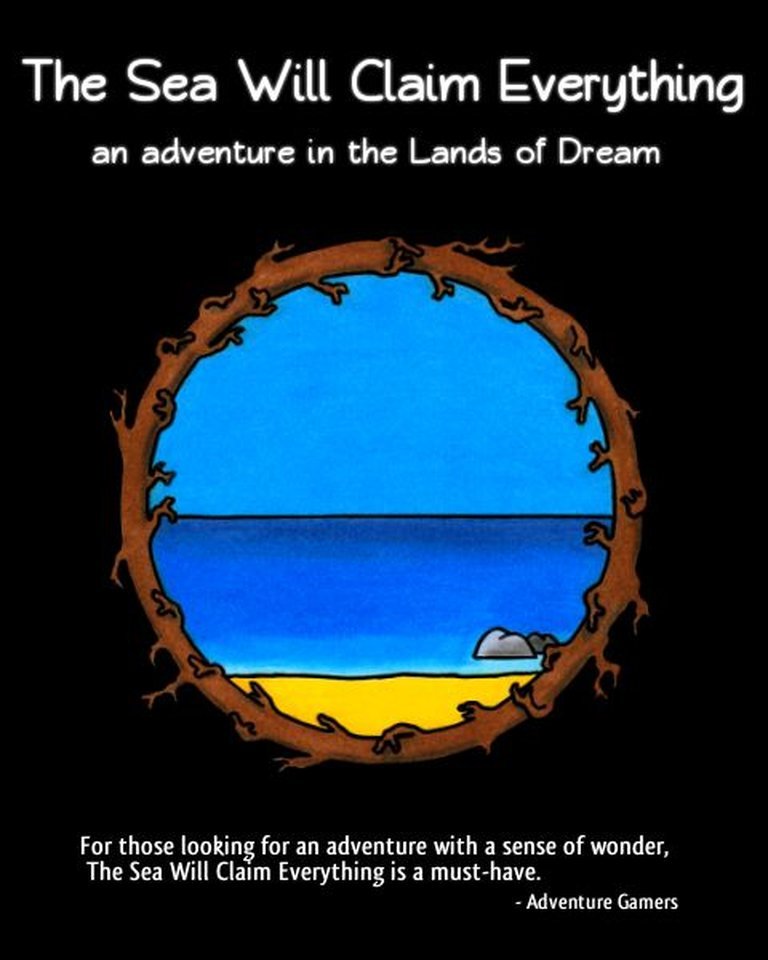
Description
The Sea Will Claim Everything is a point-and-click adventure game set in the whimsical yet politically charged Lands of Dream, where players must unravel the schemes of the tyrannical Lord Urizen to save the Fortunate Isles. Blending rich storytelling, hand-drawn art, and philosophical themes, the game offers a meditative, puzzle-driven experience that rewards exploration and patience, all while weaving a literate allegory that may mirror real-world struggles.
Gameplay Videos
The Sea Will Claim Everything Patches & Updates
The Sea Will Claim Everything Guides & Walkthroughs
The Sea Will Claim Everything Reviews & Reception
metacritic.com (90/100): The final picture of the game, as well as the unbelievable, beautiful, emotionally charged adventure that precedes it, are clearly on a league on their own.
jayisgames.com (90/100): The Sea Will Claim Everything will appeal to you if you prefer something you can sink into a lose yourself in for a long time, like a hot bubble bath with a good book.
The Sea Will Claim Everything: A Masterpiece of Narrative and Whimsy
Introduction
The Sea Will Claim Everything is not just a game—it is a portal to another world, a dreamlike odyssey that blends political allegory, philosophical musings, and whimsical storytelling into an unforgettable experience. Released in 2012 by Jonas and Verena Kyratzes, this point-and-click adventure stands as a testament to the power of indie game development, proving that a game need not rely on cutting-edge graphics or voice acting to deliver a profound emotional and intellectual impact. Instead, it thrives on its rich narrative, hand-drawn art, and a hauntingly beautiful soundtrack by Chris Christodoulou.
This review will delve deeply into the game’s development history, narrative and thematic depth, gameplay mechanics, world-building, and its lasting legacy. By the end, it will be clear why The Sea Will Claim Everything is not just a game to be played, but an experience to be savored.
Development History & Context
The Creators and Their Vision
The Sea Will Claim Everything is the first commercial release from Jonas and Verena Kyratzes, a husband-and-wife team whose creative synergy is evident in every aspect of the game. Jonas, the writer, and Verena, the artist, had already established themselves in the indie scene with their Lands of Dream series, a collection of free games that explored surreal, dreamlike worlds. The Sea Will Claim Everything is the fourth entry in this series, but it marks a significant evolution in scope and ambition.
The game was developed using Multimedia Fusion, a tool that allowed the Kyratzes to focus on their strengths—storytelling and art—without being bogged down by complex programming. This choice reflects their commitment to crafting a deeply personal and politically charged narrative, one that resonates with the economic and social upheavals of the early 2010s, particularly the Greek debt crisis.
The Gaming Landscape of 2012
2012 was a pivotal year for indie games. Titles like Journey, Fez, and The Walking Dead demonstrated that small teams could create emotionally resonant experiences that rivaled, and often surpassed, those of AAA studios. The Sea Will Claim Everything emerged in this fertile environment, offering something distinct: a game that was unapologetically literary, philosophical, and political.
At the time, point-and-click adventures were experiencing a renaissance, thanks in part to the success of The Walking Dead and the crowdfunding of Broken Age. However, The Sea Will Claim Everything stood apart by embracing a slower, more contemplative pace. It was not interested in competing with the fast-paced action of mainstream games; instead, it invited players to slow down, explore, and reflect.
Technological Constraints and Creative Freedom
The game’s use of Multimedia Fusion and its reliance on still images rather than animation might seem like limitations, but they are, in fact, strengths. The static, hand-drawn art style evokes the feeling of a storybook, reinforcing the game’s dreamlike atmosphere. The lack of voice acting forces players to engage more deeply with the text, which is rich with humor, philosophy, and political commentary.
The game’s interface, while occasionally clunky, is also part of its charm. The “window” through which the player interacts with the Lands of Dream is not just a UI element—it is a diegetic part of the world, a literal portal that blurs the line between the player’s reality and the game’s fantasy.
Narrative & Thematic Deep Dive
Plot Summary
The player is summoned to the Fortunate Isles by The Mysterious-Druid (whose first name is simply “The”) to aid in the restoration of Underhome, a sentient, biotechnological dwelling that has been damaged by the minions of Lord Urizen. Urizen, a tyrannical figure, has imposed crippling taxes on the islands, leading to widespread foreclosures and economic despair. The player’s quest involves healing Underhome, uncovering the truth behind the foreclosures, and ultimately rallying the islands’ inhabitants to resist Urizen’s oppression.
The narrative unfolds across three main islands: the Isle of the Moon, the Isle of the Sun (inspired by Greece), and the Isle of the Stars (inspired by North Africa). Each island is rich with its own culture, characters, and challenges, from the bustling port town of Port Darragh to the philosophical musings of Stavros the tree-person.
Themes: Politics, Philosophy, and Resistance
At its core, The Sea Will Claim Everything is a political allegory. The game’s setting and plot are deeply influenced by the Greek debt crisis, with Urizen and his cronies representing the predatory financial institutions and corrupt politicians that exploited the country’s economic collapse. The game does not shy away from these themes, but it presents them with a lightness of touch, blending satire with genuine empathy for its characters.
The game also explores themes of resistance and collective action. The player’s ultimate goal is not just to heal Underhome but to inspire the islands’ inhabitants to stand up against Urizen. This theme is reinforced by the game’s ending, which leaves the player with a sense of hope and the belief that change is possible.
Philosophically, the game is a meditation on the nature of dreams, reality, and the power of storytelling. The Lands of Dream are a place where the impossible is possible, where a house can be alive, and where a simple potion can change the course of history. The game’s title itself is a reminder of the inevitability of change and the transient nature of all things.
Characters and Dialogue
The game’s cast is one of its greatest strengths. From the eccentric The Mysterious-Druid to the wise-cracking EDDIE the AI, each character is memorable and fully realized. The dialogue is sharp, witty, and often profound, with a healthy dose of absurdity that keeps the tone from becoming too heavy.
One standout character is Niamh, The’s girlfriend, whose disappearance drives much of the early narrative. Her eventual return and the revelation of Urizen’s environmental crimes add depth to the game’s political themes. Other notable characters include:
- Batricia Quinn, a bat who provides guano and philosophical insights.
- Waikato, a fish who needs feeding and later helps clean Underhome’s “arteries.”
- Stavros, a tree-person who offers wisdom and a quest to find Niamh.
- Moddey Dhoo, a black puppy whose broken speech (“ai iz harbingerz of death”) is both humorous and oddly poetic.
The game’s humor is another highlight. The Kyratzes have a knack for blending highbrow and lowbrow comedy, with references ranging from Monty Python to obscure philosophical texts. The game’s item descriptions are particularly rich, with nearly every object in the game offering a unique, often hilarious, piece of flavor text.
Gameplay Mechanics & Systems
Core Gameplay Loop
The Sea Will Claim Everything is a classic point-and-click adventure, but it subverts many of the genre’s tropes. The gameplay is divided into exploration, puzzle-solving, and alchemy, with a heavy emphasis on dialogue and storytelling.
The player’s primary tasks are:
1. Exploring the Fortunate Isles: Traveling between islands, talking to inhabitants, and uncovering the game’s many secrets.
2. Solving Puzzles: Most puzzles involve fetching items, combining ingredients, or navigating the game’s intricate dialogue trees.
3. Alchemy: The game features a robust alchemy system, allowing players to brew potions, create food, and craft tools. The Alchemificator 1000 and Mixanomatron are central to this system, offering a mix of logic and trial-and-error experimentation.
Combat and Character Progression
Unlike many adventure games, The Sea Will Claim Everything has no traditional combat. The closest thing to conflict is the game’s political intrigue and the player’s eventual confrontation with Urizen’s regime. Instead of leveling up or gaining new abilities, the player progresses by solving puzzles, uncovering new areas, and deepening their understanding of the game’s world.
UI and Inventory Management
The game’s UI is both a strength and a weakness. On the one hand, it is deeply integrated into the game’s lore—the player’s “window” is a literal portal to the Lands of Dream. On the other hand, it can be clunky, particularly when managing inventory or navigating the alchemy system.
The inventory system is straightforward, allowing players to examine, smell, taste, and even feed items to a snobby mouse for evaluation. However, the lack of labels for alchemy ingredients can lead to frustration, as players must rely on memory or trial-and-error to combine the correct components.
Innovative Systems
One of the game’s most innovative features is its approach to pixel hunting. In a clever subversion of the genre’s most infamous trope, the game’s “fertilizer hunt” in the Room of Boxes does not require players to find a specific box. Instead, the fertilizer appears after clicking on a certain number of boxes, making the process more about persistence than precision.
The game also features a unique “diegetic interface” that blurs the line between gameplay and narrative. For example, the player must disable the graphics in the Unspeakable Cave to avoid going mad—a mechanic that reinforces the game’s themes of perception and reality.
World-Building, Art & Sound
The Fortunate Isles: A Dreamlike Archipelago
The Fortunate Isles are a masterclass in world-building. Each island has its own distinct culture, geography, and political climate:
- Isle of the Moon: Home to Underhome and Port Darragh, this island is the game’s starting point. It is a place of mystery and magic, with a sentient house and a shadowy glen.
- Isle of the Sun: Inspired by Greece, this island features the bustling port of Afthonia and the philosophical Hills of Helios. It is here that the player finds Niamh and learns more about Urizen’s crimes.
- Isle of the Stars: Resembling North Africa, this island is a desert landscape with the port town of Sadaqah. It is home to the Unspeakable Cave and the Isle of Becoming, a surreal location that challenges the player’s perception of reality.
The game’s world is rich with detail, from the architecture of its towns to the flora and fauna of its wilderness. The Isle of the Stars, in particular, stands out for its shifting sands and the eerie Unspeakable Cave, which can only be navigated by turning off the game’s graphics—a brilliant piece of game design that forces the player to rely on imagination.
Art Style: A Storybook Come to Life
Verena Kyratzes’ art style is one of the game’s defining features. The hand-drawn, storybook aesthetic gives the game a timeless quality, evoking the feeling of a children’s book for adults. The art is rough around the edges, but this only adds to its charm, reinforcing the dreamlike, surreal nature of the Lands of Dream.
The game’s visuals are complemented by its attention to detail. Nearly every object in the game has a unique description, and the environments are packed with Easter eggs and references to literature, philosophy, and pop culture. The result is a world that feels alive and full of secrets, inviting players to explore every nook and cranny.
Sound Design and Music
Chris Christodoulou’s soundtrack is a masterpiece in its own right. The music is haunting, melancholic, and deeply atmospheric, perfectly complementing the game’s themes of loss, resistance, and hope. Tracks like Habanera of the Sun and The Sea Will Claim Everything Part II are standouts, evoking a sense of longing and nostalgia that lingers long after the game is over.
The sound design is equally impressive. The game’s ambient noises—from the creaking of Underhome to the distant sound of waves—immerse the player in the world. The lack of voice acting is not a detriment but a strength, as it allows the player to imagine the characters’ voices and inflections, deepening their connection to the story.
Reception & Legacy
Critical Reception
The Sea Will Claim Everything was met with widespread acclaim upon its release. Critics praised its narrative depth, art style, and soundtrack, though some noted its occasional clunkiness and slow pacing.
- Adventure Gamers gave the game a 4/5, calling it “a must-have” for fans of adventure games and praising its “fine art style, extensive cultural background, and delightful music.”
- GameOver (Greece) awarded it an 8/10, highlighting its “excellent narrative, beautiful art style, and wonderful music.”
- Rock, Paper, Shotgun noted the game’s literary qualities, though it acknowledged that the dense text might overwhelm some players.
- Mash Those Buttons described the game as “a beautiful experience,” despite its interface issues.
The game was nominated for Best Original Script at the 2012 Telegraph Video Game Awards and was included in IndieGames.com’s “Best of 2012” list, ranking second for indie adventure games and twelfth overall.
Commercial Performance and Community Response
While The Sea Will Claim Everything did not achieve mainstream commercial success, it developed a devoted cult following. Its release on Steam in 2016 introduced it to a wider audience, and it has since been bundled with other indie games, further cementing its status as a hidden gem.
The game’s community is small but passionate. Fans have created walkthroughs, analyzed its themes, and even discussed its connections to other Lands of Dream games. The game’s Steam page and forums are filled with praise for its storytelling and art, though some players have noted its niche appeal.
Influence and Legacy
The Sea Will Claim Everything has had a subtle but significant influence on the indie game scene. Its success demonstrated that a game could be both deeply political and whimsically surreal, paving the way for other narrative-driven adventures like The Talos Principle (which Jonas Kyratzes co-wrote) and Disco Elysium.
The game’s themes of resistance and collective action have resonated with players, particularly in an era of political and economic uncertainty. Its blend of humor, philosophy, and political commentary has inspired other developers to explore similar themes in their own work.
Perhaps most importantly, The Sea Will Claim Everything has shown that games can be a medium for serious storytelling. It is a game that demands to be experienced slowly, thoughtfully, and with an open mind—a rare quality in an industry often obsessed with speed and spectacle.
Conclusion
The Sea Will Claim Everything is a masterpiece of indie game design, a rare blend of political allegory, philosophical musing, and whimsical storytelling. It is a game that defies categorization, offering an experience that is as thought-provoking as it is entertaining.
While it is not without its flaws—its interface can be clunky, its pacing slow, and its puzzles occasionally frustrating—these are minor quibbles in the face of its many strengths. The game’s narrative depth, rich world-building, and haunting soundtrack make it a standout title in the adventure genre.
For those willing to take their time and immerse themselves in its dreamlike world, The Sea Will Claim Everything offers an unforgettable journey. It is a game that lingers in the mind long after the credits roll, a testament to the power of storytelling in video games.
Final Verdict: 9/10 – A timeless classic that deserves a place in the pantheon of great adventure games.
The Sea Will Claim Everything is not just a game—it is an experience, a dream, and a call to action. It is a reminder that even in the darkest of times, resistance is possible, and that the sea, in the end, will claim everything.