
- Release Year: 2017
- Platforms: Luna, PlayStation 4, Windows Apps, Windows, Xbox One
- Publisher: Focus Home Interactive SAS
- Developer: Deck13 Interactive GmbH
- Genre: Action, Role-playing
- Perspective: Behind view
- Game Mode: Single-player
- Gameplay: Body targeting, Combat, Crafting, Exploration, Finishers, Looting, Skill system, Upgrading
- Setting: Cyberpunk, dark sci-fi
- Average Score: 66/100
Description
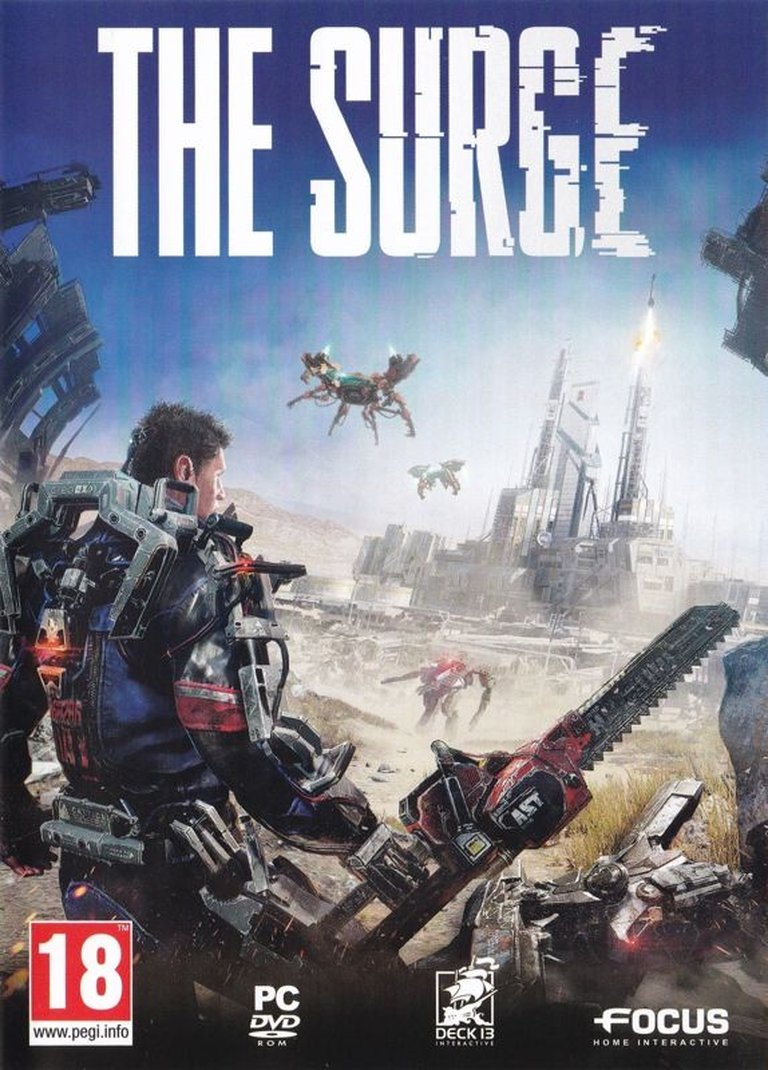
The Surge is an action role-playing game set in a dark cyberpunk dystopia where players assume the role of Warren, a worker enhanced with advanced exoskeleton technology. Navigating a corporate-controlled future, the game emphasizes visceral, physics-driven combat using the PhysX engine, challenging players to strategize in intense battles against oppressive forces.
Gameplay Videos
Where to Buy The Surge
The Surge Free Download
The Surge Mods
The Surge Guides & Walkthroughs
The Surge Reviews & Reception
metacritic.com (73/100): Matching recycled ideas with ingenious new ones has bred a challenger to one of gaming’s greats.
ign.com : challenging and fun – though a bit disjointed – sci-fi survival adventure
imdb.com (60/100): Little originality but okay enough
polygon.com : The Surge may be the single biggest surprise so far.
The Surge: A Gritty, Limb-Severing Saga in the Shadow of the colossus
Introduction: Forging a Niche in a Crowded Genre
In the mid-2010s, the “Souls-like” subgenre had evolved from a niche curiosity into a dominant force in action RPG design, largely defined by FromSoftware’s dark fantasy masterpieces. Against this backdrop, German studio Deck13 Interactive, fresh off their 2014 effort Lords of the Fallen—itself a noted, if imperfect, attempt to capture the Souls magic—launched The Surge. eschewing the medieval trappings of its predecessors, The Surge transplanted the grueling, methodical combat and intricate world design of the formula into a dystopian, cyberpunk future where exoskeletons replaced plate armor and industrial catwalks replaced castle ramparts. This review will argue that The Surge represents a pivotal, if flawed, step in the evolution of the Souls-like. It successfully transposed the core tenets of the genre into a fresh setting with a genuinely innovative dismemberment-based loot system, but was ultimately hampered by a repetitious world, inconsistent enemy design, and a narrative that, while rich in concept, struggles in its delivery. It is a game of spectacularly visceral highs and terminal lows, a roughhewn gem that laid the crucial groundwork for its superior successor.
Development History & Context: From Fantasy to Factory Floor
Studio Vision and Predecessors
Deck13 Interactive, based in Frankfurt, Germany, had established a reputation with Lords of the Fallen as a studio capable of ambitious, big-budget RPGs but one still grappling with the technical and design challenges of matching FromSoftware’s punishing standard. Following that title’s release, the team explicitly sought to apply their hard-won lessons to a new setting they felt was underexplored in the genre: hard science fiction. As stated in developer interviews, the goal was to ground the game’s technology in plausible near-future advancements in cybernetics and robotics, creating a world where environmental collapse and corporate overreach had tangible consequences. The jump from a fantasy realm to the grimy, rust-stained corridors of the CREO corporation allowed them to explore themes of technological hubris and bodily augmentation in a way that felt immediate and chillingly recognizable.
Technical Foundation and Constraints
The game was built using Deck13’s proprietary Fledge engine, a technology the studio had been developing since 2009. This engine was tailored for the precise demands of The Surge‘s combat, requiring custom solutions for limb-targeting physics, dismemberment animations, and the complex modularity of the exosuit. A significant technical partnership was with Nvidia GameWorks, utilized for advanced cloth simulation, particle effects, and dynamic lighting to enhance the industrial, oppressive atmosphere. However, the engine also bore the hallmarks of its lineage; optimization and stability issues, particularly on PC, were noted in multiple reviews, echoing similar problems in Lords of the Fallen. The development period was relatively tight, beginning in August 2015 and culminating in a May 2017 release, suggesting a focused but ambitious production cycle where some corners were inevitably cut, most evident in the game’s environmental homogeneity.
Market Positioning and Release
The Surge entered a crowded field. 2015-2017 saw the rise of numerous Souls-likes (Salt and Sanctuary, Nioh) and the final DLC for Dark Souls III. Its announcement in August 2015, with a clear “Dark Souls reimagined as sci-fi” pitch (as noted by outlets like Polygon), immediately defined its niche. Published by Focus Home Interactive, it was positioned as a premium, hardcore experience for a specific audience. The marketing heavily emphasized the unique “loot what you dismember” mechanic and the brutal, tactical combat, with trailers showcasing industrial bosses and the visceral joy of severing a foe’s weapon arm to claim it. Its release on May 16, 2017 for PC, PS4, and Xbox One placed it in a strong spring window, but it faced direct comparison to the titanic shadow of FromSoftware’s work.
Narrative & Thematic Deep Dive: The Surge of Consciousness
Plot and Structure
The narrative of The Surge is a tale of corporate dystopia and unintended consequences, pieced together primarily through environmental storytelling—audio logs, holographic messages, and scrawled notes—rather than a linear plot. The player assumes the role of Warren, a paraplegic arriving at the CREO megacorporation for a life-changing exoskeleton implantation procedure. During the operation, a cataclysmic event, the titular “Surge“, erupts—a massive energy discharge linked to the activation of CREO’s dual, contradictory projects: Project RESOLVE (a chemical-nanite compound to heal the atmosphere, later found to be toxic) and Project UTOPIA (a faster, nanite-based solution to achieve the same goal, designed to cull 95% of humanity).
The Surge corrupts all network-linked personnel. Workers, driven insane by neural feedback, become “berserk” while security drones are reprogrammed as relentless hunters. Warren awakens alone in a junkyard, guided by a mysterious executive hologram named Sally, and must fight through the sprawling, ruined CREO complex to reach the Executive Forum and uncover the truth. The story reveals that during the board’s vote on UTOPIA, the Surge—later implied to be the Rogue Process, a sentient nanite swarm born from UTOPIA’s payload—overloaded and killed the board members, creating a power vacuum. Sally, an AI medic, desperately tried to keep a sympathetic board member alive to deadlock the vote and stop UTOPIA’s launch. The player’s journey culminates at the UTOPIA launch platform, where they must decide whether to upload a virus (using data from the scientist Dr. Chavez) to corrupt the payload or allow it to launch, dooming the world. The canonical “bad” ending, where the payload launches and the Rogue Process begins to assimilate global networks, directly sets up the world of The Surge 2.
Themes and Ambiguity
The game’s core themes are technological hubris, corporate overreach, and the erosion of human agency. CREO represents the ultimate benevolent yet monstrous corporation: its workers are literally bound to their exoskeletons and neural implants, with social services collapsed and no alternative to corporate servitude. The Surge itself becomes a metaphor for the unintended, chaotic consequences of playing god with technology. The narrative excels in world-building through subtle details: worker graffiti, malfunctioning robots, audio logs detailing the dread of “using” (abusing neural stimulants), and the horrifying realization that the “zombified” workers are not undead but living, corrupted humans with shattered psyches.
However, the story’s delivery is notoriously opaque and fragmented. Key questions swirl in the community (as seen in extensive Steam and Fextralife forum discussions): Who or what exactly is Sally? Is she a corrupted AI, the Rogue Process in disguise, or a loyal program fighting a losing battle? The game suggests she is the CREO medical AI, whose core processor can be found in the server room, but her motives and the nature of the “surge” she reportedly initiated remain unclear. Similarly, the fate of other survivors like Hobbs, Irina, and Jo is left to player discovery and interpretation. Irina’s tragic arc—from coherent engineer to a security guard persona overwriting her personality by the nanite hivemind—is a standout piece of environmental storytelling, but its full mechanics are never explicitly explained. This ambiguity is a double-edged sword: it invites deep lore theorizing but can leave players feeling unfulfilled, as the central mystery feels less like a sublime mystery and more like an unresolved plot hole.
Gameplay Mechanics & Systems: The Art of Calculated Dismemberment
Core Combat Loop
The combat is the undeniable heart of The Surge and its primary claim to fame. It is a stamina-based, slow-paced, risk-reward system where every swing and dodge consumes precious energy. The cornerstone innovation is the Dynamic Targeting System. By locking onto an enemy (R3), players can cycle reticles over specific limbs—arms, legs, torso, head. This is not a mere aesthetic choice; it is a fundamental strategic layer. Attacking an armored limb does reduced damage, while unarmored, glowing “weak points” take amplified damage. Crucially, dismemberment is the primary loot mechanic. To acquire a new weapon schematic or armor piece, the player must sever the specific enemy limb that carries it (e.g., an enemy’s gun arm drops a one-handed weapon schematic). This culminates in a slow-motion finishing move upon depleting a limb’s separate health bar, directly injecting the part into the player’s inventory.
This system creates a profound tactical shift from other Souls-likes. Players are incentivized to study enemy loadouts before engaging. Facing a foe with a powerful energy cannon on its right arm? That becomes the primary target. Is its left leg unarmored? Focus fire there to cripple mobility. The combat weight is immense; attacks are deliberate, dodges (typically a slide or lunge) require precise timing, and blocking is a high-risk last resort due to heavy stamina drain and vulnerability to combos. Five weapon classes (One-Handed, Staves, Heavy Duty, Single-Rigged, Twin-Rigged) offer distinct move sets, speeds, and severance efficiencies, encouraging experimentation.
Progression and Crafting: The Scrap Economy
Progression eschews traditional level-based stats (Strength, Dexterity). Instead, it revolves around Core Power, a single metric representing the exosuit’s overall energy capacity. Core Power is increased by spending Tech Scrap (the primary currency, looted from enemies and found in the world) at MedBay checkpoints. Higher Core Power allows the equipping of more powerful, power-hungry armor pieces and Implants (cybernetic upgrades). This creates a simple but effective loop: fight, scrap, bank scrap, upgrade.
Crafting is intrinsically linked to the dismemberment system. Severed limbs provide materials (e.g., Tungsten Alloy from weapons, synthetics from armor) and, most importantly, schematics. Once a schematic is obtained (either by severing the limb or finding it in the world), players can craft the corresponding piece at a MedBay using Tech Scrap and the required materials. Weapon Proficiency is a separate, passive system: using a weapon type (e.g., Twin-Rigged) accrues experience, permanently increasing its damage output by up to 20%. This encourages sticking with a favored style but doesn’t lock players out of others.
Flaws and Friction
For all its innovation, the system has notable weaknesses. Enemy variety is severely limited, leading to repetitive encounters where tactical targeting feels routine rather than constantly engaging. Many humanoid enemies are simply reskinned with different weapons. Boss design, while mechanically satisfying for limb-targeting, often suffers from visual repetition (many are giant industrial machines or augmented humans) and can be hampered by a troublesome camera that struggles in tight, chaotic spaces—a frequent complaint in reviews. Furthermore, the illusion of RPG depth is cited; some critics (like TrueAchievements) note that stat changes from gear and implants often feel minimal, making progression feel more about cosmetic and tool variety than meaningful power increases. The game’s difficulty, while fair in intention, can spike unfairly due to poorly telegraphed enemy attacks and ambushes in tight corridors, leading to frustration rather than mastery.
World-Building, Art & Sound: Industrial Decay and Sonic Dread
Setting and Environmental Storytelling
The Surge’s world is its most consistent strength. The CREO complex is a masterpiece of industrial dystopian world-building. The environment tells a story effortlessly: pristine, sterile “posh” zones contrast with grimy, hazardous production lines, flooded waste facilities, and the eerie, Biolab-grown silicon horrors. The interconnected, Metroidvania-style map is dense with shortcuts, hidden paths, and environmental cues. The sense of place is melancholic and immersive, reflecting a corporatized hell where workers lived, labored, and died. Environmental details—personal lockers with photos, scattered notes about family, graffiti reading “SALARY IS LIFE”—ground the sci-fi horror in a palpable human tragedy. The restricted, claustrophobic level design, while criticized for sometimes feeling maze-like, effectively reinforces the feeling of being trapped in a malfunctioning, hostile machine.
Art Direction and Technical Presentation
The art direction leans heavily into a “gritty realistic” sci-fi aesthetic reminiscent of Blade Runner or Alien, but with a distinct industrial, near-future polish. The exoskeletons are beautifully detailed, a mix of functional engineering and personalized modifications. Enemy designs, however, are a weak point. While some, like the haunting, nanite-corrupted humans with cybernetic growths or the hulking “Cerberus” security bots, are memorable, the majority are recycled human models with different armor and weapon skins. This lack of visual variety compounds the gameplay repetitiveness. Technically, the game runs on the Fledge engine with mixed results. On PC, it offers extensive customization but suffers from aliasing and occasional frame pacing issues. On consoles, dynamic resolution scaling (notably on PS4 Pro) helps maintain performance but can lead to a soft image.
Sound Design and Music
The sound design is exceptional and a critical component of the atmosphere. The clang of metal on metal, the hiss of hydraulic systems, the distorted, glitching vocalizations of corrupted workers, and the deep, resonant booms of heavy impacts create a consistently tense and immersive soundscape. The audio logs are delivered with gritty, believable voice acting that sells the desperation and horror of the characters. The soundtrack, composed by Markus Schmidt, is subtle but effective, using ambient, industrial drones and tense, rhythmic pulses that swell during boss fights, perfectly complementing the on-screen brutality without ever overpowering it.
Reception & Legacy: A Flawed Foundation for a Stronger Future
Critical and Commercial Performance
Upon release in May 2017, The Surge received a “mixed or average” critical reception, with Metacritic scores ranging from 72-78/100 across platforms. The consensus, reflected in the provided reviews, was clear: critics widely praised the innovative limb-targeting combat system, the satisfying progression tied to dismemberment, and the compelling sci-fi setting. GamingTrend (90%) hailed it as a “must-play for masochistic gamers,” while IGN (79%) appreciated its “engaging experience” and “wickedly fun combat.” However, a near-universal criticism concerned the repetitive level design and enemy variety, the clunky camera, and a story that failed to leverage its intriguing premise. GameSpot (70%) noted it “bucks the trend towards creative bankruptcy” but was “rough around the edges.” PC Gamer (60%) was particularly harsh, calling it a “soulless” experience with “dull plot” and “animated junk” for enemies.
Commercially, it performed modestly but successfully for a niche title. Estimated first-week sales were around 44,000 units, with Steam lifetime estimates suggesting ~560,000 sales. For Focus Home Interactive, this was considered a commercial success, providing a solid return and justifying the development of a sequel. Its player score on MobyGames (based on 15 ratings) sits at a 3.5/5, indicating a similar split in audience reception between those who embraced its punishing, systematic combat and those who fatigued under its repetitive presentation.
Legacy and Sequels
The Surge’s primary legacy is as a proof-of-concept. It demonstrated that the Souls-like formula could be viably and interestingly transplanted into a sci-fi setting with a unique mechanical hook (targeted dismemberment for loot). Its weaknesses were clearly identified by both critics and the development team. The sequel, The Surge 2 (2019), directly addressed nearly every major criticism: it introduced a vast, sprawling urban environment (Jericho City) with greater verticality and environmental variety, a vastly expanded enemy and boss roster, a directional parry system, and a more robust narrative with branching choices and memorable characters. It refined the dismemberment system and added a drone companion, creating a more fluid and dynamic experience. In this light, the original The Surge is best viewed as a necessary, if rocky, prototype. It established the core identity—visceral exosuit combat in a broken corporate hellscape—which the sequel polished into a genre standout.
Its influence on the broader industry is subtler than FromSoftware’s but important. It joined titles like Nioh in proving that “Souls-like” was not a stylistic straightjacket but a design philosophy adaptable to diverse aesthetics. The specific “loot what you dismember” mechanic has influenced subsequent action RPGs seeking to tie progression more directly to combat execution. Furthermore, its commercial viability helped cement Focus Home Interactive’s (now Focus Entertainment) reputation as a publisher of premium, challenging niche titles and directly led to their acquisition of Deck13 Interactive in 2020 for €7.1 million, ensuring the franchise’s continuation and the studio’s independence.
Conclusion: A Flawed but Foundational Work
The Surge is a game of stark contrasts. It presents one of the most mechanically satisfying and innovative combat systems in the action RPG sphere, a brutal dance of limb-targeting and resource management that makes every encounter a calculated puzzle. Its world is a hauntingly believable vision of corporate dystopia, dripping with environmental storytelling that speaks volumes about technological decay and human suffering. Yet, this brilliance is constantly undermined by a monotonous visual palette, a dearth of enemy types that turns tactical targeting into a chore, and a narrative that withholds too much for the sake of mystery, leaving a hollow feeling where thematic depth should reside.
It is not a classic on the level of Dark Souls or even Lords of the Fallen‘s more memorable moments. But it is an essential and compelling stepping stone. It took significant risks with its setting and its central dismemberment mechanic, risks that largely paid off in creating a distinct identity. For the dedicated player willing to endure its repetitive corridors and enigmatic lore, The Surge offers a uniquely visceral and strategic experience. Its true success is measured not in its own standalone perfection, but in the stronger, more confident game it created a blueprint for. The Surge is the rough, industrial prototype—loud, brutal, and full of promising parts—that was refined into a masterpiece with The Surge 2. In the canon of Souls-likes, it occupies a crucial, if imperfect, position: the game that confidently, if clumsily, swung the genre’s wrecking ball into a gleaming, terrifying sci-fi future.