
- Release Year: 2020
- Platforms: PlayStation 4, PlayStation 5, Windows
- Publisher: Skydance Interactive LLC
- Developer: Skydance Interactive LLC
- Genre: Action, Puzzle, RPG, Stealth, Survival
- Perspective: 1st-person
- Game Mode: Single-player
- Gameplay: Direct control, Motion control, Puzzle elements, RPG elements, Stealth, Survival horror
- Setting: Horror, North America, Post-apocalyptic
- Average Score: 83/100
- VR Support: Yes
Description
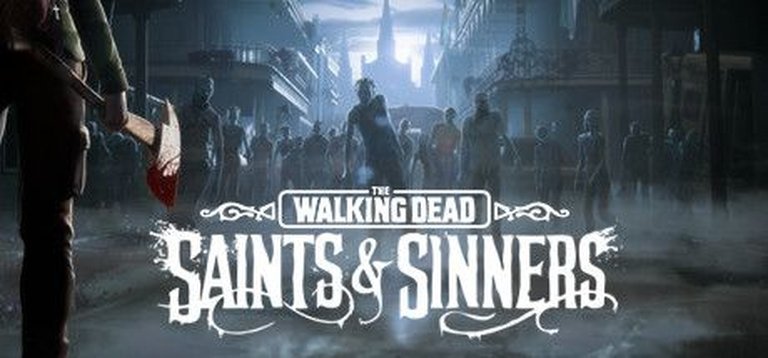
The Walking Dead: Saints & Sinners is a first-person survival horror action game set in post-apocalyptic New Orleans, overrun by zombies and warring factions. Players must navigate moral dilemmas, scavenge resources, craft weapons, and survive using stealth, combat, and RPG-style decision-making. The game emphasizes immersive VR gameplay, intense atmosphere, and strategic choices that impact the story, capturing the brutal tension of The Walking Dead universe.
Gameplay Videos
Where to Buy The Walking Dead: Saints & Sinners
PC
The Walking Dead: Saints & Sinners Cracks & Fixes
The Walking Dead: Saints & Sinners Guides & Walkthroughs
The Walking Dead: Saints & Sinners Reviews & Reception
commonsensemedia.org : Intense, scary, graphic adventure in virtual reality.
The Walking Dead: Saints & Sinners Cheats & Codes
PC
Enter codes in the game’s config files or via console commands.
| Code | Effect |
|---|---|
| CheatSetNoDurabilityLoss | Disables weapon durability loss |
| CheatMaxOutCraftingTables | Maximizes crafting table output |
| SetInfiniteStamina | Grants infinite stamina |
| CheatFlashlightInfinite | Makes flashlight battery infinite |
| StopHordeTimer | Stops the horde timer |
| CheatInfiniteAmmo | Grants infinite ammo |
| CheatDemiGod | Enables demi-god mode |
| CheatSetDay | Sets the in-game day |
| CheatSetMaxGPD | Sets maximum GPD (Game Progress Data) |
| CheatSetHealth | Sets player health |
| CheatRushBells | Triggers the bell alarm |
| CheatNoDurabilityLoss | Disables durability loss |
| CheatNoPlayerDeath | Prevents player death |
| CheatNoGrappling | Disables grappling by enemies |
| CheatNoAmmoDeduction | Prevents ammo deduction |
| CheatSetMonkeyMode | Enables monkey mode |
| CheatNoRecoil | Removes weapon recoil |
| CheatGodMode | Enables god mode |
| CheatInfiniteStamina | Grants infinite stamina |
| CheatIgnorePlayer | Makes enemies ignore the player |
| CheatSpawnWeaponPile | Spawns a pile of weapons |
The Walking Dead: Saints & Sinners: Review
Introduction
In the crowded graveyard of zombie media, The Walking Dead: Saints & Sinners emerges not just as another shambling corpse but as a visceral, genre-defining masterpiece of virtual reality storytelling. Developed by Skydance Interactive and released on January 23, 2020, this VR-exclusive title shattered expectations by blending Robert Kirkman’s grim comic universe with unparalleled immersion, moral complexity, and survival-horror mechanics. More than just a licensed extension, Saints & Sinners redefined what VR could achieve, offering a 15+ hour campaign that forces players to confront the true cost of survival in a way only interactive media can deliver. Its thesis is clear: In the ruins of New Orleans, humanity’s last struggle is not against the dead—but the choices made in desperation.
Development History & Context
Studio Vision & Technological Constraints
Skydance Interactive, a division of Skydance Media (known for Gears of War 4 collaborations), sought to create a VR experience that transcended gimmicks. Led by Project Director Mark F. Domowicz and Creative Director Adam Grantham, the team leveraged Unreal Engine 4 to craft a physics-driven world where every interaction felt tangible. The 2018-2020 development window placed Saints & Sinners at the forefront of VR’s “second wave,” where hardware like the Oculus Rift S and Valve Index demanded deeper gameplay than tech demos.
A Crowded, Precarious Landscape
At launch, VR was starved for narrative-driven AAA titles. Most offerings were either bite-sized experiences (Beat Saber) or ports of flatscreen games. Saints & Sinners aimed to fill this void, but Skydance faced hurdles: balancing realistic physics (e.g., weapon degradation, dismemberment) with performance on weaker headsets like the Oculus Quest, avoiding motion sickness through innovative locomotion options, and delivering a morally nuanced story without traditional cutscenes.
The Pandemic Paradox
Releasing just before COVID-19 lockdowns, the game benefitted from a captive audience seeking immersive escapism. The timing turned it into a sleeper hit, with players craving its bleak yet cathartic depiction of isolation and resilience.
Narrative & Thematic Deep Dive
Plot & Structure
Set a year into the apocalypse in flood-ravaged New Orleans, Saints & Sinners casts players as “The Tourist,” a nameless survivor drawn to the city by rumors of “The Reserve”—a military bunker brimming with supplies. The quest quickly spirals into a factional war between the Tower (authoritarian elites led by the shrouded “Mama”) and the Reclaimed (a voodoo-inspired cult of exiles under Jean-Baptiste).
Characters & Choices
Central to the narrative is Henri, a doomed guide whose death forces the Tourist into alliances with morally ambiguous figures:
– Casey, a guilt-ridden soldier trapped in The Reserve, symbolizing isolation and regret.
– May Benoit, a Tower defector whose maternal desperation mirrors the game’s theme of familial sacrifice.
– The Axeman (DLC foreshadowing), whose vendetta adds cyclical tragedy.
Every choice carries weight. Sparing Henri’s reanimated body or executing May post-betrayal ripples through faction reputations, resource access, and endings. The game’s crowning achievement is refusing binary morality—helping the Reclaimed often enables their fanaticism, while aiding the Tower perpetuates fascism.
Themes
– The Cost of Survival: Scarcity forces brutal calculus (e.g., flooding The Reserve to save Casey dooms supplies).
– Familial Loss: May’s quest to protect her daughter Ambre ends in betrayal and tragedy, echoing The Walking Dead’s recurring motif of failed guardianship.
– Faith vs. Pragmatism: Jean-Baptiste’s sermons contrast Georgia’s ruthlessness, questioning whether hope is a luxury or a weapon.
Gameplay Mechanics & Systems
Core Loop & Survival
The game operates on a tense daily cycle:
1. Base Management: Craft weapons/food at the cemetery bus using salvaged materials (e.g., adhesives, metal).
2. Scavenging Runs: Explore districts like The Shallows or Via Carolla, balancing loot collection against the “bell” mechanic—a timed horde escalation.
3. Combat & Stealth: Physics-based melee (grabbing walkers to stab skulls) and ranged combat (unreliable guns with bullet scarcity). Diseased walkers permanently lower max health if touched.
Innovations & Flaws
– VR Physics: Weapons feel heavy; a shovel lodged in a skull requires force to retrieve. Climbing drains stamina, emphasizing vulnerability.
– AI Quirks: Human enemies lack tactical awareness (noted in Jeuxvideo.com’s 65% review), breaking immersion.
– Crafting Depth: Over 50 recipes (e.g., “The Judge,” a barbed-wire bat) reward exploration but bottleneck progression with rare materials.
UI/UX
Diegetic interfaces—backpack inventories, wristwatches for health/stamina—keep players anchored. Motion-controlled healing (wrapping bandages) heightens tension.
World-Building, Art & Sound
Setting
New Orleans’ decay is palpable: flooded streets, crumbling Creole architecture, and oppressive bayou fog. Districts like Rampart High School (a pitch-black labyrinth) and Memorial Lane (a zombie-choked cemetery) exemplify environmental storytelling—graffiti hints at faction conflicts, while journals flesh out NPCs’ fates.
Visual Design
Art Director Jake Geiger blends Southern Gothic with apocalyptic grime. Walkers are grotesquely detailed, with peeling skin and rusted clothing. The art’s realism (water reflections, dynamic weather) pushes VR hardware limits, causing occasional frame dips on Quest (per Noisy Pixel’s 70% critique).
Sound Design
Audio Director Michael David Peter layers ambient dread: distant groans, faction radio broadcasts (featuring blues by Louis Armstrong), and the dread-inducing bell toll. Casey’s voice actor, Ben Giroux, delivers standout pathos, especially in endings where his survival is jeopardized.
Reception & Legacy
Launch Reception
The game was a critical darling:
– IGN (90%): Praised its “Deus Ex-like RPG depth.”
– PlayStation Universe (95%): Called it “the scariest The Walking Dead has ever been.”
– Mixed reviews (e.g., Jeuxvideo.com’s 65%) cited repetitive missions and AI issues.
Commercially, it became Skydance’s fastest-selling VR title, bolstered by post-launch support like the Aftershocks DLC (2021), adding end-game content.
Industry Impact
Saints & Sinners proved VR could sustain narrative complexity, influencing successors like Resident Evil 4 VR. It was nominated for Best VR/AR Game at The Game Awards 2020 and won accolades for its physics-driven combat. Its legacy endures through the 2022 sequel, Chapter 2: Retribution, refining mechanics while deepening the Axeman plot.
Conclusion
The Walking Dead: Saints & Sinners isn’t just a VR milestone—it’s a masterclass in survival horror. By intertwining player agency with visceral combat, moral decay, and a haunting setting, Skydance crafted an experience that transcends its license. Flaws like AI limitations and crafting grinds are dwarfed by its triumphs: a world where every bullet, bandage, and betrayal feels earned. In the pantheon of VR giants, Saints & Sinners stands not as a tourist but as a titan, demanding that we confront what we become when the world ends. For fans of the genre, it remains essential—a dark pilgrimage into the heart of humanity.
Final Verdict: The Walking Dead: Saints & Sinners is a landmark achievement in VR, blending narrative depth, gruesome immersion, and systemic innovation to create one of the medium’s definitive experiences. Its influence will echo long after the bells stop ringing.