
- Release Year: 2013
- Platforms: PlayStation 3, Wii U, Windows, Xbox 360
- Publisher: Activision Publishing, Inc.
- Developer: Terminal Reality, Inc.
- Genre: Action, Horror
- Perspective: 1st-person
- Game Mode: Single-player
- Gameplay: Quick Time Events, Resource Management, Shooter, Stealth, Vehicle Travel
- Setting: Georgia Countryside, Post-apocalyptic, Zombie Apocalypse
- Average Score: 38/100
Description
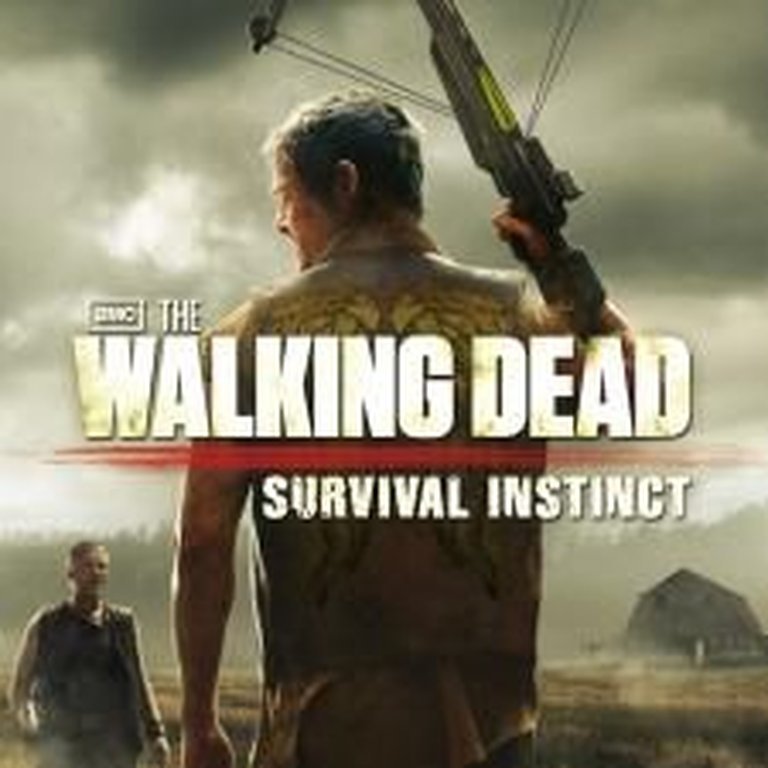
The Walking Dead: Survival Instinct is a first-person shooter set in the early days of the zombie apocalypse, serving as a prequel to the TV series. Players take on the role of Daryl Dixon, who, alongside his brother Merle and other survivors, navigates the Georgia countryside to reach Atlanta. The game blends shooting, stealth, and melee combat, with a focus on resource management and survival as players scavenge for supplies, fuel, and vehicle parts while avoiding or eliminating walkers. Travel between locations is vehicle-based, with choices affecting speed, looting opportunities, and risks like breakdowns or injuries to companions.
Gameplay Videos
The Walking Dead: Survival Instinct Free Download
The Walking Dead: Survival Instinct Cracks & Fixes
The Walking Dead: Survival Instinct Guides & Walkthroughs
The Walking Dead: Survival Instinct Reviews & Reception
metacritic.com (32/100): The Walking Dead Survival Instinct is a disappointment. There are many interesting ideas in the background but they all look terrible at the practical act.
ign.com : That’s what The Walking Dead: Survival Instinct does; it gives licensed games a bad name.
steamcommunity.com (45/100): The game doesn’t explain itself to the player. Leaving them to figure it out instead. It’s 45 because it’s got more holes in it than swiss cheese, an it’s hard to figure out.
The Walking Dead: Survival Instinct: A Comprehensive Retrospective
Introduction
The Walking Dead: Survival Instinct (2013) is a game that exists in the shadow of its own potential—a cautionary tale of how even the most promising licensed properties can falter under poor execution. Released during the height of The Walking Dead’s cultural dominance, this first-person survival shooter promised to immerse players in the harrowing early days of the zombie apocalypse alongside fan-favorite characters Daryl and Merle Dixon. Yet, despite its ambitious premise and the involvement of the TV show’s lead actors, Survival Instinct emerged as a critically panned, mechanically flawed, and narratively hollow experience. This review dissects the game’s development, gameplay, narrative, and legacy, exploring how it became one of the most infamous missteps in licensed gaming history.
Development History & Context
The Studio and the License
The Walking Dead: Survival Instinct was developed by Terminal Reality, a studio with a varied portfolio that included BloodRayne, Ghostbusters: The Video Game, and Monster Truck Madness. While Terminal Reality had experience with action games, they were stepping into uncharted territory with a survival horror title tied to one of the most beloved franchises of the 2010s. The game was published by Activision, a company known for its aggressive licensing strategies, which often prioritized marketability over creative integrity.
The game’s development coincided with the peak of The Walking Dead’s popularity. AMC’s television adaptation, which premiered in 2010, had become a cultural phenomenon, and Telltale Games’ The Walking Dead: Season One (2012) had just redefined narrative-driven gaming with its emotionally resonant storytelling. Survival Instinct was positioned as a prequel to the TV series, focusing on Daryl and Merle Dixon’s journey through rural Georgia during the outbreak’s early days. This setting offered a unique opportunity to explore the brothers’ dynamic before their iconic introduction in the show’s first season.
Technological and Creative Constraints
The game was built using Terminal Reality’s proprietary Infernal Engine, which had previously powered Ghostbusters: The Video Game (2009). While the engine was capable of handling first-person action, it struggled with the demands of an open-ended survival experience. The game’s March 2013 release placed it in a transitional period for gaming hardware—the PlayStation 3 and Xbox 360 were nearing the end of their lifecycle, and developers were beginning to experiment with more ambitious designs. Unfortunately, Survival Instinct felt stuck in the past, with dated graphics, clunky controls, and repetitive level design that failed to capitalize on the hardware’s capabilities.
One of the game’s most touted features was its resource management and branching paths, which allowed players to choose between different routes (highways vs. backroads) and manage fuel, supplies, and survivor recruitment. On paper, this system evoked comparisons to Oregon Trail meets Resident Evil, but in practice, it was underdeveloped and tedious. The game’s five-and-a-half-hour runtime (as noted by IGN’s review) suggested a rushed development cycle, with many mechanics feeling half-baked or tacked on to pad out the experience.
The Gaming Landscape in 2013
2013 was a pivotal year for zombie games. Telltale’s The Walking Dead had set a new standard for narrative depth, while The Last of Us (released in June 2013) would soon redefine survival horror with its cinematic storytelling and polished gameplay. Meanwhile, Left 4 Dead and Dead Rising had established the zombie shooter genre as a staple of cooperative and arcade-style action. Survival Instinct attempted to carve out its own niche by emphasizing stealth, survival mechanics, and moral choices, but it lacked the polish, innovation, or emotional weight to compete with its contemporaries.
Narrative & Thematic Deep Dive
Plot Summary
The Walking Dead: Survival Instinct follows Daryl Dixon (voiced by Norman Reedus) and his brother Merle Dixon (voiced by Michael Rooker) as they navigate the Georgia countryside in the immediate aftermath of the zombie outbreak. The story begins with Daryl and his half-uncle Jess Collins fleeing their mountain shelter to scavenge for supplies. Along the way, they encounter a rotating cast of survivors, including:
– Warren Bedford, a resourceful scavenger who joins the group.
– Anna Turner (Scout), a cunning survivor with her own agenda.
– Merle Dixon, who reunites with Daryl after a violent encounter with a gang.
The narrative unfolds as a road trip survival story, with Daryl and his companions traveling from one beleaguered town to another, searching for fuel, food, and a rumored safe haven in Atlanta. The plot is episodic, with each location introducing new characters, conflicts, and moral dilemmas. However, the story suffers from pacing issues, underdeveloped characters, and a lack of emotional stakes.
Themes and Missed Opportunities
At its core, Survival Instinct attempts to explore themes of brotherhood, trust, and the moral cost of survival. The relationship between Daryl and Merle—one of the most compelling dynamics in The Walking Dead TV series—could have been a rich narrative foundation. Unfortunately, the game fails to develop their bond meaningfully. Merle’s presence is sporadic, and his interactions with Daryl lack the depth and tension seen in the show.
The game also touches on the idea of sacrifice, forcing players to make choices about which survivors to save or abandon. However, these decisions feel arbitrary and inconsequential. Characters are poorly fleshed out, and their fates rarely impact the broader narrative. The game’s ending, which sees Daryl and Merle stranded at an overrun stadium, is abrupt and unsatisfying, offering little resolution or emotional payoff.
Dialogue and Voice Acting
One of the game’s few bright spots is the voice acting, particularly from Norman Reedus and Michael Rooker, who reprise their roles as Daryl and Merle. Their performances are authentic and engaging, providing a rare sense of continuity with the TV series. However, the writing and dialogue are weak, with many lines feeling stiff, expository, or outright cheesy. Supporting characters lack distinct personalities, and their interactions with Daryl often feel transactional rather than organic.
Gameplay Mechanics & Systems
Core Gameplay Loop
The Walking Dead: Survival Instinct is a first-person shooter with survival and stealth elements. The game’s primary loop revolves around:
1. Scavenging for supplies (fuel, ammunition, food, and medical items).
2. Navigating between locations via vehicle, choosing between highways (faster but riskier) and backroads (slower but safer).
3. Completing missions in linear, objective-based levels.
4. Managing survivors, assigning them tasks, and deciding whether to keep or abandon them.
On paper, this structure could have created a tense, strategic survival experience. In practice, it feels repetitive, shallow, and poorly balanced.
Combat and Stealth
The game encourages stealth over direct combat, with Daryl able to:
– Sneak past walkers using cover and distractions (e.g., throwing glass bottles).
– Perform stealth kills with melee weapons.
– Use a crossbow for silent, long-range takedowns.
However, the stealth mechanics are flawed. Walkers often ignore Daryl unless he’s directly in their line of sight, and their AI is inconsistent and unpredictable. Combat is clunky, with melee attacks relying on quick-time events (QTEs) that feel unresponsive and jarring. Firearms are underpowered and scarce, making gunfights feel unsatisfying and frustrating.
Vehicle and Resource Management
One of the game’s most ambitious features is its vehicle and resource management system. Players must:
– Monitor fuel levels, scavenging for gas cans to avoid stranding.
– Choose between highways and backroads, each with distinct risks and rewards.
– Repair vehicles after breakdowns, which trigger mini-missions to find parts.
While this system has potential, it’s poorly implemented. Highways and backroads recycle the same environments, making exploration feel repetitive and meaningless. Fuel scarcity is artificially inflated, forcing players to grind through tedious scavenging sequences. The survivor management system is equally shallow, with companions serving as little more than inventory mules with no meaningful impact on gameplay or story.
Level Design and Exploration
The game’s levels are linear and uninspired, with little room for emergent gameplay or player agency. Most missions involve:
– Sneaking through abandoned towns to reach an objective.
– Clearing out small groups of walkers in scripted encounters.
– Retrieving items for NPCs.
The environments are bland and repetitive, with dull textures, poor lighting, and lackluster enemy variety. The game’s attempts at horror fall flat, as the walkers pose little threat due to their predictable behavior and weak AI.
World-Building, Art & Sound
Setting and Atmosphere
The Walking Dead: Survival Instinct is set in rural Georgia, a location ripe with potential for atmospheric horror and Southern Gothic storytelling. Unfortunately, the game fails to capitalize on its setting. The Georgia countryside feels generic and lifeless, with little attention to environmental storytelling or world-building. Abandoned towns, gas stations, and forests lack the decay and desperation that define The Walking Dead’s universe.
Visual Design
The game’s visuals are dated even by 2013 standards. Character models are stiff and poorly animated, with Daryl and Merle being the only exceptions due to their motion-captured performances. The walkers are generic and unthreatening, lacking the grotesque detail of the TV series’ makeup effects. Environments are low-resolution and repetitive, with muddy textures and flat lighting that drain the game of any visual impact.
Sound Design and Music
The sound design is one of the game’s few redeeming qualities. The ambient noises—creaking doors, distant groans, and eerie silence—create a tense atmosphere that the visuals fail to match. The voice acting, as mentioned earlier, is strong, particularly from Reedus and Rooker. The score, composed by Gordy Haab, is moody and atmospheric, though it often fades into the background due to the game’s lack of memorable set pieces.
Reception & Legacy
Critical Reception
The Walking Dead: Survival Instinct was universally panned by critics, earning a Metacritic score of 32/100 (Xbox 360) and a MobyGames score of 4.5/10. Critics lambasted the game for its:
– Broken gameplay mechanics (clunky controls, poor AI, repetitive missions).
– Dated and ugly visuals.
– Lack of meaningful storytelling or character development.
– Tedious resource management and shallow survival elements.
IGN’s Greg Miller summed up the consensus, calling it “a half-baked attempt at a game that can be fun in the occasional spooky part, but ends up under-delivering in every way.” Giant Bomb’s Alex Navarro was even harsher, describing it as “an abysmally rushed game of barely connected ideas that brings the player little more than frustration and disappointment.”
Commercial Performance and Player Reception
The game underperformed commercially, failing to meet Activision’s expectations. Players echoed critics’ sentiments, with many expressing disappointment at the wasted potential of the Walking Dead license. On Steam, the game holds a “Mostly Negative” rating, with users citing its short length, repetitive gameplay, and lack of polish.
Legacy and Influence
The Walking Dead: Survival Instinct is often held up as an example of how not to adapt a beloved franchise. Its failure stands in stark contrast to Telltale’s The Walking Dead, which proved that licensed games could transcend their source material with strong writing and emotional depth. Survival Instinct’s legacy is one of missed opportunities, serving as a cautionary tale for developers and publishers about the dangers of rushing a game to market without proper care or vision.
Despite its flaws, the game has developed a small cult following among fans who appreciate its attempts at survival mechanics and road-trip narrative. A modding community has emerged on PC, with players creating fixes, enhancements, and total conversions to improve the game’s mechanics and visuals.
Conclusion: A Game That Should Have Stayed Dead
The Walking Dead: Survival Instinct is a frustrating, flawed, and ultimately forgettable entry in the Walking Dead franchise. It had the ingredients for greatness—a compelling setting, beloved characters, and an ambitious survival framework—but failed at nearly every level of execution. From its clunky gameplay and dated visuals to its shallow storytelling and repetitive design, the game feels like a rushed cash grab rather than a labor of love.
Yet, beneath its many failures, there are glimmers of what could have been. The voice acting, sound design, and core survival concepts hint at a better game that might have emerged with more time, resources, and care. Unfortunately, Survival Instinct will forever be remembered as the Walking Dead game that fans wish they could forget—a cautionary tale of how even the most promising ideas can rot away without proper nurturing.
Final Verdict: 3/10 – A Zombie Game That’s Already Decomposed
For fans of The Walking Dead, Telltale’s series remains the gold standard. For those seeking a survival horror experience, The Last of Us, Resident Evil, or even ZombiU offer far more compelling alternatives. Survival Instinct is only worth revisiting for the morbidly curious—those who want to see just how wrong a Walking Dead game can go.