
- Release Year: 2011
- Platforms: Windows
- Publisher: dtp entertainment AG, Fulqrum Publishing s.r.o.
- Genre: Compilation
- Game Mode: Single-player
- Average Score: 62/100
Description
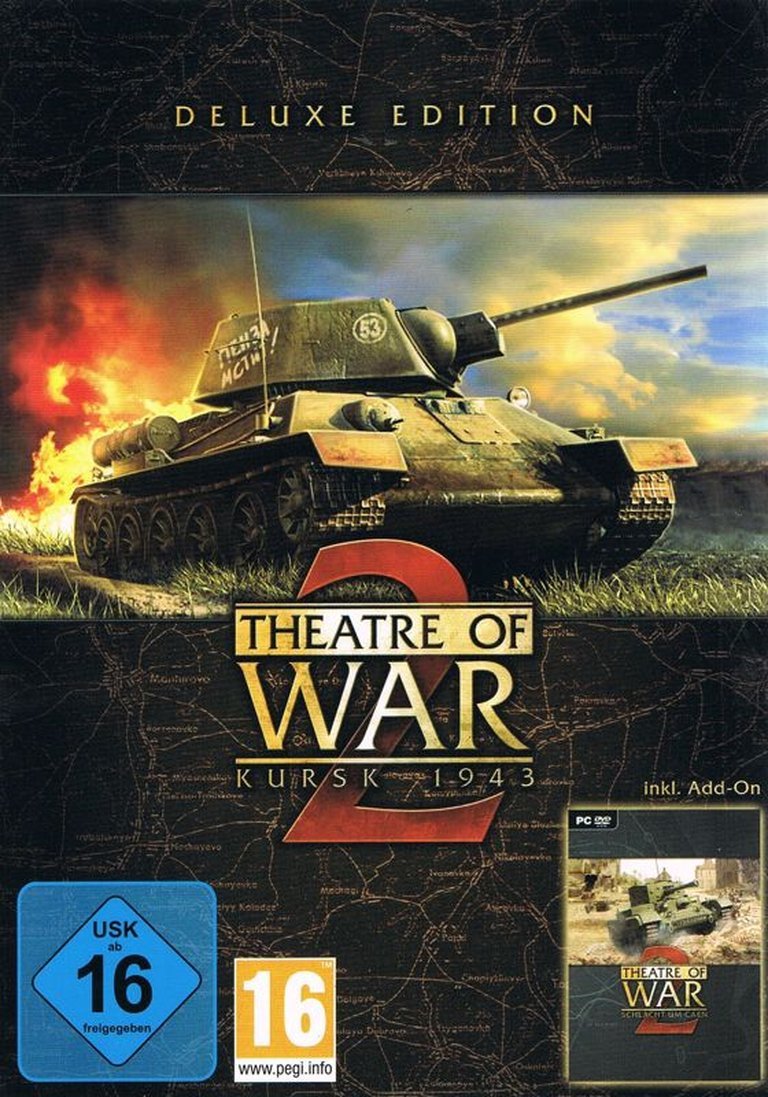
Theatre of War 2: Kursk 1943 – Deluxe Edition is a historically accurate real-time tactical war game set during the pivotal Battle of Kursk in 1943, where players command either Soviet or German forces in meticulously reconstructed engagements. The game features two campaigns—’Fiery Salient’ (Soviet) and ‘Operation Citadel’ (German)—each offering up to nine missions, with a focus on realistic ballistics, armor penetration, and unit management. Players control authentic WWII units, including infantry and vehicles, with deep customization options for troops and missions, alongside multiplayer support for up to eight players.
Theatre of War 2: Kursk 1943 – Deluxe Edition Reviews & Reception
metacritic.com (62/100): Uninspired campaign approach.
videogamegeek.com (56.7/100): The largest tank battle in history – KURSK 1943!
gamepressure.com (68/100): The Battle of Kursk lasted for forty nine days, from July 5 till August 23, 1943 and has made its way into history as one of the most crucial conflicts of WWII.
Theatre of War 2: Kursk 1943 – Deluxe Edition Cheats & Codes
PC (Cheat Engine Table)
Use Cheat Engine to activate the following features by enabling/disabling the corresponding options in the table.
| Code | Effect |
|---|---|
| Health Mode | Enables invincibility for units. |
| Unlimited Ammo | Provides infinite ammunition for units. |
| Soldiers’ Full Skill | Maximizes the skills of selected soldiers or vehicles. |
| Minimum Field Points | Reduces the cost of field points to a minimum. |
Theatre of War 2: Kursk 1943 – Deluxe Edition: A Definitive Retrospective
Introduction
Theatre of War 2: Kursk 1943 – Deluxe Edition stands as a monumental achievement in the realm of historical real-time strategy (RTS) games, offering an unparalleled blend of tactical depth, historical authenticity, and immersive gameplay. Released in 2011, this compilation includes the base game Theatre of War 2: Kursk 1943 and its expansion, Battle for Caen, delivering a comprehensive experience that captures the brutality and strategic complexity of World War II’s Eastern Front. This review delves into the game’s development, narrative, gameplay mechanics, and lasting impact, positioning it as a cornerstone in the genre of military simulations.
Development History & Context
Developed by 1C Company and Battlefront.com, Theatre of War 2: Kursk 1943 emerged from a lineage of meticulously crafted wartime strategy games. The studio’s vision was to create a game that not only entertained but also educated players about the historical significance of the Battle of Kursk, one of the largest tank battles in history. The game’s development was influenced by the technological constraints of the late 2000s, requiring a balance between graphical fidelity and performance optimization.
The gaming landscape at the time was dominated by titles like Company of Heroes and Men of War, which set high standards for realism and tactical gameplay. Theatre of War 2 distinguished itself by focusing on a more granular, simulation-like approach, appealing to hardcore strategy enthusiasts and history buffs alike.
Narrative & Thematic Deep Dive
Theatre of War 2: Kursk 1943 is set during the pivotal Battle of Kursk, a 49-day conflict that marked the last major German offensive on the Eastern Front. The game offers two distinct campaigns:
- Fiery Salient: Players command the Soviet 6th Guards and 1st Tank Army, defending against the German onslaught.
- Operation Citadel: Players take on the role of the German Grossdeutschland division, executing the offensive operation.
The narrative is deeply rooted in historical accuracy, with missions designed to reflect the real-world tactics and challenges faced by both sides. The game’s dialogue and character interactions are minimal but effective, focusing on the operational aspects of command rather than personal storytelling. The underlying themes of sacrifice, strategy, and the fog of war are palpable, immersing players in the harsh realities of wartime decision-making.
Gameplay Mechanics & Systems
Core Gameplay Loops
Theatre of War 2 excels in its tactical depth, offering a range of mechanics that simulate real-world military operations:
- Unit Management: Each soldier and vehicle is individually modeled, with unique characteristics and skills that evolve over the course of the campaign.
- Visibility and Ballistics: The game features a sophisticated visibility system, where line of sight and terrain play crucial roles in combat effectiveness.
- Armor Penetration: A detailed armor penetration system ensures that engagements are realistic, with different ammunition types and angles of attack affecting outcomes.
Combat and Strategy
Combat in Theatre of War 2 is a meticulous affair, requiring players to consider factors such as unit morale, fatigue, and supply lines. The game’s AI is notably sophisticated, with enemy units exhibiting realistic behaviors and adaptive tactics. Players must carefully plan their engagements, balancing offensive maneuvers with defensive positioning to achieve victory.
Character Progression and UI
The game’s UI is functional but somewhat dated, reflecting the technological limitations of its era. However, the depth of character progression is impressive, allowing players to promote and award soldiers based on their performance. This system adds a layer of personal investment, as players grow attached to their units over the course of the campaign.
World-Building, Art & Sound
Setting and Atmosphere
Theatre of War 2 meticulously reconstructs the battlefields of Kursk, with detailed terrain and authentic unit models. The game’s setting is immersive, capturing the vastness and chaos of the Eastern Front. The atmosphere is further enhanced by the game’s sound design, which includes realistic weapon sounds, ambient battlefield noise, and period-appropriate music.
Visual Direction
The game’s visuals are a testament to the developers’ commitment to historical accuracy. Unit models are detailed, and the environments are richly textured, providing a sense of realism that was groundbreaking for its time. The game’s art direction successfully balances realism with gameplay clarity, ensuring that players can easily distinguish between units and terrain features.
Reception & Legacy
Upon release, Theatre of War 2: Kursk 1943 received mixed but generally favorable reviews. Critics praised its historical accuracy, tactical depth, and immersive gameplay, while noting its steep learning curve and occasional technical issues. The game’s reception on platforms like Steam and Metacritic reflects this sentiment, with users appreciating its depth but criticizing its accessibility.
The game’s legacy is significant, influencing subsequent titles in the genre and setting a benchmark for historical realism in RTS games. Its emphasis on tactical depth and historical authenticity has inspired a generation of strategy games, cementing its place as a classic in the genre.
Conclusion
Theatre of War 2: Kursk 1943 – Deluxe Edition is a masterclass in historical strategy gaming, offering an unparalleled blend of tactical depth, historical accuracy, and immersive gameplay. While its technical limitations and steep learning curve may deter casual players, its rich narrative, sophisticated mechanics, and meticulous attention to detail make it a must-play for hardcore strategy enthusiasts and history buffs. The game’s enduring legacy is a testament to its quality, and it remains a cornerstone in the genre of military simulations.
Final Verdict: A definitive experience for fans of historical strategy games, Theatre of War 2: Kursk 1943 – Deluxe Edition is a timeless classic that continues to inspire and challenge players to this day.