
- Release Year: 2003
- Platforms: Browser, Linux, Macintosh, Windows, Xbox
- Publisher: Akella, GarageGames, Inc., InstantAction, Inc, Microsoft Corporation
- Developer: Bravetree Productions
- Genre: Action
- Perspective: Behind view
- Game Mode: Online PVP, Single-player
- Gameplay: Arcade, Tank, Vehicular
- Setting: Lava lands, Lush green islands, Spooky hollows
- Average Score: 81/100
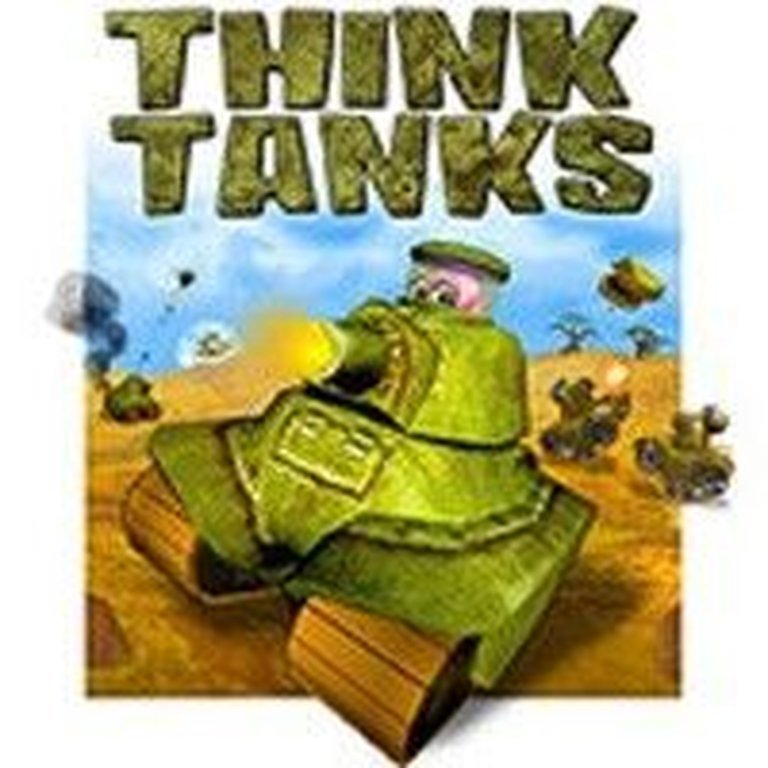
Description
In a futuristic setting, combat tanks are piloted by the brains of former soldiers to avoid direct alien warfare. As a rebellious soldier, you embark on a mission to rescue your comrades, battling across diverse arenas like lush islands and lava lands. The game features three tank types—light, medium, and heavy—each balancing speed, armor, and firepower, with power-ups and shields to enhance gameplay. Players can engage in single-player missions or multiplayer modes like Battlematch and Scrum, a rugby-inspired tank variant.
ThinkTanks Free Download
ThinkTanks Mods
ThinkTanks Guides & Walkthroughs
ThinkTanks Reviews & Reception
mobygames.com (75/100): Great fun if you’re playing for five minutes or five hours! I hope everyone has a chance to try out this great game that hearkens back to the games we all grew up with.
mobygames.com (75/100): Great fun if you’re playing for five minutes or five hours! I hope everyone has a chance to try out this great game that hearkens back to the games we all grew up with.
reddit.com : The 2003 game Think Tanks was one of my favorite games at the time, outdated as it is, it is still so fun and addicting.
myabandonware.com (95/100): Nice game, that’s exactly what i need xd
ThinkTanks: A Forgotten Gem of Arcade Tank Combat
Introduction
In the early 2000s, the gaming landscape was dominated by sprawling RPGs, cinematic shooters, and the first whispers of online multiplayer. Amidst this backdrop, ThinkTanks emerged as a quirky, fast-paced arcade tank combat game that defied expectations. Developed by Bravetree Productions and published by GarageGames, ThinkTanks offered a unique blend of simplicity and depth, wrapped in a bizarre yet charming premise: disembodied brains piloting tanks in a futuristic gladiatorial arena. While it never achieved mainstream success, its legacy persists in the hearts of a dedicated fanbase and its influence on indie game development.
This review will dissect ThinkTanks in exhaustive detail, exploring its development history, narrative quirks, gameplay mechanics, and the cultural impact it left behind. We’ll examine why it resonated with some players while failing to capture a broader audience, and how its design choices—both brilliant and flawed—shaped its reception.
Development History & Context
The Studio and Vision
ThinkTanks was developed by Bravetree Productions, a small studio that leveraged GarageGames’ Torque Engine, a tool designed to democratize game development. The Torque Engine, known for its accessibility, allowed Bravetree to craft a polished experience with a modest team of 41 people (including playtesters). The game’s creative direction was spearheaded by Joseph Maruschak (Creative/Art Director) and Mike Jahnke (Lead Artist), while Clark Fagot served as Technical Director.
The vision for ThinkTanks was clear: a fast, accessible, and moddable tank combat game that prioritized multiplayer chaos over narrative depth. The developers drew inspiration from classic arcade games like Battlezone (1980) and Tank Wars, but infused it with a modern twist—online multiplayer and a whimsical sci-fi premise.
Technological Constraints and Cross-Platform Ambitions
Released in February 2003, ThinkTanks was a technical marvel for its time, supporting Windows, Linux, and Mac—a rarity in an era when cross-platform compatibility was often an afterthought. The game’s shareware model (with a $19.95 price tag) and low system requirements (400 MHz CPU, 64 MB RAM) made it accessible to a wide audience.
The Torque Engine’s flexibility allowed for easy modding, which became a cornerstone of the game’s longevity. Players could create custom maps, skins, and even entirely new game modes, fostering a vibrant community that extended the game’s lifespan far beyond its initial release.
The Gaming Landscape of 2003
2003 was a pivotal year for gaming:
– Multiplayer shooters like Halo: Combat Evolved and Counter-Strike dominated the online scene.
– Arcade-style games were increasingly niche, overshadowed by cinematic experiences.
– Indie development was still in its infancy, with tools like Torque Engine paving the way for smaller studios.
ThinkTanks arrived at a time when fast-paced, pick-up-and-play games were becoming rare. Its simplicity was both a strength and a weakness—it appealed to casual players but struggled to compete with the depth of more complex titles.
Narrative & Thematic Deep Dive
The Excuse Plot
ThinkTanks’ narrative is deliberately minimalist, serving as little more than a backdrop for the action. The premise is as follows:
– Aliens have kidnapped human soldiers, extracted their brains, and placed them in tanks.
– These “ThinkTanks” are forced to battle in arenas for the aliens’ amusement.
– The player, a rebellious brain, fights to rescue their comrades and escape.
This absurdist sci-fi setup is reminiscent of Battlezone (1998) and Twisted Metal, but ThinkTanks leans into the ridiculousness rather than attempting serious storytelling. The lack of dialogue or character development reinforces its arcade roots—players are here for the explosions, not the exposition.
Themes: Absurdity and Player Agency
While ThinkTanks lacks deep narrative themes, its meta-commentary on gaming culture is subtle but present:
1. Gladiatorial Combat as Entertainment: The aliens’ role mirrors that of game developers or even players themselves, forcing “brains” (a stand-in for gamers) to fight for their amusement.
2. Rebellion Against Control: The player’s defiance of the alien overlords can be read as a metaphor for player agency—breaking free from the constraints of game design.
3. The Illusion of Choice: The three tank classes (Light, Medium, Heavy) theoretically offer strategic variety, but in practice, the Light Tank’s dominance in multiplayer underscores how player behavior often overrides intended balance.
The Absence of Storytelling
ThinkTanks is unapologetically shallow in its narrative ambitions. There are no cutscenes, no character arcs, and no moral dilemmas. Instead, the game relies on:
– Environmental storytelling: Arenas like “Spooky Hollow” and “Lava Lands” hint at the aliens’ sadistic creativity.
– Whimsical tone: The cartoonish brain pilots and over-the-top weaponry (e.g., the UFO tank) reinforce its arcade sensibilities.
This approach alienated players seeking depth but delighted those who wanted pure, unadulterated chaos.
Gameplay Mechanics & Systems
Core Gameplay Loop
ThinkTanks is, at its heart, a third-person tank shooter with a focus on speed, maneuverability, and power-ups. The core loop is simple:
1. Choose a tank (Light, Medium, Heavy, or UFO).
2. Enter an arena (single-player missions or multiplayer matches).
3. Blow up enemies using a variety of weapons and power-ups.
4. Repeat until victory or annihilation.
The game’s arcade DNA is evident in its pick-up-and-play accessibility, but its multiplayer depth kept players engaged.
Tank Classes and Competitive Balance
The game offers three primary tank classes, each with distinct trade-offs:
| Tank Type | Speed | Armor | Firepower | Role |
|---|---|---|---|---|
| Light | Fast | Low | High | Hit-and-run, flanking |
| Medium | Balanced | Medium | Balanced | Versatile, all-rounder |
| Heavy | Slow | High | Low | Tanky, defensive |
In theory, this creates a rock-paper-scissors dynamic:
– Light tanks outmaneuver Heavies.
– Heavies outlast Mediums.
– Mediums outgun Lights.
In practice, the Light Tank’s speed and firepower made it the dominant choice in multiplayer, rendering the other classes underpowered by comparison. This imbalance was a major criticism in reviews (e.g., Out of Eight’s complaint about “annoying aiming” and the Light Tank’s superiority).
Power-Ups and Arena Hazards
To spice up combat, ThinkTanks includes:
– Boost Pads: Temporary speed increases.
– Shields: Brief invulnerability.
– Weapon Upgrades: Enhanced firepower.
– Environmental Hazards: Lava pits, bottomless chasms, and explosive barrels.
These elements encourage aggressive play and punish complacency, reinforcing the game’s arcade roots.
Game Modes
ThinkTanks offers a variety of modes, though multiplayer is the star:
- Solo Play: A progression-based campaign against AI bots.
- Quick Play: Instant skirmishes against bots.
- Battlemode: Free-for-all deathmatch.
- Team Battlemode: Team-based deathmatch.
- Scrum: A rugby-inspired mode where players fight to carry a “scrum ball” into the enemy goal.
- Team Scrum: Scrum with team dynamics.
Scrum is the most unique mode, blending sports mechanics with tank combat. It’s chaotic, unpredictable, and a testament to the game’s creativity.
AI and Multiplayer
- Single-Player AI: The bots are competent but predictable, making Solo Play feel repetitive over time.
- Multiplayer: The true soul of ThinkTanks. Matches were fast, frantic, and often hilarious, with players bouncing off walls, exploiting power-ups, and engaging in last-second scrum ball steals.
However, the Xbox version’s multiplayer was criticized for its “floaty” controls and poor netcode (as noted by Eurogamer’s scathing 10% review).
Controls and UI
- Keyboard/Mouse Controls: Intuitive for a tank game, though the targeting reticle was occasionally clunky (a common complaint in player reviews).
- UI: Clean and functional, with minimal HUD clutter—a refreshing contrast to the busy UIs of modern shooters.
World-Building, Art & Sound
Visual Design: Cartoonish Charm
ThinkTanks’ art style is bright, colorful, and intentionally cartoonish:
– Tanks resemble toy-like vehicles with floating brains as pilots.
– Arenas are thematic but simple, with distinct biomes:
– Lush Islands: Green hills and valleys.
– Spooky Hollow: Dark, foggy, and eerie.
– Lava Lands: Hazardous terrain with instant-death pits.
The low-poly models and simple textures were a product of its time but aged surprisingly well due to their stylized approach.
Sound Design: Functional but Forgettable
- Music: Upbeat, arcade-style tracks that fit the tone but lack memorability.
- Sound Effects: Satisfying explosions and tank engine hums, though nothing groundbreaking.
The audio design serves its purpose without standing out—a common trait in arcade-style games.
Atmosphere: Chaotic Fun
ThinkTanks’ world is deliberately absurd, and the game leaned into it:
– The floating brains add a darkly comedic touch.
– The arenas’ deadliness (e.g., instant-death lava) reinforces the gladiatorial theme.
– The lack of realism makes it approachable and lighthearted.
Reception & Legacy
Critical Reception: A Divided Response
ThinkTanks received mixed but generally positive reviews, with critics praising its accessibility and multiplayer while criticizing its lack of depth and imbalance.
| Publication | Platform | Score | Key Praise | Key Criticism |
|---|---|---|---|---|
| Christ Centered Gamer | Windows | 92% | “Great graphics, stable performance, cross-platform” | Minor targeting issues |
| Mac Observer | Mac | 90% | “Fast, furious, and fun” | “Not a lot of thinking involved” |
| Eurogamer (Xbox) | Xbox | 10% | None | “Floaty tanks, worst 3D graphics on Xbox” |
| Out of Eight | Windows | 63% | “Decent AI, good game modes” | “Annoying aiming, Light Tank dominance” |
Common Praise:
– Easy to learn, hard to master.
– Great for short bursts of gameplay.
– Cross-platform support (a rarity in 2003).
Common Criticisms:
– Single-player was shallow.
– Multiplayer imbalance (Light Tank meta).
– Xbox version was poorly optimized.
Commercial Performance and Community
ThinkTanks was never a commercial juggernaut, but it cultivated a dedicated fanbase:
– Planet ThinkTanks 2 became the hub for mods, skins, and community events.
– Modding tools allowed players to create hundreds of custom maps and game modes.
– Leagues and tournaments (e.g., TBML, PSL) kept the game alive long after official support ended.
The game’s shareware model and low price point ($19.95) made it accessible, but its niche appeal limited its mainstream success.
Influence and Legacy
While ThinkTanks didn’t spawn direct sequels, its influence can be seen in:
1. Indie Tank Games: Titles like World of Tanks (2011) and War Thunder (2012) owe a debt to its accessible tank combat.
2. Modding Culture: Its Torque Engine foundation inspired other indie developers to prioritize moddability.
3. Arcade Revival: Games like Rocket League (2015) share its pick-up-and-play, physics-based chaos.
Today, ThinkTanks is remembered fondly by its fans but remains largely forgotten by the broader gaming community.
Conclusion: A Flawed but Beloved Relic
ThinkTanks is a product of its time—a fast, fun, and flawed arcade tank game that prioritized multiplayer mayhem over narrative depth. Its simplicity was its greatest strength and weakness:
– Strengths:
– Accessible, chaotic, and endlessly replayable in multiplayer.
– Cross-platform support and modding tools extended its lifespan.
– Charming, absurd premise that embraced its ridiculousness.
– Weaknesses:
– Shallow single-player and imbalanced multiplayer.
– Technical issues (especially on Xbox).
– Lack of mainstream appeal in an era dominated by deeper experiences.
Final Verdict: ThinkTanks is a cult classic—not a masterpiece, but a delightful time capsule of early 2000s indie gaming. For those who played it, it remains a nostalgic gem; for newcomers, it’s a curious relic worth experiencing for its pure, unfiltered fun.
Score: 7.5/10 – A flawed but lovable arcade shooter that punched above its weight.
Post-Script: Where to Play Today
For those interested in experiencing ThinkTanks today:
– MyAbandonware offers a free download (with a provided serial key).
– Planet ThinkTanks 2 (though now defunct) archives mods and community creations.
– Internet Archive hosts the original game files.
While its online servers are long dead, the single-player and LAN modes still offer a glimpse into a bygone era of gaming—one where simplicity and chaos reigned supreme.