
- Release Year: 2020
- Platforms: Blacknut, PlayStation 4, Stadia, Windows, Xbox One
- Publisher: WhisperGames, Wired Productions, Ltd.
- Developer: Camel 101
- Genre: Action
- Perspective: 1st-person
- Game Mode: Single-player
- Gameplay: Puzzle elements, Survival horror
- Setting: Fantasy
- Average Score: 58/100
Description
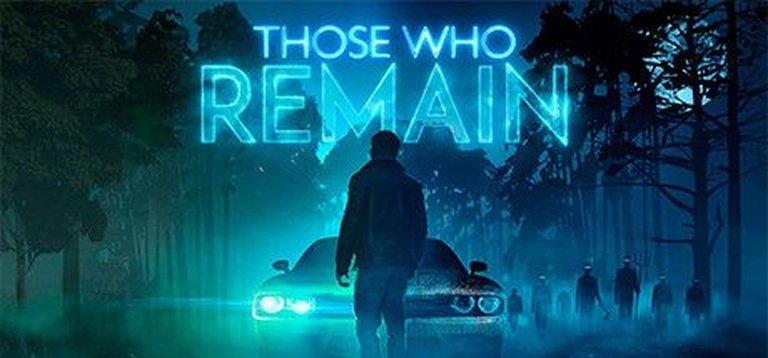
Those Who Remain is a first-person survival horror game with puzzle elements set in a fantastical realm, where players navigate eerie environments, solve intricate puzzles, and face supernatural threats. The narrative emphasizes psychological horror, with deadly boundaries that trigger consequences and a theme of the past inescapably returning to haunt the protagonist.
Gameplay Videos
Where to Buy Those Who Remain
Those Who Remain Free Download
Those Who Remain Cracks & Fixes
Those Who Remain Guides & Walkthroughs
Those Who Remain Reviews & Reception
metacritic.com (65/100): the execution leaves much to be desired.
metacritic.com (60/100): Its most fundamental problem is that it tries to do too much.
metacritic.com (100/100): If you are a fan of twisted horror video games you should play it.
metacritic.com (100/100): Great concept, storytelling and graphics for an Indie game.
metacritic.com (50/100): Those Who Remain is difficult to recommend, but there is an interesting meditation on guilt, redemption, and judgement hidden amongst an unfortunate mass of clunky design and gameplay.
ign.com : control shortcomings and a disjointed flow to its narrative prevent it from being a consistent thrill.
opencritic.com (60/100): Psychological horror game Those Who Remain features jump scares with a few too many jagged edges.
opencritic.com : A couple of nifty concepts can’t save this uninspired genre piece from its shortage of character or fear.
opencritic.com (30/100): Those Who Remain is rife with frustrating puzzles and illogical scenarios, which greatly dilutes its horror experience.
opencritic.com (50/100): Those Who Remain deserves major points for creativity of ideas and premise.
opencritic.com (50/100): There’s an intriguing and intelligent story to Those Who Remain, but poor checkpointing and awkward chase scenes often spoil the experience.
opencritic.com (50/100): Those Who Remain is presented as one of the most generic first-person horror adventures of the year and does not manage to be easy to recommend when there are so many works betting on similar ideas with a better execution.
opencritic.com (50/100): Those Who Remain is difficult to recommend, but there is an interesting meditation on guilt, redemption, and judgement hidden amongst an unfortunate mass of clunky design and gameplay.
opencritic.com (50/100): It’s just bland and mediocre – not awful – but forgettable, especially when there are so many better horror stories out there to be told.
opencritic.com : Although it had some good ideas at the start, Those Who Remain feels like the most cookie cutter horror game possible that barely manages to present anything fresh enough to keep you interested across the six hour playtime.
opencritic.com (45/100): All of these problems turn the game from something promising into a mediocre experience that’s less psychological horror than it is torture. There are better horror experiences out there.
opencritic.com : Those Who Remain doesn’t have jump-scares, it has jump-yells. Yelling at the game for its clunky controls and puzzles.
opencritic.com (50/100): Overall, Those Who Remain is fine. Just fine.
opencritic.com (50/100): Those Who Remain is a trivial story about corruption and injustice.
imdb.com (80/100): It can’t compete with other recent releases but it’s nevertheless highly recommended to genre fans.
imdb.com (60/100): Good story but not the best gaming experience
sirusgaming.com : Those Who Remain does an amazing job with how it handles its scares.
Those Who Remain: A Noble Failure in the Shadows of Horror greats
Introduction: The Allure and Agony of Light
In the overcrowded corridors of the modern horror genre, where jump-scares are cheap and atmospherics are often a veneer, Those Who Remain arrived in May 2020 with a premise so primal and potent it seemed almost foolproof: what if the darkness itself was an active, lethal entity? The core hook—surviving by manipulating light sources in a town consumed by shadow—promised a reverse-stealth experience that could redefine first-person horror. Developed by the Portuguese indie studio Camel 101, the game sought to merge the psychological Weight of a David Lynch narrative with the interdimensional dread of Stranger Things, all framed by a morality system inspired by Silent Hill. Yet, for every moment of chilling brilliance it achieves, Those Who Remain stumbles into a morass of frustrating design, clunky execution, and a narrative that collapses under the weight of its own ambitions. This review will argue that Those Who Remain is a fascinating, deeply flawed artifact—a game whose conceptual pedigree and atmospheric strengths are consistently undermined by a failure to polish its foundational mechanics and weave its thematic threads into a cohesive whole. It is not a forgotten masterpiece, but a compelling case study in how a powerful idea can be eroded by imperfection.
Development History & Context: From Sci-Fi to Supernatural
Camel 101, founded by brothers Bruno and Ricardo Cesteiro, had previously carved a niche with the sci-fi horror title Syndrome (2016). With Those Who Remain, the studio deliberately pivoted, seeking to “get a bit more down to earth,” as Ricardo Cesteiro stated in a developer interview. The initial concept was purely mechanical: a game where the player could not enter the dark. However, as the team prototyped, they discovered a critical flaw: “it was almost impossible to visually explain to the player where safety ended and danger started.” This technical hurdle forced a narrative solution—injecting creatures into the darkness—which in turn catalyzed the development of the game’s central antagonist: the shadow figures with glowing blue eyes.
The technological constraints were those of a small, three-person core team (as noted in the credits) using the Unity engine and FMOD for sound. This indie scale explains the game’s modest visual fidelity—often described as “dated” or “retro”—but also fueled its creative risks. The development occurred against the backdrop of the 2020 indie horror boom, a year that also saw releases like Mundaun and Paradise Killer. The team cited major cinematic influences: the small-town unease of Twin Peaks, the dimensional horror of Stranger Things, and the fog-shrouded dread of John Carpenter’s The Fog. These inspirations are evident in the game’s aesthetic and structure, but the translation from inspiration to implementation proved uneven. The game was released on May 28, 2020, for PC, with console ports following in July, published by Wired Productions. Its low price point ($2.99 at launch on Steam) signaled an awareness of its niche, cult-targeted appeal.
Narrative & Thematic Deep Dive: Guilt, Judgment, and Disconnected Shadows
The story of Those Who Remain is its most ambitious and most fractured element. Protagonist Edward Turner is introduced not as a hero, but as an “asshole victim” in the making: a guilt-ridden man driving to a motel to break off an affair, his family life already shattered by a past car accident that killed his daughter. This immediate establishment of moral ambiguity is a strength, aligning with the developers’ stated goal: “Real people have flaws and make mistakes.” Edward’s journey through the supernatural purgatory of Dormont becomes an externalization of his internal torment.
The narrative bifurcates into two parallel strands. The first is the central mystery of Annika, a 13-year-old girl whose death was ruled an accident but was, in fact, a result of bullying and subsequent cover-ups by three boys and, by extension, the town’s adults (a police officer, a foreman, a doctor). The player is tasked, by a mysterious masked stranger, with gathering evidence in various locations (a police station, a home, a church) to decide the fates of these individuals—forgive or condemn them. This mechanic is clearly modeled on Silent Hill 2‘s “judgment” scenarios and Silent Hill‘s overall themes of sin and punishment.
The second strand is the surreal, Stranger Things-inspired “Other Place,” a twisted mirror dimension where Edward solves puzzles that affect the real world. This dimension is tied to the town’s collective guilt and the source of the shadow entities.
However, the execution of these themes is disastrously inconsistent. The critique from multiple reviewers (IGN, TheSixthAxis, Game Hoard) consistently notes a “disjointed flow” and a “narrative that lacks cohesion.” The game’s episodic structure—jumping from a gas station to a diner to a church via loading screens—”shatter[s] any sense of place,” as IGN’s Tristan Ogilvie put it, making Dormont feel like a “theme park” of haunted houses rather than a contiguous town. This fragmentation critically undermines the intended tapestry of communal guilt. The connection between Edward’s personal sin (infidelity, past negligence) and the town’s collective sin (covering up Annika’s death) is never thematically fused; they operate as two separate plots merely juxtaposed.
Furthermore, the morality system, which should be the game’s crowning interactive achievement, is reported by players (and seemingly confirmed by IGN’s test) to be broken. Playing through twice with diametrically opposed choices—benevolent vs. wrathful—reportedly yielded the exact same “total bummer” ending. This fatally undermines the game’s core promise of “choices and consequences.” The intended shades of grey collapse into a single, predetermined path, rendering the player’s moral deliberation meaningless. The thematic exploration of “darkness in the light”—that evil resides in respectable surfaces—is stated in the game’s tagline but never dynamically explored through gameplay or narrative consequence. The characters, as IGN notes, are “unnatural-looking mud people” with “mediocre voice acting,” preventing genuine empathy and reducing the town’s residents to plot devices rather than flawed, relatable humans as the developers hoped.
Gameplay Mechanics & Systems: A Prisoner of Its Own Design
Those Who Remain builds its entire gameplay loop around its central, brilliant idea: light is safety, darkness is death. Shadow figures with glowing eyes populate every unlit space; stepping into their domain means an instant, terrifying death. This creates a constant, oppressive tension—a “palpable” fear of a lightbulb burning out or a switch failing. The mechanic is conceptually sublime, a true inversion of stealth.
Yet, from this potent seed grows a weed of frustration. The interactions are plagued by “fiddliness.” As IGN details, “inching through a doorway sideways while waving the reticule over the switch… all too often ends in an instant death.” The “hand prompt” to interact is finicky, with a small hitbox that demands pixel-perfect precision. This turns a moment of tension into a moment of controller-chewing rage. The problem is compounded by poor visual feedback: light switches glow red whether on or off, leaving the player guessing.
The game introduces a recurring mobile threat: a “hulking harpy with a car’s headlight for a face” that patrols certain areas and is unaffected by light. This should heighten the stakes, but its implementation is “one-dimensional stealth” (IGN). The player has no tools—no crouch, no lean, no distractions. As IGN quipped, the player feels “about as cloaked as a naked ninja.” The monster’s “erratic” movement makes its detection zones feel unfair, leading to deaths that feel cheap rather than earned.
Puzzle design is a mixed bag. The developer interview proudly mentions “inventive puzzles” using light, physics, and audio. Some indeed cleverly use the light-manipulation core mechanic and the alternate dimension (solving a puzzle in the Other Place to change the real world). However, the majority devolve into “pixel hunting” and “monotone search missions,” as German magazine 4Players lashed out. The environments are littered with openable drawers, cabinets, and boxes, most empty. This creates a拖沓 (tuōdài – tedious) loop of checking every container, a classic adventure game trope but one executed without reward or narrative integration. As Attack of the Fanboy summarized, the puzzles are “mostly feel unoriginal and fail to innovate.”
Checkpointing is another critical failure. Dying often forces replay of “long sections,” as noted in the IMDb user review, with no manual save option. This transforms the tense horror into a repetitive punishment, destroying pacing and atmosphere. The game’s six-hour length, as estimated by the developers, can balloon far longer due to these retries, breeding resentment rather than sustained fear.
Finally, the alternate dimension itself, while conceptually neat, is thinly realized. Its “creepy creatures” are mostly more static shadow figures, missing an opportunity for a distinct, new type of threat that could have leveraged the “twisted mirror” theme more dynamically.
World-Building, Art & Sound: A Tale of Two Halves
The atmosphere of Those Who Remain is its most celebrated and consistent element. The town of Dormont is successfully crafted as a “sleepy” locale hiding “dark secrets,” directly channeling Twin Peaks. The lighting is the undisputed star: flickering neon signs, isolated pools of lamplight, the stark contrast between safety and the inky black void. The “glowing blue eyes” of the shadow figures in the dark are an iconic, frightening image, a masterstroke of minimalistic horror design. The soundscape, with its “retro classical” 80s-inspired score and unsettling ambient noise, effectively builds dread without reliance on jump-scares, aligning with the developer’s philosophy: “an oppressive and dangerous atmosphere lasts a whole playthrough.”
However, this atmospheric excellence crashes against the game’s technical and artistic limitations. The human character models are repeatedly panned as “unnatural-looking mud people” (IGN) with “mediocre” animation and voice acting. This dissonance is jarring: you are immersed in a beautifully lit, threatening space, only to have that immersion shattered by a PS1-era facial model during a crucial dialogue moment. The environments themselves, while well-lit and conceptually interesting (a corn field at night, a police station), are often “grobschlächtig” (coarse/clunky) and “zweckmäßig” (utilitarian) in their aesthetics, lacking the detailed lived-in quality of Silent Hill or the environmental storytelling of What Remains of Edith Finch.
Performance issues, particularly on PlayStation 4 as highlighted by 4Players (“nerves ruining frame drops”), further disrupt the carefully constructed tension. A horror game’s power lies in sustaining immersion; technical hiccups and ugly character models act as constant reminders of the game’s indie budget, pulling the player out of the experience at its most critical moments. The “Other Place” dimension, while having a strong Stranger Things vibe, suffers from the same texture and model limitations, feeling more like a simple palette-swapped asset flip than a truly terrifying inverted reality.
Reception & Legacy: A Modest Bang, Then Fading Whispers
Those Who Remain arrived to a decidedly mixed-to-negative critical reception. Its Metascore sits at a “Generally Unfavorable” 49 (PC 48, PS4 49, Xbox One 59). The OpenCritic aggregate places it in the 7th percentile. The critical consensus, as evidenced by the review excerpts, is remarkably uniform in its praise for the concept and atmosphere and its condemnation of the execution. Scores hovered in the 40-65% range, with only a few outliers like XBLA Fans’ 80% and Generación Xbox‘s 75%.
The praise consistently highlights:
* The core “fear of the dark” mechanic as innovative and terrifying.
* A genuinely unsettling atmosphere built on lighting and sound.
* An intriguing, if flawed, narrative premise with moral choice.
The condemnations are equally consistent:
* Infuriatingly clunky controls and imprecise interaction.
* Monotonous, repetitive puzzle and search design.
* Disjointed, poorly paced narrative with loading-screen “jump cuts.”
* Underdeveloped character models and voice acting.
* Questionable implementation of its own morality system.
* Frustrating checkpointing and chase sequences.
Player reception, as seen on Metacritic (User Score 5.8) and IMDb, is similarly divided. Some users champion it as an “atmospheric and intriguing” experience for “real horror fans,” forgiving its flaws due to its indie pedigree and low price. Others, like the “Callistono59” Metacritic review, call it a “miserable attempt” with “zip” atmosphere and gameplay. This split mirrors the critical divide: it’s a game you either tolerate for its ideas or reject for its execution.
Its legacy is likely to be that of a niche cult title—a game discussed in forums for its “what-could-have-been” potential rather than celebrated as a classic. It has not demonstrably influenced major studio titles. Its most lasting contribution may be as a cautionary tale about the perils of letting a powerful central mechanic be dragged down by unpolished periphery systems. It sits in a long line of “ambitious but flawed” indie horror games like The Vanishing of Ethan Carter or Among the Sleep—titles that spark conversation but rarely achieve mainstream canonization.
Conclusion: Cursed to the Shadows of Better Games
Those Who Remain is a paradox wrapped in a shadow. Its heart is in the right place: a developer genuinely attempting to innovate within a stagnant genre, tackling heavy themes of guilt, judgment, and communal sin, and crafting an atmosphere of sustained dread that many AAA titles fail to achieve. The primal fear of darkness made tangible is a stroke of genius, and moments exploring the “Other Place” hint at a truly special psychological horror.
However, genius is not enough. The game collapses under the weight of its own rough edges. The clunky interaction system turns tension into irritation. The repetitive item-hunting drains the life from exploration. The broken morality system invalidates its own thematic core. The disconnected level structure neuters its social commentary. It is a game constantly at war with itself—its narrative wants to be a Twin Peaks parable, but its gameplay is a clunky adventure-game slog; its atmosphere is oppressive, but its technical presentation is often shoddy.
In the pantheon of horror games, Those Who Remain does not take its place alongside the giants like Silent Hill 2 or PT. It is not even as consistently polished as its near-contemporary indie peers like Mundaun. Instead, it occupies a more tragic, fascinating space: that of the noble failure. It is a game that is worth experiencing for the horror aficionado—not because it is good, but because it is interesting. Its failures are instructive. Its moments of brilliance are haunting. It stands as a testament to the fact that a brilliant premise, without the rigorous discipline of polished execution and cohesive narrative design, will ultimately be consumed by the very darkness it sought to weaponize. The town of Dormont remains, but its story is one of promise unfulfilled, a cautionary tale whispered in the flickering light of a dying bulb.