
- Release Year: 2008
- Platforms: Windows
- Publisher: THQ Inc.
- Genre: Compilation
- Perspective: Various
- Average Score: 55/100
Description
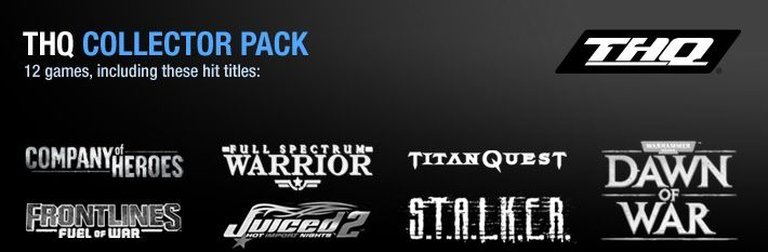
THQ Collector Pack is a comprehensive Steam compilation released in 2008, featuring twelve acclaimed titles from THQ’s portfolio, spanning diverse genres such as real-time strategy, action RPGs, tactical shooters, and racing simulations. Set across varied worlds including World War II battlefields in Company of Heroes, the post-apocalyptic Zone in S.T.A.L.K.E.R.: Shadow of Chernobyl, ancient mythological realms in Titan Quest, and grimdark futuristic wars in Warhammer 40,000: Dawn of War, this pack offers gamers a rich anthology of immersive narratives and intense gameplay experiences from the mid-2000s era.
Guides & Walkthroughs
THQ Collector Pack: A Mid-2000s Gaming Time Capsule
Introduction
Imagine unearthing a digital vault from the golden age of PC gaming, where real-time strategy battles raged across war-torn Europe, post-apocalyptic survivors scavenged irradiated wastelands, and mythic heroes clashed with ancient gods—all for the price of a single modern indie title. Released on November 26, 2008, via Steam, the THQ Collector Pack is precisely that: a sprawling compilation of twelve (or thirteen, depending on the variant) titles from publisher THQ Inc., bundling some of the era’s most acclaimed and ambitious games at a fraction of their individual cost. At launch, it retailed for around $100, but frequent sales—like the 25% discount dropping it to $75 or even $74.99—made it an irresistible deal for budget-conscious gamers. This pack isn’t just a nostalgic cash-grab; it’s a testament to THQ’s bold vision in the mid-2000s, when PC gaming was exploding with innovative genres and Steam was revolutionizing distribution. My thesis: The THQ Collector Pack stands as a definitive snapshot of 2000s PC excellence, offering unparalleled value through diverse, genre-defining titles that influenced modern gaming, though its fragmented nature demands selective engagement from today’s players.
Development History & Context
THQ Inc., founded in 1991 as a toy and video game publisher, had evolved by the mid-2000s into a powerhouse for PC and console titles, particularly in strategy, action, and RPG spaces. The Collector Pack draws from a roster of studios under THQ’s umbrella or partnerships, reflecting a collaborative ecosystem rather than a single visionary team. Key developers include Relic Entertainment for the Company of Heroes series and Warhammer 40,000: Dawn of War franchise—both built on custom engines emphasizing destructible environments and squad-based tactics. GSC Game World handled S.T.A.L.K.E.R.: Shadow of Chernobyl, a Ukrainian studio’s passion project that pushed the limits of the X-Ray Engine for open-world survival horror. Iron Lore Entertainment crafted Titan Quest, an action-RPG homage to Diablo using a modified Titan Quest Engine for seamless mythic exploration. Pandemic Studios delivered the tactical shooters Full Spectrum Warrior and its sequel Ten Hammers, leveraging Unreal Engine 3 for realistic military simulations. Kaos Studios’ Frontlines: Fuel of War innovated with a multi-platform shooter on Unreal Engine 3, while Juice Games’ Juiced 2: Hot Import Nights focused on arcade racing with a custom engine tuned for street culture vibes.
The pack’s creation was tied to Steam’s burgeoning dominance in 2008, as Valve’s platform shifted from a Half-Life launcher to a full digital storefront. THQ, facing piracy woes and retail slumps, saw bundles as a way to offload back catalog titles amid the post-financial crisis economy. Technological constraints of the era—mid-range PCs with DirectX 9 graphics cards, limited online infrastructure—shaped these games: Dawn of War‘s Gold Edition (2005) included the base game and Winter Assault expansion, optimized for broadband-era multiplayer without modern cloud saves. The gaming landscape was vibrant yet transitional; RTS giants like StarCraft loomed large, but THQ’s titles experimented with hybrid genres amid the rise of MMOs and consoles. Visionaries like Relic’s Steve Bristow aimed to humanize war stories, while GSC’s S.T.A.L.K.E.R. captured Eastern European grit in a Western-dominated market. Released just as the Great Recession hit, the pack capitalized on gamers seeking affordable escapism, foreshadowing the bundle economy seen in later Humble Bundles.
Narrative & Thematic Deep Dive
As a compilation, THQ Collector Pack lacks a unified narrative, instead weaving a tapestry of mid-2000s storytelling through war, survival, mythology, and adrenaline-fueled rebellion. At its core, themes of conflict and human (or superhuman) endurance dominate, reflecting post-9/11 anxieties and the era’s fascination with gritty realism.
The Company of Heroes duo (base game and Opposing Fronts) delivers a cinematic WWII saga, following Allied forces from Normandy to victory. Players command squads in branching campaigns, with dialogue-heavy cutscenes humanizing soldiers—Irish sergeant MacKay’s banter in Opposing Fronts‘ British storyline underscores themes of sacrifice and camaraderie amid the chaos of Arnhem. Dawn of War series (Gold Edition, Dark Crusade, Soulstorm) transplants this to the grimdark Warhammer 40k universe, where factions like Space Marines and Orks vie for planetary control. Narratives explore fanaticism and existential war; Dark Crusade‘s planet-conquering meta-campaign adds replayable depth to lore-rich tales of heresy and imperial decay, with voiced commanders delivering quotable zealotry like “For the Emperor!”
S.T.A.L.K.E.R.: Shadow of Chernobyl stands as the pack’s atmospheric outlier, a first-person survival tale in the Chernobyl Exclusion Zone. As Marked One, a amnesiac stalker, players navigate factions (Duty vs. Freedom) in a non-linear plot blending sci-fi anomalies with Slavic folklore. Themes of radiation-scarred isolation and moral ambiguity shine through sparse, haunting dialogue—NPCs whisper of the Zone’s “noosphere” psyche, critiquing humanity’s hubris. Frontlines: Fuel of War shifts to near-future geopolitics, pitting Western Coalition against Red Star Alliance in resource wars; its co-op campaign emphasizes asymmetric warfare, with narratives decrying oil-driven imperialism through terse radio chatter.
Tactical entries like Full Spectrum Warrior and Ten Hammers simulate U.S. military ops in urban Iraq-inspired settings, focusing on squad leadership over heroics—themes of brotherhood and ethical dilemmas emerge in missions where covering fire saves lives, but civilian risks haunt choices. Titan Quest and Immortal Throne offer mythic escapism: a globetrotting ARPG where players thwart Telkine demons across Greece, Egypt, and China. Characters like the scholarly mentor or fierce Amazon warriors embody heroism’s burden, with lore-laden codex entries exploring immortality’s curse. Juiced 2: Hot Import Nights bucks the trend with a lighter, street-racing narrative—customize rides and crew up for import nights, themes of underdog rebellion against elites conveyed through hip-hop infused dialogue and customizable avatars.
Collectively, these stories prioritize immersion over twists, using era-specific voice acting (often wooden but earnest) to ground themes of resilience in a post-Cold War world.
Gameplay Mechanics & Systems
The pack’s strength lies in its genre diversity, creating a playground of mechanics from RTS epics to survival shooters, though UI inconsistencies across titles can feel dated on modern systems.
RTS dominates with Company of Heroes and Dawn of War. CoH’s core loop revolves around resource points captured via territorial control, fueling unit production and veterancy upgrades—combat feels visceral, with cover-based shooting and dynamic frontline collapses. Opposing Fronts expands this with dual campaigns (British/American vs. Panzer Elite/OTD), introducing doctrines for asymmetric play. Dawn of War‘s requisition/requisition system mirrors this but adds morale mechanics; Dark Crusade‘s province conquest mode innovates with persistent maps, while Soulstorm refines multiplayer with race-specific superweapons. Flaws include pathfinding issues in large battles, but innovations like destructible terrain set standards for later titles like Total War.
Survival horror peaks in S.T.A.L.K.E.R., blending FPS with RPG elements: scavenge artifacts in a radioactive open world, manage hunger/radiation via inventory Tetris, and engage faction wars with A-Life AI simulating emergent encounters. Non-linear quests reward exploration, but clunky controls and bugs (mitigated by community mods) highlight era constraints. Frontlines: Fuel of War offers vehicle-heavy FPS action, with commander mode for tactical overlays—core loops mix infantry rushes with air strikes, though multiplayer lobbies feel sparse today.
Tactical squad games shine in Full Spectrum Warrior series: command fire teams in cover-to-cover advances, using real military doctrines like bounding overwatch. Progression ties to equipment unlocks, but the lack of direct control (no aiming) innovates frustration into realism—Ten Hammers adds vehicles for urban sprawls. ARPG fans revel in Titan Quest‘s dual-class mastery system (e.g., Spirit + Rogue for ghostly assassins), loot-driven progression across acts, and skill trees blending Greek fire with Chinese chi. Immortal Throne extends this with Atlantis DLC, refining endgame via harder rifts.
Racing rounds it out with Juiced 2‘s open-world street circuits: pink-slip races build crew respect, customization affects handling physics, and crew abilities (like nitrous boosts) add social layers. UI across the pack varies—Steam integration helps launches, but dated interfaces (e.g., DoW’s minimap) demand tweaks. Innovative systems like CoH’s line-of-sight fog influenced MOBAs, while flaws like Stalker’s inventory limits test patience.
World-Building, Art & Sound
The pack’s worlds span gritty realism to fantastical excess, forging immersive atmospheres that punch above their mid-2000s tech.
Company of Heroes and Full Spectrum Warrior excel in WWII authenticity: bombed-out Normandy villages with mud-slicked trenches, art directed for volumetric fog and particle debris. Sound design amplifies tension—distant artillery rumbles build dread, squad shouts (“Suppressing fire!”) sync with chaotic gunfire. Dawn of War‘s 40k hive cities drip gothic menace, with crimson Space Marine armor contrasting Ork scrapheaps; orchestral scores swell during Waaagh! charges, immersing in lore via faction anthems.
S.T.A.L.K.E.R.‘s Zone is a masterpiece of desolation: Pripyat’s skeletal ruins under anomaly-lit skies, built with detailed foliage and dynamic weather. Ambient howls and Geiger ticks create paranoia, complemented by a moody industrial soundtrack. Frontlines envisions 2029 battlefields—oil rigs to urban megacities—with modular destruction; soundscapes mix jet roars and bullet whines for cinematic flair.
Titan Quest paints a lush mythological tapestry: sun-baked Greek isles to shadowy Chinese temples, with modular environments hiding secrets. Art style evokes Age of Mythology, while flute-heavy scores evoke ancient epics. Juiced 2 captures neon-lit urban nights, customizable cars gleaming on rainy streets—thumping hip-hop and engine growls fuel the adrenaline.
These elements coalesce into cohesive experiences per title, enhancing themes: destruction in RTS underscores war’s toll, while Stalker’s silence amplifies isolation. Visually, DX9 limitations show (low-poly models), but art direction endures, contributing to replayable atmospheres that influenced open-world designs in Metro or Total War.
Reception & Legacy
Upon 2008 release, the THQ Collector Pack garnered no aggregated critic scores on sites like MobyGames (n/a Moby Score), but contemporaneous coverage praised its value. Elder-Geek.com called it an “impressive new package deal” worth $220 individually, while VG247 and N4G highlighted the sale as a “decent deal” for RTS fans. User sentiment echoed this—Reddit threads and forums lauded inclusions like S.T.A.L.K.E.R. (a cult hit despite bugs) and Company of Heroes (91% on Metacritic), though Juiced 2 drew mixed racing critiques. Commercially, Steam sales success paved the way for THQ’s bundle strategy, with the 2012 Humble THQ Bundle (including pack staples) raising charity funds and reviving interest.
Legacy endures through influence: Relic’s CoH mechanics shaped Homeworld sequels and esports RTS; Dawn of War popularized 40k gaming, inspiring Space Marine and MOBAs like AutoChess. S.T.A.L.K.E.R.‘s anomaly survival birthed the Metro series and survival sims like The Long Dark. Titan Quest bridged to Grim Dawn, while Full Spectrum Warrior‘s tactics influenced Brothers in Arms. THQ’s 2013 bankruptcy scattered IPs, but digital re-releases (e.g., THQ Classics in 2016) preserve them. Today, the pack symbolizes pre-crash PC optimism, influencing bundle culture and retro revivals—essential for historians, though modern ports could enhance accessibility.
Conclusion
The THQ Collector Pack is more than a bargain bin relic; it’s a curated chronicle of 2000s innovation, blending wartime epics, anomalous horrors, mythic quests, and street thrills into a 100+ hour odyssey. From Relic’s tactical brilliance to GSC’s haunting realism, it showcases THQ’s diverse ambition amid technological and economic shifts. Drawbacks like dated UIs and uneven polish aside, its value and influence cement its place as a cornerstone of PC gaming history—a must-own for strategy enthusiasts and retro completists, earning a resounding 9/10 for preserving an era when games dared to be bold. In a subscription-saturated world, this pack reminds us of ownership’s joy and gaming’s evolving legacy.