
- Release Year: 2011
- Platforms: Macintosh, Windows
- Publisher: Big Fish Games, Inc, Kutawaves Games
- Developer: Kutawaves Games
- Genre: Puzzle
- Perspective: Side view
- Game Mode: Single-player
- Gameplay: Falling block puzzle, Tile matching puzzle
- Setting: Classical antiquity, Europe, Fantasy
Description
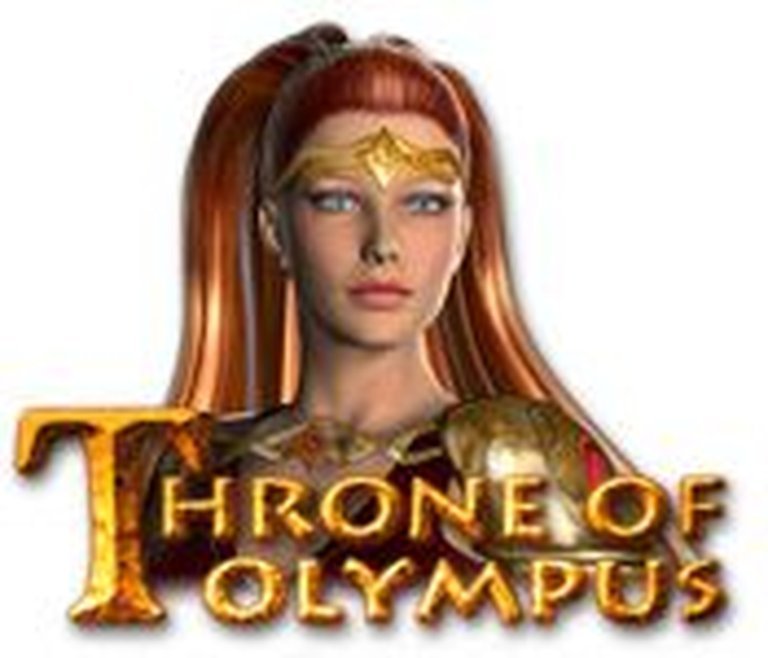
Throne of Olympus is a 2D casual turn-based puzzle game set in a fantasy version of classical antiquity, where players take on the role of Athena, daughter of Zeus, chosen as the divine successor. To prove her worth against disapproving gods and their minions, Athena engages in one-on-one battles using a tile-matching grid: matching colored gems charges magical spells, with pink gems directly attacking opponents, and larger combos granting extra turns and bonus damage across 12 increasingly challenging deity encounters.
Throne of Olympus: A Forgettable Relic in the Pantheon of Casual Puzzle Games
Introduction: The Clouds of Obscurity
In the vast and ever-expanding cosmos of video games, some titles blaze across the sky like the thunderbolts of Zeus, while others flicker unnoticed in the outer atmosphere. Throne of Olympus, a 2011 casual puzzle game from the obscure Kutawaves Games and published by Big Fish Games, belongs firmly to the latter category. It is a game that whispers rather than roars, a footnote in the annals of both the match-3 genre and the countless titles that have mined Greek mythology for thematic dressing. This review argues that Throne of Olympus is not a lost classic or a hidden gem, but rather a perfectly competent, utterly unremarkable product of its time—a game that exemplifies the assembly-line casual titles of the early 2010s while failing to carve out a distinct identity or leave any meaningful legacy. Its significance lies not in innovation or impact, but as a case study in iterative genre design and the challenges of standing out in a saturated market.
Development History & Context: The Mortal Forge of a Casual Title
The Studio and the Vision: Kutawaves Games was, and remains, a virtually unknown independent studio. The credits on MobyGames list only 16 individuals, with Sumardi Lai serving as both Producer and Programmer—a common hallmark of small-scale development. The studio’s other credited works, such as Dungeon Punks and Orczz, are similarly obscure, suggesting a team specializing in low-budget, downloadable casual games. There is no evidence of a grand, public-facing creative vision for Throne of Olympus; it appears to have been conceived as a straightforward genre exercise: “a tile-matching battle game with a Greek mythology skin.”
Technological Constraints & The Engine: The game was built using the Torque Game Builder 1.7.5, a 2D-focused engine from GarageGames known for its accessibility to indie developers but also its limitations in terms of polish and advanced features. This choice reflects a tight budget and a focus on functionality over flair. The “fixed/flip-screen” visual perspective and “side view” were standard, low-cost approaches for 2D casual games of the era, minimizing complex scrolling and asset creation. The system requirements (1.2 GHz CPU, 512 MB RAM) were modest even for 2011, targeting the broadest possible audience of casual gamers on older Windows XP/Vista machines.
The Gaming Landscape of 2011: Throne of Olympus arrived at the tail end of the golden age of the casual downloadable market. Platforms like Big Fish Games, Oberon, and PopCap’s games dominated the “hidden object” and “match-3” spaces. The template was well-established: simple, addictive core loops, gentle narrative justification, and a low barrier to entry. In this context, Throne of Olympus was not attempting to innovate but to execute a proven formula with a familiar mythological theme. It competed directly with titles like BoomZap‘s Glyph series or the myriad Zeus and Atlantis-themed match-3 games from the early 2000s. Its anonymity was almost predestined in a market flooding with similar content.
Narrative & Thematic Deep Dive: A Prophecy of Convenience
The game’s narrative, as documented on MobyGames and Metacritic, is a distilled version of a classic mythological trope: the contested succession.
“Zeus, the king of the Gods, has decided to pass the throne on to the younger gods. After careful consideration, he has finally chosen his daughter, Athena, to become his successor. Many of the gods and goddesses disagree with that decision and, therefore, Athena must prove her worthiness by defeating them and their minions in one-on-one battles.”
Plot as Mechanical Scaffolding: The story is not a driving force but a thin veneer justifying the game’s core loop. There is no character development, dialogue, or world-building presented in the source material. Athena is not a character with motivations beyond “proving worth”; the other Olympians (12 deities to defeat) are not individuals but thematic obstacles and boss encounters. The plot is a series of escalating duels, a structure perfectly suited to a level-based puzzle game where each “battle” is a discrete puzzle scenario.
Themes and Their Execution: Thematically, the game touches upon:
* Meritocracy vs. Heredity: Athena’s appointment challenges the traditional (and often tumultuous) Olympian hierarchy. However, the game explores this theme only on a surface level, reducing it to “win the fight to get the job.”
* Proving Oneself: This is the explicit narrative driver. Athena’s worth is measured solely by martial-magical prowess, aligning perfectly with the game’s combat-as-puzzle mechanics.
* Divine Conflict: The Titanomachy—the great war for Olympus—is the foundational myth this story echoes. Yet, Throne of Olympus presents a sanitized, consequence-free version. There is no mention of Tartarus, no cosmic stakes beyond a throne. The conflict is personal, managerial, and bloodless (all “fighting is done with magic”).
Compared to the rich, familial treachery of the source myths or the dramatic stakes of a game like Hades (released nearly a decade later), Throne of Olympus treats its source material as an aesthetic catalogue—a set of names and visual motifs (pink for Athena? Ares for a red spell?) without deeper engagement. It is mythology as theme park, not as living narrative.
Gameplay Mechanics & Systems: The Gilded Cage of the Match-3
This is the game’s sole area of potential substance, and here, the MobyGames description provides our only blueprint.
Core Loop & Battle Arena: Each turn-based “battle” takes place in a fixed arena. The central tile-matching grid is flanked by health bars and portraits of Athena and her opponent. This is a direct hybrid of the match-3 puzzle and RPG battle systems, a subgenre popularized by Puzzle Quest: Challenge of the Warlords (2007). However, where Puzzle Quest was a deep, strategic fusion, Throne of Olympus appears far more streamlined.
Tile Matching as Magic:
* Standard Matches (3+): Matching gems in rows/columns charges spells associated with their colors. The specific elemental or divine spells are not detailed, but the mechanic is clear.
* Pink Tiles = Direct Attack: A critical simplification. Matching pink gems automatically damages the opponent, creating a direct, no-frills offensive option.
* Combo Extensions: Matching 4+ tiles grants an extra turn, a crucial reward for skilled play that enables offensive momentum. Matching exactly 5 tiles adds “additional damage points” and an extra turn, creating a powerful “super-match” incentive.
* Spell Banking: Players can also choose to cast a fully charged spell from a bank instead of matching, introducing a layer of resource management and strategic choice between immediate damage (pink match) and potentially more powerful, delayed spell effects.
Progression & Structure:
* Gradual Spell Introduction: The description states spells are “introduced gradually,” suggesting a tutorial-like progression where new colors/abilities are added as the player advances, preventing early-game overload.
* Campaign Structure: The campaign consists of defeating 12 deities, each with “multiple minions.” This implies a hierarchy of battles: a series of easier minion battles (likely simpler puzzle grids) leading up to a more complex deity boss battle.
* Difficulty Scaling: “The difficulty of each level increases as the game progresses.” This typically means larger grids, more aggressive enemy “attacks” (which likely correspond to the opponent making matches of their own to charge their attacks), time limits, or special blocking tiles.
Innovation & Flaws:
* Innovation (Minimal): The “pink tiles = auto-attack” is a notable simplification, making offensive intent immediately clear. The “extra turn for 4+” mechanic is aggressive, rewarding large matches heavily and potentially leading to high-scoring, opponent-stunning combos.
* Presumed Flaws (Based on Genre & Limited Data): Without playing, one can infer common pitfalls of this subgenre:
* Luck Dependency: The random tile fall can drastically swing battles, potentially undermining strategic depth.
* Grind Potential: To “farm” resources or simply survive later battles, players might be forced into repetitive, easy minion matches.
* Limited Strategic Expression: The “spell bank” system may offer only a few meaningful choices per battle, reducing long-term engagement.
* The “One Rating” Curse: The single user rating of 2.0/5 on MobyGames strongly suggests a fatal flaw—perhaps excessive luck, repetitive gameplay, poor pacing, or a brutal difficulty spike that makes the campaign feel unfair rather than challenging.
The gameplay, in essence, is a functional but likely generic iteration of the “match-3 RPG battle” formula. It lacks the positional strategy of Puzzle Quest, the narrative integration of The Legend of Zelda: Skyward Sword‘s Goddess Sword puzzles, or the sheer polish of PopCap’s output. It is a game you play to pass time, not to master.
World-Building, Art & Sound: The Hollow Mount Olympus
Visual Direction & Setting: The game is a 2D, fixed/flip-screen experience. The “Classical antiquity / Europe / Fantasy” setting is represented through:
* Static Arenas: Each deity’s domain is presumably a different background image. MobyGames screenshots (not embeddable here) show simple, colorful, illustrated backdrops—likely purchased stock art from Fotolia (credited for “2D Art”), indicating minimal original asset creation.
* Character Art: Athena and the Olympians are depicted in a conventional, often revealing “fantasy” style common to casual games. The 3D art credit to “Halim Lai/Fenli” may be for pre-rendered sprites or simple model renders, but in a 2D game, this is likely minimal.
* Atmosphere: There is no evidence of dynamic lighting, parallax scrolling, or environmental storytelling. The atmosphere is purely pictorial and static, relying on the player’s prior knowledge of Greek myths to fill in the gaps. It is a postcard version of Olympus, not a lived-in world.
Sound Design & Music: The credits list five composers (Alexander Khaskin, Jack Francis, Pierre Gerwig Langer, Jonathan Adamich, Paweł Błaszczak), an unusually high number for such a small project. This suggests either:
1. A compilation of pre-existing stock music tracks.
2. Different composers for different sections (menu, battle, deity themes).
3. A lack of coherent musical direction.
The SFX are from “Shockwave Sound”, a commercial sound library. This confirms an entirely outsourced, off-the-shelf audio approach. There is no original score or sound design. The music will be competent, mood-appropriate (epic, mystical, or tense depending on the track), but completely anonymous and forgettable. It is audio wallpaper, designed to fill silence without demanding attention.
The world-building and presentation are cost-effective and disposable. They serve the functional need to distinguish one deity battle from another but create no immersive experience. The game feels like a product, not a place.
Reception & Legacy: The Ashes of Ambition
Critical & Commercial Reception:
* Critical: There are no critic reviews aggregated on Metacritic or OpenCritic. This is the most telling statistic. A game with no reviews from any professional outlet is a game that no one in the industry deemed worthy of coverage, preview, or review. It was released into a crowded digital marketplace and vanished without a ripple.
* Commercial: The “Business Model: Shareware” and “Media Type: Download” confirm it was a direct-to-consumer PC download title, typical for Big Fish Games’ model. The lack of any sales data or community discussion (1 player “Collected By” on MobyGames, 1 user rating) indicates extremely poor commercial performance. It was likely buried in the vast catalog of its publisher and quickly forgotten.
* Player Reception: The single 2.0/5 rating on MobyGames, with zero written reviews, is a damningly silent verdict. In the context of casual games, which typically enjoy more forgiving audiences, a 2.0 is catastrophic. It suggests players who stumbled upon it found it either broken, boring, or infuriatingly unbalanced.
Influence & Legacy:
* On the Industry: Throne of Olympus has zero discernible influence. It did not pioneer a mechanic, define a subgenre, or inspire imitators. It is a dead end.
* On the “Greek Mythology Game” Canon: It is listed, with a low numeric rank (#60 in the GreekGodsparadise list), among 93+ games on that exhaustive list. Its presence there is only as a data point, a title to be cataloged. It contributes nothing to the thematic conversation begun by The Battle of Olympus (1988) or God of War, and nothing to the mechanical conversation of later titles.
* Historical Value: Its only historical value is as an artifact of the casual download boom. It represents the thousands of low-budget, low-effort titles that flooded platforms like Big Fish Games, providing content for subscription services but leaving no cultural footprint. It is a ghost in the machine of digital distribution.
Conclusion: A Worthy Battle, A Lost War
Throne of Olympus is not a bad game in the sense of being unplayably broken. It is a profoundly insignificant game. It executes a known puzzle-battle formula with a known mythological skin using affordable tools and outsourced assets. For a player in 2011 looking for a few hours of mindless match-3 diversion, it might have provided a fleeting, mediocre distraction. But for the historian, the journalist, or even the dedicated casual gamer, it offers nothing to analyze, remember, or recommend.
Its thesis—that Athena must defeat the Olympians in gem-matching duels—is mechanically sound on paper but, based on all available evidence (or lack thereof), failed in execution to engage its audience. It stands as a testament to the fact that even with a rich mythological source, competent genre mechanics, and a major casual publisher, a game can fail to resonate if it lacks a spark of personality, innovation, or polish. It did not claim the throne; it never left the dungeon. In the pantheon of Greek mythology games, Throne of Olympus is not a forgotten god—it is a nameless, forgotten mortal, whose name and story have already faded into the silent, scrollable void of a digital storefront.
Final Verdict: 2.5 / 10 — An utterly forgettable entry in the match-3 genre, offering no innovation, no memorable presentation, and no reason for existence beyond filling a catalog slot. Its legacy is a single, unhappy rating and a line item on a list.