
- Release Year: 2011
- Platforms: Windows
- Publisher: YuYuSanSan
- Developer: YuYuSanSan
- Genre: Action
- Perspective: Side view
- Game Mode: Single-player
- Gameplay: Shooter
- Setting: Fantasy
Description
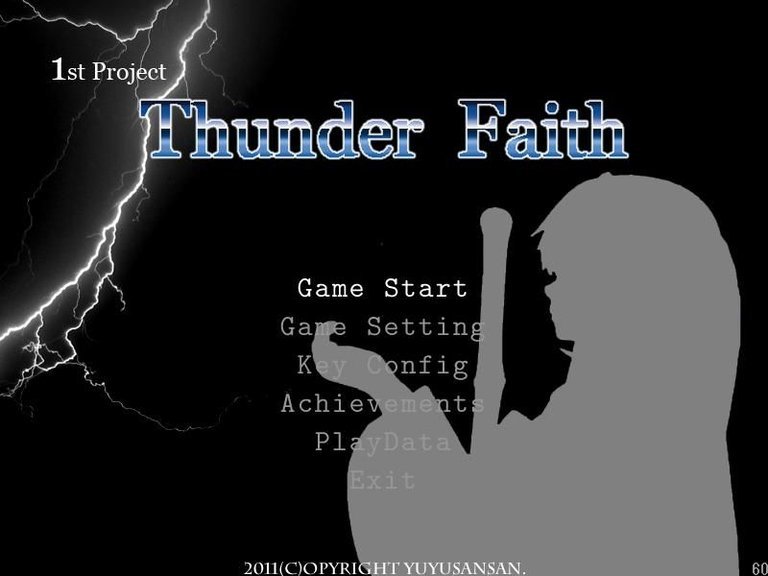
Thunder Faith is a 2D side-scrolling shooter fangame set in the Tōhō (Touhou) universe, where players take on the role of Sanae Kochiya, a shrine maiden from the Moriya Shrine. The game features fast-paced action as Sanae navigates right-scrolling levels, battling enemies and facing off against iconic Tōhō characters like Cirno and Alice in boss fights. Players can switch between five distinct weapon patterns—straight, back, spread, free, and homing—to adapt to different combat situations, with each enemy shot proving lethal. The game offers customizable difficulty by allowing players to adjust the number of lives Sanae has, blending classic shooter mechanics with anime/manga-inspired visuals and fantasy themes.
Thunder Faith Cheats & Codes
Sega Saturn (Thunder Force Gold Pack 1)
This cheat requires the Pro Action Replay/GameShark cheat device.
| Code | Effect |
|---|---|
| F6000914 C305 + B6002800 0000 | Master Code (must be on) |
| 16028026 0100 | Invincibility in Thunder Force II |
| 1602A808 0002 | Invincibility in Thunder Force III |
Sega Saturn (Thunder Force V)
Pause the game during play and press the following sequence.
| Code | Effect |
|---|---|
| Up, Right, A, Down, Right, A, C, Left, Up, B, Up, Right | All weapons |
Genesis/Mega Drive (Thunder Force IV – Europe)
Use Game Genie or Standard codes.
| Code | Effect |
|---|---|
| AABT-AA5J | Master Code |
| FF8003:10 | 1 Hit Invincibility |
| RH9T-A6WG | All extra/bonus music (Ending, Omake, etc) is available in the option screen |
| FFF339:01 | Enabled Cheat Code Get All Weapons In Pause Press Up |
| AJ2T-AA8T | Enabled Cheat Code Get All Weapons In Pause Press Up |
| A56T-AA4Y + AX7A-AAET | Enabled Hidden Options In Configuration Mode |
| AJKT-AA9T | Freeze Time Continue |
| RYKT-A6VE | Infinite Credit |
| FFF2F1:0004 | Infinite Lives |
| RZWA-A6WT + RZVT-A604 + RZWA-A60L | Invincibility (Disable Hit Detection) |
| AKMT-AA6W + AJTA-AA20 | Prevent The Game From Freezing When You Beat Bosses or Get 1-Ups |
| AACA-AR86 | Region Lockout Bypass |
Genesis/Mega Drive (Thunder Force IV – Japan)
Use Game Genie codes.
| Code | Effect |
|---|---|
| AABT-AN5J | Master code |
| AKRA-AA8N + AK6A-AA34 | Additional master codes |
| RH9T-A6VA | All extra/bonus music (Ending, Omake, etc) is available in the option screen |
Thunder Faith: A Hidden Gem in the Tōhō Fangame Pantheon
Introduction
In the vast and ever-expanding universe of Tōhō Project fangames, Thunder Faith stands as a testament to the creativity and passion of its developers. Released in December 2011 by the obscure studio YuYuSanSan, this 2D side-scrolling shooter blends the frenetic energy of Gradius with the whimsical charm of Tōhō, resulting in a game that is both a love letter to its inspirations and a unique experience in its own right. Despite its niche appeal and limited recognition, Thunder Faith offers a compelling glimpse into the potential of fangames to innovate within established frameworks.
This review aims to dissect Thunder Faith in exhaustive detail, exploring its development history, narrative nuances, gameplay mechanics, artistic direction, and its place in the broader context of Tōhō fangames and the shooter genre. By the end, we will determine whether Thunder Faith is a forgotten masterpiece or a curious footnote in gaming history.
Development History & Context
The Studio and Creators
YuYuSanSan, the developer and publisher behind Thunder Faith, remains an enigmatic entity in the gaming landscape. Little is known about the studio beyond its association with this single title, which suggests that Thunder Faith may have been a passion project rather than a commercial endeavor. The lack of additional games or public presence from YuYuSanSan implies that the team either disbanded or moved on to other ventures after its release.
The decision to create a Tōhō fangame was likely influenced by the burgeoning fangame community that had sprung up around ZUN’s Tōhō Project. By 2011, Tōhō had already cemented its status as one of the most beloved indie game series in Japan, inspiring countless fan-made games, music, and art. Thunder Faith emerged during this golden age of Tōhō fandom, where creators were experimenting with different genres and mechanics while staying true to the source material’s aesthetic and lore.
Technological Constraints and Design Choices
Thunder Faith was developed during a period when 2D side-scrolling shooters were experiencing a resurgence in popularity, thanks in part to digital distribution platforms and retro-inspired indie games. The game’s technical foundation is rooted in the traditions of classic shooters like Gradius and R-Type, but it also incorporates modern sensibilities, such as dynamic weapon-switching and a more forgiving difficulty curve.
The choice of a side-view perspective and 2D scrolling visuals was a deliberate nod to the golden age of arcade shooters, while the anime/manga art style ensured that the game would resonate with Tōhō fans. The developers’ decision to focus on horizontal scrolling rather than vertical or isometric perspectives allowed them to emphasize the game’s fast-paced, forward-moving action, which aligns perfectly with the Gradius comparison often used to describe Thunder Faith.
The Gaming Landscape in 2011
The year 2011 was a pivotal one for indie games, with titles like Super Meat Boy, Bastion, and Minecraft gaining widespread acclaim. However, the shooter genre was still dominated by AAA titles like Call of Duty and Battlefield, leaving little room for niche 2D shooters to break into the mainstream. Thunder Faith, as a Tōhō fangame, was never intended to compete with these giants. Instead, it catered to a specific audience: fans of Tōhō and classic shooters who craved something fresh yet familiar.
The game’s release on Windows via digital distribution (likely through the developer’s official site or niche platforms) meant that it relied heavily on word-of-mouth and community engagement to find its audience. This grassroots approach to marketing is typical of fangames, which often thrive within dedicated fan communities rather than through traditional advertising.
Narrative & Thematic Deep Dive
Plot Overview
Thunder Faith follows the journey of Sanae Kochiya, a shrine maiden from the Moriya Shrine, as she embarks on a perilous mission to combat the forces of evil. The game’s narrative is minimalistic, relying more on its gameplay and visual storytelling than on extensive dialogue or cutscenes. Sanae’s journey takes her through a series of horizontally scrolling levels, each culminating in a boss battle against iconic Tōhō characters such as Cirno and Alice Margatroid.
The premise is simple: Sanae must navigate through waves of enemies, utilizing her arsenal of weapons to clear each stage and defeat the boss at the end. The lack of a complex narrative is not a detriment but rather a deliberate choice to keep the focus on the gameplay. However, the game’s connection to the Tōhō universe adds a layer of depth for fans, who can appreciate the references and cameos from the series.
Characters and Dialogue
Sanae Kochiya, the protagonist, is a well-known character in the Tōhō series, and her inclusion in Thunder Faith is a natural fit. As a shrine maiden, she is often depicted as a protector of the divine, and her role in Thunder Faith aligns with this characterization. The game does not delve deeply into her personality or backstory, but her presence alone will resonate with Tōhō fans.
The bosses, drawn from the Tōhō roster, serve as the primary antagonists. Characters like Cirno, the ice fairy, and Alice Margatroid, the doll-wielding magician, are fan favorites, and their appearances in Thunder Faith add a sense of familiarity and excitement. The dialogue is sparse, with most interactions limited to pre-battle taunts or post-victory quips, but this brevity keeps the pacing tight and the focus on the action.
Themes
Thunder Faith explores themes of perseverance, faith (both literal and metaphorical), and the struggle against overwhelming odds. Sanae’s journey is one of determination, as she faces wave after wave of enemies with unwavering resolve. The game’s title itself, Thunder Faith, hints at the duality of power and belief—thunder representing raw strength, and faith symbolizing the spiritual or emotional drive that fuels Sanae’s mission.
The Tōhō series is known for its rich lore and complex characters, and while Thunder Faith does not delve deeply into these aspects, it does capture the essence of the series’ themes. The battle between the divine and the supernatural, the clash of different factions within Gensokyo, and the personal struggles of its characters are all subtly present in Thunder Faith, even if they are not explicitly explored.
Gameplay Mechanics & Systems
Core Gameplay Loop
At its heart, Thunder Faith is a classic horizontal shooter with a modern twist. The player controls Sanae as she flies through each level, automatically scrolling to the right. The core gameplay loop involves shooting down enemies, avoiding their attacks, and collecting power-ups to enhance Sanae’s abilities. The game’s pacing is relentless, with enemies appearing in carefully designed patterns that require quick reflexes and strategic thinking to overcome.
One of the standout features of Thunder Faith is its weapon-switching system. Sanae is equipped with five distinct weapons, each with unique firing patterns:
– Straight: A focused, forward-firing shot ideal for precision targeting.
– Back: A rear-facing shot that allows Sanae to attack enemies behind her.
– Spread: A wide-angle shot that covers a broad area, useful for crowd control.
– Free: A versatile shot that can be aimed in any direction, offering flexibility in combat.
– Homing: A tracking shot that locks onto enemies, making it easier to hit fast-moving targets.
The ability to switch between these weapons on the fly adds a layer of strategy to the gameplay. Players must constantly assess the situation and choose the most effective weapon for the task at hand. For example, the Spread weapon is excellent for dealing with groups of weaker enemies, while the Homing weapon is better suited for targeting specific foes or bosses.
Combat and Enemy Design
The combat in Thunder Faith is fast-paced and challenging, with enemies appearing in waves that require both offensive and defensive maneuvering. Each enemy type has distinct behaviors and attack patterns, forcing players to adapt their strategies accordingly. Some enemies may fire projectiles in predictable arcs, while others might charge directly at Sanae, requiring quick evasion.
The game’s difficulty is balanced by the player’s ability to adjust the number of lives Sanae has at the start of each session. This customization allows players to tailor the experience to their skill level, making Thunder Faith accessible to both newcomers and veterans of the shooter genre. However, the game’s lack of a continue option means that players must rely on their skills and the lives they’ve allocated to progress.
Boss Battles
The boss battles in Thunder Faith are the highlight of the gameplay experience. Each level culminates in a showdown with a Tōhō character, and these encounters are designed to test the player’s mastery of the game’s mechanics. The bosses are not merely damage sponges; they have unique attack patterns and behaviors that require careful observation and quick reflexes to overcome.
For example, Cirno’s battle might involve dodging ice projectiles while finding openings to attack, while Alice’s fight could require the player to navigate a barrage of dolls and magical attacks. The variety in boss designs ensures that each encounter feels fresh and challenging, rewarding players who take the time to learn the patterns and adapt their strategies.
UI and Feedback
The user interface in Thunder Faith is minimalistic but effective. The player’s health (represented by lives), current weapon, and score are displayed clearly, ensuring that the player always has the information they need without cluttering the screen. The game’s feedback systems, such as visual and auditory cues for weapon switches and enemy hits, are well-implemented, providing satisfying responses to the player’s actions.
One area where Thunder Faith could improve is in its tutorialization. While the game’s mechanics are intuitive for fans of the shooter genre, newcomers might struggle to grasp the nuances of weapon-switching and enemy patterns without some guidance. A brief tutorial or tooltips could have made the game more accessible to a broader audience.
World-Building, Art & Sound
Setting and Atmosphere
Thunder Faith is set in the fantastical world of Gensokyo, the same universe as the Tōhō series. The game’s levels are designed to reflect the diverse landscapes of this world, from lush forests to eerie caves and celestial realms. The horizontal scrolling perspective allows the developers to craft intricate, detailed backgrounds that enhance the game’s atmosphere and immersion.
The game’s art style is a blend of anime/manga aesthetics and classic shooter visuals. The character sprites are vibrant and expressive, while the enemy designs are creative and varied. The backgrounds are richly detailed, with parallax scrolling effects that add depth and movement to the environments. The overall visual presentation is cohesive and appealing, capturing the whimsical yet dangerous tone of the Tōhō universe.
Sound Design and Music
The sound design in Thunder Faith is functional but unremarkable. The weapon sounds, enemy attacks, and environmental effects are clear and distinct, ensuring that players can react appropriately to in-game events. However, the sound effects lack the polish and impact of more high-profile shooters, which can make the action feel somewhat muted.
The music, on the other hand, is a standout feature. The game’s soundtrack is a mix of original compositions and arrangements of Tōhō themes, blending electronic and orchestral elements to create a dynamic and engaging audio experience. The tracks are well-suited to the game’s fast-paced action, with driving rhythms and melodic hooks that keep players energized. While the music may not reach the heights of ZUN’s iconic Tōhō soundtracks, it is a commendable effort that enhances the overall experience.
Reception & Legacy
Critical and Commercial Reception
Thunder Faith was released into a niche market, and as such, it did not receive widespread critical attention. The game’s reception within the Tōhō fangame community was generally positive, with players praising its faithful adaptation of the shooter genre and its creative use of Tōhō characters and lore. However, the game’s limited distribution and lack of marketing meant that it remained relatively obscure outside of dedicated fan circles.
Commercially, Thunder Faith likely had a modest impact, given its status as a free or low-cost fangame. The absence of a MobyGames score or extensive player reviews suggests that the game did not achieve significant mainstream recognition. Nevertheless, its legacy within the Tōhō community is secure, as it remains a beloved example of how fangames can innovate within established frameworks.
Influence and Evolution
While Thunder Faith did not spawn a direct sequel or inspire a wave of imitators, its influence can be seen in the broader landscape of Tōhō fangames. The game’s blend of classic shooter mechanics with Tōhō aesthetics demonstrated the potential for fangames to explore different genres while staying true to their source material. Subsequent Tōhō fangames, such as The Last Faith (2023), have continued to experiment with genre-blending, though they have often leaned more toward action-adventure or Metroidvania styles.
Thunder Faith also serves as a reminder of the importance of passion projects in the gaming industry. Developed by a small, relatively unknown studio, the game is a testament to the creativity and dedication of its creators. It stands as a testament to the power of fangames to capture the essence of their inspirations while offering something new and exciting.
Conclusion
Thunder Faith is a hidden gem in the Tōhō fangame pantheon, offering a unique blend of classic shooter mechanics and Tōhō charm. While it may not have achieved widespread recognition or critical acclaim, it remains a beloved title among fans of the series and the shooter genre. Its strengths lie in its tight gameplay, creative weapon-switching system, and faithful adaptation of Tōhō lore, all of which combine to create an experience that is both nostalgic and fresh.
The game’s legacy is one of quiet influence, demonstrating the potential for fangames to innovate and inspire. While it may not have left a significant mark on the broader gaming landscape, Thunder Faith is a testament to the passion and creativity of its developers and the enduring appeal of the Tōhō universe.
Final Verdict: 7.5/10 – A Niche Masterpiece
Thunder Faith is a game that will resonate deeply with fans of Tōhō and classic shooters, offering a challenging and rewarding experience that stands the test of time. While it may not be a must-play for everyone, it is a title that deserves recognition for its innovation, dedication, and sheer fun factor. For those willing to seek it out, Thunder Faith is a hidden treasure waiting to be discovered.