
- Release Year: 1998
- Platforms: Windows
- Publisher: Stock’s Eye
- Developer: Robert Stock
- Genre: Adventure
- Perspective: 1st-person
- Game Mode: Single-player
- Gameplay: Graphic adventure, Point and click
- Setting: Futuristic, Sci-fi
Description
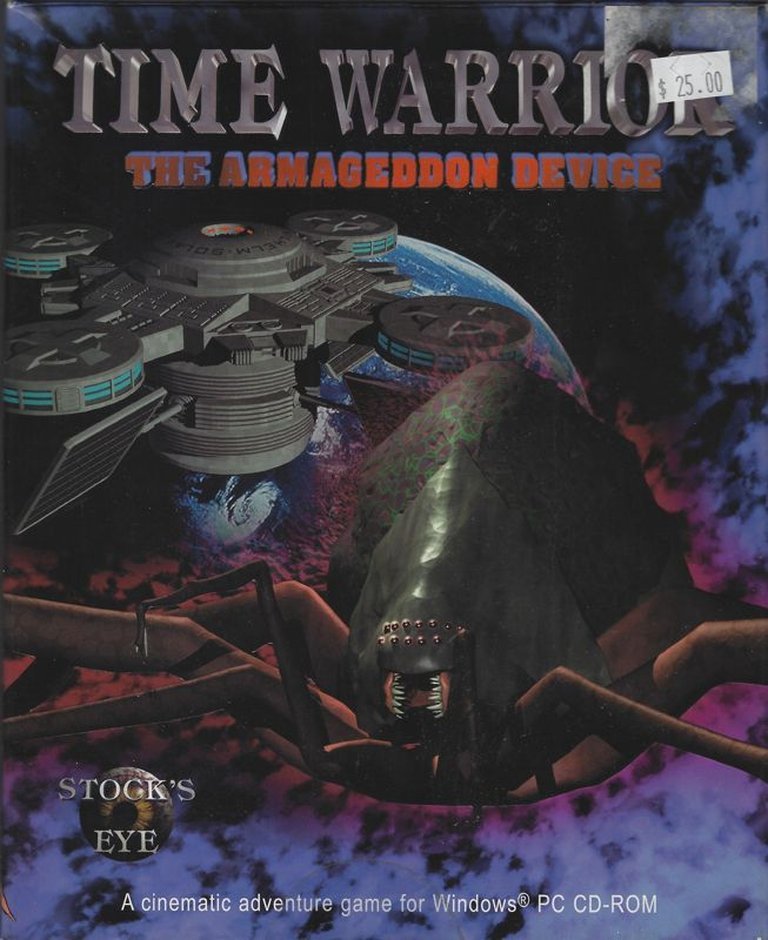
Time Warrior: The Armageddon Device is a first-person point-and-click adventure game set in the year 2328, where an ancient device is draining the life from solar systems near Earth, with Earth next in its path. Players travel through time to find the ‘Time Warrior,’ a time traveler from another reality who possesses the power to stop the ‘Armageddon Device’ and save humanity. The game features a sci-fi theme, full-motion video elements, and a mix of pre-rendered slideshows and live-action sequences, blending classic adventure gameplay with a futuristic narrative.
Gameplay Videos
Time Warrior: The Armageddon Device Free Download
Time Warrior: The Armageddon Device Guides & Walkthroughs
Time Warrior: The Armageddon Device Reviews & Reception
justadventure.com : At first, the video sequences were fun, with spaceships moving jerkily through unconvincing starfields looking for all the world like Amazon Women on the
gameboomers.com : I DO heartily recommend this game as long as you know what to expect and you get into the swing of the mood, intent and ambience of this dandy Robert Stock creation.
Time Warrior: The Armageddon Device: A Retrospective on a Cult Classic
Introduction
In the annals of video game history, certain titles emerge not for their technical prowess or commercial success, but for their sheer audacity and unapologetic embrace of their identity. Time Warrior: The Armageddon Device (1998), developed by Stock’s Eye Productions, is one such game. A first-person point-and-click adventure with a sci-fi theme and full-motion video (FMV) elements, it is a product of its time, reflecting both the limitations and the creative spirit of the late 1990s. This review delves deep into the game’s development, narrative, gameplay, and legacy, offering a comprehensive analysis of its place in gaming history.
Development History & Context
The Studio and Creators
Stock’s Eye Productions, the studio behind Time Warrior: The Armageddon Device, was a small, independent developer led by Robert Stock. The studio’s ambition was to create a game that paid homage to the campy sci-fi films of the 1950s and 1960s, blending nostalgia with the interactive potential of the adventure genre. The game was self-published and released in 1998, a time when the gaming industry was dominated by larger studios with bigger budgets. Despite its limited distribution—primarily through Electronics Boutique, Virgin Megastores, and Micro Centers—Time Warrior managed to carve out a niche for itself, thanks in part to Stock’s tenacity and dedication to the adventure genre.
Technological Constraints
The late 1990s were a period of transition in gaming technology. While 3D graphics were becoming more prevalent, many developers still relied on pre-rendered environments and FMV sequences to tell their stories. Time Warrior embraced this approach, utilizing a Myst-lite slideshow format with video inserts. The game’s visuals, though outdated even by 1998 standards, were intentionally designed to evoke the aesthetic of low-budget sci-fi films. This choice was both a creative decision and a practical one, given the studio’s limited resources.
The Gaming Landscape
In 1998, the adventure game genre was in a state of flux. Titles like Myst and The 7th Guest had popularized the point-and-click format, but the rise of 3D action games and first-person shooters was beginning to overshadow traditional adventure games. Time Warrior arrived at a time when the genre was struggling to find its footing in a rapidly evolving industry. Despite this, the game’s unique blend of sci-fi camp and interactive storytelling offered a refreshing alternative to the more serious and technically advanced titles of the era.
Narrative & Thematic Deep Dive
Plot Overview
Time Warrior: The Armageddon Device is set in the year 2328, where an ancient, malevolent device is draining the life force from solar systems near Earth. The player assumes the role of a time traveler sent from the past to save humanity by finding the “Time Warrior,” another time traveler from a different reality who possesses the power to stop the Armageddon Device. The narrative is a classic sci-fi trope, drawing inspiration from serials like Flash Gordon and B-movies of the mid-20th century.
Characters and Dialogue
The game’s characters are archetypal, embodying the tropes of classic sci-fi. Elias Nolan, Karen Anderson, and Jason Nolan are among the key figures, each contributing to the game’s campy tone. The dialogue, while often cheesy, is delivered with a sincerity that enhances the game’s nostalgic charm. The voice acting and prosthetic effects, though amateurish by modern standards, add to the game’s B-movie aesthetic.
Themes
At its core, Time Warrior is a celebration of nostalgia. It pays homage to the sci-fi serials and films that captivated audiences in the 1950s and 1960s, embracing their campiness and over-the-top storytelling. The game’s themes of time travel, heroism, and the battle against an existential threat are classic sci-fi staples, presented with a sense of fun and adventure that resonates with fans of the genre.
Gameplay Mechanics & Systems
Core Gameplay Loop
Time Warrior is a first-person point-and-click adventure game, where players navigate through pre-rendered environments, solving puzzles and interacting with objects to progress. The gameplay is reminiscent of Myst, with a focus on exploration and puzzle-solving. However, Time Warrior distinguishes itself with its sci-fi setting and FMV sequences, which add a cinematic quality to the experience.
Combat and Character Progression
Unlike many adventure games of its time, Time Warrior does not feature traditional combat mechanics. Instead, the game relies on environmental puzzles and item-based interactions to challenge the player. Character progression is minimal, with the focus squarely on advancing the narrative and uncovering the game’s secrets.
UI and Innovative Systems
The game’s user interface is straightforward, with a point-and-click system that allows players to interact with objects and navigate the environment. While the UI is functional, it lacks the polish of more mainstream titles. The game’s most innovative feature is its use of FMV sequences, which, while primitive by today’s standards, were a novel way to integrate storytelling into the gameplay experience.
Flawed Systems
One of the game’s most criticized aspects is its reliance on mazes, particularly in the latter stages. These mazes are often arbitrary and serve as little more than a means to extend gameplay. Additionally, the puzzles can feel disjointed, with solutions that are not always logically connected to the narrative. These flaws, while frustrating, are somewhat mitigated by the game’s charm and nostalgic appeal.
World-Building, Art & Sound
Setting and Atmosphere
Time Warrior takes place across a variety of sci-fi locales, including space stations, lunar colonies, and alien landscapes. The game’s environments are pre-rendered, with a visual style that deliberately evokes the aesthetic of low-budget sci-fi films. The atmosphere is one of campy fun, with over-the-top alien designs and spaceships that bob about like “yellow duckies in the bath.”
Visual Direction
The game’s visuals are intentionally outdated, reflecting the studio’s desire to create a B-movie experience. The pre-rendered environments and FMV sequences, while not technically impressive, contribute to the game’s unique charm. The prosthetic effects and makeup, though amateurish, add to the game’s nostalgic appeal.
Sound Design
The sound design in Time Warrior is a standout feature. The musical score, composed by Earl Wilson, is atmospheric and evocative, enhancing the game’s sci-fi setting. The sound effects, described as “way ahead of their time,” are effective in creating an immersive experience. The voice acting, while not always polished, fits the game’s campy tone.
Reception & Legacy
Critical and Commercial Reception
Upon its release, Time Warrior: The Armageddon Device received mixed reviews. Critics praised the game’s nostalgic charm and creative vision but criticized its technical limitations and arbitrary puzzles. The game’s limited distribution meant that it did not achieve significant commercial success, but it developed a cult following among fans of classic adventure games and sci-fi enthusiasts.
Evolution of Reputation
Over the years, Time Warrior has gained a reputation as a cult classic. Its unapologetic embrace of campy sci-fi and B-movie aesthetics has endeared it to a niche audience. While it may not be remembered as a technical or narrative masterpiece, it is celebrated for its unique charm and the passion of its creators.
Influence on Subsequent Games
Time Warrior’s influence on subsequent games is minimal, given its niche appeal and limited commercial success. However, its use of FMV sequences and pre-rendered environments can be seen as a precursor to later indie games that embraced similar techniques. The game’s campy tone and nostalgic appeal have also inspired other developers to explore the potential of retro aesthetics in modern gaming.
Conclusion
Time Warrior: The Armageddon Device is a game that defies conventional expectations. It is not a technical marvel, nor is it a narrative masterpiece. Instead, it is a celebration of nostalgia, a love letter to the campy sci-fi films of yesteryear. Its flaws are as much a part of its charm as its strengths, and its unapologetic embrace of its B-movie roots makes it a unique and memorable experience.
For fans of classic adventure games and sci-fi enthusiasts, Time Warrior offers a delightful trip down memory lane. It is a game that rewards those who appreciate its campy tone and nostalgic appeal, even as it frustrates with its arbitrary puzzles and technical limitations. In the grand tapestry of video game history, Time Warrior: The Armageddon Device stands as a testament to the power of creativity and passion, proving that even the most humble of games can leave a lasting impression.
Final Verdict: Time Warrior: The Armageddon Device is a cult classic that deserves recognition for its unique charm and nostalgic appeal. While it may not be a game for everyone, it is a must-play for fans of campy sci-fi and classic adventure games. Its legacy is one of passion and creativity, a reminder that even the most humble of games can leave a lasting impression.