
- Release Year: 2014
- Platforms: Windows, Xbox 360, Xbox One
- Publisher: Electronic Arts, Inc.
- Genre: Compilation
- Game Mode: Online PVP
- Average Score: 83/100
Description
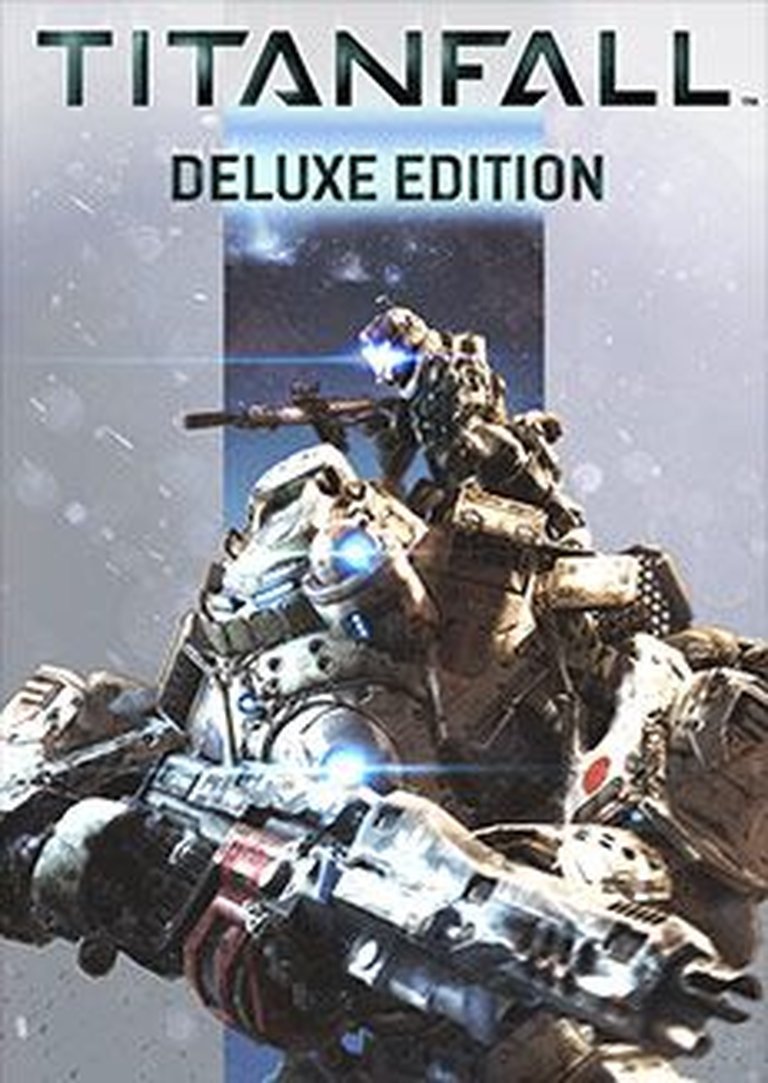
Titanfall: Deluxe Edition is a compilation that includes the base game Titanfall and its Season Pass, featuring three DLC packs: Expedition, Frontier’s Edge, and IMC Rising. Set in the war-torn outer space colonies of the Frontier, players engage in fast-paced, multiplayer-first battles as agile Pilots or powerful mech-style Titans. The game emphasizes verticality, mobility, and team-based objectives, with up to 50 characters active in a single match, blending human players with AI-controlled soldiers for dynamic, large-scale combat.
Titanfall: Deluxe Edition Guides & Walkthroughs
Titanfall: Deluxe Edition Reviews & Reception
ign.com : Titanfall turns out to be an invigorating multiplayer first-person shooter that melds fresh mechanics with familiar ones, creating a new watercooler moment almost every time I play.
metacritic.com (86/100): Titanfall is a ridiculous amount of fun. Maybe it’ll be surpassed, but right now it’s the best game on Xbox One and one of the best multiplayer shooters ever.
imdb.com (80/100): This game was revolutionary for the first person genre. With is wall climbing and running it made a game that was fast paced and with the titans involved it made you have to strategize every mode you did.
opencritic.com (85/100): Titanfall excels at making every moment and every action a fun one. It is a breath of fresh multiplayer FPS air.
Titanfall: Deluxe Edition – A Revolutionary Leap Forward in Multiplayer Shooters
Introduction: The Birth of a New Era in FPS Gaming
When Titanfall launched in 2014, it wasn’t just another first-person shooter—it was a seismic shift in the genre. Developed by Respawn Entertainment, a studio born from the ashes of Call of Duty: Modern Warfare’s creative team, Titanfall dared to redefine multiplayer combat by fusing parkour-style mobility, mech warfare, and a relentless, cinematic pace. The Deluxe Edition, released later that year, bundled the base game with its three major DLC expansions—Expedition, Frontier’s Edge, and IMC Rising—offering players the complete Titanfall experience.
This review dissects Titanfall: Deluxe Edition in exhaustive detail, exploring its development, narrative, gameplay innovations, artistic vision, and lasting legacy. Was it the “killer app” the Xbox One needed? Did it live up to the hype? And how did it influence the shooters that followed? Let’s dive in.
Development History & Context: From Call of Duty to Titanfall
The Rise of Respawn Entertainment
Titanfall’s origins are inextricably linked to the dramatic fallout between Activision and Infinity Ward in 2010. After the firing of studio heads Jason West and Vince Zampella—the architects behind Call of Duty: Modern Warfare—a mass exodus of talent followed, leading to the formation of Respawn Entertainment. Backed by a $30 million publishing deal with Electronic Arts, Respawn set out to create something entirely new, free from the constraints of annualized sequels.
A Game Built on Mobility and Scale
Early development was chaotic. The team experimented with everything from demon-themed shooters to fantasy settings, but nothing clicked. The breakthrough came when artist Joel Emslie crafted a physical model of a human-sized exoskeleton—only to realize its true potential when he placed a tiny soldier figurine beside it. The Titan was born.
Inspired by Blade Runner, Star Wars, and Ghost in the Shell, Respawn sought to merge verticality, speed, and cinematic storytelling into a multiplayer experience. The Source engine (heavily modified into “ReSource”) was chosen for its familiarity and ability to maintain 60 FPS across platforms, even the aging Xbox 360.
The Xbox One Exclusivity Controversy
Titanfall was initially slated for Xbox 360, Xbox One, and PC, but a last-minute deal between EA and Microsoft made it an Xbox/PC exclusive, locking out PlayStation players. This decision was met with backlash, but it positioned Titanfall as a system-seller for the struggling Xbox One.
The Beta That Changed Everything
A closed beta in February 2014 drew two million players, stress-testing Microsoft’s Azure cloud servers—a crucial component for offloading AI calculations. The beta revealed a game that felt fresh, fast, and addictive, but also one that lacked polish in its narrative delivery.
Narrative & Thematic Deep Dive: A War of Ideologies in the Frontier
The Setting: The Frontier and Its Factions
Titanfall is set in The Frontier, a lawless expanse of colonized planets where two factions clash:
- The Interstellar Manufacturing Corporation (IMC) – A corporate superpower that exploits Frontier resources, using Titans, Spectres (AI soldiers), and brutal military force to maintain control.
- The Frontier Militia – A ragtag resistance of colonists, pirates, and defectors fighting for independence.
The conflict is not just about territory, but ideology:
– The IMC represents corporate imperialism, where profit justifies oppression.
– The Militia embodies frontier freedom, fighting for self-determination against an unstoppable machine.
The Campaign: A Multiplayer Story Experiment
Unlike traditional shooters, Titanfall’s campaign is embedded in its multiplayer. Players fight through nine missions, each tied to a specific map and mode, with pre-match voiceovers (later removed in updates) providing context.
Key Story Beats:
- The Refueling Raid – The Militia steals fuel from the IMC, setting the stage for war.
- The Colony Massacre – The IMC tests Spectres on civilians, drawing the Militia into battle.
- The Odyssey’s Secrets – Ex-IMC officer James MacAllan joins the Militia, revealing plans to destroy the Demeter fuel depot.
- The Battle of Demeter – MacAllan sacrifices himself to cripple the IMC’s supply lines.
- The Remnant Fleet – With Vice Admiral Graves defecting, the IMC is left leaderless, but Spyglass (an AI) takes command.
Themes: War, Sacrifice, and the Cost of Freedom
- Corporate vs. Rebel Narratives – The IMC’s ruthless efficiency vs. the Militia’s desperate guerrilla tactics.
- The Human Cost of War – Characters like MacAllan and Barker show the personal toll of rebellion.
- AI and Dehumanization – The Spectres represent the IMC’s disregard for human life, turning war into a corporate algorithm.
Criticisms: A Story Told in Fragments
While ambitious, the narrative suffers from thin execution:
– Voice acting is often flat (criticized as some of the worst in gaming).
– Missions lack depth—players are background actors in a larger war.
– The “campaign” is just multiplayer with cutscenes, leaving many wanting a true single-player experience.
Gameplay Mechanics & Systems: The Perfect Storm of Innovation
The Pilot: A Master of Mobility
Titanfall’s greatest strength is its Pilot gameplay:
– Wall-Running – Sprint along walls at high speeds, chaining movements for unmatched fluidity.
– Double-Jumping & Jetpacks – Navigate maps without touching the ground.
– Tactical Abilities – Cloak (invisibility), Stim (speed boost), and X-Ray Vision add strategic depth.
The Titan: A Walking Tank
Titans are 20-foot mechs that drop from orbit, each with unique chassis:
– Atlas (Balanced) – The all-rounder, perfect for beginners.
– Ogre (Heavy) – A walking tank with high armor.
– Stryder (Light) – Fast and agile, ideal for hit-and-run tactics.
Titan Combat Features:
– Rodeo Attacks – Pilots can hijack enemy Titans, shooting their weak spots.
– Core Abilities – Damage Core (double damage), Shield Core (extra armor), Dash Core (unlimited dashes).
– Autonomous Modes – Titans can guard positions or follow their Pilot.
The Smart Pistol: A Controversial Game-Changer
The Smart Pistol Mk5 was the most polarizing weapon in Titanfall:
– Auto-locks onto targets, making it easy to use but balanced by slow lock-on time.
– Critics called it overpowered, while others praised it for lowering the skill floor.
Multiplayer Modes: A Mix of Classic and Innovative
- Attrition – Team Deathmatch with AI grunts counting toward the score.
- Hardpoint Domination – Capture and hold zones, with Titans adding chaos.
- Last Titan Standing – All players start in Titans, last one standing wins.
- Capture the Flag – Classic CTF, but with Pilot mobility making it fast and chaotic.
- Pilot Hunter – Only Pilot kills count, forcing pure infantry combat.
Progression & Customization
- Leveling System – 50 ranks, then 10 Generations (prestige).
- Burn Cards – Single-use power-ups (e.g., faster Titan drops, unlimited grenades).
- Titan & Pilot Loadouts – Deep customization, but limited at launch.
The AI: Grunts and Spectres
- Grunts – Cannon fodder that make matches feel alive.
- Spectres – Deadlier AI that flank and ambush players.
- Criticism – Some found them too dumb, but they filled out matches effectively.
The Epilogue: A Brilliant Final Touch
At the end of each match, the losing team must escape to a dropship while the winners hunt them down. This tense finale adds narrative weight to every match.
World-Building, Art & Sound: A Gritty, Lived-In Universe
Visual Design: “A Used Future”
Titanfall’s art direction is gritty, industrial, and immersive:
– Maps are war-torn colonies, with destroyed buildings, alien flora, and corporate facilities.
– Titans look like functional war machines, not shiny anime mechs.
– Pilots are agile but vulnerable, reinforcing the David vs. Goliath theme.
Sound Design: A Symphony of War
- Stephen Barton’s score blends orchestral grandeur with electronic beats, recorded at Abbey Road Studios.
- Weapon sounds are punchy and distinct—the Smart Pistol’s lock-on beep is iconic.
- Titan footsteps shake the battlefield, making their presence feel monumental.
Atmosphere: A War You Can Feel
- Dynamic weather effects (rain, dust storms) add immersion.
- AI chatter makes the world feel alive, even if the grunts are not the brightest.
Reception & Legacy: Did It Live Up to the Hype?
Critical Reception: A Mixed Bag of Praise and Criticism
Titanfall received generally favorable reviews, with Metacritic scores of 86/100 (Xbox One, PC) and 83/100 (Xbox 360).
Praise:
✅ Innovative Movement – Wall-running and parkour set a new standard for FPS mobility.
✅ Titan Gameplay – Dropping a Titan never got old.
✅ Fast-Paced Action – No downtime, always something happening.
✅ Accessible Yet Deep – Easy to learn, hard to master.
Criticism:
❌ Thin Campaign – More like a tutorial than a real story.
❌ Lack of Content – Only 15 maps at launch, no private matches initially.
❌ AI Issues – Grunts were too dumb, Spectres too predictable.
❌ Xbox One Limitations – Lower resolution than PC, frame rate drops.
Commercial Success: A System-Seller That Faded Fast
- Sold 925,000 copies in March 2014 (US alone).
- Topped sales charts in the US and UK.
- 10 million players by 2015, but player count dropped quickly.
Legacy: The Game That Changed Shooters
Titanfall’s influence is undeniable:
– Movement Systems – Games like Apex Legends, DOOM Eternal, and Call of Duty adopted wall-running and advanced mobility.
– Mech Combat – Titanfall 2 refined the formula, but no game has matched its fluidity.
– The Birth of Apex Legends – Respawn’s battle royale hit borrowed weapons, abilities, and lore from Titanfall.
The Tragic Decline: A Game Left to Die
- DDOS attacks made the game unplayable by 2019.
- No anti-cheat updates, leading to hackers dominating servers.
- Removed from sale in 2022, though servers remain online for existing owners.
Conclusion: A Flawed Masterpiece That Redefined Shooters
Titanfall: Deluxe Edition was a revolutionary game that pushed the boundaries of what a multiplayer shooter could be. Its fluid movement, Titan combat, and relentless pace set a new standard for the genre. However, its thin narrative, lack of content at launch, and eventual abandonment prevent it from being a perfect experience.
Final Verdict: 9/10 – A Landmark Title That Still Shines
✔ Must-play for FPS fans who love innovation and speed.
✔ A historical milestone that influenced every shooter that followed.
❌ Abandoned by EA, making it hard to recommend in 2024 unless you already own it.
Titanfall may not have been the killer app Microsoft hoped for, but it proved that Respawn Entertainment was a force to be reckoned with—a legacy that Titanfall 2 and Apex Legends would only solidify.
For those who experienced it at launch, Titanfall remains one of the most exhilarating shooters ever made. For everyone else, it’s a bittersweet reminder of what could have been.