
- Release Year: 2013
- Platforms: PlayStation 3, Wii U, Windows, Xbox 360
- Publisher: Ubisoft Entertainment SA
- Genre: Compilation, Special edition
- Perspective: Third-person
- Game Mode: Single-player
- Average Score: 82/100
Description
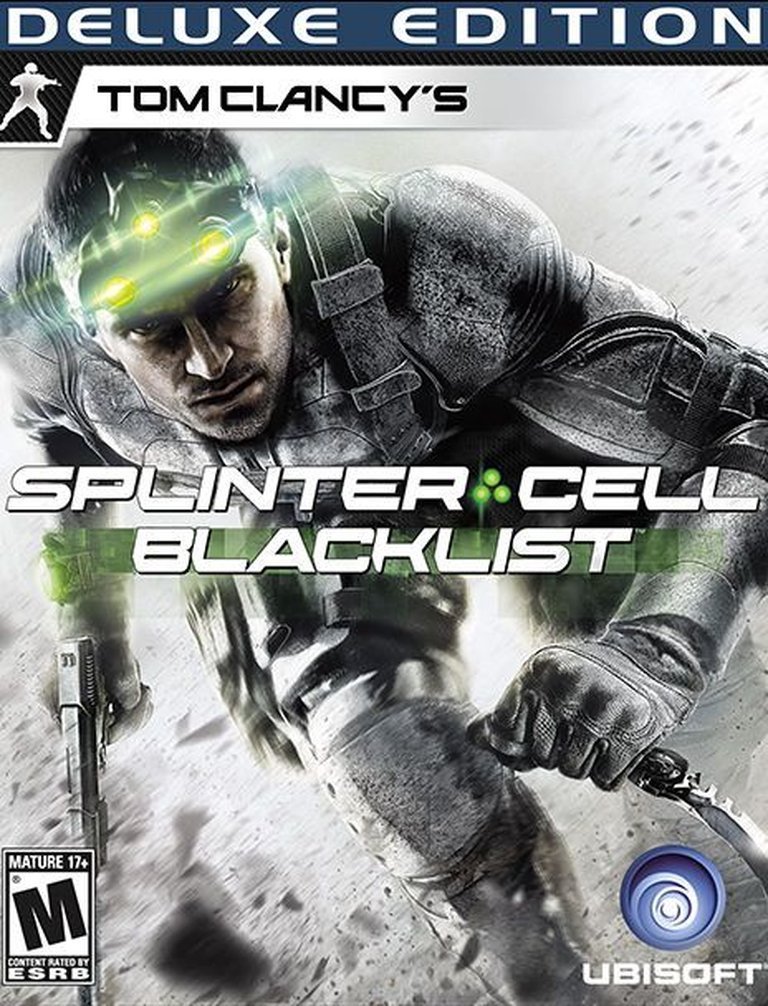
Tom Clancy’s Splinter Cell: Blacklist (Deluxe Edition) is an immersive stealth-action game where players take on the role of Sam Fisher, a legendary covert agent tasked with stopping the Engineers, a terrorist group launching a series of attacks on US interests. The Deluxe Edition includes the base game along with additional content such as new weapons, outfits, and accessories, enhancing the tactical gameplay and stealth mechanics that the Splinter Cell series is known for.
Gameplay Videos
Tom Clancy’s Splinter Cell: Blacklist (Deluxe Edition) Cracks & Fixes
Tom Clancy’s Splinter Cell: Blacklist (Deluxe Edition) Reviews & Reception
metacritic.com (82/100): The melding of Conviction’s third person shooter elements and more traditional Splinter Cell gameplay are more than the sum of their parts here. No doubt about it, this is the definitive Splinter Cell experience.
Tom Clancy’s Splinter Cell: Blacklist (Deluxe Edition): Review
Introduction
In 2013, Tom Clancy’s Splinter Cell: Blacklist arrived as a pivotal entry in Ubisoft’s storied stealth franchise, bridging the series’ hardcore stealth roots with the action-forward mechanics of Conviction. The Deluxe Edition bundled the base game with expansive DLC, offering weapons, missions, and customization options that amplified its replayability. This review dissects Blacklist as both a bold reinvention and a homage to its predecessors, exploring how it balances player choice, narrative urgency, and mechanical innovation—while grappling with the legacy of its iconic protagonist, Sam Fisher.
Development History & Context
Studio Vision & Challenges
Developed by Ubisoft Toronto—a studio founded in 2009—Blacklist was a baptism by fire. Led by Conviction veteran Maxime Béland, the team sought to merge the series’ stealth DNA with Conviction’s kinetic pacing. This meant reviving mechanics like Spies vs. Mercs multiplayer while introducing fluid movement systems like “Killing in Motion.” The studio conducted extensive player surveys post-Conviction, revealing fans craved deeper stealth options, which informed the “Ghost/Panther/Assault” playstyle triad.
Technological Ambitions
Built on the Lead Engine, Blacklist prioritized accessibility without sacrificing depth. The Wii U version leveraged the GamePad for gadget management, while Kinect integration allowed voice commands on Xbox 360. However, Ubisoft Toronto’s insistence on performance capture (via actor Eric Johnson replacing Michael Ironside) sparked backlash. Ironside’s absence—due to cancer treatment—left fans mourning Fisher’s gravelly charisma, though Johnson’s physicality brought a new dynamism to the role.
Industry Landscape
In an era dominated by open-world titles like Assassin’s Creed and linear shooters, Blacklist carved a niche with its hybrid design. It launched alongside Saints Row IV, facing stiff competition but earning praise for its modular gameplay—a rarity in 2013’s AAA landscape.
Narrative & Thematic Deep Dive
Plot & Characters
Set two years after Conviction, Blacklist sees Fisher leading Fourth Echelon, a rogue unit combating “The Engineers,” a terrorist group demanding U.S. troop withdrawals via escalating attacks (the “Blacklist”). The narrative blends geopolitical intrigue with personal stakes: Fisher’s friend Victor Coste is critically injured in the opening mission, anchoring the story in revenge and duty.
Supporting characters like hacker Charlie Cole and CIA operative Isaac Briggs add diversity to missions, though their development is often overshadowed by Fisher’s stoicism. The Engineers’ leader, Majid Sadiq, serves as a compelling antagonist, his motives rooted in anti-imperialism rather than cartoonish villainy.
Themes
Blacklist interrogates post-9/11 anxieties, exploring extrajudicial violence and the moral ambiguity of the “Fifth Freedom”—Fisher’s license to kill for national security. The game’s interrogation scenes (minus Conviction’s graphic torture) force players to choose between mercy and pragmatism, though these moments lack narrative consequence.
Writing & Dialogue
While the plot delivers thrills, dialogue oscillates between techno-jargon and clichéd one-liners. Fisher’s new voice, though serviceable, lacks Ironside’s gravitas, diluting emotional beats. The coop missions, however, shine with quippy banter, particularly Andriy Kobin’s dark humor.
Gameplay Mechanics & Systems
Core Loop & Playstyles
Blacklist’s genius lies in its flexibility. “Ghost” players avoid detection via non-lethal takedowns and shadows; “Panther” enthusiasts strike lethally but silently; “Assault” fans go guns-blazing. Each style rewards distinct upgrades, encouraging experimentation.
Tools & Gadgets
The Deluxe Edition’s arsenal—VSS sniper, crossbow, tri-rotor drone—complements gadgets like the sticky shocker. The “Killing in Motion” system lets Fisher chain takedowns seamlessly, though “Perfectionist” mode disables it for purists.
Progression & Economy
Earning “Ghost Points” unlocks weapons and Paladin upgrades, but the economy feels overly generous, reducing stakes. The Strategic Mission Interface (SMI) serves as a sleek hub for mission selection, though menu navigation can clutter pacing.
Multiplayer
Spies vs. Mercs’ return is triumphant, blending asymmetric teamwork (Spies’ agility vs. Mercs’ firepower) with class customization. However, Ubisoft’s 2022 server shutdown neutered this mode—a blow to preservation.
Flaws
Some systems feel half-baked. Interrogations lack weight, and AI inconsistency (e.g., enemies ignoring corpses) occasionally breaks immersion. The Wii U version’s omission of coop remains a baffling misstep.
World-Building, Art & Sound
Setting & Atmosphere
From Guam’s jungles to Tehran’s embassies, Blacklist’s locales are visually diverse but lack the immersive detail of Chaos Theory. The Paladin—a mobile HQ—anchors the narrative but feels underutilized as a storytelling space.
Visual Design
While textures and lighting are serviceable, character models verge on uncanny, and facial animations lack nuance. The Deluxe Edition’s cosmetic suits, like the Elite Ghillie, add flair but clash with the tone.
Sound Design
Mike Zarin and Tony Hajjar’s score blends electronic tension with orchestral heft, enhancing urgency. Sound effects—like the karambit’s schink—are visceral, though ambient noise rarely surprises.
Reception & Legacy
Launch Reception
Critics praised Blacklist (Metacritic: 82–84) for its gameplay variety and Spies vs. Mercs, though outlets like Eurogamer critiqued its identity crisis between stealth and action. The PC port’s technical hiccups and Johnson’s casting divided fans.
Commercial Performance
Despite selling 2 million copies by late 2013, Blacklist underperformed, overshadowed by Ubisoft’s own Assassin’s Creed IV. Its commercial failure arguably delayed a series revival until 2024’s rumored remake.
Long-Term Influence
Blacklist’s trio of playstyles inspired later titles like Dishonored and Metal Gear Solid V, while its coop missions set a benchmark for narrative-driven multiplayer. Yet, its legacy is tinged with “what-ifs,” particularly regarding Ironside’s absence and the delisted DLC.
Conclusion
Splinter Cell: Blacklist (Deluxe Edition) is a fascinating contradiction: a game that honors its past while chasing modern appeal. Its gameplay flexibility and Spies vs. Mercs remain standout achievements, hampered by narrative stumbles and fleeting technical polish. While not the series’ apex, Blacklist is a worthy, if flawed, chapter in Fisher’s saga—and a testament to stealth-action’s enduring allure. For newcomers, the Standard Edition suffices, but the Deluxe Edition’s extra content (where accessible) enriches an already robust package. In the pantheon of stealth games, Blacklist earns its place as a daring, if imperfect, experiment.