
- Release Year: 2001
- Platforms: Windows
- Publisher: Infogrames Europe SA
- Genre: Compilation
- Game Mode: Single-player
Description
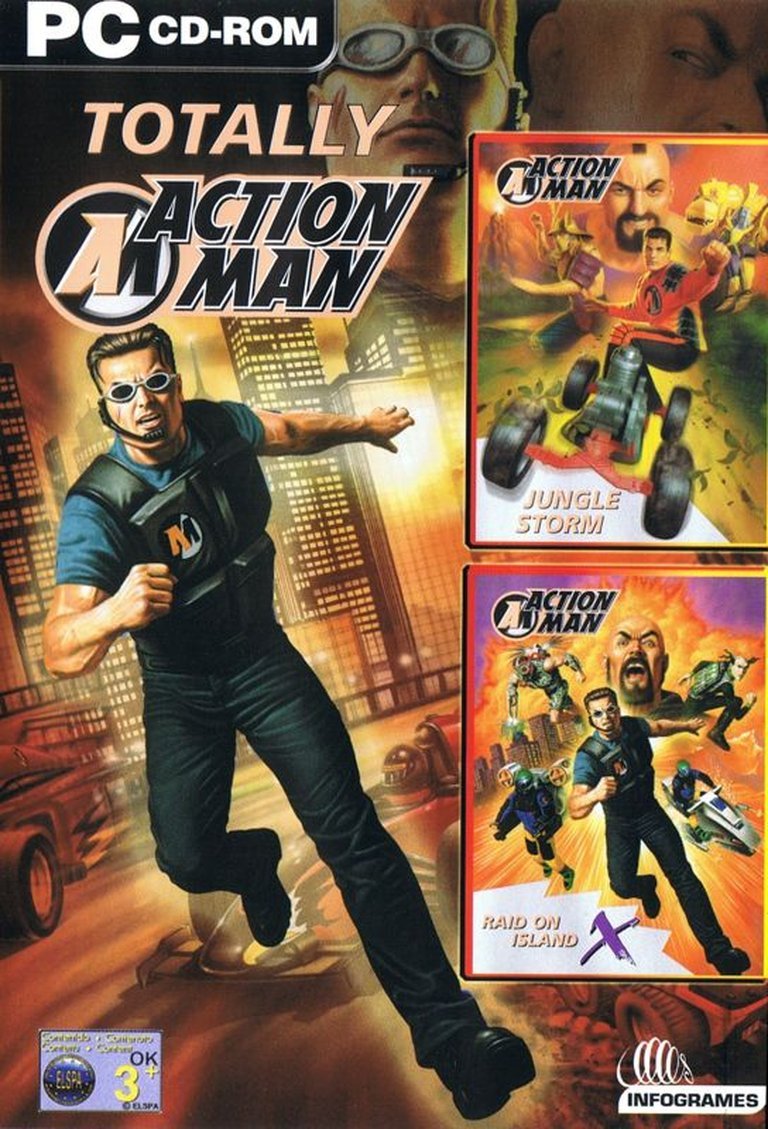
Totally Action Man is a 2001 Windows compilation by Infogrames Europe SA, bundling two action-oriented games from the Action Man series: Jungle Storm (2000) and Raid on Island X (1999). Players embody the iconic action hero in high-stakes missions set in perilous jungle environments and enemy-held islands, delivering fast-paced adventure and combat suitable for fans of licensed toy-based titles.
Totally Action Man: Review
Introduction
In the annals of video game history, few titles evoke the unbridled spirit of early 2000s licensed tie-ins quite like Totally Action Man, a 2001 Windows compilation that bundles two forgotten Action Man adventures: Raid on Island X (1999) and Jungle Storm (2000). Born from Hasbro’s iconic action figure line—a British counterpart to G.I. Joe that emphasized rugged heroism, modular gear, and globe-trotting escapades—this double-pack promised pint-sized commandos a dose of high-stakes action on their family PCs. Amid the rise of 3D blockbusters like Half-Life and Unreal Tournament, Totally Action Man stands as a relic of budget-friendly, kid-targeted compilations, capturing the toyetic thrill of plastic soldiers storming exotic locales. Yet, beneath its heroic veneer lies a product constrained by era-specific tech and minimal ambition. This review argues that while Totally Action Man faithfully distills the essence of Action Man’s pulp-adventure DNA into interactive form, its clunky execution and obscurity cement it as a curious footnote rather than a cornerstone of the action genre.
Development History & Context
Ttotally Action Man emerged from Infogrames Europe SA (later Atari), a publisher notorious for snapping up Hasbro licenses in the late 1990s to capitalize on toy-driven multimedia synergies. Released in 2001 exclusively on Windows via CD-ROM, the compilation repackaged Action Man: Raid on Island X (developed circa 1999) and Action Man: Jungle Storm (2000), both PC exclusives tailored for the ELSPA 3+ rating to appeal to young audiences. These weren’t standalone hits but value propositions in an era when PC gaming was democratizing via affordable CDs, even as consoles like the PlayStation 2 loomed large.
The Action Man toy line, relaunched by Hasbro in 1993 after Palitoy’s original 1960s run, was peaking with “extreme” variants (e.g., Ice Extreme, Rescue Extreme) and a 2000 CGI TV series pitting hero Alex “Action” Mann against mad scientist Dr. X. Video games were a natural extension, mirroring tie-ins like G.I. Joe efforts, but developed by obscure studios under Infogrames’ umbrella—likely in-house or contracted European teams, given the lack of credited developers in MobyGames entries. Technological constraints defined the era: Windows 98/Me PCs with DirectX 7, limited to 32MB RAM, Intel Pentium II processors, and Voodoo cards for basic 3D acceleration. Compilations like this thrived in a market flooded with “Totally” branded packs (Totally Flying, Totally Strategy), targeting impulse buys at retailers like Woolworths.
The gaming landscape in 2000-2001 was transitional: PC action games grappled with post-Quake II realism while kid-licensed fare clung to 2.5D hybrids. Action Man’s broader series included Operation Extreme (Blitz Entertainment, PS1/PC, 2000) with Metal Gear Solid-inspired stealth, Search for Base X (Natsume/THQ, GBC, 2001) featuring suit-swapping platforming, and Destruction X (3DO, PS1/PC, 2000). Totally Action Man slotted into this ecosystem as a low-risk repackaging, prioritizing accessibility (keyboard/mouse controls) over innovation, amid Hasbro’s push to boost toy sales via cross-media blitzes.
Narrative & Thematic Deep Dive
At its core, Totally Action Man embodies the toy line’s escapist fantasy: an indomitable everyman hero thwarting cartoonish megalomaniacs in hyper-masculine playgrounds of peril. Raid on Island X kicks off with Action Man infiltrating a volcanic island stronghold controlled by Dr. X’s forces—think a proto-Far Cry premise minus the nuance. The plot unfolds via sparse cutscenes: Action Man (voiced in gravelly bravado, per series tropes) uncovers a doomsday device, rallies allies like Red Wolf or Flynt (nodding to toy cohorts), and dismantles Gangrene’s mutant army through sequential raids. Dialogue is functional pulp—”Time to raid Island X!”—heavy on exposition dumps about “X-plosive threats” and gadgetry, evoking 1960s commando comics.
Jungle Storm escalates to lush rainforests, where Dr. X unleashes bio-engineered storms and robotic minions. The narrative arc mirrors: briefing from HQ, traversal of hazard-filled zones, boss confrontations with lieutenants like Maxx. Themes revolve around unyielding heroism versus technological hubris—Action Man’s organic grit (parkas, wet suits, space suits from kin titles) triumphs over Dr. X’s sterile sci-fi. Recurring motifs include modular heroism (gear swaps echo toy customization), environmental mastery (jungle vines, island lava flows), and moral simplicity: good guys “capture” foes non-lethally, aligning with 3+ ethics.
Deeper analysis reveals colonial undertones in exotic locales, a hallmark of boys’ adventure media, tempered by anti-villain satire (Dr. X as Bond-esque buffoon). Character depth is absent—Action Man is a blank-slate archetype, foils like Dr. X defined by monologues—but the compilation’s value lies in serialized continuity, teasing TV series elements (e.g., Base X searches). In extreme detail, plots interlink: Raid‘s island victory funds Jungle‘s storm generator, forming a loose campaign that rewards replay for hidden paths and suit-specific endings, though clunky scripting undermines emotional stakes.
Gameplay Mechanics & Systems
The twin titles form a cohesive loop of mission-based action-platforming, blending third-person shooting, light stealth, and puzzle-solving—evident from series parallels like Operation Extreme‘s MGS-lite infiltration. Core loop: select loadout (crossbow, pistol, grenades from a scrolling inventory), traverse linear levels (island bunkers, jungle canopies), neutralize patrols, and extract intel/keycards.
Raid on Island X emphasizes verticality: climb sheer cliffs, paraglide over lava pits, raid enemy camps in top-down segments akin to poor-man’s GTA 2. Combat is forgiving—enemies crumple in 2-3 shots, with “capture” animations softening violence. Jungle Storm shifts to denser foliage, introducing weather hazards (storms obscure vision) and vehicle sections (jeeps, boats). Progression ties to suits/items: a parka for cold zones, wet suit for swims—replay levels with specifics unlocks branches, fostering metroidvania-lite exploration across 15+ missions in six areas.
UI is era-typical: chunky HUD with health bar, ammo counters, and minimap; keyboard/mouse shines for aiming but frustrates platforming (WASD clunky sans modern smoothing). Flaws abound—terrible cameras (clipping in 3D rooms), frequent loads (pre-SSD agony), unfair spikes (bosses demand pattern memorization). Innovations? Adaptive loadouts encourage experimentation, but no co-op or multiplayer limits replayability. Overall, systems prioritize pick-up-and-play heroism over depth, suiting 3+ demos but paling against contemporaries like Tomb Raider.
| Mechanic | Strengths | Weaknesses |
|---|---|---|
| Combat | Responsive shooting, non-lethal flair | Predictable AI, ammo scarcity |
| Traversal | Suit variety, alternate paths | Janky physics, camera woes |
| Progression | Mission replays for secrets | Linear gating, no skill trees |
| Controls/UI | Mouse precision | Loading screens, no tutorials |
World-Building, Art & Sound
Settings immerse via toy-box dioramas: Raid on Island X‘s craggy volcanoes and bunkers pulse with fiery palettes, evoking Hasbro playsets; Jungle Storm‘s verdant overgrowth drips humidity through particle effects. Visuals leverage low-poly 3D—blocky Action Man models with swappable gear, dynamic lighting on foliage/lava—charming in nostalgia, dated in texture pop-in. Atmosphere builds tension: dim-lit enemy lairs contrast sun-baked exteriors, rain-slicked paths in Jungle amplify claustrophobia.
Sound design punches above weight: thumping orchestral scores (brassy hero themes, ominous synths for Dr. X) mimic TV series cues; SFX deliver satisfaction—crossbow thwips, enemy grunts, storm rumbles. Voice acting is hammy gold (“X marks the spot… for defeat!”), enhancing camp. Collectively, elements forge a playground vibe: worlds feel modular, like snapping together Action Man bases, heightening immersion despite technical limits.
Reception & Legacy
Launch reception? Nonexistent—MobyGames lists no scores, Metacritic none, VG Times a placeholder 5.5/10. Obscurity reigned: collected by just two Moby users, it bombed commercially amid PS2 hype. Critiques from kin titles foreshadow issues—Search for Base X (68% GameRankings) earned “fun but unfairly hard” nods from GameSpot/IGN for controls/difficulty; PS1 Operation Extreme scored 5/10 in retro blogs for camera woes.
Legacy endures as niche artifact: part of Action Man’s 2000s flurry (Robot Atak, Arctic Adventure), influencing no majors but epitomizing licensed compilations’ role in genre foundations (per action game histories, from Pac-Man evasion to 3D shooters). It preserved toy IP interactively, playable via emulators today, fostering fan preservation. Influence? Marginal—echoes in modern hero shooters (Overwatch modularism)—but culturally, it underscores 3+ action’s evolution from arcade shooters to narrative platforms.
Conclusion
Ttotally Action Man is a time capsule of early 2000s PC gaming: earnest, toy-faithful adventures hampered by tech creakiness and zero marketing. Its double-dose of island raids and jungle mayhem delivers bite-sized thrills, rich themes of heroic customization, and era-authentic charm, but clunky mechanics relegate it to curiosity status. In video game history, it claims a humble spot among licensed obscurities—worthy of emulation for Action Man completists, a 6/10 verdict as nostalgic filler rather than essential play. For historians, it’s proof that even forgotten compilations fueled the action genre’s relentless march forward.