
- Release Year: 2001
- Platforms: Windows
- Publisher: Infogrames Interactive, Inc.
- Genre: Compilation
Description
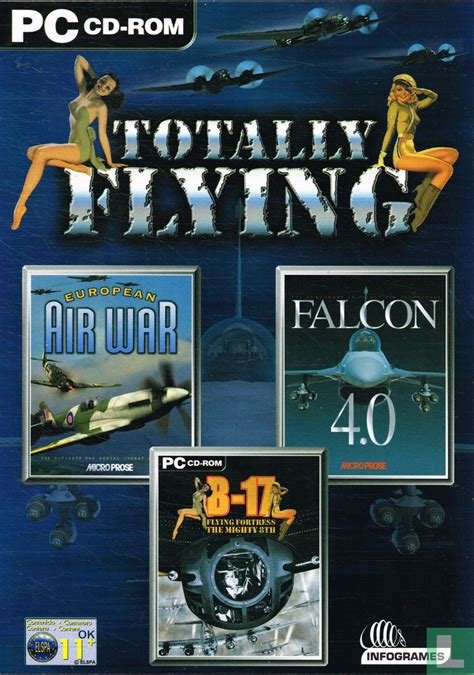
Totally Flying is a 2001 Windows compilation published by Infogrames Interactive, bundling three flight simulation classics: B-17 Flying Fortress: The Mighty 8th! for WWII bomber missions over Europe, European Air War depicting intense dogfights in the European theater of World War II, and Falcon 4.0, a detailed modern jet fighter sim set in a fictional Korean War scenario, offering players immersive aerial combat and strategic flight experiences across historical and contemporary settings.
Totally Flying: Review
Introduction
Imagine strapping into the cockpit of a B-17 Flying Fortress as flak bursts around you over 1940s Europe, or dogfighting MiG-21s in the tense skies above the Korean DMZ—all from a single 2001 CD-ROM. Totally Flying, Infogrames’ unassuming Windows compilation, bundles three landmark flight simulators: B-17 Flying Fortress: The Mighty 8th! (2000), European Air War (1998), and Falcon 4.0 (1998). Released amid the post-crash recovery of the PC gaming market and the dawn of sixth-gen consoles, this collection isn’t flashy innovation but a time capsule of simulation mastery. My thesis: Totally Flying endures as a testament to the golden age of hardcore flight sims, offering unparalleled historical immersion and mechanical depth that modern arcade flyers can’t touch, cementing its place as an essential artifact for aviation enthusiasts and historians alike.
Development History & Context
Infogrames Interactive, Inc., a powerhouse in the early 2000s budget compilation scene (think Totally Strategy or Totally Sports), assembled Totally Flying in 2001 for Windows PCs, targeting sim aficionados amid a shifting landscape. The early 2000s saw PC gaming rebound from the 1998-2000 crash, with flight sims thriving on dedicated hardware like Pentium III rigs and joysticks. Consoles like the PS2 dominated casual play, but PC remained the domain of realism-driven titles.
The included games hail from MicroProse’s storied lineage—pioneers of sims since F-15 Strike Eagle (1985)—and iMagic. Falcon 4.0, developed by MicroProse’s Georgia team led by Kevin McDonnell, launched in 1998 after years of delays, boasting a dynamic campaign engine simulating the entire Korean peninsula theater. It faced launch bugs but patched into a legend via community mods. European Air War (EAW), also MicroProse (1998), shifted focus to WWII’s Eastern Front, with lead designer Randall Garrett emphasizing procedural missions over scripted ones. Technological constraints like 32MB RAM limits forced clever optimizations, like EAW’s seamless theater transitions without loading screens.
B-17 Flying Fortress: The Mighty 8th!, iMagic’s 2000 entry (published by Infogrames), brought bomber crew management to life, directed by Lance Williams. Era hardware struggles—DirectX 7 graphics, CPU-bound physics—meant compromises like simplified ballistics, yet innovations like crew AI persisted. Infogrames bundled these post-Falcon‘s freeware legacy and EAW’s cult status, slapping a USK 16 rating for violence. Vision: Democratize premium sims at budget price (~$20), echoing MicroProse’s arcade-to-hardcore evolution amid LucasArts’ space sims (X-Wing series by Totally Games, unrelated but contemporaneous).
Narrative & Thematic Deep Dive
Flight sims aren’t novelistic, but Totally Flying excels in “environmental storytelling” (per narrative design principles), weaving history through procedural plots, lore, and player agency. Drawing from the “Holy Trinity” of plot, character, and lore, these titles prioritize reactive campaigns over linear scripts.
Falcon 4.0‘s Korean War saga pits UN forces against North Korea, with a dynamic engine generating emergent narratives: Fuel shortages strand squadrons, MiG aces hunt you across 500x300km maps. No protagonists—just you as faceless pilot—emphasizing themes of attrition and escalation, mirroring real 1950s tensions.
European Air War dives into WWII’s brutal Eastern Front (1941-45), with Il-2 Sturmoviks clashing P-51 Mustangs. Plot unfolds via 40+ scripted missions plus endless dynamic ones, lore embedded in 300+ flyables’ historical specs (e.g., Bf 109G variants). Themes: Futility of total war, with radio chatter evoking Stalingrad’s horror.
B-17‘s “Mighty Eighth” campaign personalizes via 10-man crews—named gunners with morale, fatigue, skills. Plot: 25 Schweinfurt-Regensburg-style raids, branching by losses (e.g., wounded navigator impairs nav). Dialogue crackles (“Bandits 2 o’clock low!”), themes probe sacrifice, with lore from declassified Eighth Air Force logs.
Unified theme: Human cost of air power. Flexible narratives adapt to player folly—crash a Yak-9, watch fronts shift—rewarding lore dives (manuals as “Story Bibles”). No branching dialogues, but modular missions foster ownership, evoking BioShock‘s moral reactivity in sim form.
Gameplay Mechanics & Systems
Totally Flying‘s core loop—briefing, takeoff, combat/ops, debrief—deconstructs aviation authenticity, blending arcade accessibility with sim rigor. UI: Clunky 2001 overlays (F-keys toggle views), but intuitive for throttle/joystick vets.
Core Loops & Combat: Falcon 4.0 shines with 1:1 cockpits, fluid 6DOF physics (stalls, compressibility), radar/SAM evasion. Progression: Campaign unlocks via air medals, ironclad DEFCON sim. Combat: Beyond-the-horizon missiles demand SA; flaws like pathfinding bugs fixed post-launch.
EAW streamlines WWII: Toggle external/internal views mid-flight, manage ammo/fuel realistically. Innovative: Theater-wide persistence—destroy a Luftwaffe airfield, watch ops degrade. Progression: Ace tallies unlock variants.
B-17 innovates crew sim: Assign roles (pilot, bombardier), micromanage (treat wounds). Bomber formation flying + fighter escorts = tense loops; flaws: Repetitive raids, pathing AI glitches.
Progression/UI: Shared skill trees? No—manual mastery. UI flaws: Tiny fonts, no native multiplayer (Falcon’s added via patches). Strengths: Mod support (Falcon’s FreeFalcon), HOTAS binding.
Flawed genius: Demands peripherals, punishes button-mashers, rewards study—like Portal‘s mechanic-narrative synergy.
World-Building, Art & Sound
Settings: Hyper-real skies over Korea (Falcon), Eastern Front (EAW), Western Europe (B-17). Atmosphere: Procedural weather (storms ground ops), day/night cycles, vast terrains (Falcon’s 1m res via patches).
Visuals: 2001 pixel art—Falcon‘s crisp cockpits, EAW’s seamless 360° views, B-17’s formation vistas. Low-poly planes pop against horizons; fog/mirage effects immerse. Sound: Prop roars, turbine whine, radio chatter (“Eagle leader, this is base”) build tension. Crew voices humanize (B-17: “Flak’s getting thick, sir!”). OST: Sparse WWII jazz/orchestral motifs enhance mood.
Elements synergize: Lore-rich briefings + visuals evoke Dark Souls-style discovery, transforming maps into living theaters.
Reception & Legacy
Launch reception: Sparse—MobyGames logs zero critic/player reviews, no promo images, one collector. Originals shone: Falcon 4.0 (88% aggregate), lauded for campaign but panned bugs; EAW cult hit for value; B-17 (82%) praised crews, critiqued repetition. 2001 context: Xbox/PS2 era marginalized sims; lists like Cultured Vultures’ “Best of 2001” ignore it amid GTA III, Halo.
Legacy: Revived via abandonware/mods (Falcon’s 20+ years active). Influenced IL-2 Sturmovik (91 Metacritic), DCS World. Preserves MicroProse’s death-throes genius pre-Haszan buyout. In sim history (Ultimate History of Video Games), it’s budget beacon amid arcade shift. Evolved rep: Niche reverence on forums, edging emulation scene.
Conclusion
Totally Flying distills late-90s sim zenith—Falcon‘s scale, EAW‘s fluidity, B-17‘s humanity—into accessible package. Flaws (bugs, dated UI) pale against depth; it’s not for casuals, but aviation historians’ holy grail. Definitive verdict: Essential 9/10 relic, securing compilations’ role in preserving PC’s sim heritage amid console dominance. Boot it today—history awaits overhead.