
- Release Year: 2008
- Platforms: Windows
- Publisher: Twilight Frontier
- Developer: Team Shanghai Alice, Twilight Frontier
- Genre: Action
- Perspective: Side view
- Game Mode: LAN, Online PVP, Single-player
- Gameplay: Flight mechanics, Projectile combat, Skill card mechanic, Weather System
- Setting: Fantasy, Gensokyo
- Average Score: 92/100
Description
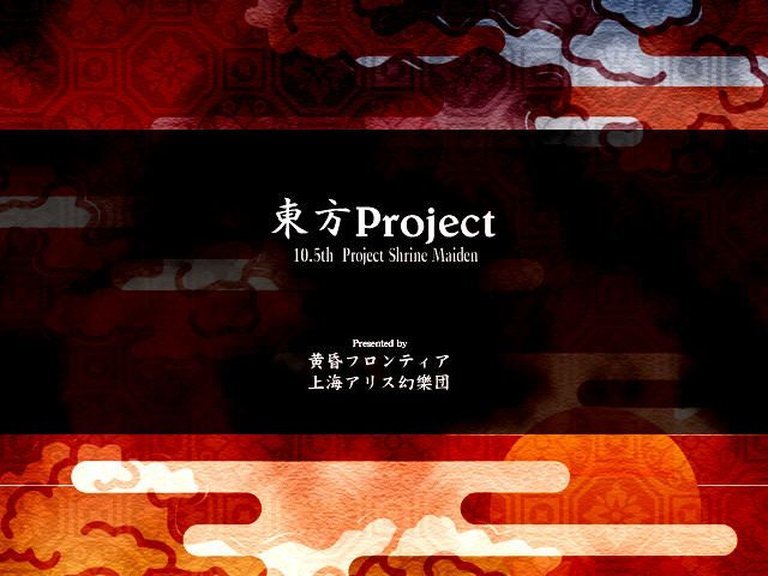
Touhou Hisouten: Scarlet Weather Rhapsody is a 2D fighting game set in the mystical world of Gensokyo, where the Scarlet Devil Mansion is plagued by bizarre natural phenomena. Players choose from 15 characters, each with unique abilities, and engage in fast-paced battles using a mix of projectiles, flight mechanics, and a dynamic weather system that alters combat conditions. The game features a skill card system for special moves and weather manipulation, along with a story mode where characters investigate the source of the anomalies, leading to multiple canonical endings.
Gameplay Videos
Touhou Hisouten: Scarlet Weather Rhapsody Patches & Updates
Touhou Hisouten: Scarlet Weather Rhapsody Mods
Touhou Hisouten: Scarlet Weather Rhapsody Guides & Walkthroughs
Touhou Hisouten: Scarlet Weather Rhapsody Reviews & Reception
myabandonware.com (92.8/100): very cool
Touhou Hisouten: Scarlet Weather Rhapsody: A Masterclass in Danmaku Fighting
Introduction
In the vast, kaleidoscopic universe of the Touhou Project, few entries have dared to redefine the series’ identity as boldly as Touhou Hisouten: Scarlet Weather Rhapsody (SWR). Released in 2008 as the 10.5th installment, this game is a fascinating hybrid—a fighting game that seamlessly blends the bullet-hell mechanics of its predecessors with the strategic depth of a card-based combat system. Developed collaboratively by Team Shanghai Alice and Twilight Frontier, SWR is not just a spin-off; it is a bold experiment that challenges the conventions of both the Touhou series and the fighting game genre at large.
At its core, Scarlet Weather Rhapsody is a game about chaos—both narrative and mechanical. The story unfolds in Gensokyo, a land where humans and youkai coexist, now plagued by bizarre, unseasonal weather phenomena. The Hakurei Shrine is leveled by an earthquake, the Forest of Magic is drenched in unending rain, and the Scarlet Devil Mansion is shrouded in an eerie, dense fog. These anomalies are the work of Tenshi Hinanai, a celestial being who, bored with the monotony of heavenly existence, seeks to stir up trouble in Gensokyo for her own amusement. Her actions set the stage for a narrative that is as much about the whims of immortality as it is about the resilience of those who call Gensokyo home.
But what truly sets Scarlet Weather Rhapsody apart is its gameplay. Building upon the foundation laid by its predecessor, Immaterial and Missing Power, SWR introduces a weather system and a card deck mechanic that fundamentally alter the flow of combat. The weather system dynamically changes the conditions of battle, granting buffs or debuffs depending on the current state—sunny skies might reduce flight costs, while a hailstorm could double spirit recovery. Meanwhile, the card deck system allows players to customize their character’s moveset, adding layers of strategy and personalization that were previously unseen in the series.
This review will delve deep into the game’s development history, its narrative and thematic richness, the intricacies of its gameplay mechanics, and its lasting impact on the Touhou franchise and the fighting game genre. By the end, it will be clear why Scarlet Weather Rhapsody is not just a footnote in the Touhou series, but a landmark title that deserves recognition for its innovation and ambition.
Development History & Context
The Collaboration Between Team Shanghai Alice and Twilight Frontier
Scarlet Weather Rhapsody is the product of a unique collaboration between Team Shanghai Alice, the one-man development team led by ZUN (Jun’ya Ōta), and Twilight Frontier, a doujin circle known for their work on games like Eternal Fighter Zero. This partnership was not new—it had previously yielded Immaterial and Missing Power (IaMP), the first fighting game in the Touhou series. However, Scarlet Weather Rhapsody represented a significant evolution of that collaboration, with each team bringing their strengths to the table.
ZUN was responsible for the game’s overarching vision, including the story, character designs, spell card names, and three original music tracks. His involvement ensured that SWR remained true to the Touhou series’ aesthetic and narrative tone, even as it ventured into uncharted gameplay territory. Meanwhile, Twilight Frontier handled the bulk of the programming, sprite artwork, and additional music arrangements. Their expertise in fighting game mechanics was crucial in refining the game’s combat system, making it both accessible and deep.
The Gaming Landscape of 2008
To understand Scarlet Weather Rhapsody‘s significance, it’s essential to consider the gaming landscape of 2008. The fighting game genre was in a state of flux. Street Fighter IV, released in February 2008, had reignited interest in the genre with its return to 2D mechanics and stunning visuals. Meanwhile, games like Super Smash Bros. Brawl and BlazBlue: Calamity Trigger were pushing the boundaries of what a fighting game could be, blending traditional mechanics with innovative new systems.
In this context, Scarlet Weather Rhapsody was a bold experiment. It was not a traditional fighting game in the mold of Street Fighter or Tekken, nor was it a straightforward bullet-hell shooter like the mainline Touhou games. Instead, it was a hybrid—a fighting game that incorporated elements of bullet-hell mechanics, card-based strategy, and dynamic environmental effects. This made it a niche title, but one that resonated deeply with fans of both genres.
Technological Constraints and Innovations
The game was developed for Windows 2000/XP, with relatively modest system requirements: a Pentium 1GHz processor, 1GB of RAM, and a DirectX 9.0c-compatible graphics card. These constraints influenced the game’s design, particularly in its visual presentation. Unlike the flashy, high-definition graphics of Street Fighter IV, SWR relied on a more minimalist aesthetic, with detailed but low-resolution sprites and a focus on fluid animation.
One of the most significant technological innovations in SWR was its native online multiplayer support. While Immaterial and Missing Power lacked online play, Scarlet Weather Rhapsody included built-in netplay, allowing players to compete over the internet. This was a major step forward for the Touhou fighting games, as it enabled a competitive scene to develop around the title. The netplay was peer-to-peer, which meant that match quality depended on the players’ connection speeds, but it was a groundbreaking feature for a doujin game of its time.
The Evolution from Immaterial and Missing Power
Scarlet Weather Rhapsody was not just a sequel to Immaterial and Missing Power—it was a refinement and expansion of its ideas. The core mechanics of IaMP, such as projectile-based combat and grazing, were retained, but SWR introduced several key innovations:
-
Flight Mechanics: Characters could now fly, adding a new dimension to movement and combat. This was a natural extension of the Touhou series’ emphasis on aerial maneuverability, but it also introduced new strategic possibilities, such as high-altitude battles and vertical dodging.
-
Card Deck System: The most significant addition was the card deck system, which allowed players to customize their character’s moveset. This system replaced the more rigid spell card declarations of IaMP with a flexible, strategic approach to combat. Players could build decks tailored to their playstyle, whether they preferred aggressive rushdown tactics or defensive, projectile-heavy strategies.
-
Weather System: The weather system was another major innovation. Weather conditions dynamically altered the battlefield, granting buffs or debuffs that could turn the tide of battle. This system added a layer of unpredictability and strategy, as players had to adapt to changing conditions mid-fight.
-
Expanded Roster: SWR featured 15 playable characters, including new additions like Tenshi Hinanai and Iku Nagae. Each character had a unique moveset and playstyle, ensuring a diverse and balanced roster.
The Release and Reception
Scarlet Weather Rhapsody was first unveiled at Reitaisai 4 in May 2007, where a playable demo was available to attendees. The demo was well-received, with long lines forming to try out the game. A trial version was later sold at Comiket 72 in August 2007, and an updated demo was released for free download in April 2008. The full version was released at Reitaisai 5 on May 25, 2008, priced at 2,000 yen on CD-ROM.
The game’s release was met with enthusiasm from the Touhou fanbase, who appreciated its innovative mechanics and faithful adherence to the series’ lore. Critics also praised the game, with Jeuxvideo.com giving it an 85% score, highlighting its improved gameplay and strategic depth. However, the game’s niche appeal and lack of widespread marketing meant that it remained a cult classic rather than a mainstream hit.
Narrative & Thematic Deep Dive
The Story: A Tale of Celestial Boredom and Gensokyo’s Resilience
At its heart, Scarlet Weather Rhapsody is a story about boredom—specifically, the boredom of immortality. Tenshi Hinanai, a celestial being from Bhava-agra (a heavenly realm), finds her eternal existence monotonous and unfulfilling. Envious of the youkai of Gensokyo, who constantly stir up incidents and create chaos, she decides to instigate her own catastrophe. Using the Sword of Scarlet Thought, she manipulates the weather and causes earthquakes, disrupting the delicate balance of Gensokyo.
The game’s narrative is structured around 15 distinct story routes, each following a different character as they investigate the strange phenomena. Unlike previous Touhou games, where multiple endings were numbered and their canonicity was ambiguous, SWR treats all story routes as canonical. This is achieved by placing each route at a different point in the timeline, creating a non-linear but cohesive narrative.
Key Themes
-
The Whims of Immortality: Tenshi‘s actions are driven by her boredom and desire for excitement. Her story explores the idea that immortality, while often romanticized, can be a curse—one that leads to a lack of purpose and a craving for chaos. This theme is reinforced by the reactions of other characters, who view Tenshi‘s actions as reckless and selfish.
-
The Resilience of Gensokyo: Despite the chaos caused by Tenshi, the inhabitants of Gensokyo refuse to be cowed. Characters like Reimu Hakurei and Marisa Kirisame take it upon themselves to investigate the anomalies and restore order. Their determination highlights the resilience of Gensokyo and its inhabitants, who are accustomed to dealing with supernatural threats.
-
The Interconnectedness of Events: The game’s non-linear narrative structure emphasizes the interconnectedness of events in Gensokyo. Each character’s story route intersects with others, creating a web of cause and effect. This reinforces the idea that Gensokyo is a living, breathing world where actions have consequences.
-
The Power of Perception: The title Scarlet Weather Rhapsody is a pun on Bhava-agra, the heavenly realm where Tenshi resides. The Japanese title, 東方緋想天 (Touhou Hisouten), translates to Eastern Skies of Scarlet Perceptions, hinting at the game’s exploration of how perception shapes reality. The weather anomalies are not just physical phenomena—they are manifestations of Tenshi‘s perceptions and desires.
Character Arcs and Motivations
Each of the 15 playable characters has a unique motivation for investigating the weather anomalies, and their story routes reflect their personalities and roles in Gensokyo:
-
Reimu Hakurei: As the miko of the Hakurei Shrine, Reimu is driven by a sense of duty. When the shrine is destroyed by an earthquake, she sets out to find the culprit and restore order. Her route is a classic hero’s journey, culminating in a confrontation with Tenshi.
-
Marisa Kirisame: A magician with a penchant for trouble, Marisa is initially motivated by curiosity. She suspects that the rain in the Forest of Magic is related to a theft, and her investigation leads her to Tenshi. Her route is more lighthearted than Reimu‘s, reflecting her mischievous personality.
-
Sakuya Izayoi: The head maid of the Scarlet Devil Mansion, Sakuya notices that her body is emitting a strange mist. Concerned, she investigates the source of the anomaly, leading her to Tenshi. Her route explores her loyalty to Remilia and her desire to protect the mansion.
-
Youmu Konpaku: The gardener of Hakugyokurou, Youmu is alarmed by the disappearance of ghosts in the Netherworld. She investigates the weather anomalies, suspecting that they are causing the spiritual imbalance. Her route is a mix of action and introspection, as she grapples with her dual nature as a half-human, half-phantom.
-
Tenshi Hinanai: As the instigator of the incident, Tenshi‘s route offers a unique perspective on the events. She is bored with her celestial existence and seeks to create chaos in Gensokyo for her own amusement. Her route is a study in arrogance and immaturity, as she underestimates the resolve of Gensokyo‘s inhabitants.
Dialogue and Character Interactions
The dialogue in Scarlet Weather Rhapsody is sharp, witty, and full of personality. Each character has a distinct voice, and their interactions are a highlight of the game. For example, Reimu and Marisa‘s banter is playful and familiar, reflecting their long-standing rivalry. Meanwhile, Tenshi‘s dialogue is haughty and dismissive, emphasizing her celestial superiority.
The game also features multiple canonical endings, each offering a different resolution to the story. For example, Reimu‘s ending sees her sealing Tenshi and using a keystone to rebuild the Hakurei Shrine, while Marisa‘s ending has her defeating Tenshi but leaving the keystone’s fate to Reimu. These endings reinforce the game’s themes of resilience and interconnectedness, as each character’s actions have ripple effects across Gensokyo.
Gameplay Mechanics & Systems
Core Gameplay Loop
At its core, Scarlet Weather Rhapsody is a 2D fighting game with a unique twist: it incorporates elements of bullet-hell shooters and card-based strategy. The core gameplay loop revolves around projectile-based combat, grazing, and deck management.
-
Projectile-Based Combat: Unlike traditional fighting games, which rely on melee attacks and combos, SWR emphasizes projectile-based combat. Characters can fire a variety of projectiles, from simple bullets to complex danmaku patterns. This makes positioning and spacing crucial, as players must constantly adjust their distance from the opponent to avoid incoming fire.
-
Grazing: Grazing is a mechanic carried over from the mainline Touhou games. It allows players to evade projectiles by moving close to them without taking damage. Successful grazing fills the spirit gauge, which is used to power special attacks and spell cards. This mechanic adds a layer of risk and reward to combat, as players must balance aggression with evasion.
-
Deck Management: The card deck system is the heart of SWR‘s strategy. Players assemble a deck of 20 cards, which are drawn randomly during battle. These cards are divided into three categories:
- System Cards (Red): These cards have utility effects, such as changing the weather, restoring health, or granting temporary invincibility.
- Skill Cards (Gray): These cards enhance or replace a character’s standard attacks, adding new moves to their arsenal.
- Spell Cards (Yellow): These are powerful, high-damage attacks that require a certain number of cards in hand to activate.
The deck system encourages players to think strategically about their moveset, as the cards they draw can drastically alter the flow of battle.
Flight and Movement
One of the most significant additions to SWR is the flight mechanic. Characters can now fly by holding the dash button while airborne, allowing for greater mobility and evasion. Flight consumes spirit orbs, which are replenished by grazing or dealing damage. This mechanic adds a new dimension to combat, as players can now engage in high-altitude battles or use flight to dodge projectiles.
The flight mechanic is particularly effective when combined with the weather system. For example, sunny weather reduces the cost of flight, making it easier to maneuver, while tempest weather increases the number of aerial dashes available.
Weather System
The weather system is one of SWR‘s most innovative features. Weather conditions dynamically alter the battlefield, granting buffs or debuffs that can change the tide of battle. There are 14 different weather types, each associated with a specific character and offering unique effects:
- Sunny (Reimu): Reduces flight cost and allows free Border Escapes.
- Drizzle (Marisa): Increases spell card damage.
- Cloudy (Sakuya): Reduces spell card cost by 1.
- Azure Sky (Youmu): Allows special attacks to be canceled into other special attacks.
- Hail (Alice): Doubles spirit orb recovery and increases bullet damage.
- Spring Haze (Patchouli): Prevents melee attacks but removes spirit recharge delay.
- Dense Fog (Remilia): Grants Life Drain on successful hits.
- Snow (Yuyuko): Reduces the opponent’s spell card gauge on hit.
- Sunshower (Yukari): Causes Guard Crush on improperly blocked melee attacks.
- Sprinkle (Suika): Upgrades all special moves to Level 4.
- Tempest (Aya): Increases aerial mobility and allows high-jump cancels.
- Mountain Vapor (Reisen): Hides spell cards in reserve.
- River Mist (Komachi): Randomly adjusts the distance between opponents.
- Typhoon (Iku): Grants superarmor but removes the ability to block.
The weather system adds a layer of unpredictability to combat, as players must adapt to changing conditions mid-fight. It also encourages strategic deck-building, as certain cards may be more effective under specific weather conditions.
Character Progression and Customization
Scarlet Weather Rhapsody offers a high degree of character customization through its deck system. Players can tailor their deck to suit their playstyle, whether they prefer aggressive rushdown tactics or defensive, projectile-heavy strategies. The game also features multiple difficulty levels, from Easy to Lunatic, ensuring that players of all skill levels can enjoy the experience.
In addition to the deck system, SWR includes a story mode with 15 distinct routes, each offering unique dialogue and encounters. Completing these routes unlocks new characters and cards, adding to the game’s replayability.
UI and Accessibility
The game’s UI is clean and functional, with a focus on clarity and accessibility. The health bar, spirit gauge, and card hand are all prominently displayed, allowing players to keep track of their resources at a glance. The game also includes a practice mode, where players can test out combos and strategies against a dummy opponent.
One of the game’s few drawbacks is its lack of voice acting. While this is in keeping with the Touhou series’ minimalist aesthetic, it can make the story feel less immersive. However, the game’s soundtrack more than makes up for this, with a mix of original compositions and arrangements of classic Touhou tracks.
World-Building, Art & Sound
The World of Gensokyo
Scarlet Weather Rhapsody is set in Gensokyo, a fantastical land where humans and youkai coexist. The game’s story takes place approximately one year after the events of Mountain of Faith, and it explores the delicate balance between the human and supernatural worlds.
The game’s stages are beautifully designed, each reflecting a different location in Gensokyo. From the Hakurei Shrine to the Scarlet Devil Mansion, each stage is rich in detail and atmosphere. The weather system further enhances the world-building, as the dynamic weather conditions make Gensokyo feel like a living, breathing world.
Visual Direction
Scarlet Weather Rhapsody features a minimalist but detailed visual style. The character sprites are low-resolution but fluidly animated, and the backgrounds are rich in detail. The game’s color palette is vibrant and varied, with each character and stage having a distinct look.
One of the standout features of the game’s visuals is its danmaku patterns. The projectile attacks are intricate and visually stunning, with each character having a unique set of patterns. This makes combat not just a test of skill, but also a visual spectacle.
Sound Design and Music
The game’s soundtrack is a highlight, featuring a mix of original compositions and arrangements of classic Touhou tracks. The music is composed by ZUN and U2 Akiyama, and it perfectly captures the game’s blend of action and whimsy.
The sound effects are also well-designed, with each attack and movement having a distinct sound. The weather system is further enhanced by ambient sounds, such as the patter of rain or the howl of wind, which immerse the player in the game’s world.
Reception & Legacy
Critical and Commercial Reception
Scarlet Weather Rhapsody was well-received by critics and fans alike. Jeuxvideo.com gave the game an 85% score, praising its improved gameplay and strategic depth. The game’s innovative mechanics and faithful adherence to the Touhou series’ lore were particularly highlighted.
Commercially, the game was a success within the Touhou fanbase, selling well at events like Reitaisai and Comiket. However, its niche appeal and lack of widespread marketing meant that it remained a cult classic rather than a mainstream hit.
Influence on Subsequent Games
Scarlet Weather Rhapsody had a significant impact on the Touhou series and the fighting game genre. Its card deck system and weather mechanics were refined and expanded in its sequel, Touhou Hisoutensoku, which added new characters and gameplay modes.
The game’s native online multiplayer also set a precedent for future Touhou fighting games, with Hopeless Masquerade and Urban Legend in Limbo both featuring robust netplay options. This helped to foster a competitive scene around the Touhou fighting games, with fan-hosted tournaments and community events.
Legacy in the Touhou Community
Within the Touhou community, Scarlet Weather Rhapsody is regarded as a landmark title. Its innovative mechanics and rich narrative have made it a favorite among fans, and its influence can be seen in numerous fan games and mods.
The game’s weather system and card deck mechanics have also inspired other developers, with similar systems appearing in games like BlazBlue and Under Night In-Birth. This speaks to the game’s lasting impact on the fighting game genre as a whole.
Conclusion
Touhou Hisouten: Scarlet Weather Rhapsody is a masterclass in innovation and ambition. It takes the core mechanics of the Touhou series and reimagines them as a fighting game, blending bullet-hell combat with card-based strategy and dynamic environmental effects. The result is a game that is both familiar and fresh, a testament to the creativity of Team Shanghai Alice and Twilight Frontier.
The game’s narrative is rich and thematically complex, exploring ideas of immortality, resilience, and the interconnectedness of events. Its gameplay is deep and strategic, with a high degree of customization and replayability. And its visuals and sound design are a feast for the senses, immersing the player in the vibrant world of Gensokyo.
Scarlet Weather Rhapsody may not have achieved mainstream success, but its influence on the Touhou series and the fighting game genre is undeniable. It is a cult classic, a game that resonates deeply with those who appreciate its unique blend of mechanics and storytelling. For fans of the Touhou series, fighting games, or innovative gameplay experiences, Scarlet Weather Rhapsody is an essential title—a true gem in the world of indie gaming.
Final Verdict: 9/10 – A bold, innovative masterpiece that redefines the boundaries of the fighting game genre.