
- Release Year: 2012
- Platforms: Macintosh, Windows
- Publisher: SMP Enterprises Inc.
- Genre: Simulation
- Perspective: Diagonal-down
- Gameplay: City building, construction simulation, Open World, RPG elements, Sandbox
- Average Score: 39/100
Description
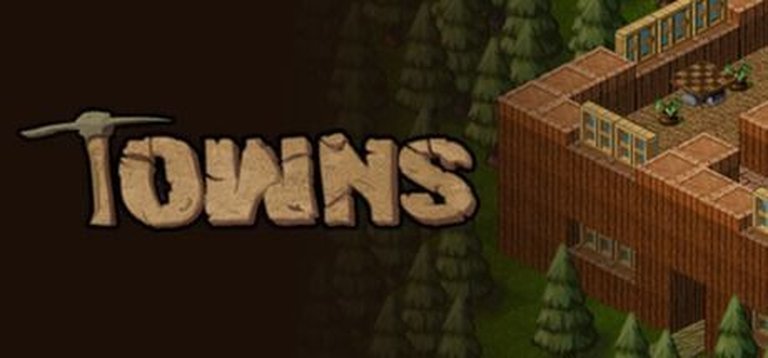
Towns is a 2012 simulation game that blends city-building with RPG elements in an isometric, multi-level world. Players begin with a small group of villagers and must construct a thriving settlement by designing specialized rooms for crafting, gathering resources, and adapting to various biomes—such as grasslands, deserts, and snowy regions—each offering unique resources, wildlife, and environmental threats. Inspired by titles like Diablo, Dungeon Keeper, and Dwarf Fortress, the game emphasizes sandbox-style construction, exploration, and management in a dynamic setting.
Where to Buy Towns
PC
Towns Mods
Towns Guides & Walkthroughs
Towns Reviews & Reception
metacritic.com (39/100): Shameless money-grab; this game did have quite a bit of potential, but a large amount of bugs.
steamcommunity.com : While that game isn’t completed yet, I’d say it’s pretty close.
pcworld.com : This is a great game for fans of Dwarf Fortress, Minecraft, and the like, but be warned that you’re paying for something that’s still under development.
Towns: A Monument to Unfulfilled Promise in the City-Builder Genre
Introduction: The Allure of the Deputy Dungeon Master
In the crowded landscape of simulation games, few titles have captured a core fantasy with such immediate clarity as Towns. Its central premise—”Instead of playing the hero who delves deep into the dungeon, how about playing the town that houses and caters to the hero’s needs?”—is a stroke of brilliant, almost obvious, genius. It flips the script on centuries of fantasy gaming, asking the player to embody the bustling, logistical heartbeat of a frontier settlement rather than its sword-wielding savior. Released in 2012, Towns arrived at the zenith of the indie renaissance and the nascent Steam Greenlight program, promising a fusion of Dwarf Fortress‘s deep systemic simulation, Minecraft‘s tactile building, and Diablo‘s loot-driven progression. Yet, this review will argue that Towns stands not as a classic realized, but as one of the most poignant and instructive “what if” stories in modern gaming history—a game of immense, tangible potential systematically undermined by technical infirmity, poor communicative practices, and a development cycle that burned out before it could achieve liftoff. Its legacy is a cautionary tale about the perils of early access, the weight of community trust, and the fragile line between pioneering ambition and unplayable neglect.
Development History & Context: The Greenlight Gambit and the Burnout
The SMP Collective and a Vision Forged in homage
Towns was the brainchild of the three-person independent group SMP, consisting of Xavi Canal (“supermalparit”), Alex Poysky, and Ben Palgi (“burningpet”). The team’s cited influences—Diablo, Dungeon Keeper, and Dwarf Fortress—form a trinity that perfectly explains the game’s design DNA: the loot and hero dynamics of Diablo, the evil genius lair-management of Dungeon Keeper, and the sprawling, complex, often cruel simulation of Dwarf Fortress. The ambition was to create a more accessible, visually coherent, and commercially viable take on the “fortress simulator,” a genre then dominated by ASCII graphics and an infamous learning curve. Ben Palgi handled graphics, Canal code and design alongside song composition, with Sam Poole (“Evilpooley”) providing additional music and Florian Frankenberger (“Moebius”) contributing code. This was a pure, passion-driven indie project.
Steam Greenlight: Pioneer or Precarious Precedent?
Towns‘s history is inextricably linked to Steam’s Greenlight program. It was among the first ten games approved for sale on Steam via the system in September 2012, releasing on November 7, 2012. This placed it at the vanguard of a new distribution model. However, this is where the first, and most damaging, controversy erupted. Multiple critical sources, including Penny Arcade’s report and Wikipedia, confirm the game was released as a beta/unfinished product without clear disclosure on its Steam store page. This was not an “early access” title in the modern sense; it was presented as a finished product, leading to a firestorm of complaints from purchasers who felt deceived. As one Metacritic user review starkly stated: “Unfinished, bad rip-off of Dwarf Fortress. They have pulled development stating that ‘Sales did not turn out as hoped’ despite making 2 mil for a two-person team.” The perception was of a cash grab, a sentiment amplified when development stalled.
The Collapse: Burnout and Abandonment
The development timeline is brutally short and abruptly terminated. According to forum announcements cited in Wikipedia and Gamasutra, on February 9, 2014, Canal announced that after releasing build v14, SMP was discontinuing development due to burnout. The torch was passed to Florian Frankenberger, a community member, on February 17, 2014. His stewardship was short-lived; he ended his development on May 6, 2014. The game was left in a functional but clearly incomplete state. Community requests to open the source code, as noted on HandWiki, went unanswered. The entire active development span was a mere 18 months from Steam release to final abandonment, with core development by SMP lasting about 16 months post-release. This rapid rise and collapse defines the Towns experience: a sprint that ended in a heap.
Narrative & Thematic Deep Dive: A Story Told in Systems
Towns possesses no traditional narrative with characters, dialogue, or a plotted storyline. Its “story” is an emergent, systemic narrative generated by the player’s interaction with its core duality: the Town Above vs. The Dungeon Below.
The Premise as Theme: Civilization’s Frontier
The game’s entire thematic thrust is encapsulated in its ad blurb: managing a settlement “on top of an active dungeon.” This is not a backdrop; it is the fundamental conflict. The town exists in a state of tense symbiosis with the underworld. Resources (stone, metals, gems, monster parts) must be extracted from the dungeon, an act of invasion that provokes retaliation. The hero, an external agent, is both a savior and a liability—a force that can clear threats but also draws them upward. The theme is one of frontier perseverance. You are not a hero; you are the infrastructure that makes heroism possible and survivable. The constant struggle to feed, equip, and protect your villagers (“People die all the time and do stupid things” – Metacritic user) against environmental hazards (hostile fauna from biomes) and dungeon incursions creates a persistent, low-grade narrative of survival against entropy.
Biome Lore and Environmental Storytelling
The game’s world-building is expressed through its biome system. Each starting biome (Grass, Desert, Snow, Jungle) possesses unique properties that create different early-game challenges and narratives. A Jungle biome provides bananas and radishes but spawns hostile frogmen; a Desert biome yields cacti and giant scorpions. This system tells a story of adaptation. Your town’s identity is shaped by its location. A desert outpost is a story of scarcity and monstrous heat, while a snowy settlement is a tale of cold and foraging. These are not cosmetic differences; they are fundamental narrative variables that change the “story” of your town’s founding.
The Hero as a Narrative Device
The heroes you attract function as narrative agents. They have independent goals: to “explore the dungeons below, fight off monsters, gain levels, special skills and collect the best loot they can find.” To the player, they are autonomous units, their adventures generating randomized loot and clearing dungeon levels. Their successes and failures—their kamikaze charges into overwhelming forces, as noted in reviews—create episodic stories of triumph and tragedy that feed back into your town’s economy and security. You are the silent benefactor and beneficiary of their saga.
Gameplay Mechanics & Systems: Ambitious Architecture on Shaky Ground
Core Loop: Supply Chains and Sovereign Citizens
The foundational gameplay loop is classic city-building with a heavy emphasis on production chains. Starting with 11 villagers, the player must establish basic needs: food, wood, stone. This is done through a room-based system. You designate areas for specific functions: a “Carpenter” room for woodworking, leading to a “Masonry” room for stonework, and so on. Each room requires a specific furniture item (e.g., a Carpenter’s Table) to function. This creates a tangible, Minecraft-like sense of construction. From there, production chains deepen: wheat must be grown in fields, harvested, milled into flour, and baked into bread in a Bakery. The complexity is praised by some (“Complex systems” – PCWorld) and condemned by others as micromanagement hell (“The simplest tasks are made so complex it stops being a game and starts becoming work” – Metacritic).
The villagers, or “townies,” are autonomous butstupid. Their AI is the game’s most infamous and consistently criticized system. Reviews uniformly describe them as suicidal, inefficient, and inscrutable. They will starve while surrounded by food, trap themselves, and blindly rush into combat. The player’s core interaction is zoning, prioritizing, and tweaking to mitigate this AI’s failings. You set food production quotas, manage stockpiles, and assign priorities, but ultimate control is elusive. This lack of direct control is a core design choice aligning it with Dwarf Fortress, but where Dwarf Fortress‘s depth justifies its complexity, Towns‘s shallower simulation exposes the AI’s flaws brutally.
The Dungeon & Hero Integration
The second pillar is the vertical dungeon. The isometric view supports multiple z-levels, allowing for deep mining. Digging down reveals dungeon levels populated by monsters (slimes, spiders, goblins). The player cannot directly control combat; instead, the strategy is to build a Tavern to attract Heroes. These heroes autonomously explore, fight, and return with loot (gels, weapons, armor). This creates a fascinating passiveRPG layer. Your town’s growth fuels hero recruitment, and hero success fuels town growth through loot. It’s a compelling feedback loop, but one reviewers found underdeveloped (“the RPG aspect is non-existent” – Metacritic). Heroes are essentially uncontrollable, high-risk assets whose kamikaze tendencies can be as problematic as the monsters.
Interface, UI, and Technical Woes
The user interface is repeatedly cited as a major flaw. It is described as “clunky,” “terrible,” and having “10 menu screens to fully complete most rooms/tasks” (Metacritic). Navigational confusion is constant. Technically, the game suffered from performance issues (“Lag in high populated towns” – Steam user), crashes (“CTD after 10 minutes” – Metacritic), and pathfinding disasters. The graphics, while a deliberate retro/isometric style, were called “crude” and “not sensational” (Metacritic). The sound design was almost universally panned, with its looping 20-second track a notorious irritant (“The music is so annoying that I had to cut it” – Metacritic).
Innovation and Flaw Intertwined
Towns‘s greatest innovation—the town-as-entity managing heroes exploring a dungeon—was also its greatest source of frustration. The lack of direct control over heroes and the unreliable AI of villagers meant the player often felt like a spectator to their own failure. The systemic depth promised by the production chains and biome variety was constantly at war with the game’s inability to reliably execute basic functions. The result was a game that felt half-baked in its most critical interactive systems.
World-Building, Art & Sound: A Charming Façade Over a Crumbling Foundation
Visual Design: Functional Isometry
The game employs a diagonal-down, isometric perspective with multi-level height. This technical choice was essential for its vertical gameplay, allowing players to see into deep caverns and over multi-story structures. Visually, it uses a simple, colorful, pixel-art style. Screenshots and user descriptions suggest an aesthetic closer to a refined Dungeon Keeper than the ASCII of Dwarf Fortress. It was “charming” to some (“The graphics are fine” – Metacritic positive reviewer) but “crude” to others (“I could draw better” – Metacritic). The art served the function of making the complex simulation legible, a crucial goal it partially achieved. The biome differentiation added visual variety and immediate environmental storytelling.
Atmosphere: Oppressive and Punchdrunk
The atmosphere is one of perpetual, grinding anxiety. The relentless need for food, the constant threat of monster incursions from below, and the sheer劳动 required to build anything create an oppressive, never-relaxing tone. This is compounded by the severe audio landscape. The infamous repetitive soundtrack and minimal sound effects (no ambient noises, no dynamic combat cries) create a hollow, repetitive auditory experience that many found maddening, actively detracting from the immersive potential of the world. The atmosphere, therefore, is not one of epic fantasy but of tedious toil punctuated by sudden, AI-driven disasters.
Sound as a Symptom
The sound design is a perfect microcosm of the game’s state: a clear, basic idea (a fantasy town theme) executed with minimal effort, looping interminably. It reflects the developer’s apparent prioritization of mechanical scope over polish and user comfort—a pattern repeated across the UI and AI.
Reception & Legacy: The Sound of a Promise Breaking
Critical and Commercial Reception at Launch: A Divided, Angry Audience
Towns launched into a firestorm of controversy. The undisclosed beta status on Steam led to accusations of deception. Metacritic’s aggregated user score sits at a dismal 3.9/100 (“Generally Unfavorable”), with 59% of over 2,800 Steam reviews being negative as of 2026. The critique was multifaceted:
1. The Deception: Anger over paying for an unfinished product.
2. The Broken AI: Universal condemnation of villager intelligence.
3. The Unpolished Experience: Crashing, poor UI, bad pathfinding.
4. The Abandonment: The perception that developers took the money and ran.
Yet, amidst the negativity, a dedicated niche persisted. Some reviewers on Metacritic and Steam forums gave it 7-10/10 scores, praising its addictive “one more turn” quality, its fascinating concept, and its potential. They argued it was “playable” and “fun” if one endured the learning curve and accepted its alpha state. PCWorld’s review captured this dichotomy perfectly: it praised the “complex systems” and “fun concept” but bluntly stated, “this is still more ‘We’re happy to accept donations!’ than ‘Try the demo, then buy the game.'”
The Evolution of Reputation: From Potential to Pariah
As development ceased in mid-2014, any hope for a redemption arc evaporated. The game’s reputation solidified as a cautionary tale. It became a frequent citation in discussions about the risks of Steam Early Access and the misconduct possible under the Greenlight system. Its name is often invoked alongside The War Z as an example of a game that misrepresented its state to consumers. The Metacritic and Steam review scores have remained stubbornly negative over a decade later, a permanent scar on its record. For every user who comments, “I love this game, i spend so much hours playing it” (Metacritic), there are ten decrying its “terrible A.I.” and “abandoned” state.
Influence on the Industry and Genre
Towns‘s direct influence is murky due to its abandonment. It did not spawn a wave of successful clones in the way Minecraft or Dwarf Fortress did. However, its core conceit—managing a town that services adventurers in a dungeon—can be seen as a direct precursor to later, more polished successes.
* RimWorld (2018): While not identical, RimWorld’s core loop of managing a colony that produces gear and withstands raids from a hostile frontier shares substantial DNA with Towns‘s town vs. dungeon dynamic, but with vastly superior AI, UI, and narrative generation.
* Against the Storm: This recent hit directly mechanizes the core loop Towns only gestured at: you are the mayor of a settlement that supplies a cursed, cyclical forest, managing production chains to satisfy a capricious queen—a thematic and mechanical descendant.
* The “town-building” sub-genre was arguably pushed to consider the external ecosystem (dungeons, heroes, caravans) as more than just a source of resources, but as an active, narrative-driving force.
Towns serves as a proof-of-concept that was never fully realized. It demonstrated that the “town manager” fantasy had legs, but its failure showed that the execution—particularly in AI, interface, and communication—was non-negotiable. Its legacy is that of a failed prototype whose ideas were later perfected by more resourced and stable teams.
Conclusion: The Ghost in the Machine of a Genre
Towns is a profoundly difficult game to summarize. To label it simply “bad” is to ignore its breathtakingly original core premise and the hundreds of hours its most ardent supporters poured into its clunky world. To label it “good” or a “hidden gem” is to dismiss the very real, game-breaking frustrations that faced every player from day one—the suicidal AI, the impenetrable UI, the crashing, and the ultimate, irreversible abandonment by its creators.
Its place in video game history is not as a classic played and revered, but as a tectonic plate of an idea that shifted the landscape without ever becoming a mountain. It was a daring experiment that confirmed the viability of the “town-as-hero” fantasy while catastrophically demonstrating the non-negotiable importance of polish, communication, and sustainable development. The sheer volume of user reviews detailing the same core issues—pathfinding, AI, clarity—is not the whining of entitled gamers, as some developers dismissed it, but a unified diagnostic report on a game whose foundations were cracked before the first floor was finished.
For the professional historian, Towns is a mandatory case study. It illustrates the honeypot and the hazard of the early access model. It shows how a brilliant design pivot can be rendered inert by technical debt and poor management. It stands as a monument not to what was achieved, but to what was promised—a ghost town whose Blueprints for a fantastic city are still faintly visible in the rubble, waiting for a more capable architect to finally read them. The verdict is therefore one of fascinating, instructive failure. It is a must-play for students of game design to understand its ambitions and its fatal mistakes, but it cannot be recommended to the casual player as a complete or satisfying experience. Its final score is not a number, but a question mark: a haunting, unfinished sentence in the history of the simulation genre.