
- Release Year: 2006
- Platforms: Windows
- Publisher: Focus Home Interactive SAS
- Developer: Nadeo
- Genre: Compilation
- Perspective: Bird’s-eye view
- Game Mode: Hotseat, LAN, Online PVP, Single-player
- Gameplay: Racing, Stunt driving, Track Editor
Description
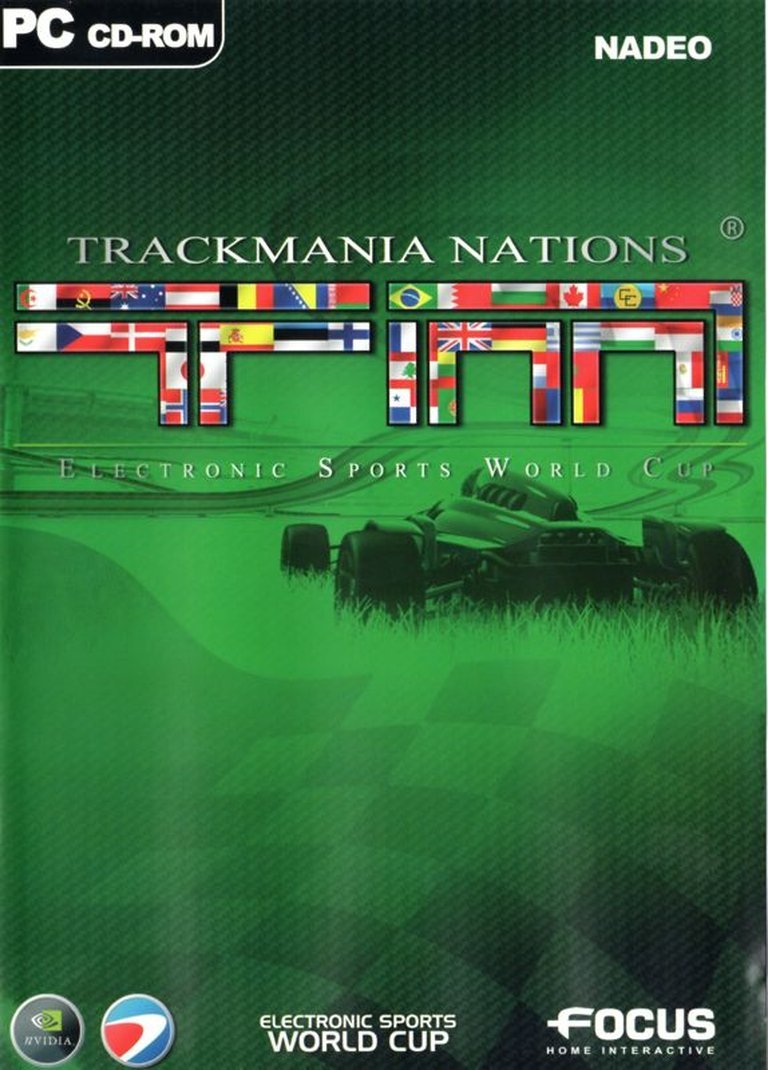
TrackMania Sunrise eXtreme + TrackMania Nations ESWC (Collector’s Edition) is a compilation offering two high-speed racing experiences from the TrackMania series. TrackMania Sunrise eXtreme emphasizes technical skill with its challenging tracks featuring loops, jumps, and turbo blocks, while TrackMania Nations ESWC serves as a free-to-play tournament-focused edition used in the 2006 Electronic Sports World Cup, introducing a stadium environment and team-based online multiplayer modes. The collection includes 90+ single-player tracks, customizable vehicles, and a graphical track editor for user-created content, alongside bonus stickers and the competitive spirit of racing as both offline and online multiplayer support up to 20 players.
TrackMania Sunrise eXtreme + TrackMania Nations ESWC (Collector’s Edition): Review
Elite arcade racing crystallized into a landmark compilation
In the mid-2000s, the TrackMania series emerged as a beacon of simplicity-meets-skill in the racing genre, blending blistering speed, precision-based physics, and a growing obsession with online competition. The Collector’s Edition — bundling TrackMania Sunrise eXtreme and TrackMania Nations ESWC alongside a sticker set — represents the maturation of Nadeo’s vision, fusing the foundational “Original” physics and stunt-driven gameplay with an esports-ready experience. This review unpacks how this compilation became a cornerstone for both casual arcade racers and competitive communities, cementing TrackMania’s legacy as a vehicle for technical mastery and creative expression.
Development History & Context
Nadeo SAS, the French studio behind TrackMania, had already carved its niche with the 2003 debut of TrackMania Original, a stripped-down racing simulator inspired by the 1990s DOS classic Stunts. The Collector’s Edition compilation, released in 2006, leveraged the same robust microtransaction-free engine and physics model that defined the series. However, its development unfolded during a transitional period for gaming: broadband internet was becoming ubiquitous, modding communities were thriving, and esports tournaments like the Electronic Sports World Cup (ESWC) were shifting from niche to mainstream recognition.
TrackMania Sunrise eXtreme (2005), an updated take on Sunrise (2005), emphasized graphical polish and trick-heavy desert/snowy environments, while Nations ESWC (2006) was explicitly built as a freeware tournament platform. Nadeo’s dual approach — iterative upgrades in Sunrise eXtreme paired with the lean, competitive focus of Nations ESWC — reflects a manifesto that prioritized core gameplay over narrative. The games occasionally contended with tech limitations, notably the anti-piracy StarForce drivers required for the downloadable version of Nations ESWC, a controversial choice that alienated some players.
The compilation arrived in a landscape dominated by polished but story-driven racing games (Gran Turismo 4, Need for Speed: Most Wanted), offering a contrasting experience: physics-driven, fast-paced, and impossible to master without dedicated practice.
Narrative & Thematic Deep Dive
Unlike traditional racing games that shoehorned in narratives — think illegal street races or personal rivalries — TrackMania’s Collector’s Edition rejected plot in favor of a universal language: speed. The absence of a traditional narrative was a strength, allowing players to project their ambition onto the track. No characters guided the story; the protagonist was the player themselves, racing against time or ranked adversaries.
The thematic undercurrents revolved around technical challenge, procedural mastery, and the democratization of racing. TrackMania Sunrise eXtreme’s neon-soaked deserts and alpine courses evoked the essence of vehicular freedom, while Nations ESWC’s Stadium environment — a mono-theme of competitive arenas featuring banks, ramps, and speed blocks — positioned racing as a digital sport. The “nations” framework in Nations ESWC tapped into primal tribal instincts, transforming online leaderboards into nationalistic rivalries.
Even in singleplayer, the themes of improvement and self-discipline surfaced. Medals locked behind escalating time standards (bronze, silver, gold) served as both gamified goals and a metaphor for the “1% margin” seen in real-world motorsports, where victory hinges on millisecond-perfect execution.
Gameplay Mechanics & Systems
Core Loops & Precision Design
At its heart, the Ψhysics Engine!* — a term Nadeo trademarked — anchored the gameplay. Acceleration, weightlessness, and momentum were modeled with formulaic exactness, creating a sense of inevitability: a late brake, a twitched steering input, or a missed jump angle would decisively shatter runs. Sunrise eXtreme refined this with:
– Vehicular stunts: Loops, corkscrews, and airborne segments demanded an astronaut’s spatial awareness.
– Turbo blocks: Randomized boosts forced drivers to weigh risk against reward, embedding tactical repetition into practice.
Nations ESWC streamlined this further for competitive play:
– Stadium-only: Eliminated environmental variety for a hyper-focused “stunt racing” arena, ideal for tournament consistency.
– Three modes:
– Round: One-lap duels shaping ability under pressure.
– Time Attack: Unlimited retries for analytic experimentation.
– Team: Collaborative and adversarial layer for group play.
Multiplayer & Progression
Both games shared a ladder system where players climbed rankings via performance, but Nations ESWC elevated this into global and national leaderboards. The included server browser and PvP-focused voting mechanics (e.g., map selection) catered to burgeoning online communities, while Sunrise eXtreme’s robust track editor prioritized creation.
The editor in Sunrise eXtreme was revolutionary. Media Tracker allowed designers to embed text, camera movements, and sound effects into tracks, transforming them into audiovisual experiences akin to roller-coaster broadband performances. Player-sharing via replays (exportable to AVI) created a feedback loop where the game’s creators and consumers collaborated in shaping its lifespan.
Flaws & Frustrations
While praised for accessibility, the steep skill curve marginalized casual players. The “unguided” approach — no tutorials past initial tips — required trial-and-error that some found overwhelming. Additionally, the public server browser’s lack of moderation tools occasionally led to latency issues in Nations ESWC, despite its competitive pedigree.
World-Building, Art & Sound
Environments
The two games represent polar extremes of Nadeo’s design philosophy:
– Sunrise eXtreme: Desert (Speed Vision) and snowy (Winter Speed) environments painted with vibrant textures and undulating terrain, contrasting with the austere Stadium in Nations.
– Nations ESWC: A kitsch arena dripping with pop-culture advertising (e.g., NVIDIA banners cycling to TrackMania United promotions), creating a surreal, ephemeral backdrop for high-stakes races.
All tracks, regardless of environment, were minimalist yet self-consistent — a single mistake gate, a gravel patch, or a turbo block’s glow wasn’t just decorative; it was a lesson in the studio’s “form follows function” ethos.
Sound Design
DOO’s physics-attuned soundtrack — a blend of electronic rock and industrial rhythms — mirrored the games’ pace. Engine noises across +40 cars (from american muscle cars to futuristic rally vehicles) were intentionally exaggerated to provide auditory feedback, a clever design choice to help players gauge acceleration and direction mid-air.
The Stadium’s ambient crowd noises in spectator mode, while rudimentary, added theatrical weight to multiplayer victories. The absence of voice acting, however, underscored the lack of narrative focus.
Reception & Legacy
Despite scant traditional metadata (no critic reviews surfaced in MobyGames’ listing as of 2024), the Collector’s Edition inherited high praise from its components:
– TrackMania Sunrise eXtreme:Lauded for its “flick stick” joy of desert loops and advanced car dynamics.
– Nations ESWC: A verifiable esports milestone, with ESWC 2006 awarding €40,000 across tournaments. Its nomination as “Best Cost-Benefit Ratio in 2006” by PC Powerplay (Germany) hinted at its value as a free standalone, let alone as part of this compilation.
Players loved the pure gymnastics of the physics, though some balked at StarForce drivers in the download version. Nonetheless, the games’ longevity was assured:
– TrackMania United (2006) and sequels expanded on these mechanics, merging environments and real-time MP.
– Competitive Adoption: Titles like Trials HD (2009) and Forza Horizon’s (2012) speed traps owe a clear debt.
– Track Editor Precursor: Sunrise eXtreme’s level tools foreshadowed Super Mario Maker facilitation in track design.
Today, the Nations ESWC modding scene keeps it alive. The original StarForce controversy faded once the game migrated to freeware platforms, sidestepping the failed accessory without sacrificing its soul.
Conclusion
The Collector’s Edition stands as a Rosetta Stone of early 2000s racing. By bottling Nadeo’s uncompromising design philosophy and fostering a creation ecosystem, it laid the groundwork for decades of asynchronous online competition and user-made content. While Nations ESWC’s Stadium became esports shorthand for “pure racing,” Sunrise eXtreme offered that delight in schemas of dirt and speed, challenges against the laws of slide.
Any fatigue from mastering its razor-thin margins is overshadowed by the euphoria of a flawless run — a feeling Nadeo perfected long before VR headsets chased “immersion.” Few games ever balance the developer’s code and the player’s adrenaline as harmoniously. Rather than fading into the bargain bin of history, this compilation marks TrackMania’s graduation from niche to legacy. Definitive Verdict: Essential for historians; challenging yet rewarding for modern players; inspirational for any game seeking gameplay purity over production glitz.