
- Release Year: 2010
- Platforms: Windows
- Publisher: N3V Games Pty Ltd.
- Developer: Roger Cabo
- Genre: Simulation, Vehicular
- Perspective: 1st-person
- Game Mode: Single-player
- Gameplay: Train Simulation
- Setting: Modern
- Average Score: 54/100
Description
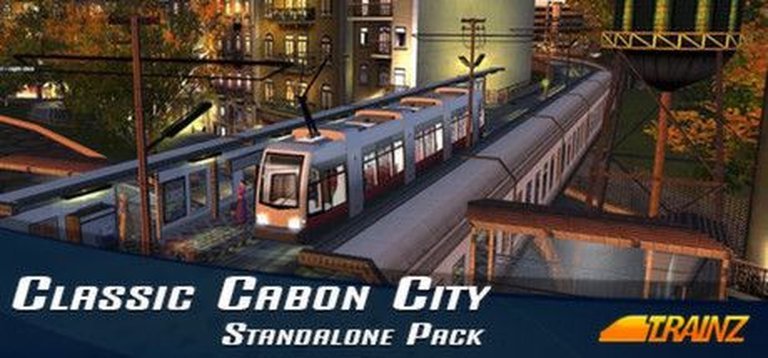
Trainz: Classic Cabon City is a train simulation game set in a sprawling urban environment with over 180 stations and a dual-track system, offering players the freedom to choose their routes. Players can operate two distinct trams, each with unique cabins, while navigating the city using an in-cab HUD interface to monitor their path and control junctions. The game emphasizes realistic train operation and exploration within a detailed, expansive cityscape.
Gameplay Videos
Where to Buy Trainz: Classic Cabon City
PC
Trainz: Classic Cabon City Guides & Walkthroughs
Trainz: Classic Cabon City Reviews & Reception
steambase.io (37/100): This score is calculated from 52 total reviews which give it a rating of Mostly Negative.
gamesreviews2010.com (90/100): A Virtual Railroading Masterpiece.
raijin.gg (37/100): Player reviews have been mostly negative, reflected in a 36.54% rating.
Trainz: Classic Cabon City: A Deep Dive into a Niche Simulation
Introduction: The Allure of Urban Railroading
Trainz: Classic Cabon City (2010) is a fascinating artifact in the long-running Trainz franchise—a series that has, since its debut in 2001, carved out a dedicated niche for railroad enthusiasts. Unlike its predecessors, which often focused on rural or industrial rail networks, Classic Cabon City boldly shifts the setting to a sprawling, fictional urban metropolis. This review explores whether the game succeeds in its ambitious vision or stumbles under the weight of its own complexity.
At its core, Classic Cabon City promises an immersive tram-driving experience, complete with a 10km² city, 180 stations, and a dynamic route-planning system. But does it deliver? This review will dissect its development, gameplay, world-building, and legacy to determine its place in simulation history.
Development History & Context: The Trainz Evolution
The Studio Behind the Tracks
Developed by N3V Games (formerly Auran), Classic Cabon City emerged during a transitional period for the Trainz series. The franchise had already established itself as a leader in railroad simulation, but by 2010, the studio was experimenting with urban environments—a departure from the series’ traditional focus on freight and long-distance passenger trains.
The game was spearheaded by Roger Cabo, a community figure known for his work on Trainzland.com, with scripting assistance from David Marinus and technical support from Auran’s veteran team. The collaboration between modders and professional developers was a hallmark of Trainz’s development philosophy, blending official content with community-driven innovation.
Technological Constraints & Era Context
Released in September 2010, Classic Cabon City arrived at a time when simulation games were pushing boundaries in realism. However, it was also constrained by the hardware of its era:
– Minimum specs required a Pentium D 3.4GHz CPU and 1GB RAM, reflecting mid-2000s standards.
– The nVidia GeForce 7200 (128MB) was the baseline GPU, limiting texture fidelity and lighting effects.
– The game’s 2GB installation size was modest by modern standards but substantial for 2010.
Despite these limitations, the developers leveraged Trainz’s proprietary engine (introduced in Trainz Classics 3 and TS2009) to render a dense urban environment—a technical feat for the time.
The Gaming Landscape in 2010
The simulation genre in 2010 was dominated by:
– Microsoft Train Simulator (2001) and its modding community.
– RailWorks (later Train Simulator), which emphasized realism but lacked Trainz’s open-ended sandbox appeal.
– Cities in Motion (2011), which would later redefine urban transit simulations.
Classic Cabon City positioned itself as a hybrid: a tram-focused experience within a living city, bridging the gap between pure rail simulation and urban exploration.
Narrative & Thematic Deep Dive: A City Without a Story
The Absence of Plot
Unlike narrative-driven simulations (e.g., Euro Truck Simulator 2’s career mode), Classic Cabon City eschews traditional storytelling. There are:
– No characters beyond the player.
– No dialogue or scripted events.
– No overarching goals—just the open-ended freedom to drive trams.
This minimalist approach aligns with Trainz’s sandbox philosophy but may leave players craving structure.
Themes: Urban Exploration & Systems Mastery
The game’s themes revolve around:
1. Urban Complexity – The city is a labyrinth of tracks, junctions, and stations, rewarding players who learn its intricacies.
2. Realism vs. Accessibility – While it simulates tram operations, it stops short of full-scale railroad management.
3. Discovery – Hidden landmarks (the 1000m Skytower, airport, fun fairs) encourage exploration.
The lack of narrative is compensated by emergent gameplay—players create their own stories through route planning and city traversal.
Gameplay Mechanics & Systems: The Tram Driver’s Toolkit
Core Gameplay Loop
- Route Selection – Choose from 180 stations and plot a path using the HUD interface.
- Driving & Switching – Operate one of two trams, manually controlling junctions from the cabin.
- Exploration – Deviate from main routes to uncover hidden locations.
Innovations & Flaws
✅ Pros:
– Interactive HUD – A ahead-of-its-time feature allowing real-time junction control.
– Night Mode – Dynamic lighting and shadows enhance immersion.
– Dense City Layout – The two-track system offers genuine route variety.
❌ Cons:
– Steep Learning Curve – No tutorial means newcomers may struggle.
– Repetitive Gameplay – Without objectives, long sessions can feel aimless.
– Technical Issues – Some players report buggy junctions and performance drops in dense areas.
UI & Controls
The first-person cabin view is immersive but clunky:
– Mouse-driven controls for switches feel unintuitive.
– The HUD is functional but lacks polish compared to modern sims.
World-Building, Art & Sound: A City That Breathes
Visual Design
- High-resolution textures (for 2010) bring the city to life.
- Dynamic lighting makes night drives atmospheric.
- Landmarks (Skytower, airport) add verticality and scale.
However, the repetitive building models and low-poly distant objects betray its age.
Sound Design
- Tram sounds are authentic but limited in variety.
- Ambient city noise (traffic, crowds) is subtle but effective.
- No music—just the hum of the tram and urban chatter.
The absence of a soundtrack reinforces realism but may feel sterile to some.
Reception & Legacy: A Mixed Response
Critical & Commercial Reception
- Steam Reviews: Mostly Negative (37% positive) – Players cite bugs, lack of depth, and outdated mechanics.
- Sales: Estimated 1,250 units sold (per Raijin.gg), making it a niche product.
- Community: Beloved by Trainz purists but overlooked by mainstream sim fans.
Influence on the Genre
While not a commercial success, Classic Cabon City demonstrated:
– The viability of urban tram simulations.
– The appeal of player-driven exploration in rail games.
– The importance of modding support (though this entry lacked it).
Later titles like Cities in Motion and Transport Fever would refine these ideas.
Conclusion: A Flawed but Fascinating Experiment
Trainz: Classic Cabon City is a bold but imperfect entry in the Trainz series. Its ambitious urban design and interactive systems were ahead of their time, but technical limitations and lack of polish hold it back.
Final Verdict:
– For hardcore Trainz fans: A must-play for its unique setting.
– For casual players: Too niche and unguided to recommend.
– For simulation historians: A fascinating case study in early urban rail sims.
Score: 6.5/10 – A noble experiment that doesn’t quite reach its destination.
Would you like additional analysis on modding potential or comparisons to modern tram sims?