
- Release Year: 2008
- Platforms: iPad, iPhone, Windows
- Publisher: Big Fish Games, Inc, G5 Entertainment AB, NevoSoft LLC
- Developer: Artogon Games
- Genre: Adventure
- Perspective: 1st-person
- Game Mode: Single-player
- Gameplay: Hidden object, Puzzle elements
- Average Score: 83/100
Description
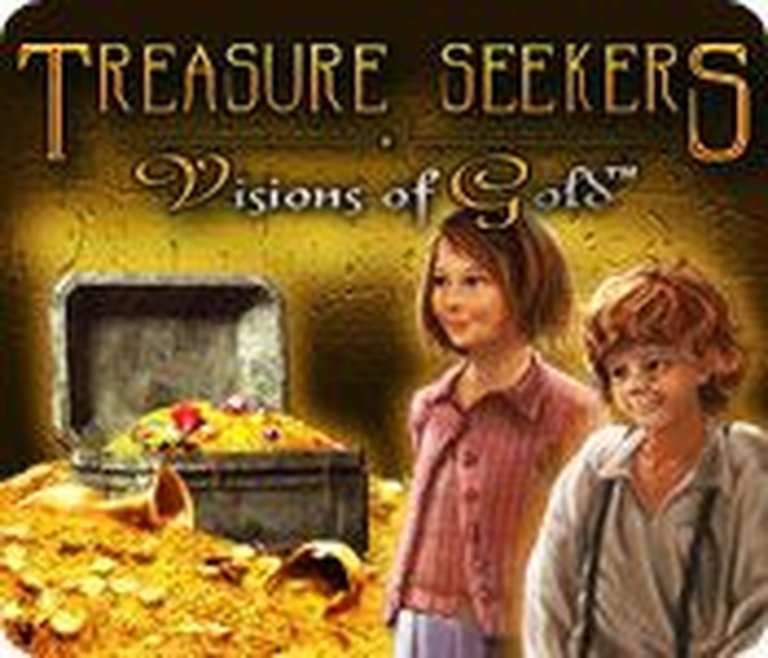
Treasure Seekers: Visions of Gold is a hidden object adventure game where siblings Nelly and Tommy discover their pirate grandmother’s diary, leading them on a quest to uncover hidden treasure. The game features unique hotspot-based mechanics where players find and drag objects into circles to progress, alongside logic puzzles and multiple interactive windows. With a whimsical storyline and a mix of exploration and problem-solving, the game offers a lighthearted yet engaging experience for fans of the genre.
Gameplay Videos
Treasure Seekers: Visions of Gold Free Download
Treasure Seekers: Visions of Gold Guides & Walkthroughs
Treasure Seekers: Visions of Gold Reviews & Reception
jayisgames.com (88/100): A triumphant return to form for the series.
metacritic.com (78/100): Overall, when all of the different parts of Treasure Seekers are taken into account, the game is both well made and provides a lot of joy to people who are into pixel hunts.
mobygames.com (75/100): A fairly standard hidden object game with a flimsy storyline and a glorious disregard for health and safety.
familyfriendlygaming.com (91/100): The puzzle elements of Treasure Seekers Visions of Gold are super.
Treasure Seekers: Visions of Gold: A Hidden Gem in the Hidden Object Genre
Introduction
In the late 2000s, the casual gaming market was flooded with hidden object games, many of which followed a predictable formula: static scenes, lists of items to find, and little narrative depth. Amid this sea of sameness, Treasure Seekers: Visions of Gold (2008) emerged as a breath of fresh air—a game that dared to blend adventure, puzzle-solving, and a heartwarming story into a cohesive experience. Developed by Artogon Games and published by Big Fish Games, Visions of Gold is the first installment in the Treasure Seekers series, and it remains a standout title for its innovative mechanics, charming storytelling, and meticulous attention to detail.
This review will delve deeply into the game’s development history, narrative and thematic elements, gameplay mechanics, artistic and auditory design, critical reception, and lasting legacy. By examining these facets, we can understand why Treasure Seekers: Visions of Gold is not just another hidden object game but a pivotal title that helped redefine the genre.
Development History & Context
The Studio and Creators’ Vision
Artogon Games, the Russian studio behind Treasure Seekers: Visions of Gold, was relatively unknown before the game’s release. However, the team had already experimented with the hidden object genre in their previous title, The Mystery of the Crystal Portal (2008). Visions of Gold was conceived as a spiritual successor, refining and expanding upon the mechanics introduced in Crystal Portal.
The creators’ vision was clear: they wanted to craft a game that appealed to both casual players and adventure enthusiasts. Unlike traditional hidden object games, which often relied on static lists of items, Visions of Gold introduced a dynamic, context-sensitive approach. The game’s lead designer, Denis Ilyin, emphasized the importance of storytelling and player agency, stating in interviews that the goal was to make players feel like they were part of an unfolding adventure rather than merely checking off a list.
Technological Constraints and Innovations
Released in 2008, Visions of Gold was developed during a transitional period in casual gaming. The rise of digital distribution platforms like Big Fish Games and the increasing popularity of mobile devices (the game was later ported to iOS in 2010) meant that developers had to balance visual fidelity with accessibility. The game was built using Adobe Flash, a common tool for casual games at the time, which allowed for smooth animations and interactive elements but also imposed limitations on complexity.
One of the most significant innovations in Visions of Gold was its “hotspot” system. Instead of presenting players with a static list of items to find, the game used clickable hotspots that revealed contextual puzzles. For example, clicking on a broken door handle would open a circular menu showing the tools needed to fix it (e.g., a screwdriver, nails, and a hammer). This system not only made the gameplay more engaging but also tied the hidden object mechanics directly to the narrative, giving players a sense of purpose.
The Gaming Landscape in 2008
The late 2000s saw the casual gaming market dominated by hidden object games (HOGs) and time management titles. Franchises like Mystery Case Files and Hidden Expedition were household names, but many of these games followed a rigid formula: find items, solve a simple puzzle, and repeat. Visions of Gold arrived at a time when players were beginning to crave more depth and variety.
The game’s release coincided with the growing popularity of hybrid genres, where developers blended elements of adventure, puzzle, and hidden object games. Visions of Gold was one of the first titles to successfully integrate these elements, paving the way for future games like The Secret Society and Criminal Case.
Narrative & Thematic Deep Dive
Plot Overview
Treasure Seekers: Visions of Gold follows the adventures of Nelly and her younger brother Tommy, who discover their grandmother’s pirate diary in the basement of their home. The diary contains clues leading to a hidden treasure, and the siblings embark on a journey to uncover it. Along the way, they encounter a series of challenges, from fixing a broken fuse box to navigating a treacherous mine and even firing a cannon.
The story is told from Nelly’s perspective, which adds a layer of innocence and wonder to the narrative. The game’s opening sequence, where Nelly dreams of life on a pirate ship, sets the tone for the adventure. While the plot is relatively simple, it is effective in drawing players into the world and making them care about the characters’ journey.
Character Analysis
-
Nelly: The protagonist of the story, Nelly is a curious and resourceful young girl. Her determination to find the treasure drives the narrative forward, and her interactions with Tommy provide moments of levity and warmth. Nelly’s character is well-developed for a casual game, and her dialogue reflects her youthful enthusiasm and intelligence.
-
Tommy: Nelly’s younger brother, Tommy, serves as both a companion and a comic relief character. His presence adds a familial dynamic to the story, making the adventure feel more personal. Tommy’s dialogue is often playful and naive, which contrasts nicely with Nelly’s more serious demeanor.
-
The Pirate Grandmother: Though she never appears in the game, the pirate grandmother is a central figure. Her diary serves as the catalyst for the adventure, and her legacy is felt throughout the game. The idea of a pirate grandmother adds a whimsical touch to the story, blending the ordinary (a family basement) with the extraordinary (a hidden treasure).
Themes and Motifs
-
Adventure and Discovery: The game’s primary theme is the joy of discovery. Nelly and Tommy’s journey is not just about finding treasure but also about uncovering family secrets and exploring new places. The game encourages players to embrace curiosity and perseverance.
-
Family and Legacy: The pirate grandmother’s diary is a symbol of family legacy. The game suggests that adventure and bravery run in the family, and Nelly and Tommy are continuing a tradition of exploration and discovery.
-
Resourcefulness and Problem-Solving: Throughout the game, Nelly and Tommy must use their wits to overcome obstacles. Whether it’s fixing a broken wire or solving a complex puzzle, the game emphasizes the importance of critical thinking and creativity.
-
Childhood Wonder: The story is told from a child’s perspective, which infuses the game with a sense of wonder and imagination. The ordinary becomes extraordinary, and even mundane tasks (like fixing a fuse box) feel like grand adventures.
Dialogue and Writing
The dialogue in Visions of Gold is simple but effective. Nelly and Tommy’s interactions are charming and often humorous, adding personality to the characters. However, some critics have noted that the dialogue can be overly saccharine at times, with phrases like “You brave and clever children…” feeling a bit forced. Despite this, the writing succeeds in creating a warm and inviting atmosphere that draws players into the story.
Gameplay Mechanics & Systems
Core Gameplay Loop
Treasure Seekers: Visions of Gold is a hybrid of hidden object and adventure gameplay. The core loop involves exploring environments, finding hidden objects, and solving puzzles to progress the story. Unlike traditional HOGs, the game does not rely on static lists of items. Instead, players interact with hotspots in the environment, which reveal contextual puzzles.
For example:
1. Hotspot Interaction: Clicking on a hotspot (e.g., a broken door) opens a circular menu showing the items needed to fix it.
2. Object Collection: Players must search the environment for the required items, which are often hidden in drawers, under floorboards, or behind other objects.
3. Puzzle Solving: Once all items are collected, players must use them to solve the puzzle (e.g., placing a screwdriver in the correct slot to fix the door).
4. Progression: Solving the puzzle unlocks new areas or advances the story.
This system makes the gameplay feel more dynamic and purposeful than traditional HOGs, where the goal is often just to find a predetermined list of items.
Combat and Character Progression
Visions of Gold does not feature traditional combat mechanics. Instead, the challenges are purely puzzle-based. Players must use their wits to overcome obstacles, whether it’s fixing a broken machine, solving a jigsaw puzzle, or navigating a maze.
There is no character progression in the traditional sense (e.g., leveling up or unlocking new abilities). However, the game does feature a sense of progression through its narrative and the increasing complexity of its puzzles. Early puzzles are simple, involving basic tasks like finding a few tools, while later puzzles require more critical thinking and multiple steps.
User Interface and Controls
The game’s UI is clean and intuitive, designed to be accessible to casual players. The main elements include:
– Hotspot Indicators: Glowing areas that indicate interactive objects.
– Circular Menus: Pop-up menus that show the items needed to solve a puzzle.
– Hint Button: A button that highlights the location of a hidden object (with a cooldown period).
– Skip Button: Allows players to skip puzzles after a short wait.
The controls are simple and responsive, relying on point-and-click mechanics. Players use the mouse to interact with the environment, and the game provides visual feedback (e.g., a red “X” for incorrect clicks) to guide the player.
Innovative and Flawed Systems
-
Hotspot System (Innovative): The hotspot system is one of the game’s most innovative features. By tying hidden objects to specific puzzles, the game creates a sense of purpose and context that is often lacking in traditional HOGs. This system also encourages exploration, as players must search the environment for interactive objects rather than relying on a static list.
-
Hint System (Balanced): The hint system is well-balanced, providing assistance without making the game too easy. The cooldown period ensures that players cannot spam the hint button, encouraging them to think critically before seeking help.
-
Puzzle Variety (Strength): The game features a wide variety of puzzles, from simple hidden object challenges to more complex logic puzzles. This variety keeps the gameplay fresh and engaging.
-
Lack of Voice Acting (Flaw): One of the game’s few weaknesses is the absence of voice acting. While the dialogue is well-written, the lack of vocal performances can make the characters feel less immersive.
-
Short Length (Flaw): The game can be completed in approximately three hours, which some players may find too short. However, the tight pacing ensures that the game never overstays its welcome.
World-Building, Art & Sound
Setting and Atmosphere
Visions of Gold takes players on a journey through a variety of environments, from the cozy confines of Nelly’s bedroom to the eerie depths of a mine. Each location is richly detailed, with objects that are both functional and aesthetically pleasing. The game’s art style is bright and colorful, with a focus on realism that grounds the fantastical elements of the story.
The atmosphere is one of wonder and adventure, with each new location offering a sense of discovery. The game’s environments are designed to be interactive, with hidden compartments, movable objects, and intricate puzzles that encourage exploration.
Visual Direction
The game’s visual direction is one of its strongest aspects. The art style is a blend of realism and whimsy, with detailed textures and vibrant colors. The character designs are simple but expressive, and the environments are filled with small details that make the world feel alive.
One of the most impressive aspects of the visual design is the way objects are hidden. Unlike many HOGs, where items are often obscured or placed in illogical locations, Visions of Gold ensures that objects are hidden in plausible places. For example, a screwdriver might be found in a toolbox, and a key might be hidden under a rug. This attention to detail makes the gameplay feel more immersive and less arbitrary.
Sound Design and Music
The sound design in Visions of Gold is understated but effective. The game features a light, whimsical soundtrack that complements the adventurous tone of the story. The music is never intrusive, instead serving to enhance the atmosphere and draw players deeper into the world.
Sound effects are used sparingly but effectively. The clinking of tools, the creaking of doors, and the rustling of papers all add to the game’s immersive quality. However, the lack of voice acting is noticeable, and some players may find the silence during dialogue sequences to be a detraction.
Reception & Legacy
Critical Reception
Treasure Seekers: Visions of Gold received generally positive reviews upon its release. Critics praised the game’s innovative mechanics, charming story, and high production values. The game holds a Metacritic score of 78 (based on 4 critic reviews) and a MobyGames score of 7.6 (based on 5 critic reviews and 7 player reviews).
Positive Reviews:
– GameZebo (80/100): “Fans of these kinds of games will no doubt enjoy this wonderfully crafted tale, so don’t hesitate to dive in for a memorable adventure you won’t soon forget.”
– Caught Me Gaming (90/100): “Well made, fun to play and never boring.”
– Game Chronicles (81/100): “It’s a title that would be better purchased on the iPad if the option is available to you, but the game works well enough on the iPhone.”
Mixed Reviews:
– Capsule Computers (65/100): “There are a number of bugs that plight the game, though all of these could be fixed with an update in the near future, and there are some issues with badly chosen sound, but all of these are pretty minor drawbacks and shouldn’t be dwelled on too much.”
– AllAboutTheGames.co.uk (60/100): “The fun only lasts a few hours however, as it’s fairly simple to complete.”
Player Reception:
Player reviews were similarly positive, with many praising the game’s charm and innovation. However, some players criticized the game’s short length and lack of voice acting. One player review on MobyGames noted, “I completed this game in one sitting, play time was around three hours. To be honest I finished it because I do not like giving up on a game and not because I was enjoying it.”
Commercial Success and Ports
Visions of Gold was a commercial success, particularly on digital distribution platforms like Big Fish Games. The game’s popularity led to ports for iOS (iPhone and iPad) in 2010, which further expanded its reach. The mobile versions were well-received, with critics noting that the game’s touch controls were intuitive and well-suited to the platform.
Influence on Subsequent Games
Treasure Seekers: Visions of Gold had a significant impact on the hidden object genre. Its innovative hotspot system and narrative-driven gameplay influenced subsequent titles, including:
– Treasure Seekers II: The Enchanted Canvases (2009): The sequel expanded on the original’s mechanics, introducing new puzzles and a more complex story.
– The Secret Society (2012): This mobile game borrowed the idea of contextual puzzles and integrated them into a larger adventure framework.
– Criminal Case (2012): While not directly inspired by Visions of Gold, this game’s emphasis on narrative and puzzle-solving owes a debt to the innovations introduced by Artogon Games.
The Treasure Seekers series itself became a staple of the hidden object genre, with four main entries and numerous spin-offs. The series is known for its charming stories, innovative mechanics, and high production values, all of which can be traced back to the original Visions of Gold.
Conclusion
Treasure Seekers: Visions of Gold is more than just a hidden object game—it is a pioneering title that helped redefine the genre. By blending adventure, puzzle-solving, and a heartwarming story, the game created an experience that was both engaging and immersive. Its innovative hotspot system, charming narrative, and meticulous attention to detail set it apart from the sea of generic HOGs that dominated the casual gaming market in the late 2000s.
While the game is not without its flaws—its short length and lack of voice acting are notable drawbacks—its strengths far outweigh its weaknesses. Visions of Gold is a testament to the power of innovation in game design, proving that even in a crowded genre, a fresh approach can make all the difference.
Final Verdict: 8.5/10 – A Hidden Gem
Treasure Seekers: Visions of Gold is a must-play for fans of hidden object games and adventure titles alike. Its charming story, innovative mechanics, and high production values make it a standout title in the genre. While it may not be the longest or most complex game, its tight pacing and engaging gameplay ensure that it remains a memorable experience. For those looking for a game that blends adventure, puzzle-solving, and a heartwarming narrative, Visions of Gold is a treasure worth seeking.