
- Release Year: 2009
- Platforms: Nintendo DS, Windows
- Publisher: City Interactive S.A., MSL-INTENIUM BV
- Genre: Adventure
- Perspective: 1st-person
- Game Mode: Single-player
- Gameplay: Hidden object, Mini-games, Puzzle elements
- Setting: Hawaiian, Oceania
Description
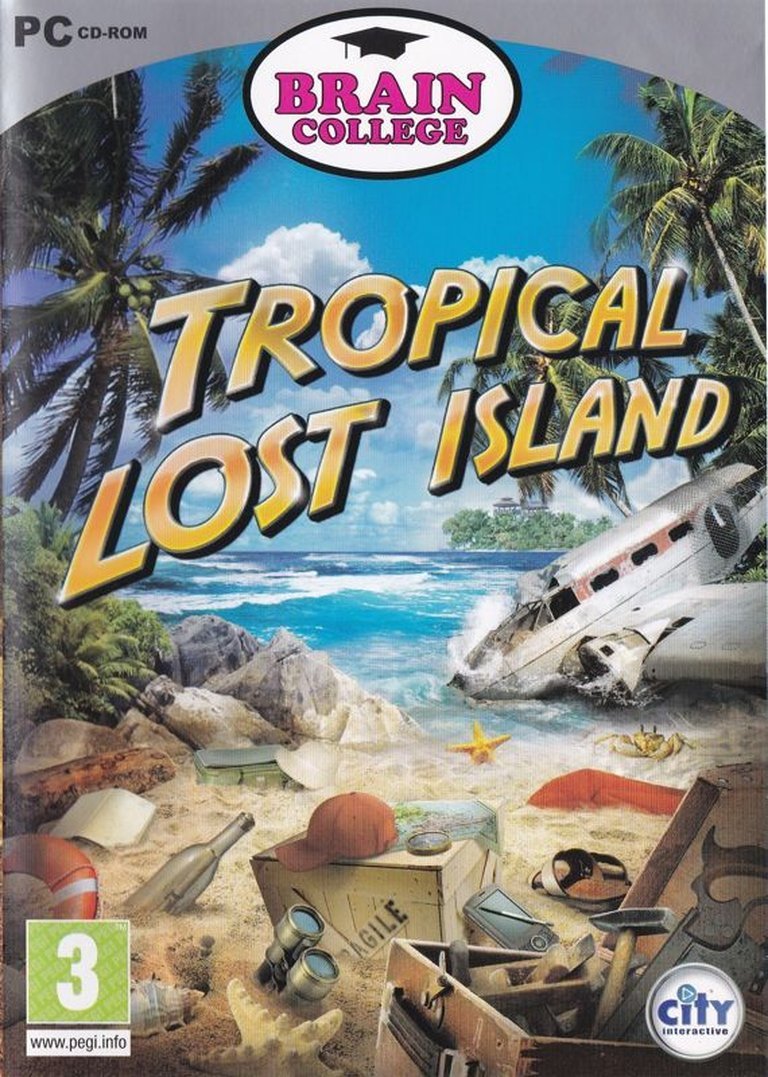
Tropical Lost Island is a single-player adventure game set in the Hawaiian islands, blending hidden object scenes and puzzles with a mythical narrative. The story revolves around the gods who created Hawaii, leaving clues to a hidden twentieth island for future generations. Players follow the journey of adventurer Charlie Johnson, whose plane crashes while searching for the Lost Island, alternating between his struggles and the player’s own quest. The game unfolds through static images and messages, leading to timed puzzles and hidden object challenges, with hints available at the cost of reduced time.
Tropical Lost Island Reviews & Reception
cubed3.com : Tropical Lost Island is not one of the worst entries into the Hidden Object genre, yet it fails to live up to the standards set by other similar games.
Tropical Lost Island Cheats & Codes
PC (BepInEx Mod)
Use the following hotkeys after installing the mod.
| Code | Effect |
|---|---|
| Tab | Opens the cheat console |
| Multiply (Keypad) | Force win a run |
| Divide (Keypad) | Force lose a run |
| F | Show FPS counter |
| X | Fast delete cards |
| LeftAlt + Mouse Scroll | Move cards |
| LeftShift + Mouse Scroll | Move card piles |
Tropical Lost Island: A Forgotten Gem of the Hidden Object Genre
Introduction
In the vast ocean of video games, some titles drift into obscurity, forgotten by time and overshadowed by more prominent releases. Tropical Lost Island is one such game—a hidden object adventure that, despite its modest ambitions, offers a unique blend of narrative intrigue and puzzle-solving mechanics. Released in 2009 for Windows and later ported to the Nintendo DS in 2010, Tropical Lost Island is a product of its era, reflecting the early 2000s fascination with casual gaming and the burgeoning popularity of hidden object games. While it may not have left a lasting mark on the industry, its quirky charm and Hawaiian mythology-inspired storyline make it a fascinating artifact of gaming history.
This review aims to dissect Tropical Lost Island in exhaustive detail, exploring its development history, narrative depth, gameplay mechanics, and artistic design. By examining its strengths and weaknesses, we can better understand its place in the broader context of video game evolution.
Development History & Context
The Studio and Creators’ Vision
Tropical Lost Island was developed by EEEZEE Products for the Windows version and MSL Benelux for the Nintendo DS port. The game was published by City Interactive S.A. and MSL-INTENIUM BV, studios known for their work in the casual gaming market. The development team’s vision was to create a game that blended adventure storytelling with the addictive mechanics of hidden object puzzles, a genre that was gaining traction in the late 2000s.
The game’s premise is rooted in Hawaiian mythology, a choice that reflects the era’s interest in exotic settings and cultural lore. The developers sought to craft a narrative that would immerse players in a mystical world while providing a steady stream of puzzles and hidden object challenges. The result is a game that, while not groundbreaking, offers a cohesive experience tailored to fans of the genre.
Technological Constraints and Era
Released in 2009, Tropical Lost Island was developed during a transitional period in gaming. The Windows version was designed for relatively modest hardware, with recommended system requirements including a Pentium III 1 GHz processor, 512 MB of RAM, and a GeForce FX 5700 graphics card. These specs reflect the game’s casual gaming roots, ensuring accessibility for a broad audience.
The Nintendo DS port, released in 2010, faced additional constraints due to the handheld’s limited processing power and screen resolution. The DS version’s reliance on static images and simple touch controls highlights the challenges of adapting a PC game to a portable platform. Despite these limitations, the DS port retains the core gameplay loop, albeit with some visual and mechanical compromises.
The Gaming Landscape of 2009-2010
The late 2000s saw the rise of casual gaming, driven by platforms like Big Fish Games and the success of titles like Mystery Case Files. Hidden object games became a staple of the genre, appealing to players seeking relaxed yet engaging experiences. Tropical Lost Island entered this market as a mid-tier offering, competing with more polished titles like Mystery Case Files: MillionHeir and Professor Layton and the Curious Village.
On the Nintendo DS, the game joined a growing library of puzzle and adventure titles, including Brain Training and The Legend of Zelda: Phantom Hourglass. While it lacked the polish of these bigger releases, Tropical Lost Island carved out a niche for itself among fans of hidden object games.
Narrative & Thematic Deep Dive
Plot Overview
Tropical Lost Island centers on the mythical creation of the Hawaiian Islands by ancient gods. According to the game’s lore, the gods created nineteen large islands, seven of which were inhabited by humans. The twentieth island, known as the Lost Island, was reserved for the gods themselves, who left clues to its location for future generations.
The story begins with Charlie Johnson, an adventurer searching for the Lost Island, whose plane crashes on a remote Hawaiian island. The player assumes the role of a rescue team member tasked with finding Charlie while unraveling the island’s mysteries. The narrative alternates between Charlie’s experiences on the island and the player’s journey, creating a dual perspective that adds depth to the storytelling.
Characters and Dialogue
The game’s characters are minimalistic, with Charlie Johnson serving as the primary protagonist. His voice (in the Windows version) and static images convey his determination and curiosity, though the lack of dynamic animation limits emotional engagement. The player’s character remains unnamed, serving as a silent avatar for the player’s actions.
Dialogue is delivered through text boxes, with the Windows version featuring voice acting for key moments. The writing is functional but unremarkable, focusing on advancing the plot rather than developing deep character arcs. The Hawaiian gods—Pele, Kanaloa, Lono, and Ku—are referenced but never directly encountered, adding a layer of mystique to the narrative.
Themes and Symbolism
Tropical Lost Island explores themes of discovery, cultural heritage, and the intersection of myth and reality. The Lost Island represents a hidden truth, a place where the gods’ influence lingers, and the player’s journey mirrors the human desire to uncover the unknown. The game’s use of Hawaiian mythology also touches on the idea of preserving cultural stories, as the gods’ clues are meant to validate their existence for future generations.
The dual narrative structure—alternating between Charlie and the player—reinforces the theme of parallel journeys, suggesting that discovery is a shared experience. However, the game’s shallow character development and static storytelling prevent these themes from reaching their full potential.
Gameplay Mechanics & Systems
Core Gameplay Loop
Tropical Lost Island is a hidden object adventure game, meaning its core gameplay revolves around finding items within cluttered scenes. The game alternates between hidden object scenes and puzzle challenges, with each level timed to add tension.
- Hidden Object Scenes: Players are given a list of items to find within a static image. The objects are often cleverly hidden, requiring keen observation. The DS version uses the touchscreen for interaction, while the Windows version relies on mouse controls.
- Puzzles and Mini-Games: Between hidden object scenes, players encounter puzzles such as Mahjong, jigsaw puzzles, and memory games. These mini-games serve as palate cleansers, breaking up the monotony of item hunting.
- Hint System: Players have access to three hints per scene, which can be used to locate elusive items. However, using a hint reduces the remaining time, adding a risk-reward dynamic.
Combat and Progression
Tropical Lost Island is not a combat-driven game, but it does feature light progression mechanics. As players advance, they unlock new locations and uncover more of the island’s secrets. The game’s difficulty scales with each level, introducing more complex hidden object scenes and puzzles.
The time pressure is a defining feature of the gameplay. If the timer runs out, the scene resets with a new arrangement of objects, ensuring replayability. This mechanic encourages players to improve their observation skills and efficiency.
UI and Controls
The game’s user interface is straightforward, with a clean layout that prioritizes functionality. The Windows version uses a point-and-click system, while the DS version leverages the touchscreen and stylus for interaction. Both versions suffer from occasional clunkiness, particularly in the DS port, where the small screen can make object detection difficult.
The hint system is integrated into the UI, with a drone (in the Windows version) or a visual cue (in the DS version) highlighting hidden items. The lack of voice acting in the DS port and the static imagery in both versions contribute to a budget feel, but the controls remain intuitive for the genre.
World-Building, Art & Sound
Setting and Atmosphere
Tropical Lost Island is set in the Hawaiian Islands, a lush and vibrant environment that serves as the backdrop for the adventure. The game’s art style is realistic but static, with pre-rendered images depicting tropical landscapes, ancient ruins, and hidden temples. The atmosphere is mystical and serene, evoking a sense of exploration and wonder.
The dual narrative—Charlie’s stranded journey and the player’s rescue mission—enhances the world-building by offering two perspectives on the same environment. However, the lack of dynamic visuals and animation limits immersion, making the world feel more like a series of postcards than a living, breathing space.
Visual Design
The game’s visuals are functional but unremarkable. The hidden object scenes are detailed enough to hide items effectively, but the low-resolution textures and repetitive backgrounds betray the game’s budget constraints. The DS version suffers the most, with muddy visuals that make object detection frustrating at times.
Despite these limitations, the game’s color palette is vibrant, with lush greens, deep blues, and warm oranges creating a tropical aesthetic. The static images are occasionally striking, particularly in scenes depicting ancient Hawaiian ruins or sunlit beaches.
Sound Design and Music
The sound design in Tropical Lost Island is minimalistic. The Windows version features voice acting for key narrative moments, but the DS port relies entirely on text. The background music is relaxing and ambient, with soft melodies that complement the tropical setting. However, the lack of dynamic audio cues or immersive sound effects detracts from the overall experience.
The game’s soundtrack is forgettable but serviceable, providing a soothing backdrop without distracting from the gameplay. The absence of voice acting in the DS version is a notable omission, as it removes a layer of personality from the characters.
Reception & Legacy
Critical and Commercial Reception
Tropical Lost Island received mixed reviews upon release. Critics praised its unique setting and narrative premise but criticized its repetitive gameplay and budget presentation. The DS version, in particular, was noted for its clunky controls and unclear visuals, which made hidden object scenes unnecessarily frustrating.
Cubed3 gave the DS version a 5/10, calling it a “decent ‘filler’ product” for fans of the genre but noting that it failed to live up to the standards set by competitors like Professor Layton. The game’s lack of critical acclaim and commercial success relegated it to obscurity, with only two players listing it in their MobyGames collections as of 2024.
Influence and Legacy
Tropical Lost Island did not leave a significant mark on the gaming industry, but it remains a curiosity for fans of hidden object games. Its use of Hawaiian mythology and dual narrative structure are notable, even if the execution was flawed. The game’s replayability mechanics, such as randomized object placement, were ahead of their time and influenced later titles in the genre.
The game’s legacy is one of modest ambition. It neither revolutionized the hidden object genre nor became a cult classic, but it serves as a time capsule of early 2000s casual gaming. Its inclusion in compilations like Jewels and Marbles Quest 2 and Wimmelbild Collection: Verborgene Schätze suggests that it found a niche audience among puzzle enthusiasts.
Conclusion
Tropical Lost Island is a flawed but fascinating entry in the hidden object genre. Its Hawaiian mythology-inspired narrative and dual perspective storytelling offer a unique premise, but the execution is hampered by budget constraints, repetitive gameplay, and unclear visuals. The game’s timed hidden object scenes and mini-games provide moments of engagement, but the lack of polish prevents it from standing out in a crowded market.
For casual gamers and puzzle enthusiasts, Tropical Lost Island is a decent diversion, offering a few hours of entertainment. However, it lacks the depth and innovation to be considered a classic. Its place in video game history is that of a forgotten relic—a game that tried to blend adventure and puzzle-solving but ultimately fell short of greatness.
Final Verdict: 5.5/10 – A Mediocre but Charming Hidden Object Adventure
Tropical Lost Island is worth a play for those curious about the evolution of the hidden object genre, but it is unlikely to leave a lasting impression. Its legacy is one of modest ambition, a game that aimed for the stars but settled for the treetops.