
- Release Year: 2011
- Platforms: Android, iPad, iPhone, Linux, Macintosh, Windows
- Publisher: Noble Master LLC
- Developer: Noble Master LLC
- Genre: Strategy, Tactics
- Perspective: Isometric
- Game Mode: LAN, Online Co-op, Online PVP, Single-player
- Gameplay: Co-op, Multiplayer, Real-time
- Setting: Deserted Island, Tropical Island
- Average Score: 100/100
Description
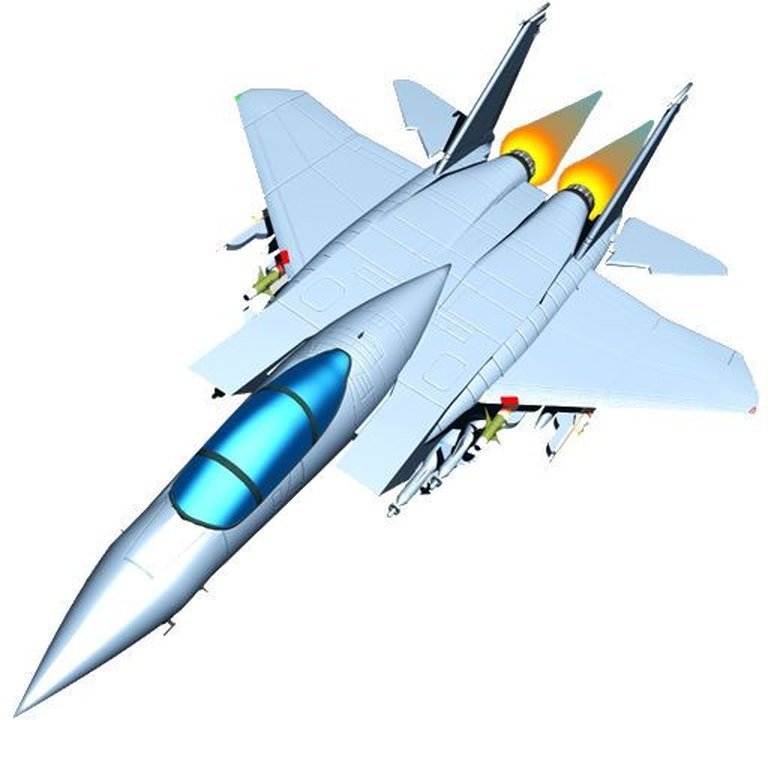
Tropical Stormfront is a retro real-time strategy (RTS) game set on tropical archipelagos, blending classic gameplay with modern accessibility. Inspired by ‘Classic Empire’ and ‘Command & Conquer,’ it features a simplified rock-paper-scissors combat system, diverse units like Humvees, tanks, and submarines, and supports both single-player and cross-platform multiplayer, including co-op modes. Players can choose from nations like the USA, England, Russia, and more, engaging in missions such as attack, defense, and capture the flag across lush island landscapes.
Gameplay Videos
Tropical Stormfront Reviews & Reception
pocketgamer.com : An enjoyable, well-paced single-player experience, Tropical Stormfront is held back by technical problems and a lack of online options
indiedb.com (100/100): The simple mechanics of this are refreshing from most RTS games which are often convoluted and generally take a while to learn.
Tropical Stormfront Cheats & Codes
PC
| Code | Effect |
|---|---|
| Zelda | Unlocks the second quest |
| ALPHA | Unlocks the third quest |
Tropical Stormfront: A Retro RTS Gem in the Palm of Your Hand
Introduction: The Overlooked Strategy Classic
In the crowded landscape of real-time strategy (RTS) games, Tropical Stormfront (2011) stands as a quiet but remarkable achievement—a love letter to classic RTS mechanics, reimagined for the mobile era. Developed by the indie studio Noble Master LLC, this game blends the tactical depth of Command & Conquer with the accessibility of Advance Wars, all wrapped in a vibrant, retro aesthetic. Despite its niche appeal, Tropical Stormfront carves out a unique identity by simplifying without sacrificing strategy, making it one of the few RTS games that truly works on touchscreens.
This review will dissect Tropical Stormfront in exhaustive detail, exploring its development, narrative, gameplay systems, and legacy. We’ll examine why it remains a cult favorite among strategy enthusiasts and how its design choices reflect both the limitations and innovations of early 2010s mobile gaming.
Development History & Context: A Labor of Love in the Mobile Wild West
The Studio Behind the Storm
Noble Master LLC, founded in 2009 by Christoph Aschwanden, was a small but ambitious indie studio specializing in strategy games. Before Tropical Stormfront, the team had worked on titles like Age of Conquest: South America, but this project marked their first foray into real-time strategy. The studio’s ethos was clear: create games that were easy to pick up but hard to master, with a focus on cross-platform play.
Inspirations & Design Philosophy
The game’s DNA is a fusion of two classics:
1. Walter Bright’s Classic Empire (1977) – A turn-based strategy game that pioneered the “rock-paper-scissors” unit balance system.
2. Westwood Studios’ Command & Conquer (1995) – The gold standard for real-time strategy, with its fast-paced combat and resource management.
Aschwanden and his team sought to modernize Empire’s mechanics while streamlining them for mobile devices. The result was a game that retained the tactical depth of its predecessors but jettisoned complex micro-management in favor of intuitive touch controls.
Technological Constraints & Cross-Platform Ambitions
Released in December 2011 (with a wider launch in March 2012), Tropical Stormfront arrived during a transitional period for mobile gaming. Smartphones were becoming powerful enough to handle RTS games, but touchscreen controls were still unproven for the genre. Noble Master’s solution was elegant:
– Simplified UI: Large, tap-friendly unit icons and minimal menus.
– Automated Pathfinding: Units moved intelligently without requiring constant player input.
– Cross-Platform Play: The game supported LAN and online multiplayer across Windows, Mac, Linux, Android, and iOS—a rarity at the time.
The engine, built using libGDX (a Java-based framework), ensured smooth performance across devices, though some early Android users reported crashes—a common teething issue for mobile RTS games of the era.
The Gaming Landscape in 2011-2012
When Tropical Stormfront launched, the RTS genre was dominated by PC titans like StarCraft II and Company of Heroes. Mobile strategy games were largely turn-based (Civilization Revolution, Great Little War Game) or tower defense titles. Noble Master’s decision to bring real-time tactics to smartphones was bold, if not entirely successful in terms of mainstream adoption.
The game’s $9.99 (desktop) and $3.99 (mobile) price points were also a gamble. In an era where Angry Birds and Fruit Ninja thrived on freemium models, Tropical Stormfront’s premium pricing likely limited its reach. Yet, for those who took the plunge, it offered a depth rarely seen in mobile strategy games.
Narrative & Thematic Deep Dive: A Tropical Cold War
Plot Overview: Geopolitical Strife in Paradise
Tropical Stormfront’s campaign is set in a near-future Pacific archipelago, where two factions clash:
– The United Democratic Alliance (UDA): Comprising the USA, England, Russia, and Brazil—positioned as the “heroes” defending freedom.
– The Order, Discipline, and Obedience (ODO): A coalition of China, Japan, Germany, and India, framed as expansionist aggressors.
The story is barebones but effective, serving as a backdrop for the gameplay rather than a driving force. Missions range from defensive holds to all-out assaults, with objectives like capturing enemy generals, securing flags, or surviving waves of attackers.
Themes: Simplicity vs. Strategy
The game’s narrative is intentionally minimalist, reflecting its casual-friendly design. However, beneath the surface, Tropical Stormfront explores themes of:
– Asymmetrical Warfare: The ODO’s numerical superiority forces players to rely on tactics over brute force.
– Resource Scarcity: Unlike traditional RTS games, bases generate income automatically, emphasizing territorial control over resource-gathering tedium.
– Unit Synergy: The rock-paper-scissors combat system (e.g., submarines counter cruisers, artillery dominates tanks) rewards strategic foresight.
Characters & Dialogue: Functional, Not Flamboyant
There are no named protagonists or voice-acting—just faceless generals and unit portraits. The lack of personality is a missed opportunity, but it keeps the focus squarely on gameplay. The Korean NamuWiki entry humorously notes that the only difference between nations is their flags and portraits, a nod to the game’s streamlined approach.
The Absurdity of the Premise
The NamuWiki’s tongue-in-cheek summary captures the game’s campy charm:
“It is absurd that [the UDA] unite to become apostles of justice and defeat these bad countries (…).”
This self-aware silliness aligns with the game’s retro aesthetic, evoking the over-the-top geopolitical conflicts of 1990s RTS games.
Gameplay Mechanics & Systems: The Art of Tropical Warfare
Core Gameplay Loop: Conquer, Capture, Repeat
Tropical Stormfront’s gameplay revolves around:
1. Base Capture: The only way to generate income is by holding bases (or shipyards/airfields). Tanks are the sole units capable of capturing structures.
2. Unit Production: Spend resources to build units, each with distinct roles.
3. Territorial Control: Expand across islands, balancing offense and defense.
Unit Breakdown: The Rock-Paper-Scissors Meta
The game’s 12 unit types follow a strict counter system:
| Unit | Strengths | Weaknesses | Cost |
|---|---|---|---|
| Tank | Captures bases, all-rounder | Weak to artillery, missiles | 100 |
| Artillery | Long-range, anti-tank | Vulnerable to close combat | 200 |
| Missile Tank | Anti-air | Useless vs. ground/naval | 150 |
| Destroyer | Anti-submarine | Weak to everything else | 200 |
| Submarine | Dominates ships (except destroyers) | Blind, weak to destroyers | 400 |
| Cruiser | Jack-of-all-trades naval unit | Expensive, weak to subs | 550 |
| Transport | Moves ground units | Fragile | 200 |
| Fighter | Anti-air | Limited range | 250 |
| Helicopter | Anti-ground | Weak to anti-air | 300 |
| Airship | Transports units, high HP | Slow, expensive | 300 |
Key Takeaways:
– Cruisers are king: Versatile but costly, they dominate most engagements—except against submarines.
– Submarines are the great equalizer: A single sub can sink multiple cruisers, making destroyers essential escorts.
– Air units are situational: Fighters and helicopters are outclassed by missile tanks and cruisers, rendering them niche picks.
Mission Variety: More Than Just “Kill Everything”
The campaign’s 25 missions offer surprising diversity:
– Attack Missions: Standard RTS fare—destroy the enemy.
– Defense Missions: Hold out against waves (e.g., “Defense” mode in skirmish).
– Capture the Flag: Secure a central base and hold it for a set time.
– General Assassination: Kill the enemy commander (a Humvee-like unit) to win instantly.
The NamuWiki highlights the brutal difficulty spike in later missions, where AI opponents exploit unit counters mercilessly. Players must adapt or face annihilation.
Multiplayer: A Broken Dream
Despite supporting LAN and online play, multiplayer is effectively unplayable due to matchmaking issues. As the NamuWiki laments:
“There is a multiplayer button, but the game does not start even if I wait 100 days…”
This is Tropical Stormfront’s greatest missed opportunity—a game this tactical would thrive in competitive play.
Progression & Modding
- Unit Leveling: Units gain experience (up to level 3), increasing their stats. However, counters remain absolute—no amount of leveling lets a tank beat artillery.
- Mod Support: Travis Bowling’s modding tools allowed for custom maps and units, though the community remained small.
World-Building, Art & Sound: A Retro Paradise
Visual Design: 16-Bit Nostalgia
Tropical Stormfront’s isometric pixel art is a deliberate throwback to 1990s RTS games, evoking Civilization and Dune II. The tropical setting—lush islands, turquoise waters, and sandy beaches—contrasts sharply with the grim warzones of most RTS games, giving it a unique identity.
Strengths:
– Clear Unit Distinction: Even on small screens, units are easily identifiable.
– Smooth Animations: Steve Rowlands’ work ensures fluid movement, crucial for real-time play.
Weaknesses:
– Repetitive Environments: Islands lack distinctive landmarks, making navigation tricky in large battles.
– No Zoom Function: A major oversight for mobile play, forcing players to squint at tiny units.
Sound & Music: The Unsung Hero
Composer Sean Beeson (known for Axiom Verge and Dead Cells) delivers a surprisingly robust soundtrack. The tropical-themed tracks blend steel drums with military marches, reinforcing the game’s quirky tone. Sound effects, handled by Matthew Myers, are functional but unremarkable—explosions and gunfire lack the punch of AAA titles.
Atmosphere: War in Paradise
The juxtaposition of idyllic islands and brutal warfare creates a unique mood. The game doesn’t take itself too seriously, embracing its B-movie premise with charm.
Reception & Legacy: The Game That Could Have Been
Critical Reception: A Mixed Bag
- PocketGamer (2012): Praised its accessibility but criticized technical issues and lack of multiplayer.
> “Tropical Stormfront may be the best Android strategy game that nobody’s talking about.” - IndieDB (2012): Lauded its simplicity and tactical depth, comparing it favorably to Advance Wars.
- Metacritic: No critic reviews, reflecting its niche status.
Player Reception:
– MobyGames: 5/5 average from 6 ratings (though no written reviews).
– NamuWiki: Korean players embraced it, with detailed strategy guides and memes about its difficulty.
Commercial Performance: A Cult Classic
Sales figures are unavailable, but its presence on multiple platforms (including a 2013 bundle, Strategie Boxxx) suggests modest success. The lack of marketing and multiplayer likely stunted its growth.
Legacy & Influence
- Desert Stormfront (2014): The sequel improved on many flaws, adding better multiplayer and refined unit balance.
- Mobile RTS Evolution: Tropical Stormfront proved that deep strategy could work on touchscreens, paving the way for later titles like Rusted Warfare.
- Indie Strategy Renaissance: Its success (however limited) showed that retro-inspired RTS games could find an audience outside the PC mainstream.
Conclusion: A Flawed Masterpiece
Tropical Stormfront is a game of contradictions:
– Brilliant in simplicity, yet frustrating in execution.
– Deep in strategy, but shallow in presentation.
– Ahead of its time, yet held back by technical limitations.
Final Verdict: 8/10 – A Must-Play for Strategy Fans
Pros:
✅ Tight, tactical gameplay with meaningful unit counters.
✅ Cross-platform support (a rarity in 2012).
✅ Charming retro aesthetic and catchy soundtrack.
✅ Mission variety keeps the campaign engaging.
Cons:
❌ Broken multiplayer (a catastrophic oversight).
❌ No zoom on mobile makes large battles clunky.
❌ Lack of narrative depth (units and factions feel interchangeable).
❌ Steep difficulty curve in later missions.
Where It Stands in History
Tropical Stormfront is not a lost classic, but it is a cult gem—a game that deserved a larger audience. It stands as a testament to what indie developers can achieve with limited resources and a clear vision. For RTS enthusiasts, it’s a fascinating experiment; for mobile gamers, it’s a rare taste of hardcore strategy.
If you love:
– Advance Wars’ tactical depth,
– Command & Conquer’s fast-paced combat,
– Or retro aesthetics with modern gameplay,
…then Tropical Stormfront is worth your time. Just don’t expect a StarCraft-level experience—and pray that Noble Master one day fixes that multiplayer.
Final Thought:
In a world where mobile gaming is dominated by gacha and hyper-casual titles, Tropical Stormfront remains a defiant outlier—a game that dares to demand strategy from its players. And for that alone, it deserves to be remembered.
Where to Play:
– Steam (unofficial ports)
– itch.io ($3.99)
– Google Play (discontinued, but APKs exist)
Sequel: Desert Stormfront (2014) – Refines the formula with better balance and (theoretically) working multiplayer.
Verdict: A flawed but fascinating strategy game that punches above its weight. Recommended for hardcore RTS fans.