
- Release Year: 2019
- Platforms: Android, iPad, iPhone, Linux, Macintosh, Nintendo Switch, PlayStation 4, Windows, Xbox One
- Publisher: Beep Japan Inc., Headup Games GmbH & Co. KG, WhisperGames
- Developer: btf GmbH
- Genre: Adventure
- Perspective: 3rd-person (Other)
- Game Mode: Single-player
- Gameplay: Graphic adventure, Puzzle elements
- Setting: Cold War, Europe, Fantasy
- Average Score: 70/100
Description
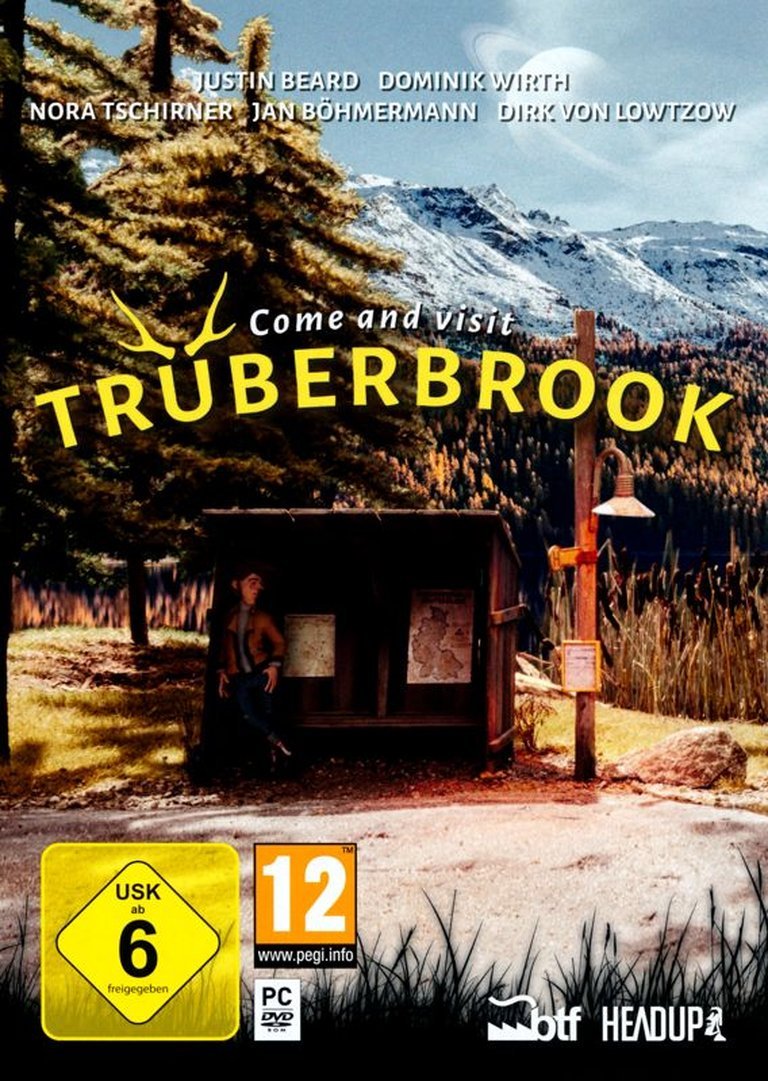
Set in a remote 1960s European village during the Cold War, ‘Trüberbrook’ is a sci-fi mystery graphic adventure following young American scientist Hans Tannhauser as he investigates strange occurrences and uncovers a conspiracy. Featuring meticulously crafted handmade miniature scenery, the game combines puzzle-solving, exploration, and dialogue-driven storytelling in a surreal, atmospheric environment blending retro-futurism and supernatural elements.
Gameplay Videos
Where to Buy Trüberbrook
Trüberbrook Cracks & Fixes
Trüberbrook Guides & Walkthroughs
Trüberbrook Reviews & Reception
metacritic.com (100/100): If you enjoyed the Kings Quest games and similar titles, you will enjoy Trüberbrook. Hands down, this is a surprising slam dunk.
metacritic.com (76/100): Standout visuals and an excellent soundtrack set an extraordinary mood, which is sabotaged by streamlined puzzles and a breakneck pace.
imdb.com (60/100): It’s a mixed bag… a pretty but very average game.
imdb.com (80/100): Twin Peaks in Germany… a really unique, entertaining and atmospheric game.
opencritic.com (40/100): One of the best looking point ‘n’ click adventures ever made, but the unique visuals don’t compensate for illogical puzzles and a weak script.
opencritic.com (85/100): Overall, Trüberbrook is a very special and quirky game that most people are going to love.
opencritic.com (65/100): The story has an intriguing concept but is resolved too quickly and lacks an impactful revelation.
opencritic.com (50/100): A very average, obsolete adventure.
opencritic.com (70/100): With sumptuous hand-crafted visuals and a throwback LucasArts approach… drained by an unsatisfying story.
opencritic.com (75/100): If you don’t mind some wonky voice-acting, there’s plenty of charm to be found in Trüberbrook’s engrossing rustic sci-fi tale.
gameboomers.com : A delightfully animated 5 to 6 hour point and click mixed bag.
Trüberbrook: Review
Introduction
In the shadow of Saturn’s looming presence over a remote German village, Trüberbrook emerges as a visual and thematic curiosity—a love letter to Twin Peaks and The X-Files, wrapped in Cold War paranoia and handcrafted miniature aesthetics. Released in 2019 by German studio btf GmbH, this sci-fi mystery adventure game captivated critics with its unique art direction but divided players with its uneven narrative and streamlined gameplay. This review argues that Trüberbrook is a daring indie experiment that redefines visual storytelling in adventure games, yet stumbles under the weight of its own ambition, leaving a legacy as a flawed but unforgettable cult classic.
Development History & Context
Studio Vision & Crowdfunding Triumph
Founded by Florian Köhne (designer/director) and rooted in bildundtonfabrik’s TV production expertise, btf GmbH sought to bridge physical craftsmanship with digital interactivity. Their goal: replicate the tactile charm of stop-motion dioramas in a game world. Funded via Kickstarter in late 2017, the campaign hit its €80,000 goal in 30 hours and closed at nearly €200,000—a record for German crowdfunded games at the time. Backers included Monkey Island creator Ron Gilbert, drawn to its promise of “doom jazz” ambiance and handmade scenery.
Technological Innovation
Trüberbrook’s defining feature—photogrammetry—involved constructing physical miniature sets, digitizing them via 3D scanning, and integrating them with Unity-engine characters. This painstaking process allowed dynamic lighting shifts (e.g., daylight to snowfall) and unprecedented environmental detail, evoking a tangible, dollhouse-like world. However, budget constraints limited total gameplay to 5–7 hours, forcing narrative compromises.
2019 Gaming Landscape
Released amid a resurgence of narrative-driven indies (Disco Elysium, Outer Wilds), Trüberbrook stood apart with its analog aesthetic but faced skepticism toward short playtimes and “walking simulator” critiques. Its Cold War setting—untapped in adventures—offered fresh ground, yet competed with genre titans like Thimbleweed Park.
Narrative & Thematic Deep Dive
Plot & Characters
Players control Hans Tannhauser, a neurotic American quantum physics student who wins a suspicious lottery to visit Trüberbrook, a fading 1967 West German spa town. After his thesis is stolen by a glow-footed intruder, Hans partners with Gretchen Lemke, a brash paleoanthropologist, to uncover a conspiracy involving the Millennium Cooperative—a shadowy organization mining the mountains for interdimensional technology. The story escalates into a multiverse-hopping race to prevent planetary collapse, aided by eccentric locals: a melancholic robot bartender, a conspiracy theorist, and Lazarus Taft, a stranded alien inventor.
Themes & Influences
– Cold War Anxiety: The village embodies divided Germany’s existential dread, with rusted mines symbolizing resource exploitation and villagers’ secrecy mirroring Stasi-era distrust.
– Sci-Fi Absurdism: Quantum portals and time loops evoke Star Trek meets The Twilight Zone, while Hans’ dictaphone monologues parody Twin Peaks’ Agent Cooper.
– Existential Rootlessness: Gretchen’s betrayal (revealed as a dimension-hopping anarchist) and Hans’ final choice—explore the multiverse or stay—reflect themes of belonging versus escape.
Flaws & Strengths
Pacing suffers in later chapters, collapsing complex sci-fi ideas into rushed exposition. While dialogue brims with dry humor (e.g., trading a vibrator for a fishing rod), supporting characters lack depth beyond quirky archetypes. Yet, the meta-commentary—via a fourth-wall-breaking finale inside an unrendered game model—smartly critiques escapism.
Gameplay Mechanics & Systems
Core Loop & Puzzles
A traditional point-and-click adventure, Trüberbrook simplifies the genre with a “verb coin” interface: hovering highlights interactables, while a radial menu (look, use, talk) reduces pixel-hunting. Puzzles lean on inventory combinations—e.g., crafting a makeshift flashlight from fireflies—but suffer from:
– Over-Simplification: Selecting items from a list (vs. manual combining) minimizes challenge.
– Logic Gaps: Solutions often prioritize absurdity over intuition, like using cheese-stuffed straws as blowguns.
– Invisible Triggers: Progression sometimes requires talking to NPCs in arbitrary orders, frustrating exploration.
UI & Controls
Console ports introduced dual-stick camera controls, praised for fluidity, but PC’s mouse-and-keyboard felt snappier. The inventory system’s lack of item descriptions (beyond icons) led to confusion, especially with technobabble objects like “RAM modules.”
Innovations
– Dictaphone Mechanic: Hans’ audio logs contextualize lore and occasionally unlock puzzles, rewarding curiosity.
– Branching Endings: A last-second choice alters the finale, encouraging replayability despite the short runtime.
World-Building, Art & Sound
Visual Design
The photogrammetry sets—built with model trains, polystyrene mountains, and LED lighting—create a tangible, Wes Anderson-esque whimsy. Each locale, from the fog-drenched marshes to Taft’s steampunk lab, feels hand-stitched, with textures so rich players can “feel” the grain of wooden cabins. However, some areas (e.g., the gray-finale lab) lack the warmth of early scenes.
Atmosphere & Sound
Sebastian Nagel’s “tranquil doom jazz” soundtrack—channeling Twin Peaks’ Angelo Badalamenti—layers smoky saxophones over ambient drones, amplifying the rural unease. Voice acting shines in German (with English subtitles), where villagers’ thick accents heighten Hans’ outsider status. The English dub, however, renders NPCs overly cartoonish.
Sound as Storytelling
Environmental audio—crackling radios, distant church bells—subtly hints at temporal rifts, while Barbarossa the robot’s HAL-9000 homage unsettles with monotone hospitality.
Reception & Legacy
Launch Reception
Critics (avg. 69/100) lauded its artistry (GameStar: 83/100) but critiqued pacing and puzzles (Metro: 40/100). Players (avg. 5.7/10) praised immersion but lamented abrupt endings and lackluster NPCs. The $29.99 price tag sparked debate over value versus innovation.
Accolades & Evolution
– Won “Best German Game” and “Best Production” at the 2019 German Computer Game Awards.
– Animated Games Award (Stuttgart Festival) for visual craftsmanship.
– Failed to spur a franchise, though whispers of a sequel persist among fans.
Industry Impact
Trüberbrook inspired indie devs to explore photogrammetry (e.g., The Vale), proving physical sets could enrich digital worlds. However, its gameplay conservatism reinforced the genre’s need for mechanical evolution alongside aesthetic risk-taking.
Conclusion
Trüberbrook remains a paradox: a visually revolutionary adventure hamstrung by narrative haste and overly accommodating puzzles. Its miniature dioramas and jazz-soaked melancholy carve a niche no other game occupies, while Hans’ odyssey—equal parts cosmic and quaint—offers fleeting brilliance. For historians, it epitomizes indie gaming’s 2010s ethos—style as substance—but warns against sidelining interactivity for spectacle. Ultimately, Trüberbrook earns its place in video game history not as a masterpiece, but as a beautifully flawed tribute to the artistry possible when developers dare to build worlds by hand. Verdict: A cult classic for aesthetes; a middling mystery for purists.