
- Release Year: 2022
- Platforms: Macintosh, Nintendo Switch, PlayStation 4, PlayStation 5, Windows Apps, Windows, Xbox One, Xbox Series
- Publisher: Finji, LLC
- Developer: Isometricorp Games Ltd.
- Genre: Action
- Perspective: Diagonal-down
- Game Mode: Single-player
- Gameplay: Metroidvania, Puzzle elements
- Setting: Fantasy
- Average Score: 86/100
Description
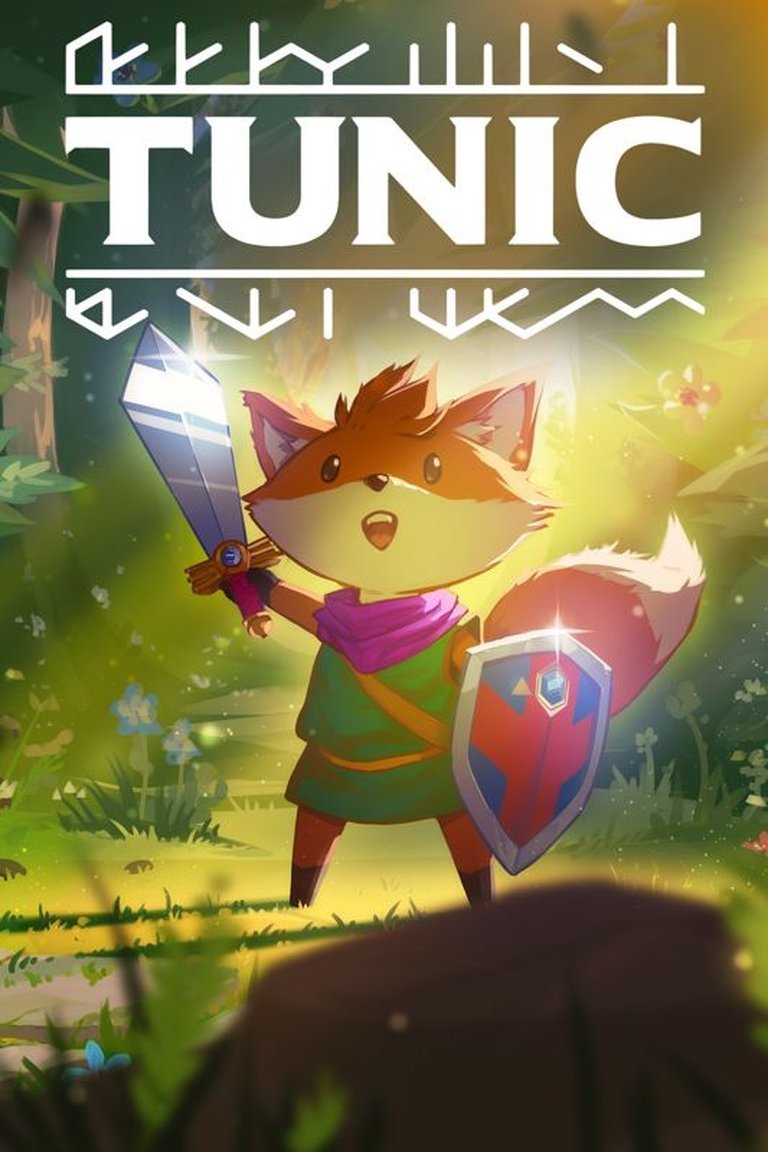
Tunic is an action-adventure game set in a vibrant, isometric fantasy world where players control a small fox on a quest to uncover the secrets of a mysterious land. The game blends exploration, combat, and puzzle-solving in a Metroidvania-style experience, featuring cryptic in-game manuals, hidden lore, and challenging encounters. With its charming visuals, atmospheric soundtrack, and intricate level design, Tunic offers a nostalgic yet fresh take on classic adventure games.
Gameplay Videos
Where to Buy Tunic
Tunic Free Download
Tunic Cracks & Fixes
Tunic Mods
Tunic Guides & Walkthroughs
Tunic Reviews & Reception
metacritic.com (85/100): A triumphant return to form for the series.
ign.com (90/100): Tunic is an unapologetically challenging action-adventure game that is charming, multi-layered, and immensely rewarding to solve.
opencritic.com (85/100): Tunic is an outstanding accomplishment from solo developer Andrew Shouldice in terms of piecing every vital element together from its melancholic storytelling and exciting exploration to thrilling combat encounters.
theaureview.com : Tunic is still as incredible as it was a year ago, thanks to a visually delightful art style, simplistic yet challenging gameplay and therapeutic pace and tone.
Tunic Cheats & Codes
General (All Platforms)
Enter codes using the D-Pad or arrow keys while the game is unpaused.
| Code | Effect |
|---|---|
| DOWN, RIGHT, DOWN, LEFT, UP, RIGHT, UP | Refill health bar |
| UP, LEFT, UP, RIGHT, DOWN, RIGHT, RIGHT | Fairies swarm near the player to give hints for Fairy Puzzles or lead to related areas |
| DOWN, RIGHT, UP, RIGHT, UP, LEFT, UP, LEFT, DOWN, LEFT, DOWN, RIGHT | Firecracker (One-time use) |
| LEFT, DOWN, RIGHT, UP, RIGHT, DOWN, RIGHT, UP, RIGHT, DOWN, RIGHT, UP, LEFT | Ice Bomb (One-time use) |
| LEFT, UP, RIGHT, DOWN, RIGHT, UP, RIGHT, DOWN, RIGHT, UP, RIGHT, DOWN, LEFT | Fire Bomb (One-time use) |
| RIGHT, UP, LEFT, DOWN, DOWN, RIGHT, UP, LEFT, UP | Temporarily reduces mana cost of using freeze ray attack |
| UP UP UP LEFT UP LEFT UP RIGHT UP LEFT UP RIGHT UP LEFT UP RIGHT UP RIGHT DOWN RIGHT DOWN LEFT DOWN RIGHT DOWN LEFT DOWN RIGHT DOWN LEFT DOWN LEFT | Sunglasses Mode |
| UP, LEFT, UP, RIGHT, DOWN, RIGHT | Points to the closest fairy, if one is nearby |
| UP, RIGHT, UP, LEFT, UP, RIGHT, DOWN, RIGHT, RIGHT, UP, RIGHT, DOWN, LEFT, DOWN, RIGHT, DOWN | Big Head Mode (Enter again to disable) |
| URUL URDR RURD LDRD | Big Head Mode (Alternative code) |
| UUU LUL URU LUR ULU RUR DRD LDR DLD RDL DL | Sunglasses Mode (Alternative code) |
| RUL DDR ULU | Reduces the magic-points cost of Icebolt for 80 seconds |
| ULL DRD LUL LDR DLU RDL DRR URD LDR RR | The fox hugs a Lure |
Tunic: A Masterclass in Mystery, Nostalgia, and Player Agency
Introduction
In an era where games often hold players’ hands with waypoints, tutorials, and excessive exposition, Tunic arrives as a breath of fresh air—a deliberate throwback to the days when discovery was its own reward. Developed primarily by Andrew Shouldice over seven years and published by Finji, Tunic is more than just an homage to The Legend of Zelda and Dark Souls; it is a love letter to the magic of exploration, the thrill of deciphering secrets, and the joy of piecing together a world that feels alive with mystery. With its charming isometric visuals, punishing yet fair combat, and an in-game manual that doubles as both a guide and a puzzle, Tunic stands as one of the most ingenious indie games of the 2020s. This review will dissect its brilliance, from its development roots to its lasting impact on the industry.
Development History & Context
The Birth of a Passion Project
Tunic began in 2015 as a solo endeavor by Andrew Shouldice, who left his job at Silverback Productions to pursue a vision of a game “with lots of secrets.” Initially titled Secret Legend, the project was born out of Shouldice’s childhood fascination with NES manuals—particularly Metroid II: Return of Samus—and the sense of wonder he felt when encountering elements he couldn’t yet understand. The fox protagonist, now iconic, was a practical choice; Shouldice struggled to design a human character he liked, and the fox’s expressive, non-verbal nature allowed for universal appeal.
A Team United by Vision
Shouldice’s early tweets and Vine posts of the game’s prototype caught the attention of key collaborators:
– Terence Lee (Lifeformed) and Janice Kwan composed the game’s serene, atmospheric soundtrack, which contrasts beautifully with its challenging gameplay.
– Kevin Regamey of Power Up Audio designed the sound effects, ensuring the audio felt like “a character in the world.”
– Eric Billingsley joined as a level designer in 2020, refining the game’s intricate environments.
– Finji, the publisher behind Chicory: A Colorful Tale, signed on in 2017, providing crucial support for marketing and multi-platform releases.
A Long Road to Release
Tunic was announced at E3 2017 and quickly became a darling of the indie scene, praised for its adorable aesthetic and promising gameplay. However, development stretched far longer than anticipated. Shouldice’s iterative approach meant nearly every asset was revised multiple times as his skills and vision evolved. The game’s scope also expanded, with entire areas—like a planned desert—being cut for pacing reasons. Finally, after seven years of development, Tunic launched on March 16, 2022, for Windows, macOS, and Xbox, with PlayStation and Nintendo Switch ports following in September.
Narrative & Thematic Deep Dive
A Story Told Through Silence and Symbols
Tunic’s narrative is deliberately oblique. The player controls an anthropomorphic fox who washes ashore on a ruined island filled with ancient structures, hostile creatures, and remnants of a lost civilization. The game’s text is written in a constructed language—Trunic—which players must decipher using clues found in the environment and the in-game manual. This linguistic barrier is not just a gimmick; it reinforces the game’s central themes of discovery, cycles of history, and the burden of knowledge.
The Manual as a Meta-Narrative Device
The in-game manual is Tunic’s most innovative storytelling tool. Scattered across the world as collectible pages, it serves multiple purposes:
1. A Guide: It explains mechanics, enemy behaviors, and puzzle solutions—though often cryptically.
2. A Puzzle: The manual’s text is written in Trunic, requiring players to translate it using a hidden cipher.
3. A Story: The manual reveals the lore of the island, including the tragic tale of the Heir, a legendary hero who sought immortality through forbidden power, leading to the civilization’s downfall.
The manual’s pages are not presented in order, and some are written by a previous player (the Heir), whose annotations in biro (ballpoint pen) offer hints and personal notes. This meta-layer suggests that the player is experiencing the game secondhand, much like renting a cartridge with a save file and scribbled notes from a previous owner.
The Cycle of the Heir
The game’s lore, pieced together from manual pages and environmental storytelling, reveals a time loop centered around the Heir:
– The Heir was once a hero who discovered the Holy Cross and the power of the obelisks, which could trap souls to grant immortality.
– Their experiments led to a cataclysm that destroyed the civilization, leaving the island in ruins.
– The Heir was imprisoned in the Far Shore, a spiritual plane, but their prison acts as a beacon, luring new heroes to replace them.
– The player’s fox is one such hero. If they defeat the Heir, they take their place, perpetuating the cycle. However, the true ending—achieved by collecting all manual pages and solving the game’s most obscure puzzles—allows the fox to break the cycle by sharing knowledge with the Heir, freeing them both.
This narrative structure mirrors the game’s meta-themes of shared experiences and generational knowledge, evoking the way players in the ’80s and ’90s would trade secrets and tips.
Themes of Exploration and Consequence
Tunic’s themes extend beyond its lore:
– The Joy of Discovery: The game rewards curiosity, with hidden paths, secret items, and optional challenges that feel genuinely rewarding to uncover.
– The Weight of Knowledge: The more the player learns, the more they realize the tragic fate of the island’s civilization—a reflection of how knowledge can be both empowering and burdensome.
– Player Agency: Tunic trusts players to figure things out, offering minimal hand-holding and encouraging experimentation.
Gameplay Mechanics & Systems
Combat: A Dance of Precision and Patience
Tunic’s combat is a hybrid of Zelda-like action and Souls-inspired precision. The fox wields a sword, shield, and an array of secondary weapons, including:
– Sword: Light and heavy attacks, with combos limited to three strikes to prevent spamming.
– Shield: Blocks and parries, consuming stamina but crucial for surviving tougher enemies.
– Bow: A ranged option for sniping enemies from a distance.
– Magic Weapons: Includes a wand for elemental attacks, a staff for explosive projectiles, and a dagger for close-range magical bursts.
Stamina management is key. Dodging, attacking, and blocking all deplete the fox’s stamina bar, which replenishes after a few seconds. Enemies are aggressive and punish reckless play, forcing players to learn attack patterns and time their dodges carefully.
Progression: Laurels and Upgrades
Character progression is tied to Hero’s Laurels, green leaves that represent the fox’s health, stamina, and attack power. Laurels are lost upon death but can be recovered by returning to the corpse. Permanent upgrades are purchased at fox statues using gold and specific items:
– Health: Increases the number of hits the fox can take.
– Stamina: Extends dodge and attack endurance.
– Magic: Expands the blue magic meter for spellcasting.
Later in the game, players can restore lost laurels by visiting Hero’s Graves, which require solving environmental puzzles to access.
Exploration: A World Designed for Secrets
Tunic’s world is a Metroidvania-style labyrinth, with areas gated by abilities and items. The isometric perspective hides numerous secrets, from hidden ledges to underground tunnels. Key mechanics include:
– Teleport Shrines: Allow fast travel between discovered locations.
– Golden Platforms: Transport the fox to the Far Shore, a parallel dimension with its own challenges.
– Manual Pages: Often hint at hidden paths or mechanics (e.g., a diagram showing how to use a shield to reflect projectiles).
The game’s lack of a traditional map forces players to rely on landmarks and memory, enhancing the sense of immersion.
Boss Fights: Tests of Skill and Observation
Boss encounters are Tunic’s most intense moments. Each boss has distinct attack patterns that require precise dodging, parrying, and weapon-switching. Notable examples:
– Garden Knight: A sword-wielding foe with sweeping combos and a charging lunge.
– Siege Engine: Fires homing projectiles and summons minions, demanding ranged attacks and quick reflexes.
– The Heir: The final boss, whose fight is a culmination of all mechanics learned throughout the game.
Accessibility and Difficulty
Tunic offers accessibility options, including toggles for unlimited stamina or health, making it more approachable for players who struggle with its punishing combat. However, the default experience is designed to be challenging, rewarding patience and skill.
World-Building, Art & Sound
A Ruined World Steeped in Mystery
Tunic’s setting is a post-apocalyptic fantasy island, filled with crumbling ruins, overgrown forests, and eerie dungeons. The art style is a blend of isometric pixel art and modern lighting, creating a world that feels both nostalgic and fresh. Key areas include:
– The Overworld: A lush, open area with winding paths and hidden secrets.
– The Quarry: A mine filled with purple essence, hinting at the island’s dark past.
– The Cathedral: A grand, ruined structure tied to the game’s lore.
– The Far Shore: A spiritual plane where the Heir is imprisoned.
The world is interconnected, with shortcuts and hidden paths encouraging backtracking. The lack of a traditional map forces players to rely on environmental cues, reinforcing the game’s themes of exploration.
A Visual Feast
The game’s art direction is vibrant and detailed, with each area boasting a distinct color palette:
– Early areas are lush and green, evoking a sense of adventure.
– Later regions shift to dark purples and blues, reflecting the island’s corruption.
The fox’s animations are expressive and fluid, conveying emotion without dialogue. Enemies are designed with exaggerated movements, making their attack patterns easier to read.
A Soundtrack That Breathes Life into the World
Composed by Lifeformed (Terence Lee) and Janice Kwan, Tunic’s soundtrack is a masterpiece of ambient and atmospheric music. Tracks like “Memories of Memories” evoke a sense of wonder, while boss themes like “The Siege” ramp up the tension. The music dynamically shifts based on the player’s actions, enhancing immersion.
Sound design is equally impressive, with environmental cues like wind howling through ruins or the rustling of manual pages adding to the atmosphere.
Reception & Legacy
Critical Acclaim
Tunic was met with universal praise, earning an 85/100 on Metacritic across platforms. Critics lauded its:
– Exploration and secrets: Many compared it favorably to The Legend of Zelda, praising its ability to recapture the magic of discovery.
– Combat: Described as challenging but fair, with boss fights standing out as highlights.
– Art and sound: The game’s visuals and soundtrack were widely celebrated for their beauty and immersion.
– Innovative manual system: The in-game manual was hailed as a stroke of genius, blending nostalgia with modern gameplay.
However, some critics noted:
– Difficulty spikes: Certain boss fights and puzzles could feel frustratingly tough.
– Short length: The main story can be completed in 8–10 hours, though completionists may spend 20+ hours uncovering all secrets.
Awards and Nominations
Tunic’s impact was recognized with numerous awards, including:
– BAFTA Games Awards 2023: Won Best Debut Game and Artistic Achievement.
– D.I.C.E. Awards 2023: Won Outstanding Achievement for an Independent Game.
– The Game Awards 2022: Nominated for Best Independent Game, Best Debut Indie Game, and Best Action/Adventure Game.
Influence on the Industry
Tunic has already inspired other indie developers to embrace obfuscated storytelling and player-driven discovery. Its success proves that games don’t need excessive hand-holding or cinematic narratives to be compelling. Instead, Tunic trusts players to engage with its world on their own terms, a philosophy that has resonated deeply in an era of overly guided experiences.
Conclusion: A Modern Classic
Tunic is more than just a game—it’s an experience. It captures the magic of childhood discovery, the thrill of solving a puzzle no one else has figured out, and the satisfaction of mastering a challenge through skill and perseverance. Its blend of nostalgia and innovation makes it a standout title, not just in the indie space, but in gaming as a whole.
With its charming art style, haunting soundtrack, punishing yet rewarding combat, and brilliant use of the in-game manual, Tunic is a masterclass in game design. It doesn’t just pay homage to the classics—it redefines what they meant in a modern context.
For those willing to embrace its mysteries, Tunic offers one of the most memorable and fulfilling adventures in recent years. It’s a game that demands to be played, not just completed—one that lingers in the mind long after the credits roll.
Final Verdict: 9.5/10 – A Must-Play Masterpiece
Tunic is a timeless gem, a game that will be remembered not just for its quality, but for how it made players feel—like intrepid explorers in a world brimming with secrets. If you love adventure games, puzzles, or simply the joy of discovery, Tunic is an essential experience.