
- Release Year: 2004
- Platforms: Windows
- Publisher: astragon Software GmbH, GameHouse, Inc., phenomedia publishing gmbh
- Developer: Snowstep Development
- Genre: Action
- Perspective: Top-down
- Game Mode: Single-player
- Gameplay: Platform
- Average Score: 76/100
Description
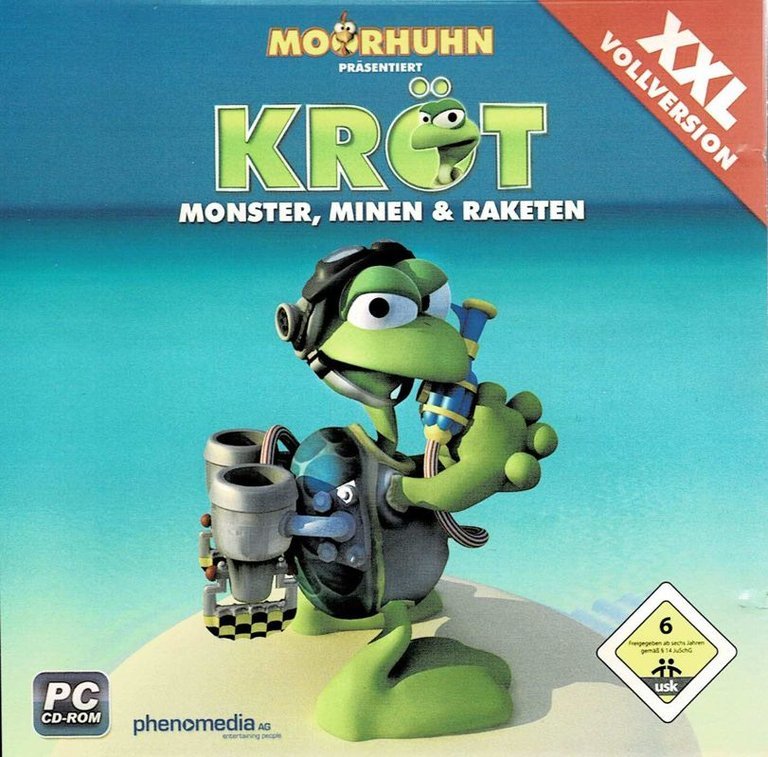
In ‘Turtle Bay’, players take on the role of Kröt, a brave turtle from the Moorhuhn family, as he battles mutant octopuses from outer space that have invaded the once-peaceful Turtle Bay and are freezing its inhabitants. Armed with mines and rockets, Kröt must free his frozen turtle friends by prodding them and destroy octopus cocoons before they hatch. As players progress through the game, they unlock upgrades like stronger shells, turbo boosts, and TNT crates to access new areas. The game features top-down action-platforming gameplay with simple controls, suitable for both keyboard and mouse.
Gameplay Videos
Where to Buy Turtle Bay
PC
Turtle Bay Free Download
PC
Turtle Bay Reviews & Reception
gamepressure.com (78/100): Bomb Bay is an uncomplicated arcade game prepared with children in mind.
mobygames.com (60/100): Kröt, a member of the Moorhuhn-Family, has to save the day as mutant octopuses from outer space have invaded the once quiet and cosy turtle bay and are freezing the other turtles.
myabandonware.com (90/100): One of my favorite Gamehouse games back when i had a shitty computer, ong
Turtle Bay: A Forgotten Gem of Early 2000s Casual Gaming
Introduction
In the vast ocean of early 2000s casual games, Turtle Bay (2004) emerges as a quirky, often overlooked title that embodies the charm and limitations of its era. Developed by Snowstep Development and published by a trio of companies—GameHouse, phenomedia publishing gmbh, and astragon Software GmbH—this top-down action-platformer tasks players with guiding Kröt, a plucky turtle from the Moorhuhn universe, through a whimsical yet perilous quest to save his frozen brethren from an alien octopus invasion. While Turtle Bay never achieved the commercial or critical acclaim of its contemporaries, its unique premise, simple mechanics, and nostalgic appeal make it a fascinating artifact of early 2000s gaming culture.
This review aims to dissect Turtle Bay in exhaustive detail, exploring its development history, narrative and thematic elements, gameplay systems, artistic direction, and lasting legacy. By analyzing its strengths and flaws, we can better understand its place in the broader context of casual gaming and the evolution of indie titles.
Development History & Context
The Studio and Creators’ Vision
Snowstep Development, the studio behind Turtle Bay, was a small but ambitious team based in Germany. The game was conceived by Lukas John, Markus Fendt, and Pierre Flick, who also handled programming duties. Markus Fendt served as the sole artist, while Alexander Röder composed the game’s music and sound effects. The team’s modest size—just 10 developers—reflects the indie spirit of the early 2000s, where small studios could still carve out a niche in the growing casual gaming market.
Turtle Bay was part of the Moorhuhn franchise, a series of casual games centered around a quirky chicken character. Kröt, the protagonist of Turtle Bay, had previously appeared in Moorhuhn Kart 2, suggesting the developers sought to expand the franchise’s universe. The decision to feature a turtle as the hero was likely influenced by the game’s aquatic setting and the desire to create a family-friendly, non-violent adventure.
Technological Constraints and Design Choices
Released in April 2004, Turtle Bay was constrained by the technological limitations of its time. The game ran at a modest resolution of 640×480, a standard for many casual titles of the era but one that drew criticism from reviewers accustomed to higher-fidelity experiences. The top-down perspective, while functional, lacked the depth and immersion of more ambitious 3D games emerging at the time.
The game’s simplicity was both a strength and a weakness. On one hand, it ensured accessibility for younger players and those with less powerful hardware. On the other, it limited the complexity of gameplay mechanics and visual design. The developers compensated for these constraints with colorful, cartoonish graphics and a lighthearted tone, ensuring the game remained engaging despite its technical limitations.
The Gaming Landscape of 2004
Turtle Bay entered a gaming market dominated by blockbuster titles like Half-Life 2, World of Warcraft, and Halo 2. Casual games, however, were gaining traction thanks to digital distribution platforms like RealArcade and Big Fish Games. These platforms allowed smaller studios to reach audiences without the need for physical retail distribution, making games like Turtle Bay viable despite their niche appeal.
The early 2000s also saw the rise of flash-based browser games, which often shared Turtle Bay’s simplicity and accessibility. However, Turtle Bay’s CD-ROM release and commercial business model positioned it as a premium casual title, distinct from the free-to-play browser games that would later dominate the market.
Narrative & Thematic Deep Dive
Plot Overview
Turtle Bay’s narrative is straightforward but charming. The once-peaceful Turtle Bay has been invaded by mutant octopuses from outer space, who are freezing the local turtles in ice blocks. Kröt, a small but determined turtle, dons a rocket backpack and sets out to rescue his frozen friends and repel the alien invaders. The premise is reminiscent of classic arcade games like Space Invaders or Galaga, but with a whimsical, aquatic twist.
The game’s story unfolds across three distinct environments: the Caribbean, the Amazon, and the Arctic. Each region introduces unique hazards and enemies, from boxing crabs to venomous snakes and mine-spitting submarines. The progression through these zones gives the game a sense of adventure, even if the narrative itself is minimal.
Characters and Dialogue
Kröt is the sole playable character, and his design is simple yet endearing. His rocket backpack and ability to prod frozen turtles with his shell give him a playful, almost cartoonish personality. The octopuses, while antagonistic, are portrayed in a non-threatening manner, reinforcing the game’s family-friendly tone.
Dialogue is virtually nonexistent in Turtle Bay, with the story conveyed through visual cues and brief text prompts. This lack of narrative depth is typical of casual games of the era, which prioritized gameplay over storytelling. However, the game’s lighthearted tone and colorful cast of enemies ensure that the experience remains engaging despite its simplicity.
Themes: Environmentalism and Heroism
Beneath its whimsical surface, Turtle Bay touches on themes of environmentalism and heroism. The invasion of the octopuses disrupts the natural harmony of Turtle Bay, and Kröt’s mission to restore balance can be interpreted as a metaphor for environmental stewardship. The game’s emphasis on rescuing frozen turtles and clearing islands of hazards reinforces this theme, albeit in a simplified, child-friendly manner.
Kröt’s journey also embodies the classic hero’s quest. Despite his small size and limited abilities, he takes on the responsibility of saving his community, demonstrating courage and determination. The game’s progression system, which rewards players with upgrades like a stronger shell and turbo boost, mirrors Kröt’s growth as a hero, reinforcing the theme of perseverance in the face of adversity.
Gameplay Mechanics & Systems
Core Gameplay Loop
Turtle Bay’s gameplay revolves around a simple but addictive loop: rescue frozen turtles, avoid or destroy octopuses, and clear islands to progress. The game is divided into 80 levels, each presenting a small, self-contained challenge. Players must navigate Kröt through each island, freeing frozen turtles by prodding them and eliminating octopus cocoons before they hatch.
The controls are straightforward, with players using either the keyboard or mouse to guide Kröt. The rocket backpack allows for quick bursts of speed, while the water cannon (a later upgrade) provides a means of attacking enemies from a distance. The game’s simplicity makes it easy to pick up, but the increasing difficulty of later levels ensures a satisfying challenge.
Combat and Enemy Mechanics
Combat in Turtle Bay is minimal but strategic. Octopuses cannot be attacked directly in their normal state; instead, players must wait for them to transform into cocoons before ramming them. This mechanic adds a layer of timing and precision to the gameplay, as players must balance speed and caution to avoid being overwhelmed by newly hatched enemies.
The game introduces a variety of hazards beyond octopuses, including wooden barrels, mines, and environmental obstacles like sharks. These elements keep the gameplay fresh and require players to adapt their strategies as they progress. The turbo boost and TNT crates, unlocked as rewards for clearing islands, provide additional tools for overcoming these challenges.
Progression and Upgrades
Turtle Bay’s progression system is linear but rewarding. As players clear islands, they earn upgrades that enhance Kröt’s abilities:
- Stronger Shell: Allows Kröt to break wooden barrels, which often block paths or hide rewards.
- Turbo Boost: Increases Kröt’s speed, making it easier to reach cocoons before they hatch.
- TNT Crates: Provide explosive power to clear obstacles and access hidden areas.
These upgrades are dolled out at a steady pace, ensuring that players always have something new to look forward to. The sense of progression, while simple, is effective in maintaining player engagement.
UI and Accessibility
The game’s user interface is minimalist, with a health bar, score counter, and level indicator displayed at the top of the screen. The lack of clutter ensures that players can focus on the action, but it also means that some information—such as the status of upgrades—is not immediately visible.
Accessibility is a mixed bag in Turtle Bay. The game’s simple controls and forgiving difficulty make it suitable for younger players, but the lack of customizable controls or difficulty settings may frustrate more experienced gamers. The fixed resolution of 640×480, while standard for the time, can feel cramped on modern displays.
World-Building, Art & Sound
Setting and Atmosphere
Turtle Bay’s world is divided into three distinct regions, each with its own visual and thematic identity:
- The Caribbean: Bright, tropical islands with palm trees and clear waters. The environment is vibrant and inviting, setting the stage for the game’s lighthearted adventure.
- The Amazon: Dense jungles with winding rivers and lush vegetation. The Amazon levels introduce new hazards, such as venomous snakes, and a darker, more mysterious atmosphere.
- The Arctic: Icy landscapes with snow-covered islands and frozen waters. The Arctic levels are the most challenging, with slippery terrain and mine-spitting submarines adding to the difficulty.
The transition between these regions gives Turtle Bay a sense of progression and variety, even if the core gameplay remains largely unchanged. The game’s top-down perspective limits the depth of its environments, but the colorful, cartoonish art style ensures that each region feels distinct.
Visual Direction
Markus Fendt’s artwork is the standout feature of Turtle Bay. The game’s visuals are cheerful and vibrant, with a hand-drawn aesthetic that gives it a timeless appeal. Kröt’s design is simple but expressive, and the octopuses and other enemies are rendered in a playful, non-threatening manner.
The game’s animations are smooth and fluid, particularly Kröt’s movements and the explosions caused by TNT crates. The water effects, while basic by modern standards, add a touch of realism to the aquatic setting. Overall, the visual direction complements the game’s lighthearted tone and ensures that it remains visually engaging despite its technical limitations.
Sound Design and Music
Alexander Röder’s sound design and music are integral to Turtle Bay’s charm. The game’s soundtrack is upbeat and whimsical, with tropical and adventurous themes that match the game’s setting. The music is repetitive but catchy, ensuring that it doesn’t become grating over extended play sessions.
The sound effects are simple but effective. The plop of Kröt entering the water, the whoosh of his rocket backpack, and the boom of TNT explosions all contribute to the game’s playful atmosphere. The lack of voice acting is not a detriment, as the game’s minimalist narrative doesn’t require it.
Reception & Legacy
Critical Reception
Turtle Bay received mixed reviews upon release, with critics praising its charm and accessibility but criticizing its simplicity and technical limitations. The game holds a MobyGames score of 6.0 out of 10, based on five critic reviews, and a player score of 3.4 out of 5.
- Freegame.cz (92%): Praised the game’s graphics, sound, and accessibility, calling it a “pleasant and well-crafted” experience.
- Computer Bild Spiele (56%): Noted the game’s simplicity and beginner-friendly controls but criticized its short length and lack of depth.
- PC Action (Germany) (41%): Found the game’s low resolution and repetitive gameplay off-putting but acknowledged its potential as a casual time-waster.
- PC Games (Germany) (36%): Criticized the game’s lack of challenge and “graphically meager” presentation.
- GameStar (Germany) (13%): Harshly criticized the game’s unprecise controls and dull gameplay, advising players to avoid it.
The disparity in scores reflects the game’s polarizing nature. While some critics appreciated its charm and accessibility, others found it too simplistic and technically outdated.
Commercial Performance and Player Reception
Turtle Bay’s commercial performance is difficult to gauge, as it was released during a time when digital distribution was still in its infancy. The game was included in Moorhuhn and Friends (2005), a compilation that likely helped it reach a wider audience. However, it never achieved the mainstream success of other casual games of the era, such as Bejeweled or Peggle.
Player reception, as evidenced by user reviews and forum discussions, is generally positive. Many players recall Turtle Bay fondly as a nostalgic childhood favorite, praising its simplicity and charm. The game’s shareware model, which required a license key to unlock the full version, may have limited its reach, but it also ensured a dedicated fanbase among those who purchased it.
Legacy and Influence
Turtle Bay’s legacy is modest but noteworthy. It represents a snapshot of early 2000s casual gaming, where simplicity and accessibility were prioritized over complexity and depth. The game’s whimsical premise and colorful art style have inspired comparisons to later indie titles like Akuatica and Turtle Odyssey 2, which share its aquatic themes and lighthearted tone.
While Turtle Bay did not spawn a direct sequel, its inclusion in the Moorhuhn franchise ensured that Kröt remained a recognizable character in the casual gaming world. The game’s focus on environmental themes and heroism also foreshadowed the rise of eco-conscious indie games in the late 2000s and 2010s.
Conclusion
Turtle Bay is a product of its time—a charming, if flawed, casual game that embodies the strengths and limitations of early 2000s indie development. Its simple mechanics, vibrant art style, and lighthearted narrative make it an enjoyable, if brief, experience. While it may not have achieved the critical or commercial success of its contemporaries, its nostalgic appeal and unique premise ensure that it remains a memorable entry in the casual gaming canon.
Final Verdict: 6.5/10 – A quirky, nostalgic gem that’s worth a play for fans of early 2000s casual games, but ultimately held back by its simplicity and technical limitations.
Turtle Bay is a reminder of a time when games didn’t need to be complex or visually stunning to be enjoyable. In an era dominated by open-world epics and hyper-realistic graphics, its simplicity is both a strength and a weakness. For those willing to embrace its charm, Turtle Bay offers a delightful, if fleeting, escape into a world where a small turtle can save the day.