
- Release Year: 2001
- Platforms: Linux, Windows
- Publisher: Dreamscape
- Developer: Dreamscape
- Genre: Action
- Perspective: Fixed / flip-screen
- Game Mode: Co-op, Single-player
- Gameplay: Arcade, Shooter, Space flight, Vehicular
- Setting: Futuristic, Sci-fi
- Average Score: 36/100
Description
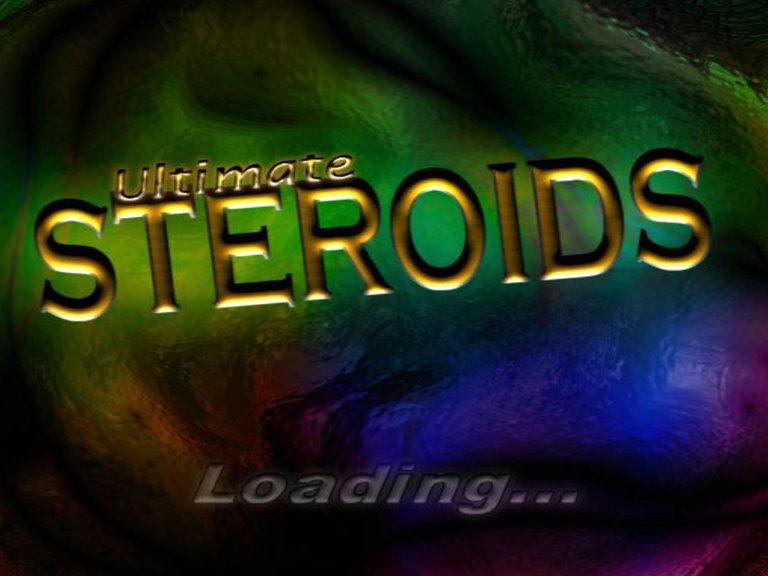
Ultimate Steroids is a sci-fi arcade shooter released in 2001, serving as a modernized clone of the classic Asteroids game. Players pilot a spaceship in a wraparound screen environment, blasting apart asteroids while dodging threats like kamikaze alien vessels and gravitational black holes. The game features power-ups to enhance firepower, split-screen multiplayer support, and retro-styled electronic music, offering fast-paced action with a futuristic twist.
Ultimate Steroids Free Download
Ultimate Steroids: Review
Introduction
In the burgeoning freeware scene of the early 2000s, Ultimate Steroids emerged as a love letter to Asteroids—and a defiant proof of concept for indie developers working within technological constraints. Released in 2001 by Finnish developer Dreamscape, this OpenGL-powered space shooter carved a modest but distinct legacy, blending nostalgic arcade purity with grassroots innovation. Yet beneath its neon-washed asteroids and pulsating MOD tracks lies a deeper narrative of passion, collaboration, and the democratization of game development tools. This review argues that Ultimate Steroids transcends its clone status, embodying both the triumphs and limitations of a transitional era in gaming history.
Development History & Context
The Indie Crucible
Dreamscape, a small team led by programmer/designer Mika Halttunen and composer/designer Teemu Ruokolainen, operated in an era where indie development was often a solitary struggle. The game’s credits reveal a reliance on open-source tools and tutorials—Allegro for cross-platform graphics, NeHe’s OpenGL tutorials, and FMOD for audio—highlighting the DIY ethos of pre-Engine-era creation. As Halttunen joked in the Ultimate Steroids source code release, its “crappy code” was a testament to the learning curves of self-taught developers.
Technological Ambitions
Targeting OpenGL acceleration was bold for 2001, a time when mainstream audiences still grappled with 3D hardware adoption. The team aimed to modernize Asteroids’ vector simplicity with textured 3D models and parallax-scrolling cosmic backdrops, yet hardware compatibility issues plagued early builds. The Linux port in 2002 (also freeware) expanded accessibility but struggled against Windows’ dominance in the shareware market.
The Freeware Landscape
Ultimate Steroids debuted amid a wave of retro revivals (Disasteroids 3D, TUMIKI Fighters) yet stood out for its modularity. Its support for user-imported MOD/S3M/XM tracks—a rarity at the time—anticipated today’s customizable indie experiences. Yet commercial expectations loomed: Dreamscape’s decision to release it as freeware reflected both idealism and pragmatism in a market shifting toward digital distribution.
Narrative & Thematic Deep Dive
Minimalism as a Virtue
Like its arcade ancestors, Ultimate Steroids forgoes explicit storytelling. Its “lore” is environmental: players pilot a lone ship against cosmic debris and “evil alien” drones, framed as a primal struggle for survival. The lack of narrative depth isn’t a flaw but a design choice, echoing Asteroids’ hypnotic focus on kinetic mastery.
Thematic Echoes
Thematically, the game channels an existential tension between chaos and control. Black holes—irresistible vortices that distort movement—serve as metaphors for entropy, while weapon upgrades (from basic lasers to screen-clearing novas) symbolize humanity’s Sisyphean quest to impose order on randomness. Even the title (“Steroids”) winks at artificial enhancement, framing power-ups as temporary bulwarks against futility.
Gameplay Mechanics & Systems
Core Loop & Innovation
The foundation is pure Asteroids: directional thrust, wraparound physics, and fractal-like rock fragmentation. Ultimate Steroids innovates within constraints:
– Progressive Armament: 10 weapon grades (scaled down from an initial 20 for balance) allow strategic escalation.
– Environmental Hazards: Black holes unpredictably tug the ship, while kamikaze UFOs add threat variety.
– Multiplayer Experimentation: Split-screen co-op and competitive modes (e.g., asteroid tag, score races) anticipate modern party-game dynamics.
Systems & Flaws
The power-up system is tantalizing but uneven. While bonuses like rapid-fire or shields elevate tension, their spawn rates often feel arbitrary, leading to feast-or-famine difficulty spikes. The UI—spartan even for 2001—lacks visual feedback for weapon cooldowns, exacerbating frustration in later levels.
Legacy of Modularity
The built-in MOD player, supporting 128 user tracks, was revolutionary. Players could replace default tracks like Andrew Sega’s (Necros) “Point of Departure” with their own chiptune libraries, transforming the experience into a personalized arcade rave. This feature foreshadowed today’s mod-friendly indies but was undercut by poor documentation.
World-Building, Art & Sound
Visual Language
The game’s OpenGL-driven art oscillates between ambition and compromise. Ship models and asteroid meshes boast crisp textures, but low polygon counts and repetitive backgrounds (e.g., static nebulae) betray hardware limits. Notably, the 3D perspective adds little strategic depth—a missed opportunity to evolve the Asteroids formula.
Sound Design
The soundtrack merges hypnotic trance (Ruokolainen’s “Steroids”) and brooding industrial (Andreas Östling’s “Devoid of Hope”), complementing the game’s tension-release rhythm. Sound effects, however, are functional at best: asteroid cracks lack visceral punch, and the UFO’s hum feels tinny through era-standard PC speakers.
Atmosphere as Ambiance
Ultimate Steroids succeeds in mood over realism. The pulsing rave aesthetic—vibrant particle explosions, screen-shake on large asteroid splits—creates a trance-like flow state, masking repetitive gameplay through sensory overload.
Reception & Legacy
Critical Divide
Player reviews were sparse and polarized. The lone MobyGames user rating (1.8/5) likely reflects frustration with erratic difficulty, yet niche communities like Retrolorean and Home of the Underdogs praised it as “one of the best Asteroids clones.” Critics overlooked its mod potential, focusing instead on its derivative core.
Enduring Influence
The game’s legacy lies in its open-source ethos. As abandonware, it became a case study for aspiring devs—Halttunen’s released source code (though “crappy”) demystified OpenGL integration. Its modular soundtrack design also presaged games like Hotline Miami, where music is foundational to identity.
Cultural Artifact
Today, Ultimate Steroids symbolizes an era when indie development meant wrestling with APIs rather than engines. Dreamscape’s reliance on community tutorials (NeHe, AGL mailing list) underscores how pre-YouTube knowledge sharing fueled creativity.
Conclusion
Ultimate Steroids is neither a masterpiece nor a footnote—it’s a time capsule of transitional game design. As a playable artifact, its flaws (janky difficulty, dated visuals) are eclipsed by its historical significance: a love letter to arcade tradition that dared to experiment with modding and 3D immersion. For historians, it exemplifies early 2000s freeware ambition; for players, it offers fleeting, frenetic joy. In the pantheon of Asteroids clones, Dreamscape’s creation earns its “Ultimate” prefix not through polish, but through audacity. A flawed yet vital relic of indie gaming’s DIY dawn.
Final Verdict:
★★★☆☆ (3/5)
An uneven but culturally resonant homage—best appreciated as a museum piece of gaming’s grassroots past.