
- Release Year: 1999
- Platforms: Windows
- Publisher: Interactive Magic, Inc., Media-Service 2000
- Developer: Eagle Interactive
- Genre: Aviation, Flight, Simulation
- Perspective: 1st-person, 3rd-person (Other)
- Game Mode: Online PVP, Single-player
- Gameplay: Attacking enemy facilities, Bounty collection, Defense, Flight combat, Patrol, Weaponry and craft upgrades
- Setting: Post-apocalyptic
- Average Score: 55/100
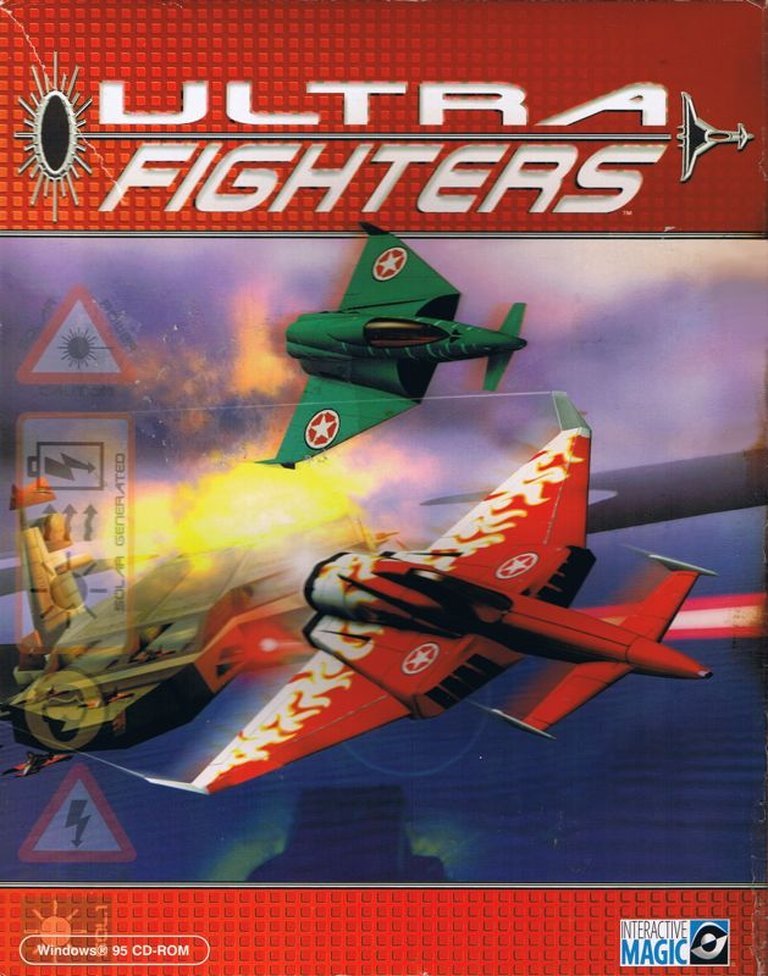
Description
Set in a post-apocalyptic third millennium, ‘Ultra Fighters’ is a flight combat simulator where global conflicts erupt over control of Thermodux, a rare energy-amplifying material. As a mercenary pilot for Navco, contracted by a corporatized United States, players engage in missions to defend Solomon Islands from Emperor Zindo’s forces. The game emphasizes aerial dogfights, bounty collection for upgrades, and protecting allied facilities to avoid penalties, blending strategic combat with post-war political tensions.
Where to Buy Ultra Fighters
PC
Ultra Fighters Free Download
Ultra Fighters Guides & Walkthroughs
Ultra Fighters: A Relic of Post-Apocalyptic Skies – An Exhaustive Retrospective
Introduction
In the twilight of the 20th century, as the gaming industry soared into 3D innovation with titles like Half-Life and EverQuest, Ultra Fighters (1999) arrived as a budget-flight combat simulator with lofty ambitions and a dystopian vision. Developed by Eagle Interactive and published by Interactive Magic, the game promised a unique blend of post-apocalyptic world-building, mercenary economics, and aerial dogfights. Yet, it crashed onto shelves with a whimper, dismissed by critics as a technical misfire. This review dissects Ultra Fighters’ turbulent flight path—its creative world-building shackled by technological inadequacies—and examines its paradoxical legacy as a fascinating, flawed artifact of late-’90s ambition.
Development History & Context
Studio Vision & Technological Constraints
Eagle Interactive, a studio with credits in niche combat simulators like Luftwaffe Commander and iF/A-18E Carrier Strike Fighter, aimed to blend arcade accessibility with speculative fiction. Produced by Paul Potera and scripted by James Cowgill, the team envisioned a “near-future” energy-war drama, leveraging the era’s fascination with Y2K-era techno-pessimism. However, the project was hamstrung by the limitations of late-’90s hardware. Built for systems with Pentium II 233MHz CPUs and 32MB RAM, Ultra Fighters’ engine struggled to render textured polygons at stable framerates, leading to compromises in visual fidelity and physics.
The 1999 Gaming Landscape
The game debuted amid fierce competition. Franchises like Jane’s Combat Simulations and Crimson Skies dominated the flight-sim niche with polished mechanics and immersive narratives. Meanwhile, the post-apocalyptic genre flourished with Fallout 2 (1998). Ultra Fighters’ budget-price positioning (bundled in collections like Ultra Flight Pack) betrayed its underdog status. Interactive Magic’s marketing leaned into its novel setting, but the game lacked the resources to match contemporaries in scale or polish.
Narrative & Thematic Deep Dive
Plot & World-Building
Set in the 26th century after a cataclysmic Global War, Ultra Fighters presents a geopolitics-rich backdrop. Fossil fuels are banned due to irradiated oil fields, and nations fracture into corporatized entities: the U.S. reforms as a shareholder-run “company” annexed by Canada and Mexico, while a reunified China under Emperor Zindo seeks control of Thermodux—a miracle material amplifying clean energy. Players join NAVCO, a mercenary firm hired to secure the Thermodux-rich Solomon Islands from Zindo’s forces.
Characters & Dialogue
Character development is nonexistent; players are silent recruits motivated purely by cash and U.S. government shares. Mission briefings drip with boilerplate military jargon (“neutralize hostiles,” “protect assets”), though the lore documents (recovered from manual and in-game text) reveal surprising depth. The corporate dystopia—where citizenship is equity and war is outsourced—echoes Snow Crash’s satirical cynicism but lacks thematic exploration beyond set-dressing.
Themes & Subtext
Beneath its B-movie veneer, Ultra Fighters critiques late-capitalist decay: nations as brands, soldiers as gig-economy contractors, and energy as the ultimate commodity. Yet, these ideas remain unexplored in gameplay, reducing the narrative to a skeletal excuse for combat. The game’s true ambition lies in its speculative world-building—a missed opportunity for interactive storytelling.
Gameplay Mechanics & Systems
Core Loop & Combat
The game’s structure is rudimentary: complete mission sets (patrol, defense, assault) to earn bounties for downed enemies, then spend earnings on new aircraft (10 models, including electric “Ultralights”) and weapons. Failure to protect U.S. facilities incurs fines, adding risk-rebalance tension. Sorties play out in first- or third-person, with controls criticized as “Airbus-like” (PC Action) and “trudgelike” (PC Joker).
Flawed Systems & UI
- Flight Model: Inertial delays and erratic stall mechanics (e.g., aircraft spiraling ludicrously when fuel depletes) frustrate precision.
- Weapon Systems: Guns and missiles lack impact feedback; explosions resemble “graphical bugs” (PC Player).
- UI Failures: The radar fails to rotate with the aircraft, rendering it “useless” (PC Joker), while keybindings clash, preventing actions like firing while disabling afterburners.
Multiplayer & Progression
LAN/online multiplayer (2-8 players) offers dogfights and co-op, but connectivity issues and balance problems plagued it. Progression feels unrewarding—cash rewards barely offset upgrades, and campaigns lack narrative payoff.
World-Building, Art & Sound
Visual Design & Atmosphere
Ultra Fighters’ vision of 2600 AD is more functional than evocative. Landscapes blend generic tropical islands and industrial complexes, rendered with blocky textures and draw-distance fog. Aircraft designs mix原型 F-16s with perfunctory科幻 accents (e.g., glowing engines), lacking stylistic cohesion. Post-apocalyptic decay is faintly implied through mission text, not art.
Sound Design
Critics universally panned the audio. Weapon effects are “dilettantish” (PC Joker), lasers emitting feeble pew sounds. The synth-heavy soundtrack loops repetitively, while the AI co-pilot’s monotone alerts (“Enemy spotted”) grate over time. Tommy Tallarico’s alleged involvement (credited in other Eagle titles) is unconfirmed here, but the audio lacks his signature flair.
Reception & Legacy
Critical & Commercial Performance
Launch reviews were scathing:
– PC Player (30/100): “Fly unmotivated, shoot a little, hope the autopilot doesn’t crash.”
– GameStar (20/100): “Lame aircraft shooting in miserable graphics… Particularly bad.”
– 7Wolf Magazine (70/100): A lone defender praising it as “stress-free arcade fun.”
The game flopped commercially, relegated to bargain bins and multi-game packs.
Influence & Retrospective
Ultra Fighters left no discernible industry impact, but its flaws encapsulate an era of transitional tech. Its “corporations as nations” premise anticipated Advance Wars’ Black Hole Rising and Deus Ex’s dystopias, while its janky multiplayer presaged indie experiments like Altitude. Today, it’s a morbidly fascinating curio—a testament to how ambition crumbles under execution.
Conclusion
Ultra Fighters is neither a lost gem nor a so-bad-it’s-good oddity. It is a stark lesson in unrealized potential: a rich narrative premise suffocated by technical incompetence, half-baked mechanics, and budgetary constraints. For historians, it offers a window into 1999’s cutthroat sim market, where even intriguing worlds couldn’t save a game from its own design failures. As a playable experience, it’s best left to archaeologists of gaming’s awkward adolescence—a relic whose wings clipped themselves.
Final Verdict: Ultra Fighters earns its place in history not as a pioneer, but as a cautionary tale. Its MobyScore of 5.5/10 is charitable; this is a game that crashes on the runway, forever grounded by what could have been.