
- Release Year: 2013
- Platforms: Windows, Xbox 360
- Publisher: Key17 Games
- Developer: Key17 Games
- Genre: Action
- Perspective: Top-down
- Game Mode: Co-op, Single-player
- Gameplay: Power-ups, Shooter, Survival mode, Twin-stick shooter
- Setting: Zombie Apocalypse
- Average Score: 80/100
Description
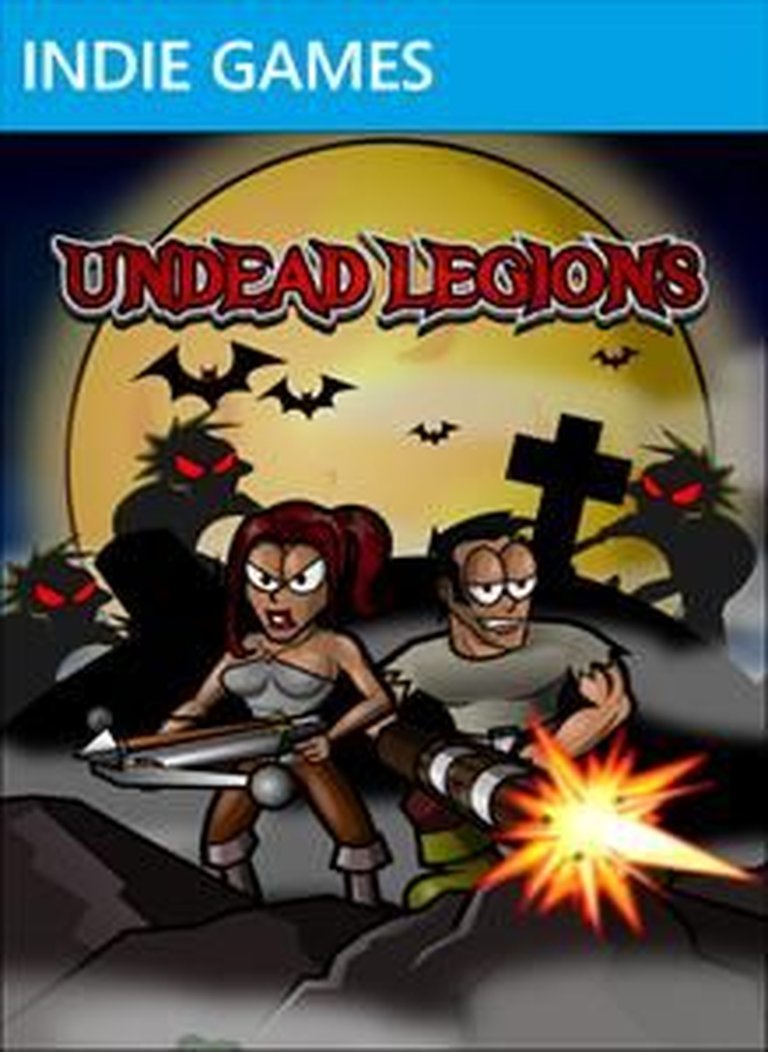
Undead Legions is a top-down twin-stick shooter where players battle waves of zombies and bosses using one of four unique characters, each with distinct stats and special attacks. The game features power-ups, survival modes, and unlockable challenges like ‘power-up heaven’ and ‘overlord challenge,’ blending fast-paced action with strategic upgrades and endless zombie hordes.
Undead Legions Reviews & Reception
moddb.com (80/100): Nice visuals, great soundtrack, sharp controls and pure FUN! Well done and solid zombie bashing.
Undead Legions: A Retrospective on the Overlooked Twin-Stick Zombie Slayer
Introduction: The Forgotten Gem of the Indie Apocalypse
In the crowded landscape of zombie-themed shooters, Undead Legions (2013) emerged as a modest yet fiercely enjoyable entry—a game that, despite its lack of mainstream recognition, carved out a niche for itself among fans of frenetic, arcade-style carnage. Developed by the small but ambitious Key17 Games, Undead Legions is a top-down twin-stick shooter that distills the essence of cooperative survival horror into a bite-sized, replayable package. While it may not have redefined the genre, its tight mechanics, charming aesthetic, and relentless pacing make it a title worthy of revisitation—especially in an era where “rogue-lite” and “survival” mechanics dominate indie game design.
This review seeks to dissect Undead Legions in its entirety: from its development origins and gameplay systems to its artistic identity and legacy. Was it a forgotten masterpiece, or a flawed but fun diversion? And why, despite its obscurity, does it still resonate with those who discovered it?
Development History & Context: The Rise of Key17 Games
A Small Studio’s Big Ambitions
Undead Legions was the brainchild of Key17 Games, a German indie studio founded by Christian Werner, who served as both the game’s designer and lead programmer. The studio’s portfolio prior to Undead Legions was modest, but their passion for arcade-style gameplay was evident. The game was developed using a custom engine, a testament to the team’s technical prowess despite their small size (only 17 people were credited on the Xbox 360 version).
The game first launched on March 29, 2013, for the Xbox 360 as part of the Xbox Live Indie Games (XBLIG) program—a platform that, while often overlooked, served as a breeding ground for experimental and budget-friendly titles. A Windows PC version followed shortly after, expanding its reach to a broader audience.
The Gaming Landscape of 2013
The early 2010s were a golden age for indie games, with titles like Super Meat Boy, Binding of Isaac, and FTL: Faster Than Light proving that small teams could craft experiences as compelling as AAA blockbusters. The twin-stick shooter subgenre, in particular, was thriving, thanks to classics like Geometry Wars and Robotron: 2084 inspiring a new wave of developers.
Undead Legions entered this space with a clear identity:
– Cooperative multiplayer (up to 4 players locally)
– Wave-based survival with escalating difficulty
– RPG-lite progression via power-ups and character stats
– Boss fights that punctuated the chaos
However, it also faced stiff competition. Games like Nuclear Throne (2013) and Risk of Rain (2013) were redefining the “bullet hell” and “rogue-lite” genres, while Left 4 Dead had already set the gold standard for cooperative zombie slaying. Undead Legions didn’t aim to dethrone these giants—instead, it offered a pick-up-and-play alternative, perfect for quick sessions with friends.
Technological Constraints & Design Philosophy
Given its indie roots, Undead Legions was built with accessibility in mind. The game supported both mouse/keyboard and gamepad controls, ensuring flexibility for PC players. The XBLIG version, however, was constrained by Microsoft’s policies at the time, which limited indie games to smaller file sizes and simpler assets.
Despite these limitations, the team managed to create a visually distinct world, thanks to Sebastian Braun’s pixel-art graphics and Vert Hany’s atmospheric soundtrack. The sound design, a collaborative effort involving freesound.org contributors, added a layer of gritty realism to the undead onslaught.
Narrative & Thematic Deep Dive: Minimalism with Maximum Impact
A Story Told Through Gameplay
Undead Legions is not a narrative-driven experience. There is no elaborate lore, no cutscenes, and no dialogue—just pure, unadulterated survival. The premise is simple:
– An undead horde has overrun the land.
– Four heroes (each with unique abilities) stand as the last line of defense.
– Wave after wave of zombies, goblins, and bosses must be repelled.
This minimalist approach is a double-edged sword. On one hand, it allows players to jump straight into the action without unnecessary exposition. On the other, it misses an opportunity to deepen the world—something later games in the genre (like Vampire Survivors) would capitalize on with environmental storytelling.
Character Design: Archetypes with Personality
The four playable characters are archetypal but distinct, each catering to different playstyles:
1. The Gunner – High damage, low speed (ideal for players who prefer brute force).
2. The Priestess – Balanced stats with healing abilities (the “support” role).
3. The Rogue – Fast movement, high fire rate (for hit-and-run tactics).
4. The Warrior – Tanky, with high health and melee-focused attacks.
While their backstories are nonexistent, their visual designs (cartoonish yet detailed) and unique special attacks give them just enough personality to feel distinct. The mana-based special abilities (e.g., fireballs, shields, area-of-effect blasts) add a layer of strategy, encouraging players to manage resources rather than spam attacks.
Themes: Survival, Chaos, and the Thrill of the Horde
At its core, Undead Legions is about controlled chaos. The game thrives on the tension between survival and overwhelming odds, a theme that resonates with classic arcade shooters. The power-up system (which includes temporary shields, weapon upgrades, and score multipliers) reinforces this by rewarding risk-taking—do you grab that health pack now, or save it for the next boss wave?
The goblin NPCs that appear between waves add a touch of dark humor, serving as interactive piñatas that drop power-ups when shot. This mechanic, while simple, reinforces the game’s arcade sensibilities—every moment is an opportunity to gain an edge.
Gameplay Mechanics & Systems: A Masterclass in Arcade Design
Core Gameplay Loop: Kill, Survive, Repeat
Undead Legions follows a wave-based structure, a staple of the twin-stick shooter genre:
1. Select a character (each with unique stats and abilities).
2. Survive waves of enemies, which increase in number and difficulty.
3. Collect power-ups (randomly spawned, enemy-dropped, or goblin-looted).
4. Face boss encounters at key intervals.
5. Unlock new modes (e.g., Power-Up Heaven, Overlord Challenge, Survival Mode).
This loop is easy to grasp but difficult to master, making it ideal for both casual players (who can enjoy short sessions) and hardcore fans (who chase high scores and leaderboard dominance).
Combat & Progression: Depth Beneath the Simplicity
While the premise is straightforward, the progression systems add depth:
– Permanent stat upgrades (e.g., faster mana regeneration, increased damage) persist across runs, giving a sense of long-term growth.
– Temporary power-ups (shields, speed boosts, weapon upgrades) create dynamic, high-risk moments—do you risk grabbing that shield mid-horde, or play it safe?
– Bombs (which clear sections of the screen) serve as a panic button, rewarding strategic use.
The boss fights are a highlight, introducing unique attack patterns that force players to adapt. The Undead Overlord, in particular, is a bullet-spongy, screen-filling menace that tests both reflexes and resource management.
Multiplayer: The Heart of the Experience
Undead Legions shines brightest in local co-op, where up to four players can team up (or compete for high scores). The chaos of four characters unleashing spells, traps, and bullets is where the game’s charm truly comes alive. However, the lack of online multiplayer (a common limitation of XBLIG titles) restricts its modern appeal.
Flaws & Missed Opportunities
Despite its strengths, Undead Legions has notable shortcomings:
– Repetitive enemy designs – After a few hours, the zombie variants start to blend together.
– Limited replayability – Once all modes are unlocked, the incentive to return diminishes.
– Technical issues – Some players reported invisible enemies in Survival Mode (a bug that, while patched, tarnished early impressions).
– No online leaderboards – A missed opportunity to foster competition.
World-Building, Art & Sound: A Gothic Cartoon Aesthetic
Visual Design: Pixel Art with Personality
Undead Legions adopts a cartoonish, slightly gothic art style that balances readability and charm. The top-down perspective ensures that players can always track the action, while the detailed sprites (zombies, bosses, and power-ups) give the world a handcrafted feel.
The color palette is dark but vibrant, with neon-green mana orbs and explosive red blood splatters standing out against the grim backdrop. The boss designs, in particular, are memorable—hulking ogres, skeletal mages, and the towering Overlord all feel distinct and threatening.
Sound & Music: An Underrated Atmosphere
The soundtrack, composed by Vert Hany, is a pulsing, electronic score that perfectly complements the game’s frantic pace. The sound effects (a mix of freesound.org contributions and custom recordings) add weight to every shot, explosion, and zombie groan.
One standout feature is the audio cues—players can hear when a boss is about to spawn (a deep, ominous rumble) or when a power-up appears (a chime), reinforcing the arcade-like feedback loop.
Reception & Legacy: The Game That Could Have Been
Critical & Commercial Reception
Undead Legions received little mainstream attention, with no Metacritic reviews and no major gaming outlet coverage. However, player reviews (such as those on ModDB and IndieDB) were overwhelmingly positive, praising its:
– Addictive gameplay loop
– Tight controls
– Great value for its price ($1.99 at launch)
The game’s lack of marketing and XBLIG’s niche status likely contributed to its obscurity. Still, it developed a cult following, particularly among fans of local co-op shooters.
The Cancelled Sequel & Unfulfilled Potential
In 2015, Key17 Games announced Undead Legions: Resurrection, a reimagined sequel that promised:
– RPG elements (deeper progression, loot systems)
– Tower-defense mechanics
– Expanded co-op features
A Kickstarter campaign was launched, but the project failed to gain traction, and the game was ultimately cancelled. This left Undead Legions as a one-and-done experiment, rather than the start of a franchise.
Influence & Modern Comparisons
While Undead Legions didn’t spawn imitators, its design philosophy can be seen in later games:
– Vampire Survivors (2022) – Adopted the minimalist storytelling + deep progression model.
– Broforce (2015) – Emphasized chaotic local co-op with destructible environments.
– Risk of Rain 2 (2020) – Expanded on the wave-based survival + power-up formula.
Had Undead Legions received more support, it might have been remembered alongside these titles. Instead, it remains a hidden gem—a game that did everything right within its scope, but lacked the polish or marketing to break out.
Conclusion: A Flawed but Fantastic Relic of the Indie Boom
Undead Legions is not a revolutionary game, nor is it a perfect one. What it is, however, is a tight, entertaining, and endlessly replayable twin-stick shooter that punches above its weight. Its addictive gameplay loop, charming aesthetic, and local co-op chaos make it a title worth revisiting—especially for fans of arcade-style action.
Final Verdict: 7.5/10 – A Cult Classic in the Making
- Strengths:
- Fast-paced, satisfying combat
- Great local co-op experience
- Addictive power-up system
- Memorable boss fights
- Weaknesses:
- Repetitive enemy designs
- Limited long-term replayability
- No online multiplayer
- Technical hiccups (e.g., invisible enemies)
Undead Legions may have been overshadowed by bigger names, but its pure, unfiltered fun ensures it deserves a place in the pantheon of underrated indie shooters. If you stumble upon it in a Steam sale or Xbox backward compatibility list, don’t hesitate—grab a friend and dive in. Just be prepared for the zombie apocalypse to claim a few hours of your life.
Final Thought:
In an era where games are judged by their open worlds, cinematic narratives, and live-service hooks, Undead Legions is a refreshing throwback—a reminder that sometimes, all you need is a gun, a horde of zombies, and a friend by your side.