
- Release Year: 2011
- Platforms: Windows
- Publisher: astragon Software GmbH, Excalibur Publishing Limited
- Developer: Vulkanware
- Genre: Simulation
- Perspective: 3rd-person
- Game Mode: Single-player
- Gameplay: Business simulation, Managerial
- Average Score: 26/100
Description
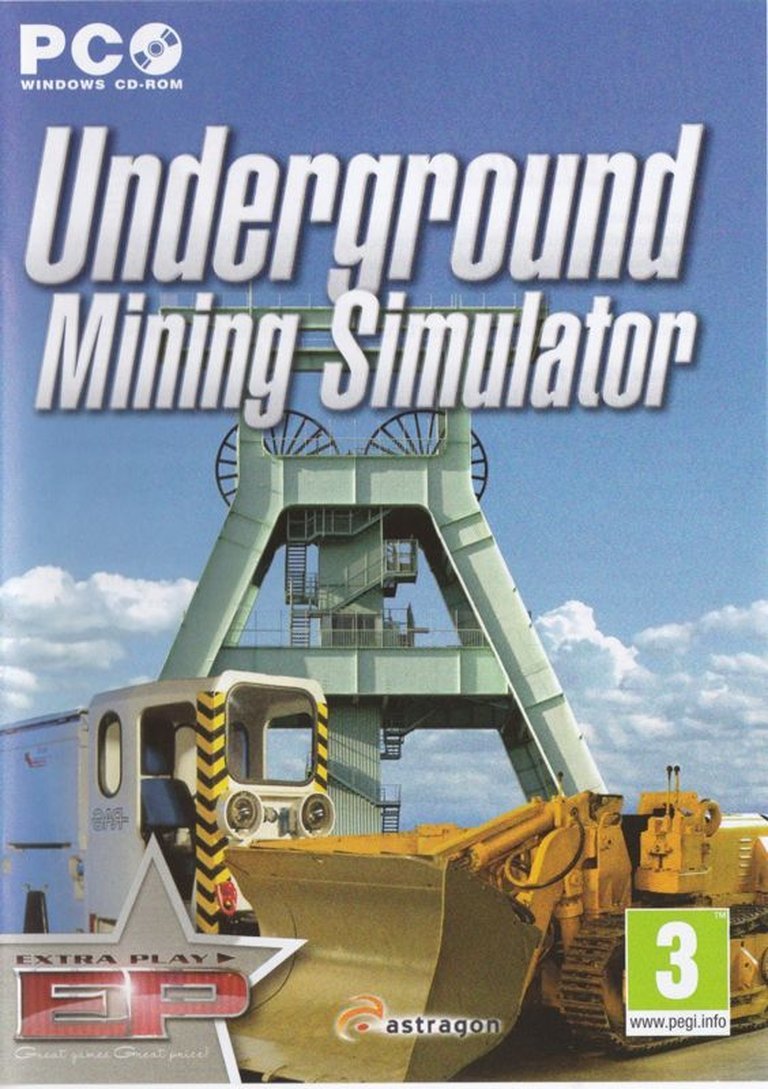
Underground Mining Simulator is a detailed simulation game that puts players in the role of a miner, tasked with operating a variety of machinery to extract resources from four types of mines (coal, salt, iron, and gold). Using tools like explosives or drill wagons, players must gather ore, transport it via mine carts to shipment stations, and manage over 20 upgradable machines. The game features mission-based progression to unlock new vehicles and upgrades, which can then be utilized in a free-play mode for unrestricted mining operations.
Gameplay Videos
Underground Mining Simulator Cracks & Fixes
Underground Mining Simulator Reviews & Reception
gamepressure.com (32/100): Atypical simulator designed by the Astragon studio, in which we play the role of a miner.
mobygames.com (20/100): Underground Mining Simulator is a simulation about working in a mine.
Underground Mining Simulator Cheats & Codes
PC (V1.0.87)
Use the trainer functions in-game.
| Code | Effect |
|---|---|
| F1 | Edit: FFYL Movement Speed |
| F2 | Unlimited Brave |
| F3 | Super Speed |
| F4 | Unlock All Craftings |
| F5 | Unlimited Resonance Burst |
| F6 | Relationships Don’t Change |
| F7 | Edit: Ingame Time |
| F8 | Mega Chain |
| F9 | XP to Next Level |
| F10 | No Campfire Needed to Craft |
| F11 | Goblins Won’t Age |
| HOME | Disable All |
Underground Mining Simulator: A Deep Dive into the Niche World of Industrial Simulation
Introduction: The Unlikely Allure of Underground Labor
Few video games dare to explore the gritty, unglamorous world of industrial mining. Yet, Underground Mining Simulator (2011), developed by Vulkanware and published by astragon Software, carves out a unique niche in the simulation genre by offering players an unexpectedly detailed glimpse into the life of a miner. Released during a golden age of hyper-specific simulators—where games about farming, trucking, and even surgery thrived—Underground Mining Simulator stands as a fascinating artifact of an era when developers sought to simulate every conceivable profession, no matter how obscure.
At its core, the game is a managerial and operational simulation, tasking players with extracting resources from four distinct types of mines (coal, salt, iron, and gold) using a variety of tools and vehicles. But beneath its utilitarian surface lies a curious blend of realism, repetitive gameplay, and an almost meditative focus on process. This review will excavate the game’s development, mechanics, reception, and legacy, ultimately asking: Does Underground Mining Simulator succeed as a game, or is it merely a digital museum piece for industrial enthusiasts?
Development History & Context: The Rise of the “Job Simulator”
The Studio and the Vision
Underground Mining Simulator was developed by Vulkanware, a German studio with a portfolio heavily skewed toward niche simulations. The game was published by astragon Software, a company that had already made a name for itself with titles like Bus Driver and Farming Simulator. The collaboration between these two entities was a natural fit, as both were deeply invested in the burgeoning “job simulator” subgenre—a trend that saw games mimicking real-world professions with varying degrees of fidelity.
The game’s lead producer, Torsten Fock, and the team at Vulkanware approached the project with a clear goal: to create a realistic, physics-driven mining experience that would appeal to both simulation enthusiasts and those curious about industrial processes. The inclusion of NVIDIA’s PhysX engine underscored this commitment to realism, ensuring that the behavior of machinery, debris, and even mine carts adhered to plausible physical laws.
Technological Constraints and the 2011 Gaming Landscape
Released on June 29, 2011, Underground Mining Simulator arrived at a time when the gaming industry was undergoing significant shifts:
– The Indie Revolution: Games like Minecraft (2010) and Terraria (2011) were redefining player expectations for sandbox and crafting experiences, proving that mining could be fun when paired with creativity and progression.
– The Simulator Boom: The late 2000s and early 2010s saw an explosion of hyper-specific simulators, from Euro Truck Simulator 2 (2012) to Surgery Simulator 2011. These games catered to a growing audience that craved realism over fantasy.
– Hardware Limitations: The game’s recommended specs—a Pentium IV 2 GHz CPU, 2 GB RAM, and a GeForce 6600 GPU—reflect the modest demands of the era. While not graphically intensive, the PhysX integration required careful optimization to ensure smooth performance.
The Mining Simulator Lineage
Underground Mining Simulator was not the first game to tackle mining, but it was among the first to treat it as a serious, systematic process rather than an arcade-style challenge. Earlier titles like:
– Boulder Dash (1984) and Dig Dug (1982) framed mining as a puzzle or action game.
– Miner 2049er (1982) and Manic Miner (1983) used mining as a backdrop for platforming.
– Minecraft (2010) abstracted mining into a core gameplay loop tied to crafting and survival.
By contrast, Underground Mining Simulator stripped away fantasy and focused solely on the logistics of extraction, positioning itself as a business management simulator with a mining theme.
Narrative & Thematic Deep Dive: The Absence of Story in a World of Systems
Plot and Characters: The Miner as Faceless Operator
Underground Mining Simulator is, at its heart, a narrative-free experience. There are no protagonists, no villains, no overarching plot—just the player, the mine, and the machinery. This absence of traditional storytelling is not a flaw but a deliberate design choice, reinforcing the game’s identity as a process-driven simulation.
The closest thing to a “story” is the career mode, which structures progression through a series of missions. Players begin as novice miners, gradually unlocking new equipment and mine types as they complete objectives. However, these missions are purely functional, lacking any emotional or narrative stakes. The game’s “characters” are the machines themselves—each with distinct roles in the mining process.
Themes: Labor, Industry, and the Romance of Extraction
While Underground Mining Simulator may lack a conventional narrative, it is rich in thematic subtext:
1. The Romance of Industry: The game glorifies the mechanical ballet of mining operations, presenting the player as a conductor orchestrating drills, carts, and explosives. There’s an almost Steampunk fascination with the machinery, even if the visuals are far from stylized.
2. Labor as Gameplay: Unlike games that abstract labor (e.g., Stardew Valley), Underground Mining Simulator forces players to engage with the monotony and precision of real mining work. The repetitive nature of drilling, loading, and transporting ore mirrors the actual rhythms of industrial labor.
3. Economic Determinism: The game’s progression is tied to efficiency and profit. Players must optimize their operations to unlock better equipment, reinforcing a capitalist feedback loop where success is measured in output and upgrades.
Dialogue and Atmosphere: The Sound of Silence
With no NPCs or voice acting, the game’s “dialogue” consists of menu text, mission briefings, and mechanical sounds. The sound design (credited to Definitv: Ton) is minimal but effective:
– The rumble of drills and clatter of mine carts create an immersive industrial soundscape.
– Kevin MacLeod’s music (a staple of indie and simulation games) provides a light, unobtrusive backdrop that never distracts from the core gameplay.
The overall atmosphere is one of isolated industry—a lone worker (the player) navigating the depths, surrounded by the hum of machinery. It’s a far cry from the bombastic audio design of mainstream games, but it suits the simulation’s austere tone.
Gameplay Mechanics & Systems: The Art of Extraction
Core Gameplay Loop: Drill, Transport, Repeat
Underground Mining Simulator distills mining into a three-phase process:
1. Extraction: Players use explosives or drill wagons to break apart ore deposits.
2. Transportation: The extracted ore is loaded onto mine carts and shuttled to a shipment station.
3. Management: Players must upgrade equipment, unlock new vehicles, and optimize routes to maximize efficiency.
This loop is repeated across four mine types (coal, salt, iron, gold), each with slight variations in ore density, machinery requirements, and environmental hazards.
Machinery and Progression: The Tools of the Trade
The game features over 20 machines, each serving a specific function:
– Drill Wagon: For precision extraction.
– Explosives: For blasting large deposits.
– Mine Carts: For transporting ore.
– Bulldozers & Loaders: For clearing debris and moving materials.
– Face Tunneling Machine: A late-game upgrade for rapid excavation.
Progression is tied to mission completion, with each successful task unlocking new machinery or upgrades. The free play mode allows players to experiment with their full arsenal of tools, unburdened by objectives.
Physics and Realism: The PhysX Difference
The integration of NVIDIA’s PhysX engine is one of the game’s standout technical features. It governs:
– Debris behavior: Rocks and ore react realistically to explosions and drilling.
– Vehicle handling: Mine carts and drills have weight and momentum.
– Structural integrity: Poorly supported tunnels can collapse (though this is more of a visual effect than a gameplay mechanic).
While the physics are impressive for 2011, they are not without flaws. Collisions can feel janky, and the mine carts occasionally exhibit unpredictable behavior, leading to frustration during tight transport sequences.
UI and Controls: Functional but Clunky
The game’s third-person perspective and mouse-and-keyboard controls are serviceable but lack polish:
– Camera angles can be awkward, making precision drilling difficult.
– Vehicle switching is cumbersome, requiring menu navigation rather than quick hotkeys.
– The mission UI is sparse, offering little feedback on progress or efficiency.
These issues highlight the game’s budget constraints and its priority on simulation over accessibility.
Innovations and Flaws
Innovations:
✅ Realistic mining processes rarely seen in games.
✅ Physics-driven interactions add depth to extraction.
✅ Modular progression allows for player-driven optimization.
Flaws:
❌ Repetitive gameplay with little variation.
❌ Clunky controls hinder precision tasks.
❌ Lack of narrative or emotional hooks makes long sessions tedious.
World-Building, Art & Sound: The Aesthetics of Industry
Setting and Atmosphere: The Mine as a Character
The game’s underground environments are procedurally generated but follow a consistent industrial aesthetic:
– Dimly lit tunnels with exposed rock walls.
– Mechanical infrastructure (rails, support beams, conveyor belts).
– Minimal decorative elements—this is a worksite, not a fantasy dungeon.
The lack of surface-world context is striking. Players never see the above-ground facilities or the end destination of their ore, reinforcing the isolated, subterranean focus of the experience.
Visual Design: Functional Over Fantastical
The 3D graphics are utilitarian, prioritizing clarity and function over visual flair:
– Textures are repetitive but serviceable.
– Lighting is flat, with few dynamic effects.
– Machine models are detailed but lack animations (e.g., drills don’t visibly wear down).
The game’s visuals are adequate for 2011 but feel dated by modern standards. Comparisons to Minecraft or Deep Rock Galactic (2020) highlight how far mining games have evolved in terms of artistic ambition.
Sound Design: The Symphony of Industry
As mentioned earlier, the sound design is a highlight:
– Drills emit a steady, mechanical whir.
– Explosions are deep and resonant, shaking the virtual mine.
– Mine carts clatter and rattle as they traverse rails.
The absence of music during gameplay (outside of menus) reinforces the realism, though some players may find the silence oppressive during long sessions.
Reception & Legacy: A Niche Game for a Niche Audience
Critical and Commercial Reception
Underground Mining Simulator received little critical attention upon release, a fate shared by many niche simulators of the era. MobyGames lists only one player rating (1/5), while Metacritic has no user reviews—a testament to its obscurity.
However, the game found a small but dedicated audience among:
– Simulation enthusiasts who appreciated its realistic approach.
– Industrial machinery fans who enjoyed the detailed vehicle models.
– Players seeking “anti-games”—experiences that reject traditional gameplay in favor of systemic realism.
Legacy: The Mining Simulator Genre
While Underground Mining Simulator did not spawn a franchise, it contributed to the evolution of mining in games:
– Inspired later titles like Mining Industry Simulator (2014) and Gold Rush: The Game (2017).
– Proved that mining could be a standalone genre, not just a mechanic in larger games.
– Paved the way for cooperative mining experiences like Deep Rock Galactic (2020), which blended industrial simulation with action.
Cultural Impact: The Unlikely Appeal of Virtual Labor
The game’s legacy is less about sales or awards and more about what it represents:
– A time capsule of the early 2010s simulator boom.
– A testament to the diversity of gaming experiences—not every game needs combat or narrative.
– A curiosity for historians studying the evolution of niche genres.
Conclusion: A Flawed but Fascinating Relic
Underground Mining Simulator is not a great game by conventional metrics. It is repetitive, clunky, and visually dated. Yet, it is a fascinating artifact—a game that dares to simulate the unglamorous and, in doing so, offers a unique perspective on labor, industry, and gameplay design.
Final Verdict: 6/10 – A Niche Classic
Pros:
✔ Authentic mining simulation with physics-driven interactions.
✔ Detailed machinery and progression systems.
✔ A meditative, process-focused experience for fans of industrial simulators.
Cons:
✖ Repetitive gameplay with little variation.
✖ Clunky controls and awkward camera angles.
✖ No narrative or emotional engagement.
Who Should Play It?
– Simulation enthusiasts who enjoy hyper-realistic job simulators.
– Industrial machinery fans who appreciate detailed vehicle operation.
– Historically curious gamers interested in the evolution of niche genres.
Who Should Avoid It?
– Players seeking action, narrative, or emotional depth.
– Those who dislike repetitive, process-heavy gameplay.
– Gamers expecting modern graphics or polished controls.
Final Thoughts
Underground Mining Simulator is not for everyone, but for the right audience, it is a rewarding, if flawed, experience. It stands as a testament to the diversity of video games—proof that even the most mundane professions can be transformed into interactive experiences. While it may not have left a lasting mark on the industry, it remains a culturally significant relic of an era when developers were willing to simulate anything.
In the end, Underground Mining Simulator is less a game and more a digital museum exhibit—one that invites players to don a hard hat, grab a drill, and descend into the depths of virtual industry.
Rating Breakdown:
– Gameplay: 5/10
– Graphics: 4/10
– Sound: 7/10
– Replayability: 5/10
– Innovation: 7/10
– Overall: 6/10 – “A Flawed Gem for Simulation Fans”