
- Release Year: 2014
- Platforms: Windows
- Genre: Action
- Perspective: First-person
- Game Mode: Single-player
- Gameplay: Puzzle elements
- Setting: Contemporary
- VR Support: Yes
Description
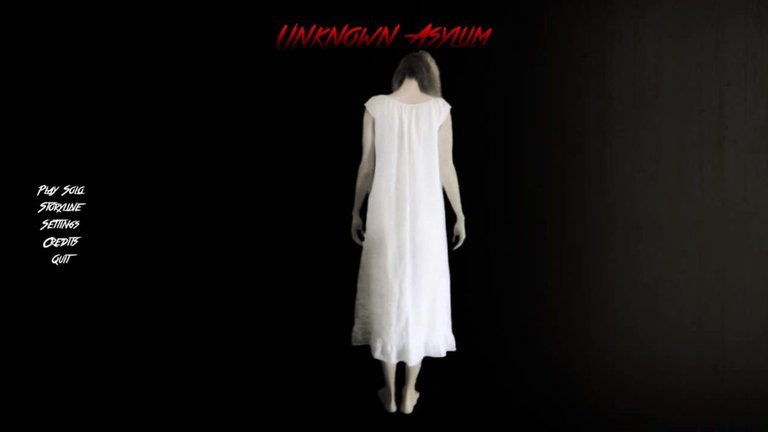
Unknown Asylum is a first-person horror puzzle game set in a contemporary abandoned asylum. The player is trapped within the labyrinthine institution and must escape before starving to death, navigating maze-like corridors infested with ghosts and monsters that cannot be fought, requiring careful avoidance and puzzle-solving to survive.
Gameplay Videos
Unknown Asylum Reviews & Reception
steamcommunity.com : The wait was really worth it!
Unknown Asylum: Review
Introduction
In the vast landscape of indie horror games, Unknown Asylum emerges as a obscure yet evocative entry from 2014, developed solely by Sean Toman. Released as freeware for Windows, this first-person horror experience traps players in a labyrinthine abandoned asylum, tasking them with escaping before starvation sets in while evading spectral threats. Its legacy is one of quiet anonymity—often overshadowed by more polished contemporaries—but it encapsulates the minimalist, atmosphere-driven design philosophy that flourished in the early 2010s indie scene. This review critically examines Unknown Asylum through the lens of its scant documentation, gameplay mechanics, and thematic intentions, arguing that while it suffers from a lack of depth and visibility, it remains a curious artifact of DIY horror experimentation. By synthesizing the provided source material—primarily sparse database entries and a brief synopsis—we uncover a game that prioritizes tension over narrative, yet fails to leverage its setting for a fully immersive experience due to evident limitations in scope and polish.
Development History & Context
Unknown Asylum was released on September 18, 2014, by an individual developer, Sean Toman, who also served as publisher. Its development history is largely undocumented in the provided sources, but contextual clues place it within a specific technological and cultural moment. In 2014, indie horror was experiencing a boom following the success of Slender: The Eight Pages (2012) and Amnesia: The Dark Descent (2011), with many creators leveraging accessible engines like Unity or GameMaker: Studio to produce low-budget, high-concept experiences. The game’s business model as freeware/public domain aligns with the era’s “shareware” ethos, where developers prioritized accessibility and word-of-mouth over commercial gain. Technological constraints were likely significant: as a solo project, it probable used pre-built assets or simple 3D modeling, resulting in a functional but visually rudimentary presentation. The gaming landscape then was shifting toward narrative-driven horror (e.g., P.T.’s teaser in 2014), yet Unknown Asylum adheres to older survival-horror tropes—avoidance, resource management, and maze-like environments—suggesting a deliberate retro approach. Unlike its later counterpart ASYLUM (2025) by Senscape, which underwent a protracted 15-year development with engine switches and professional voice work, Unknown Asylum represents a snapshot of rapid, grassroots creation, unburdened by Kickstarter expectations or publisher demands. This context explains its minimalist design but also its obscurity; without a marketing push or community engagement, it faded into the avalanche of indie horror titles that year.
Narrative & Thematic Deep Dive
The narrative of Unknown Asylum is skeletal, conveyed entirely through a brief description on MobyGames and a Metacritic synopsis. The plot follows an unnamed protagonist who wakes up in a locked white room within an abandoned asylum, having been imprisoned for days with no memory of why. They experience hallucinations and hear haunting noises, feeling their sanity unravel. When the door inexplicably unlocks, they must escape while weak from hunger, navigating a maze-like facility infested with ghosts and monsters. This setup introduces core themes: isolation, psychological disintegration, and the struggle for survival against incomprehensible threats. However, the game lacks any substantial character development, dialogue, or backstory. There are no named characters, no logs or documents to collect (as implied by the absence of such features in the source), and no explanation for the asylum’s history or the protagonist’s presence. Thematically, it touches on the horror of institutional decay and madness—a staple of the genre—but fails to explore these ideas deeply. Compare this to ASYLUM (2025), which weaves intricate lore about Group E patients, PTSD stages, and eldritch entities through journals and conversations; Unknown Asylum offers nothing comparable, relying instead on the player’s imagination to fill narrative voids. The starvation mechanic hints at a ticking clock, but its thematic weight is undercut by the lack of context: why is hunger the primary threat? Are the ghosts real or products of delirium? The source provides no answers, leaving the story a hollow shell that prioritizes gameplay urgency over storytelling. This narrative vacuum is its greatest weakness, as horror thrives on emotional investment, and here, there is little to invest in beyond basic survival.
Gameplay Mechanics & Systems
Gameplay in Unknown Asylum is defined by its first-person perspective, puzzle elements, and avoidance-based horror. From the MobyGames specs, it uses “direct control” and “puzzle elements,” with a setting described as “contemporary” and narrative as “horror.” The core loop involves traversing node-based environments (common in early 3D horror games like Alone in the Dark), solving environmental puzzles to progress (e.g., finding keys or activating mechanisms), and stealthily evading ghosts and monsters that populate the asylum. Crucially, there is no combat system—players must hide, run, or use the environment to circumvent threats, amplifying tension through powerlessness. The starvation element adds a meta-challenge: escape before a resource depletes, though the implementation is unclear from sources (likely a timer or health decay). The maze-like structure encourages backtracking and cognitive mapping, a deliberate design to foster anxiety and disorientation. However, the puzzle integration is rudimentary; without examples, it’s safe to assume they serve as simple gates (e.g., locked doors requiring items found elsewhere), which can become tedious if overused. The interface is minimal—probably point-and-click movement with item interaction—but details on UI, inventory management, or hint systems are absent. Compared to ASYLUM (2025), which features a notebook-based quest log and integrated hints, Unknown Asylum likely lacks such quality-of-life features, relying on player persistence. Gameplay flaws emerge from this simplicity: the avoidance mechanics may feel repetitive if enemy AI is predictable, and the starvation timer could create unfair frustration without clear feedback. Yet, in its favor, the focus on evasion over combat aligns with pure survival horror traditions, where vulnerability breeds dread. Overall, the systems are functional but unrefined, reflecting a solo developer’s constrained resources and a design ethos that values atmosphere over interactivity.
World-Building, Art & Sound
The world of Unknown Asylum is a contemporary, abandoned mental institution rendered in first-person 3D. The setting is described as a “maze” and “old abandon asylum,” evoking classic horror locales like those in Session 9 or * Silent Hill. Atmosphere is paramount: decayed architecture, dim lighting, and pervasive silence (broken by ghostly sounds) should create unease. However, the source material provides no specifics on art direction—textures, models, or lighting quality are unmentioned, implying a basic, perhaps low-poly aesthetic typical of 2014 indie projects. Sound design is equally vague; while horror games of the era used ambient drones and jump-scare cues, *Unknown Asylum’s audio palette is not documented. This lack of detail makes it hard to assess its immersive qualities, but we can infer limitations: without sophisticated particle effects or dynamic audio (as noted in ASYLUM’s use of FMOD), the horror may rely on static scares and repetitive environments. World-building is nonexistent beyond the physical space—there are no notes, artifacts, or environmental storytelling to flesh out the asylum’s past or the ghosts’ origins. This emptiness contrasts sharply with ASYLUM (2025), which fills its vast Institute with documents, patient records, and lore about the Entity, creating a layered narrative. For Unknown Asylum, the world is purely functional: a series of rooms to navigate, devoid of history or personality. This undermines horror, as fear stems from the unknown, and here the unknown is only surface-level—players learn nothing about the asylum’s former inhabitants or the nature of the threats. The art and sound, while potentially adequate for a freeware title, likely fail to leverage the setting for deeper psychological impact, leaving the experience feeling shallow and underdeveloped.
Reception & Legacy
Critical and commercial reception for Unknown Asylum is virtually non-existent in the provided sources. MobyGames lists no critic reviews, and Metacritic shows no user scores or written reviews, indicating minimal visibility upon release. As a freeware title, it may have circulated in niche forums or horror game communities, but without a significant online presence or press coverage, it flew under the radar. Its legacy is therefore negligible; it has not influenced subsequent games nor is it cited in discussions of asylum horror. Compare this to ASYLUM (2025), which sparked extensive debates about its ending, pacing, and design, despite its own controversies. Unknown Asylum’s obscurity stems from its low-budget, solo development and lack of marketing—a common fate for countless indie horror experiments that never gain traction. In the broader context, it represents the “long tail” of horror gaming: titles that explore mechanics but fail to resonate due to execution gaps. Its place in video game history is as a footnote, perhaps of interest only to researchers studying early 2010s indie horror trends or the proliferation of asylum-themed games. The provided source material, while rich in detail about ASYLUM, offers no redemption for Unknown Asylum’s reception; it remains an unheralded project, illustrating the challenges of standing out in a crowded genre without polish, narrative depth, or community engagement.
Conclusion
Unknown Asylum is a minimalist horror game that captures the spirit of indie experimentation but falls short in execution. Its strengths lie in a tense, avoidance-based gameplay loop and a claustrophobic setting that leverages familiar asylum tropes. However, severe limitations in narrative depth, world-building, and production values—evidenced by the complete absence of lore, characters, or documented reception—prevent it from achieving lasting impact. While it may offer brief moments of fear for players seeking raw survival horror, its lack of polish and engagement mechanics makes it a forgettable experience. In the pantheon of asylum horror, it is eclipsed by more ambitious titles like ASYLUM (2025), which, despite flaws, demonstrates how to build a rich, immersive world. Ultimately, Unknown Asylum serves as a cautionary tale about the perils of underdeveloped design: a compelling premise undermined by sparse execution. Its historical significance is minimal, but as an artifact of DIY horror, it reminds us that innovation often requires more than just a good idea—it demands the resources and refinement to bring that idea to life. For most players, it is not recommended; for historians, it is a curious but ultimately unilluminating case study in obscurity.