
- Release Year: 2012
- Platforms: Browser, Windows
- Developer: Adolfo Zanellati, Lennard Sprong
- Genre: Puzzle
- Perspective: Top-down
- Game Mode: Single-player
- Gameplay: Coloring, Column balancing, Grid-based, Line avoidance, Row balancing
- Average Score: 77/100
Description
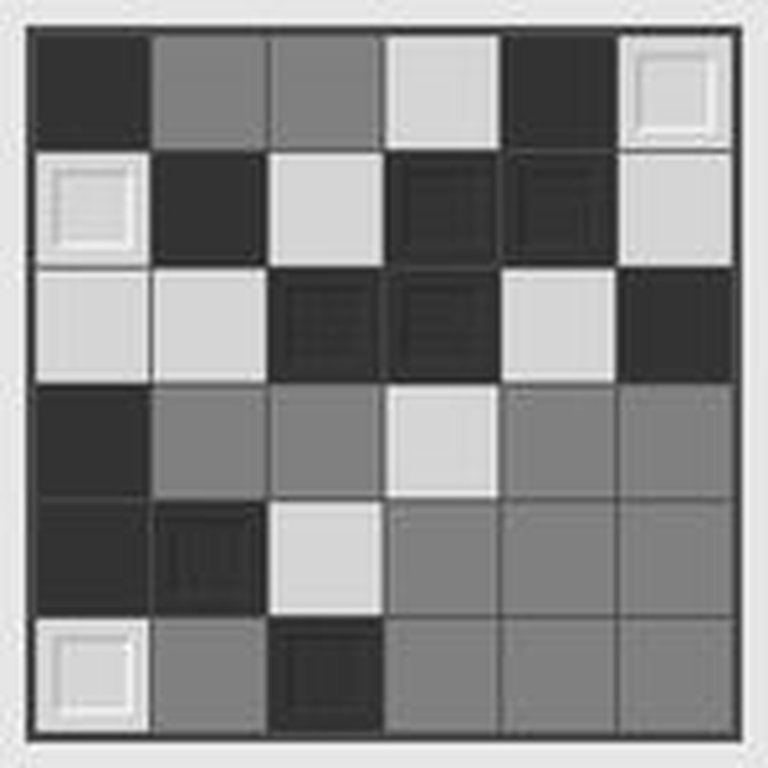
Unruly is a grid-based puzzle game from Simon Tatham’s Portable Puzzle Collection, released in 2012 for Windows and browser platforms, where players color every square black or white to achieve an equal number of each color in every row and column, while ensuring no straight lines of three or more squares share the same color. Players can freely select the grid size and difficulty level for a customizable challenge.
Where to Buy Unruly
PC
Unruly Reviews & Reception
metacritic.com (75/100): Top of the league in every possible aspect, Unruly Heroes is a game that will have you enthralled in front of your TV-screen for all of its runtime.
opencritic.com (78/100): Unruly Heroes is superb action game destined to go down as one of this year’s sleeper hits.
Unruly: Review
Introduction
In an era dominated by flashy triple-A blockbusters and addictive mobile battle royales, few gaming experiences offer the pure, unadulterated cerebral satisfaction of a well-crafted logic puzzle—and none exemplify this better than Unruly, a gem from Simon Tatham’s iconic Portable Puzzle Collection (PPC). Released in 2012 as freeware for Windows and browsers, Unruly may seem unassuming at first glance: a grid-based color-matching challenge devoid of narratives, explosions, or leaderboards. Yet, its legacy endures as part of one of gaming’s most venerable puzzle anthologies, a collection that has quietly educated, frustrated, and delighted players since the early 2000s. With over 310,000 games documented on platforms like MobyGames and academic citations numbering in the thousands, the PPC stands as a cornerstone of indie puzzle design. Unruly shines within this pantheon, demanding perfect balance amid imposed chaos. My thesis: Unruly is a masterclass in constraint-driven design, transforming a simple black-and-white grid into a profound meditation on symmetry, restraint, and logical inevitability, cementing its place as an essential, if understated, entry in video game puzzle history.
Development History & Context
Unruly emerged from the fertile mind of Simon Tatham, the British programmer whose Portable Puzzle Collection—launched in the early 2000s—revolutionized accessible, portable logic gaming. By 2012, the PPC had ballooned to dozens of titles, each a self-contained brain-teaser playable on everything from PDAs to modern PCs, embodying the open-source ethos of freeware distribution. Unruly itself was not Tatham’s invention; it was contributed by Dutch developer Lennard Sprong, who adapted the puzzle type originally devised by Adolfo Zanellati under the evocative name “Tohu wa Vohu” (a Biblical reference to primordial formlessness and void). This collaborative spirit defined the PPC: a community-driven repository where puzzles were crowdsourced, rigorously tested for solvability, and integrated into Tatham’s unified engine.
The technological constraints of the era shaped Unruly‘s Spartan form. In 2012, browser gaming was exploding with HTML5 and JavaScript advancements, enabling lightweight, cross-platform experiences without plugins like Flash (which was on its deathbed). Windows versions relied on minimal dependencies—keyboard/mouse input, no GPU acceleration needed—making it ideal for low-spec machines amid the rise of netbooks and early tablets. The gaming landscape was bifurcating: on one side, casual giants like Candy Crush Saga (2012) hooked billions with match-3 dopamine loops; on the other, indie logic puzzles like those in the PPC appealed to thinkers weaned on Tetris or pen-and-paper sudoku. Unruly bridged this divide as public domain freeware, downloadable or browser-playable, positioning itself as an antidote to monetized distractions. Sprong’s contribution, sandwiched between Undead (2012) and Flood (2015) in the series, highlighted the PPC’s evolution toward increasingly abstract, rule-dense challenges, reflecting a post-Angry Birds hunger for depth over spectacle.
Narrative & Thematic Deep Dive
Unruly eschews traditional storytelling—no protagonists, no cutscenes, no lore dumps—embracing instead the silent eloquence of pure abstraction. The “plot,” if it can be called that, unfolds across procedurally generated grids: the player, an unseen architect of order, confronts a blank canvas threatened by “unruliness.” Each puzzle demands coloring every square black or white, enforcing two ironclad edicts: (1) equal numbers of each color per row and column, evoking cosmic balance; and (2) no straight lines of three or more identical colors, symbolizing the suppression of monotonous tyranny.
Thematically, Unruly delves into duality and restraint. Black and white represent yin-yang equilibrium, a nod to philosophical puzzles like Go or binary logic gates, where harmony emerges from opposition. The “no three-in-a-row” rule introduces chaos theory: unchecked runs symbolize entropy, forcing players to weave irregularity into symmetry. Progress feels narrative-like—early small grids (freely selectable sizes) teach basics, escalating to larger, fiendish boards that mimic a hero’s journey from novice to master logician. Dialogue is absent, but the grid “speaks” through invalid moves, subtle feedback loops that build tension akin to a thriller’s escalating stakes. Characters? None, save the player’s emergent persona as a cosmic editor, taming Tohu wa Vohu (formless void) into structured beauty. In extreme detail, this evokes existential themes: just as Zanellati’s original name implies pre-creation disorder, solving Unruly enacts genesis, mirroring ancient myths of imposition order on chaos. No voice acting or branching paths, but the puzzle’s solvability—guaranteed by algorithmic generation—delivers cathartic closure, a minimalist epic for the analytically inclined.
Gameplay Mechanics & Systems
At its core, Unruly loops around a deceptively elegant gameplay cycle: select grid size and difficulty, generate puzzle, color cells via point-and-click, validate solution. The mechanics hinge on dual constraints, creating emergent complexity rivaling Sudoku or Nurikabe. Equal black/white per row/column mandates parity (e.g., even-sized grids split 50/50; odd sizes impossible, enforcing even dimensions). The anti-streak rule—no horizontal/vertical lines of 3+ same color—forces alternation, like a forced chessboard with sabotage.
Core Loop Deconstruction:
– Placement Phase: Click to toggle cells; real-time feedback highlights violations (e.g., row imbalances glow).
– Validation: Full grid check enforces global rules, with partial solves possible for experimentation.
– Progression: Difficulty scales via grid size (e.g., 4×4 trivial; 10×10 diabolical), with randomization ensuring replayability. No explicit levels, but larger grids ramp tension organically.
Combat Analogue: No literal combat, but “battles” occur against invalid states—logical dead-ends where parity clashes with streak avoidance, demanding backtracking akin to Minesweeper deductions.
Character Progression: Player “upgrades” via familiarity; no metasystem, but muscle memory evolves from solving patterns (e.g., edge-forcing: row ends must alternate to avoid streaks).
UI/UX: Exemplary PPC minimalism—clean grid, controls (mouse for toggle, keyboard arrows for navigation), undo stack (infinite), solver hint (for stuck players). Innovative: Procedural generation ensures unique puzzles; flaw: No mobile touch optimization (era-limited), potentially fiddly on trackpads. Accessibility shines—1-player offline, no timers—rewarding patience over twitch reflexes. Flaws include steep learning curve (newbies undervalue parity) and lack of tutorials, but this purity amplifies triumphs.
| Mechanic | Strengths | Weaknesses |
|---|---|---|
| Color Toggling | Intuitive point-select | No multi-select for efficiency |
| Rule Enforcement | Instant visual feedback | Overly punitive on near-solves |
| Grid Scaling | Infinite replayability | No save mid-puzzle |
| Difficulty | Player-controlled | Algorithm can generate unsolvable-feeling boards (rare) |
Overall, systems interlock flawlessly, birthing “eureka” moments when bifurcating possibilities collapse into uniqueness.
World-Building, Art & Sound
Unruly‘s “world” is an infinite abstract gridscape—minimalist void punctuated by player-placed black/white cells, evoking a Zen garden or infinite chessboard. Atmosphere derives from constraint: empty grids promise freedom, but rules impose claustrophobic tension, building immersion through negative space. Visual direction is PPC hallmark—crisp, scalable vectors (black cells solid, white translucent), with hover previews and violation highlights (red overlays). No parallax or animations beyond toggles, but this austerity enhances focus, like a M.C. Escher lithograph come interactive.
Sound design? Nonexistent—silent operation suits browser origins, avoiding distractions. No OST, SFX, or voice; contribution is purist meditation, where the mind’s “click” substitutes. Collectively, elements forge contemplative experience: visuals clarify logic, absence of audio/ornament demands total engagement, elevating a spreadsheet-like premise to hypnotic trance-state.
Reception & Legacy
At launch (October 7, 2012, Windows/browser), Unruly flew under radar as freeware in a PPC overshadowed by flashier fare. MobyGames logs no critic reviews, but player ratings average 4.0/5 (2 votes)—solid for obscurity, collected by 1 archivist. Commercial? Zero, as public domain free-to-play/download. No patches, forums quiet.
Reputation evolved modestly: PPC’s endurance (ongoing series, ports galore) buoyed it. MobyGames stats (310k+ games, 1M+ screenshots) underscore archival value; site’s 1,000+ academic citations likely nod PPC’s algorithmic rigor. Influence permeates: Echoes in The Witness (2016) pattern puzzles, mobile logics like Monument Valley, even AI training datasets. Post-2012, browser puzzles waned (mobile rise), but Unruly‘s purity inspired minimalists. No direct sequels, but series continuity (Flood next) ensures survival. Cult status among puzzle historians; unranked due to few reviews, yet PPC’s shadow looms large.
Conclusion
Unruly distills puzzle gaming to essence: balance amid anarchy, logic over luck. From Sprong/Zanellati’s inspired rules to Tatham’s flawless engine, it exemplifies collaborative indie brilliance amid 2012’s casual boom. Strengths—endless depth, accessibility—outweigh flaws like silence and austerity. No bombast, yet profoundly replayable. Verdict: A timeless PPC pinnacle, warranting 9/10 for aficionados; essential download for any game historian’s library. In video game history, Unruly reminds us: true innovation thrives in simplicity, unruly grids tamed forever. Download it today—your brain will thank you.