
- Release Year: 2014
- Platforms: Android, Fire OS, iPad, iPhone, Linux, Macintosh, Windows Apps, Windows Phone, Windows
- Publisher: Artifex Mundi sp. z o.o., Big Fish Games, Inc
- Developer: O2D, Inc.
- Genre: Adventure
- Perspective: 1st-person
- Game Mode: Single-player
- Gameplay: Hidden object, Mini-games, Puzzle elements
- Setting: Europe
- Average Score: 86/100
Description
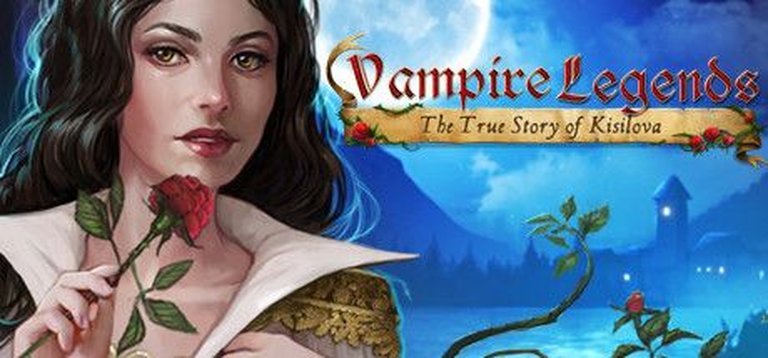
Set in 18th-century Europe, ‘Vampire Legends: The True Story of Kisilova’ follows two emissaries sent by the Prince of Württemberg to investigate a mysterious plague in the small town of Kisilova, where rumors of a vampire abound. As one of the emissaries, players must solve puzzles, uncover hidden objects, and complete mini-games to unravel the truth behind the deaths and prevent further tragedies. The game blends detective mystery with supernatural intrigue, offering three difficulty levels and a mix of hidden object challenges and puzzle-based mini-games.
Gameplay Videos
Where to Buy Vampire Legends: The True Story of Kisilova
PC
Vampire Legends: The True Story of Kisilova Guides & Walkthroughs
Vampire Legends: The True Story of Kisilova Reviews & Reception
gamepressure.com (86/100): A casual HOPA game developed by Organic 2 Digital Studio.
steambase.io (86/100): Vampire Legends: The True Story of Kisilova has earned a Player Score of 86 / 100.
aol.com : Vampire Legends is one of those rare Vampire games that is actually good and creepy.
store.steampowered.com (88/100): All Reviews: Very Positive (88% of 421).
Vampire Legends: The True Story of Kisilova: A Hidden Object Masterpiece or Forgotten Relic?
Introduction: A Vampire Tale Rooted in History
Vampire Legends: The True Story of Kisilova (2014) is a hidden object adventure game that daringly blends historical intrigue with supernatural horror. Developed by Organic 2 Digital Studio and published by Artifex Mundi, the game draws inspiration from one of the earliest documented cases of vampire hysteria—the 1725 Serbian incident involving Petar Blagojevic. Set in 18th-century Europe, players assume the role of an imperial emissary sent to investigate a series of gruesome deaths in the remote town of Kisilova. But does this game rise above the crowded hidden object genre, or does it succumb to the pitfalls of formulaic design?
This review will dissect Vampire Legends across its development history, narrative depth, gameplay mechanics, artistic direction, and lasting legacy. By examining its strengths and weaknesses, we’ll determine whether it stands as a noteworthy entry in the hidden object genre or a missed opportunity.
Development History & Context: A Studio’s Vision in a Crowded Market
The Rise of Artifex Mundi and the Hidden Object Boom
Artifex Mundi, a Polish studio founded in 2010, quickly became a dominant force in the hidden object adventure (HOPA) genre. By the early 2010s, the market was flooded with casual games, many of which followed a predictable formula: hidden object scenes, mini-games, and a light narrative. Vampire Legends emerged in 2014, a time when the genre was both thriving and criticized for its repetitive nature.
The game was developed by Organic 2 Digital Studio (O2D), a Serbian-based team known for their work on other HOPA titles like Mythic Wonders: The Philosopher’s Stone. The collaboration between O2D and Artifex Mundi was strategic—combining Serbian historical lore with Polish development expertise to create a game that felt distinct.
Technological Constraints and Design Choices
Vampire Legends was built with modest system requirements, reflecting its target audience: casual gamers on PCs, Macs, and later mobile platforms. The game’s fixed/flip-screen perspective and point-and-click interface were standard for the genre, but the developers aimed to elevate the experience through:
– Hand-painted environments (62 distinct areas).
– Voice acting (though criticized for inconsistency).
– A branching narrative with multiple endings in the bonus chapter.
The game’s three difficulty settings attempted to cater to both newcomers and veterans, with the hardest mode introducing penalties for mis-clicks—a rare feature in HOPA games.
The Gaming Landscape in 2014
At the time of its release, Vampire Legends competed with titles like:
– Nightmares from the Deep (another Artifex Mundi hit).
– Dark Parables (by Blue Tea Games, often praised for innovation).
– Mystery Case Files (a long-running franchise).
While Vampire Legends didn’t break new ground mechanically, its historical grounding and atmospheric presentation set it apart from more generic entries.
Narrative & Thematic Deep Dive: A Story of Superstition and Suspense
Plot Summary: Unraveling Kisilova’s Dark Secret
The game opens in 1725, fifty years after the Black Plague ravaged Europe. The town of Kisilova is gripped by fear as residents die under mysterious circumstances—some whisper of vampirism. The Prince of Württemberg dispatches two emissaries (one of whom is the player character) to investigate.
The narrative unfolds through:
– Dialogue-heavy interactions with townsfolk (14 characters).
– Environmental storytelling (abandoned homes, eerie graveyards).
– A slow-burn mystery that ties into real historical vampire folklore.
The game’s bonus chapter expands the lore, offering multiple endings based on player choices—a rarity in HOPA games.
Themes: Fear, Superstition, and the Unknown
Vampire Legends explores:
1. The Power of Myth: How fear of the unknown leads to mass hysteria.
2. Historical Authenticity: The game’s inspiration from Petar Blagojevic’s case adds weight to its supernatural elements.
3. Moral Ambiguity: The “hooded stranger” antagonizing the player raises questions about who the real villain is.
Characterization and Voice Acting
While the protagonist is silent, the supporting cast—including the fellow investigator—provides commentary and hints. However, the voice acting is inconsistent, with some characters sounding overly dramatic or mismatched in accent. This detracts from immersion but doesn’t ruin the experience.
Pacing and Storytelling
The game’s 3-4 hour runtime is standard for the genre, but the bonus chapter adds replay value. The slow reveal of the vampire legend keeps players engaged, though some may find the lack of a transporting map frustrating.
Gameplay Mechanics & Systems: Hidden Objects, Puzzles, and Frustration
Core Gameplay Loop
Vampire Legends follows the classic HOPA structure:
1. Explore a location (e.g., a tavern, graveyard, or mayor’s office).
2. Find hidden objects in cluttered scenes.
3. Solve mini-games to progress.
4. Use inventory items to unlock new areas.
Hidden Object Scenes: A Mixed Bag
- Pros:
- Objects are well-integrated into environments.
- Some scenes require interactive elements (e.g., moving objects to reveal others).
- Cons:
- Small item sizes make some objects hard to spot.
- Repetitive lists (e.g., “Find 12 random items”).
Mini-Games and Puzzles
The game features 36 mini-games, ranging from:
– Simon Says-style memory challenges.
– Pipe-connecting puzzles.
– Symbol-matching games.
While some are cleverly designed, others feel overly simplistic (e.g., the “untangle the rope” puzzle).
UI and Quality-of-Life Features
- Map System: Shows locations but does not allow teleportation—a major flaw.
- Hint System: Works intermittently (a common complaint in reviews).
- Journal: Detailed but requires manual navigation.
Difficulty and Accessibility
The three difficulty modes adjust:
– Hint recharge time.
– Penalties for mis-clicks (hard mode only).
However, the lack of a skip button for mini-games frustrates players stuck on puzzles.
World-Building, Art & Sound: A Gothic Atmosphere
Visual Design: Hand-Painted Horror
The game’s 62 hand-painted scenes are its strongest asset:
– Gothic architecture (crumbling churches, misty forests).
– Mood lighting (flickering candles, moonlit graveyards).
– Historical accuracy (18th-century clothing, tools).
However, some textures appear grainy, and character models are stiff.
Sound Design and Music
- Ambient sounds (howling wind, creaking doors) enhance immersion.
- Orchestral score by Nikola Tomic (Deetronic Studios) is moody but repetitive.
- Voice acting is hit-or-miss (some lines feel unnatural).
Atmosphere: A Creepy, Isolated Town
The game excels at building tension through:
– Environmental details (bloodstains, abandoned homes).
– Subtle animations (shadows moving in the distance).
Reception & Legacy: A Divisive but Enduring Title
Critical Reception
- Steam: 88% positive (421 reviews).
- MobyGames: 3.5/5 (player score).
- Diehard GameFan: Called it “solid” but criticized the “based on a true story” marketing.
Player Feedback: Praise and Complaints
Positive Aspects:
– Engaging story (for fans of historical horror).
– Beautiful artwork.
– Challenging puzzles (for some).
Negative Aspects:
– Buggy hint system.
– No teleporting map.
– Short length (3-4 hours).
Legacy and Influence
While Vampire Legends didn’t revolutionize the genre, it:
– Proved that historical horror could work in HOPA games.
– Paved the way for sequels (Vampire Legends: The Untold Story of Elizabeth Bathory).
– Remains a cult favorite among hidden object enthusiasts.
Conclusion: A Flawed but Fascinating Hidden Object Adventure
Vampire Legends: The True Story of Kisilova is a visually stunning, historically intriguing hidden object game that suffers from technical shortcomings and repetitive gameplay. Its strong narrative foundation and gothic atmosphere make it worth playing for fans of the genre, but its lack of innovation and frustrating design choices prevent it from being a classic.
Final Verdict: 7.5/10 – A Solid but Imperfect Gem
- Best for: Fans of historical horror and hidden object games.
- Worst for: Players seeking deep gameplay mechanics or long playtimes.
- Legacy: A noteworthy entry in Artifex Mundi’s catalog, but not their best.
If you enjoy atmospheric mysteries and don’t mind some jank, Vampire Legends is a worthwhile journey into 18th-century vampirism. Just don’t expect it to redefine the genre.