
- Release Year: 1999
- Platforms: Browser, DOS, Linux, Windows 16-bit, Windows
- Developer: Adam Cadre
- Genre: Adventure
- Perspective: First-person
- Game Mode: Single-player
- Gameplay: Interactive fiction, Puzzle elements, Text adventure
- Average Score: 81/100
Description
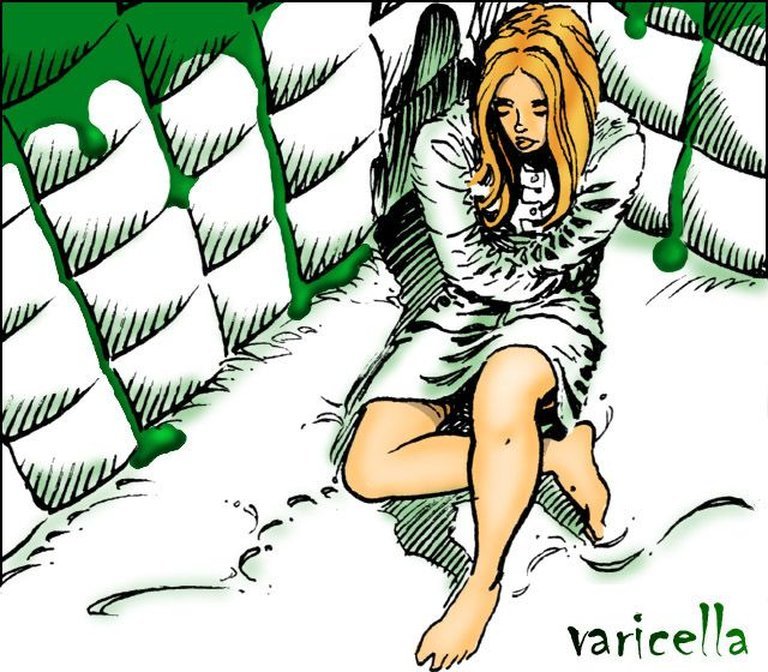
Varicella is a 1999 interactive fiction game set in an alternate history blending Renaissance court politics with modern elements. You play as Primo Varicella, the Palace Minister of Piedmont, who must manipulate and eliminate rivals to secure the regency after the king’s impending death. The game is known for its intricate storytelling, Machiavellian themes, and a mix of historical and contemporary tones, earning critical acclaim and multiple XYZZY Awards.
Varicella Free Download
PC
Varicella Guides & Walkthroughs
Varicella Reviews & Reception
mobygames.com (82/100): This game has won four Xyzzy Awards, including Best Game of 1999.
gamesreviews2010.com : Varicella is a challenging and rewarding strategy game that offers a unique blend of political intrigue and strategic gameplay.
ifwiki.org (80/100): Varicella is another name for chicken pox.
mobygames.com (82/100): Average score: 82% (based on 1 ratings)
Varicella: A Masterclass in Interactive Fiction and Machiavellian Intrigue
Introduction: The Art of the Schemer
In the pantheon of interactive fiction, few works have left as indelible a mark as Varicella, Adam Cadre’s 1999 magnum opus. A game that seamlessly blends Renaissance court politics with modern sensibilities, Varicella is not just a text adventure—it is a psychological chess match, a darkly comedic exploration of power, and a masterclass in narrative design. Released at the tail end of the 20th century, it arrived at a time when interactive fiction (IF) was often dismissed as a relic of the past, yet it defied expectations by offering a complexity and depth that rivaled even the most ambitious graphical adventures of its era.
At its core, Varicella is a game about ambition, manipulation, and the lengths to which one will go to seize power. You play as Primo Varicella, the Palace Minister of Piedmont, a man of refined tastes and ruthless cunning. The King is dead, and the throne is up for grabs. Your goal? Eliminate your rivals—each a grotesque caricature of corruption and vice—and secure the regency for the five-year-old Prince Charles. The catch? You have only a few hours before the War Minister, Klaus Wehrkeit, returns to the palace and likely murders you in cold blood.
What follows is a labyrinthine dance of deception, where every conversation, every object, and every seemingly innocuous detail can be leveraged to your advantage—or your downfall. Varicella is not a game that holds your hand. It is a game that demands patience, ingenuity, and a willingness to embrace the morally ambiguous. It is, in the words of its creator, “a world,” one that rewards exploration, experimentation, and a keen understanding of its characters’ motivations.
This review will dissect Varicella in exhaustive detail, examining its development, narrative depth, gameplay mechanics, and lasting legacy. We will explore why it remains a touchstone for IF enthusiasts and a benchmark for storytelling in games. Whether you are a seasoned veteran of text adventures or a curious newcomer, Varicella offers a experience that is as challenging as it is rewarding, as darkly humorous as it is disturbing.
Development History & Context: The Birth of a Classic
The Creator: Adam Cadre’s Vision
Adam Cadre is a name synonymous with innovation in interactive fiction. By the late 1990s, he had already established himself as a formidable talent with works like Photopia (1998), a critically acclaimed short story in game form. However, Varicella represented a significant departure from his earlier work. Where Photopia was introspective and emotionally resonant, Varicella was sprawling, cynical, and unapologetically complex.
In a 2002 interview with Avventure Testuali, Cadre reflected on Varicella as the pinnacle of his creative output up to that point:
“Photopia has made more of a mark, I suppose, but Photopia is a short story; Varicella is a world. There are so many things to see and do… it’s definitely the game of mine that I’m hoping that future pieces I might create will most resemble, in structure if not in content.”
This sentiment underscores Cadre’s ambition with Varicella. He sought to craft not just a game, but an immersive, reactive world where player agency was paramount. The game’s design philosophy was rooted in the idea of emergent storytelling—where the player’s choices and failures would shape the narrative in unexpected ways.
Technological Constraints and the Z-Machine
Varicella was built using Inform 6, a programming language designed specifically for creating interactive fiction. The game was distributed in Z-code format, a bytecode language originally developed by Infocom for their text adventures in the 1980s. By 1999, the Z-machine was something of an anachronism, a relic of a bygone era in gaming. Yet, Cadre’s decision to use it was not merely nostalgic; it was pragmatic.
The Z-machine’s limitations—particularly its lack of graphics and sound—forced Cadre to rely entirely on the strength of his writing and the depth of his systems. Every interaction, every puzzle, and every character had to be conveyed through text alone. This constraint, rather than hindering the game, became one of its greatest strengths. Varicella is a testament to the power of prose, proving that immersive worlds can be built with words alone.
The Gaming Landscape of 1999
The late 1990s were a transitional period for video games. The industry was increasingly dominated by 3D graphics, with titles like Half-Life (1998) and Unreal (1998) pushing the boundaries of visual fidelity. Text-based adventures, once a staple of the medium, had largely fallen out of favor with mainstream audiences. The commercial viability of IF was negligible, and most works in the genre were labors of love, distributed as freeware by passionate creators.
Yet, within this niche, a vibrant community thrived. The Interactive Fiction Competition (IF Comp), founded in 1995, provided a platform for authors to showcase their work, and online forums like rec.arts.int-fiction fostered lively discussions about the craft. Varicella emerged from this ecosystem, a game that was both a product of its time and a defiant rejection of its constraints.
The XYZZY Awards and Critical Acclaim
Upon its release, Varicella was met with widespread acclaim within the IF community. It won four XYZZY Awards in 1999, including Best Game, Best Individual NPC (Miss Sierra), Best Individual PC (Primo Varicella), and Best NPCs. It was also nominated for Best Puzzles, Best Story, Best Use of Medium, and Best Writing. These accolades were not merely ceremonial; they reflected the game’s profound impact on its audience.
Academics, too, took notice. Nick Montfort and Stuart Moulthrop’s 2003 paper, “Face It, Tiger, You Just Hit the Jackpot: Reading and Playing Cadre’s Varicella,” analyzed the game’s narrative structure and its subversion of traditional IF conventions. Dr. Wendy Morgan’s “Touching (on) Character: New Engagements in New Media Narratives” explored the game’s use of character interaction and player agency. These scholarly examinations underscored Varicella’s significance as not just a game, but a work of interactive art.
Narrative & Thematic Deep Dive: Power, Corruption, and the Art of the Scheme
The Premise: A Palace of Vipers
Varicella is set in the Palazzo del Piemonte, a Renaissance-style palace in the fictional kingdom of Piedmont. The game’s world is an alternate history where modern technology coexists with feudal politics—a deliberate anachronism that serves to heighten the absurdity and brutality of its characters. The King of Piedmont has died, and his five-year-old son, Prince Charles, is set to inherit the throne. However, the true prize is the regency, a position that will grant its holder effectively unlimited power.
You play as Primo Varicella, the Palace Minister, a man whose title belies his true influence. On the surface, Varicella is little more than a glorified butler, overseeing banquets and managing servants. But beneath this veneer of civility lies a Machiavellian schemer, a man who sees the King’s death not as a tragedy, but as an opportunity.
The game’s opening moments are telling. Varicella is in the midst of a manicure, a seemingly mundane activity that underscores his vanity and meticulousness. The letter from the Queen arrives, confirming the King’s death, and Varicella’s true mission begins. The palace is a viper’s nest, and your rivals are each more despicable than the last:
- Klaus Wehrkeit, the War Minister, is a bloodthirsty general who has been fighting the Venetians. He is the most immediate threat, as he will return to the palace and kill Varicella if the player does not act swiftly.
- Pierre Bonfleche, the Christ Minister, is a pedophilic priest who has been molesting Prince Charles. His piety is a facade for his depravity.
- Variola Modo, the Interior Minister, is a mad scientist experimenting with biological weapons in the palace’s underground lab. Her name, a reference to smallpox, hints at her lethal ambitions.
- Argento Rico, the Coffers Minister, is a corrupt financier who uses his wealth to manipulate others. His name, translating to “Money Rich,” is a blunt indication of his priorities.
- Prince Louis, an alcoholic and idle nobleman, is initially dismissed as a non-threat, but his laziness belies a capacity for cruelty.
Each of these characters is a grotesque exaggeration of their respective archetypes, yet they are grounded in a disturbing realism. Their dialogues, motivations, and actions are meticulously crafted, making them feel like living, breathing entities rather than mere obstacles.
Themes: Power, Corruption, and Moral Ambiguity
Varicella is, at its heart, a meditation on power and the lengths to which people will go to obtain it. The game’s world is one where morality is a luxury, and survival depends on one’s willingness to embrace ruthlessness. Varicella himself is an antihero, a man whose ambition is tempered only by his distaste for the even more reprehensible actions of his rivals.
The game’s themes are reinforced by its setting. Piedmont is a kingdom in decline, a laughingstock within the Carolingian League. The palace is a microcosm of this decay, a gilded cage where intrigue and betrayal are the currency of the realm. The contrast between the palace’s opulence and the moral rot of its inhabitants is deliberate, serving to highlight the hypocrisy of those who wield power.
One of the most striking aspects of Varicella is its treatment of sexual violence. Several characters—Bonfleche, Prince Louis, and Argento Rico—are revealed to be sexual predators. Queen Sarah, Princess Charlotte, and Prince Charles are all victims of abuse. This is not mere shock value; it is a commentary on the systemic corruption that permeates the palace. The game forces the player to confront these horrors, not as mere plot points, but as integral components of its world.
The Narrative Structure: A Web of Deception
Varicella’s narrative is non-linear, with multiple paths to victory (and failure). The game operates on a strict time limit—Wehrkeit’s return to the palace—adding a sense of urgency to the player’s actions. This time pressure is not merely a gameplay mechanic; it is a narrative device that reinforces the precariousness of Varicella’s position.
The game’s storytelling is accretive, meaning that the player’s understanding of the world and its characters deepens with each playthrough. Early attempts will likely end in failure, as the player struggles to grasp the complexities of the palace’s politics. However, each death provides new insights, new clues, and new opportunities to refine one’s strategy.
This structure is reminiscent of classic IF games like Deadline (1982) and The Witness (1983), where the player must piece together a mystery through exploration and experimentation. However, Varicella distinguishes itself through its emphasis on character interaction. The game’s conversation system is robust, allowing the player to engage with NPCs in a variety of tones—cordial, servile, or hostile. Each approach yields different information, and the player must carefully consider their words to avoid arousing suspicion.
The Endings: Victory and Its Consequences
Varicella offers multiple endings, each reflecting the player’s choices and the fate of the palace’s inhabitants. The “best” ending—where Varicella successfully eliminates his rivals and secures the regency—is a Pyrrhic victory. Prince Charles, traumatized by the events of the game, grows up to become a tyrannical conqueror, plunging Europe into war. Varicella himself is tortured to death on live television, a grim reminder that power is fleeting and justice is arbitrary.
This ending is a masterstroke of narrative subversion. It undermines the player’s expectations, forcing them to confront the consequences of their actions. Varicella’s victory is not a triumph; it is a tragedy, one that underscores the game’s central theme: in a world of vipers, even the cunningest schemer is doomed.
Other endings are equally bleak. If Wehrkeit succeeds in his coup, he murders Varicella and likely Prince Charles, installing himself as a military dictator. If Bonfleche’s invasion succeeds, Piedmont is overrun by foreign forces. If Prince Louis becomes regent, the kingdom collapses into chaos. There are no happy endings in Varicella, only varying degrees of failure.
Gameplay Mechanics & Systems: The Art of the Scheme
The Core Gameplay Loop: Exploration and Manipulation
Varicella is a puzzle game at its core, but its puzzles are not the traditional “find key, unlock door” variety. Instead, they are social and logistical, requiring the player to manipulate characters, gather information, and exploit weaknesses. The game’s world is a web of interconnected systems, where every action has the potential to ripple outward in unexpected ways.
The player’s primary tools are conversation and inventory management. Varicella begins the game with a master key, allowing access to most areas of the palace, and a letter from the Queen, which can be used to leverage authority. From there, the player must explore the palace, interact with NPCs, and gather items that can be used to eliminate rivals.
The Conversation System: Words as Weapons
One of Varicella’s most innovative features is its conversation system. The game employs an “ask-tell” model, where the player can query NPCs about specific topics or share information with them. The tone of these interactions—cordial, servile, or hostile—affects the NPC’s responses. For example, speaking to Miss Sierra, the palace’s informant, in a servile tone may yield more information than a hostile one.
This system is not merely a mechanical convenience; it is a narrative device that reinforces the game’s themes of manipulation and deception. The player must carefully choose their words, balancing the need for information with the risk of arousing suspicion. A misplaced comment can lead to disaster, as NPCs may turn against Varicella or alert his rivals.
The Timed Mission: Urgency and Strategy
Varicella operates on a strict time limit. The game begins at 10:00 AM, and Wehrkeit returns to the palace at 3:00 PM. The player has five in-game hours to eliminate their rivals and secure the regency. This time pressure is not merely a gameplay mechanic; it is a narrative device that heightens the tension and forces the player to prioritize their actions.
The passage of time is tracked through a series of events. For example, the Queen will hold a funeral for the King at 1:00 PM, and the player must decide whether to attend or use the time to further their schemes. The game’s pacing is deliberate, with each hour bringing new opportunities and threats.
The Puzzle Design: Complexity and Replayability
Varicella’s puzzles are among the most complex in interactive fiction. They require the player to think several steps ahead, anticipating the consequences of their actions. For example, eliminating Bonfleche may require the player to gather evidence of his crimes, convince Miss Sierra to kill him, or trick him into a fatal confrontation with another NPC.
The game’s puzzles are also highly interconnected. Solving one puzzle may create new opportunities or close off others. For example, killing Rico early in the game may prevent the player from using his wealth to bribe other characters. This interdependence encourages experimentation and replayability, as the player must adapt their strategy based on their choices.
The User Interface: Minimalism and Clarity
Varicella’s UI is a model of minimalism. The game is played entirely through text, with the player entering commands via a parser. The lack of graphics or sound is not a limitation; it is a deliberate choice that forces the player to engage with the game’s prose.
The parser is robust, allowing for a wide range of commands. However, it is not forgiving. The player must be precise in their inputs, and the game offers little in the way of hints or guidance. This lack of hand-holding is a double-edged sword. On one hand, it reinforces the game’s themes of self-reliance and cunning. On the other, it can be frustrating for players who are accustomed to more modern, user-friendly interfaces.
The “Happy Fun Room” and Meta-Narrative
One of Varicella’s most intriguing features is its meta-narrative ending. By typing “wake up,” the player can trigger an alternate ending where the events of the game are revealed to be a dream of a female university student named Charlotte. This ending is a playful subversion of the game’s dark themes, offering a moment of levity amidst the brutality.
However, the “Happy Fun Room” ending is more than just a joke. It is a commentary on the nature of interactive fiction itself. By breaking the fourth wall, Varicella invites the player to reflect on their role as both participant and observer. It is a reminder that, in the end, the game is a construct, a world of words and ideas that exists only in the player’s imagination.
World-Building, Art & Sound: The Power of Prose
The Setting: A Palace of Decay
Varicella’s world is a masterclass in atmospheric writing. The Palazzo del Piemonte is a character in its own right, a labyrinthine structure filled with opulent salons, dank dungeons, and hidden passageways. The palace’s layout is meticulously described, with each room offering clues to its inhabitants’ personalities and motivations.
The game’s alternate history setting—where Renaissance politics coexist with modern technology—is a deliberate anachronism. Characters speak in contemporary language, yet they inhabit a world of courtly intrigue and feudal power structures. This contrast serves to heighten the absurdity of the palace’s corruption, making it feel both timeless and eerily familiar.
The Characters: Grotesques and Villains
Varicella’s cast is a rogues’ gallery of grotesques, each more despicable than the last. From the pedophilic Bonfleche to the bloodthirsty Wehrkeit, the game’s antagonists are not merely obstacles; they are embodiments of the palace’s moral decay.
Yet, even in their depravity, these characters are compelling. Their dialogues are sharp, their motivations are clear, and their actions are consistent with their personalities. This depth makes them feel like real people, albeit monstrous ones. The player’s interactions with them are not just mechanical; they are emotionally charged, forcing the player to confront the consequences of their schemes.
The Sound of Silence: The Power of Text
Varicella is a game without sound or graphics, yet it is richly atmospheric. The absence of these elements is not a limitation; it is a strength. By relying entirely on text, the game forces the player to engage with its prose, to imagine the sights and sounds of the palace for themselves.
This approach is reminiscent of classic literature, where the reader’s imagination fills in the gaps left by the author. In Varicella, the player is not just a participant; they are a co-creator, shaping the world through their interpretations and actions. This collaborative storytelling is one of the game’s greatest achievements.
Reception & Legacy: A Landmark in Interactive Fiction
Critical Reception: A Masterpiece of IF
Upon its release, Varicella was met with widespread acclaim within the interactive fiction community. It won four XYZZY Awards in 1999, including Best Game, Best Individual NPC, Best Individual PC, and Best NPCs. These accolades were not merely ceremonial; they reflected the game’s profound impact on its audience.
Critics praised Varicella for its depth, complexity, and narrative ambition. The Society for the Promotion of Adventure Games (SPAG) awarded it an 82% score, calling it “one of the best pieces of IF ever to be produced.” The game’s reception was a testament to its quality, proving that interactive fiction could still innovate and captivate in an era dominated by graphical games.
Academic Recognition: A Work of Interactive Art
Varicella’s significance extends beyond the gaming community. Academics have analyzed the game as a work of interactive art, exploring its narrative structure, character dynamics, and thematic depth. Nick Montfort and Stuart Moulthrop’s 2003 paper, “Face It, Tiger, You Just Hit the Jackpot: Reading and Playing Cadre’s Varicella,” examined the game’s subversion of traditional IF conventions. Dr. Wendy Morgan’s “Touching (on) Character: New Engagements in New Media Narratives” explored the game’s use of player agency and character interaction.
These scholarly examinations underscored Varicella’s importance as a cultural artifact. The game was not just a diversion; it was a medium for storytelling, a tool for exploring complex themes and ideas.
Influence on Subsequent Games
Varicella’s influence can be seen in a variety of subsequent interactive fiction works. Its emphasis on character interaction, emergent storytelling, and moral ambiguity has inspired countless authors. Games like The King of Shreds and Patches (2008) and The Warbler’s Nest (2013) owe a debt to Varicella’s narrative ambition and mechanical depth.
Beyond IF, Varicella’s themes and structure have resonated with designers in other genres. Its focus on political intrigue and player agency can be seen in games like Crusader Kings (2004) and Disco Elysium (2019). While these games differ in scope and presentation, they share Varicella’s commitment to complex, reactive storytelling.
The Game’s Enduring Appeal
More than two decades after its release, Varicella remains a touchstone for interactive fiction enthusiasts. Its reputation has only grown with time, as new players discover its depths and veterans revisit its challenges. The game’s availability as freeware, playable in modern Z-machine interpreters, has ensured its accessibility to a new generation of players.
Varicella’s enduring appeal lies in its timeless themes and its uncompromising design. It is a game that rewards patience, ingenuity, and a willingness to embrace the morally ambiguous. It is, in the words of its creator, “a world,” one that continues to captivate and challenge players to this day.
Conclusion: A Masterpiece of Interactive Fiction
Varicella is more than a game; it is a work of art. Adam Cadre’s magnum opus is a testament to the power of interactive fiction, a medium that can rival the depth and complexity of any graphical adventure. Through its intricate narrative, compelling characters, and uncompromising gameplay, Varicella offers an experience that is as challenging as it is rewarding.
The game’s legacy is secure. It is a landmark in interactive fiction, a touchstone for authors and players alike. Its themes of power, corruption, and moral ambiguity are timeless, resonating with audiences across generations. Its mechanics, though demanding, are a masterclass in emergent storytelling, offering a level of player agency that few games can match.
For those willing to embrace its challenges, Varicella is an unforgettable journey into the heart of darkness. It is a game that demands to be played, studied, and revisited. It is, in every sense of the word, a classic.
Final Verdict: 10/10 – A Masterpiece
Varicella is not just one of the greatest interactive fiction games ever made; it is one of the greatest games, period. Its influence can be felt across the medium, and its reputation has only grown with time. For fans of narrative-driven experiences, it is essential playing. For aspiring game designers, it is a masterclass in storytelling and mechanics. And for anyone who has ever dreamed of outwitting their enemies in a palace of intrigue, it is the ultimate fantasy.
Play it. Study it. And above all, enjoy the dance of deception.