
- Release Year: 2008
- Platforms: Macintosh, Windows
- Publisher: Big Fish Games, Inc
- Developer: Dragon Altar Games
- Genre: Adventure
- Perspective: 1st-person
- Game Mode: Single-player
- Gameplay: Hidden object, Puzzle elements
- Average Score: 80/100
Description
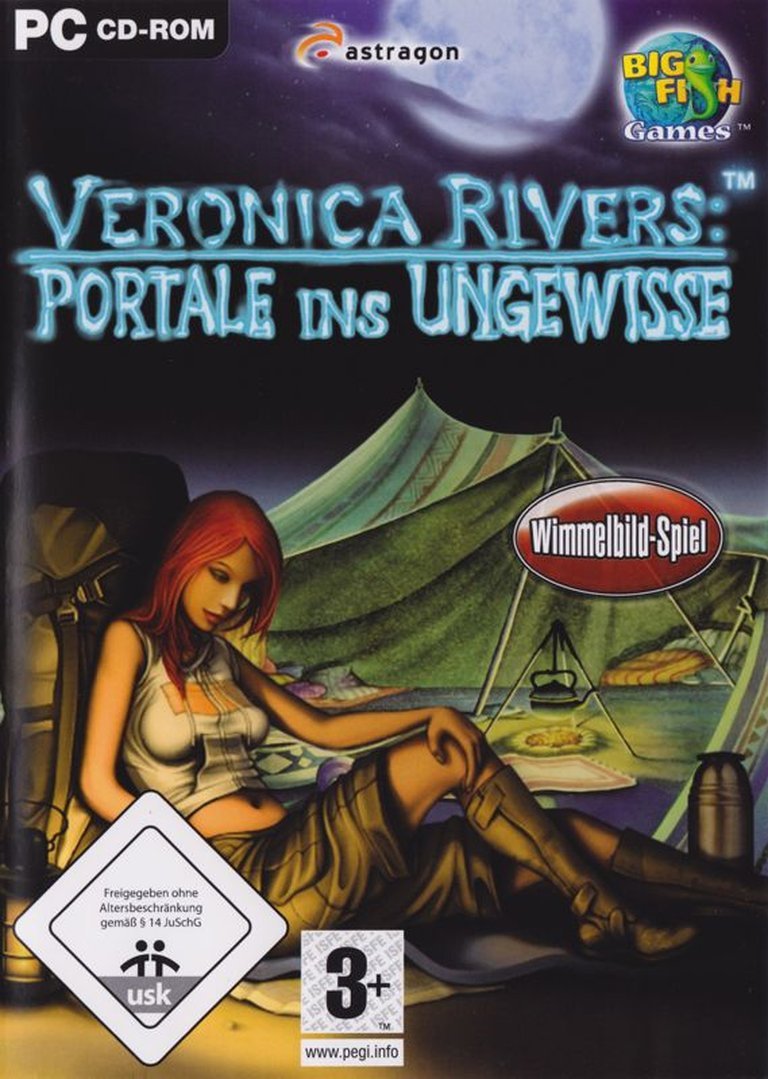
Veronica Rivers: Portals to the Unknown is a hidden object adventure game where players take on the role of Veronica Rivers, a rescue pilot who receives a distress call from geologists in Alaska. Upon arriving at their camp, she discovers a magical portal inside a cave that transports her to various locations around the world. The game features a mix of hidden object challenges, where players must find items from a list or photograph specific parts of the screen, and puzzle-solving elements that include logic games and equipment repairs. With unlimited hints and a compelling storyline, the game offers an engaging experience for fans of casual adventure games.
Gameplay Videos
Veronica Rivers: Portals to the Unknown Guides & Walkthroughs
Veronica Rivers: Portals to the Unknown Reviews & Reception
gamezebo.com (80/100): Veronica Rivers: Portals to the Unknown might not offer anything outrageously different than other hidden object games but it certainly deserves top marks for doing everything extremely well.
mobygames.com (80/100): Veronica Rivers: Portals to the Unknown is a hidden object game, where the player has to find all the required items from a list on locations filled with assorted objects.
judsgamereviews.wordpress.com : It’s just poorly executed visually in the area that is the whole point of the game – Hidden Objects!
retro-replay.com : Veronica Rivers: Portals to the Unknown invites you to immerse yourself in a richly detailed hidden object experience.
Veronica Rivers: Portals to the Unknown – A Hidden Object Adventure That Transcends Its Genre
Introduction: A Portal to Adventure
In the late 2000s, the hidden object genre was flooded with titles that often prioritized quantity over quality. Amid this crowded landscape, Veronica Rivers: Portals to the Unknown (2008) emerged as a standout, blending meticulous world-building, inventive mechanics, and a compelling narrative into a cohesive experience. Developed by Dragon Altar Games and published by Big Fish Games, this first-person adventure transcends the limitations of its genre, offering players a globe-trotting mystery that feels both intimate and epic. While it may not have redefined the hidden object formula, it perfected it, delivering an experience that remains a benchmark for storytelling and design in casual gaming.
Development History & Context: The Rise of Hidden Object Games
The late 2000s marked a golden age for casual gaming, particularly in the hidden object (HO) and puzzle-adventure genres. Publishers like Big Fish Games capitalized on the growing demand for accessible, downloadable titles that appealed to a broader audience beyond traditional gamers. Veronica Rivers: Portals to the Unknown was born from this era, where innovation often meant refining existing mechanics rather than reinventing them.
Dragon Altar Games, a relatively obscure studio, crafted Veronica Rivers with a clear vision: to elevate the hidden object genre by integrating a strong narrative and varied gameplay mechanics. The studio’s approach was ambitious for its time, focusing on atmospheric storytelling and player agency—elements that were often secondary in HO games. The game’s development was constrained by the technological limitations of the era, particularly in terms of graphical fidelity and interactivity. Yet, these constraints fostered creativity, leading to unique solutions like the silhouette-based object lists and the camera viewfinder mechanic.
The gaming landscape in 2008 was dominated by titles like Mystery Case Files and Dream Chronicles, which set the standard for hidden object adventures. Veronica Rivers distinguished itself by weaving its gameplay into a cohesive narrative framework, rather than treating the story as an afterthought. This focus on immersion and player engagement would later influence titles like The Hidden Mystery Collectives and other compilation series that sought to blend storytelling with puzzle-solving.
Narrative & Thematic Deep Dive: A Journey Through the Unknown
Plot Overview
Veronica Rivers: Portals to the Unknown begins with a deceptively simple premise: Veronica Rivers, a rescue pilot stationed in the Arctic, receives a distress call from a team of geologists stranded in Alaska. What starts as a routine mission quickly spirals into a supernatural mystery when Veronica discovers a hidden cave containing a magical portal. This portal transports her to various locations across the globe, each teeming with secrets and challenges.
The narrative unfolds through a series of interconnected chapters, each tied to a different portal. The geologists’ disappearance serves as the initial catalyst, but the story soon expands to include themes of ancient civilizations, forgotten technologies, and the blurred line between science and mythology. Veronica’s journey is as much about self-discovery as it is about solving the mystery, with her internal monologues revealing a character yearning for adventure beyond her mundane rescue missions.
Themes and Motifs
-
Exploration and Discovery: The game’s central theme revolves around the thrill of exploration. Each portal represents a new world to uncover, reinforcing the idea that the unknown is both terrifying and exhilarating. The geologists’ research into prehistoric civilizations mirrors Veronica’s own journey, suggesting that knowledge and adventure are intertwined.
-
The Intersection of Science and Magic: The portals themselves are a fascinating blend of scientific curiosity and magical wonder. They are presented as ancient artifacts with unexplained powers, challenging the player to suspend disbelief while grounding the narrative in a semi-plausible framework. This duality is reflected in the game’s puzzles, which often require logical problem-solving to unlock supernatural gateways.
-
Isolation and Resilience: Veronica’s role as a lone rescue pilot in the Arctic underscores themes of isolation and self-reliance. Her journey through the portals amplifies this, as she navigates unfamiliar territories with only her wits and tools to guide her. The game subtly reinforces the idea that resilience is key to overcoming the unknown.
Characterization and Dialogue
Veronica Rivers is a refreshing protagonist in a genre often dominated by anonymous avatars. Her character is defined by her resourcefulness, curiosity, and dry wit, which shines through in her commentary and reactions to the environments. While the dialogue is minimal, it is impactful, with Veronica’s internal thoughts providing context and motivation for the player’s actions.
The geologists, though secondary characters, serve as a narrative device to drive the plot forward. Their notes and recordings, scattered throughout the game, offer clues and backstory, deepening the mystery. The lack of extensive character interaction is a minor drawback, but it aligns with the game’s focus on exploration and puzzle-solving over traditional storytelling.
Gameplay Mechanics & Systems: Refining the Hidden Object Formula
Core Gameplay Loop
At its heart, Veronica Rivers is a hidden object game, but it distinguishes itself through its varied and inventive mechanics. The core gameplay loop involves:
1. Finding Objects: Players scour detailed scenes for items listed on their PDA. These lists are presented in multiple formats, including text descriptions, silhouettes, and black-and-white photographs that must be “captured” using a camera viewfinder.
2. Solving Puzzles: Between chapters, players encounter logic-based mini-games, such as unscrambling gems, repairing equipment, or aligning GPS signals. These puzzles serve as narrative gates, unlocking new portals and advancing the story.
3. Exploring Portals: Each portal transports Veronica to a new location, from jungles to ancient ruins, each with its own set of challenges and hidden objects.
Innovative Mechanics
-
Silhouette and Photographic Lists: One of the game’s standout features is its use of silhouettes and photographs to guide object searches. Instead of relying solely on text descriptions, players must match shapes or align their viewfinder to capture specific scenes. This mechanic adds a layer of complexity and immersion, forcing players to engage more deeply with the environments.
-
PDA Tools: Veronica’s PDA is equipped with multiple tools, including a camera, evidence scanner, and spatial scanner. These tools are used to interact with the environment in different ways:
- Camera: Players must take photographs of specific locations to progress.
- Evidence Scanner: Highlights hidden evidence in scenes, adding a detective-like element to the gameplay.
- Spatial Scanner: Reveals secret tablets and symbols, often tied to puzzle-solving.
-
Unlimited Hints: The game features an unlimited hint system, though players must wait for the hint meter to recharge. Hints are context-sensitive, highlighting objects or providing clues based on the current task. This system ensures that players are never permanently stuck, maintaining a smooth and enjoyable experience.
-
Mini-Games and Puzzles: The mini-games in Veronica Rivers are simple but effective, offering a break from the hidden object searches. These include:
- Stone Puzzles: Players must arrange colored stones to match symbols or patterns.
- GPS Connector: A wire-based puzzle where players untangle satellite connections.
- Tracing Shapes: Players trace symbols onto the PDA screen, testing their precision and attention to detail.
User Interface and Controls
The game’s UI is streamlined and intuitive, with a clearly labeled hint button and descriptive text for each object. The mouse-driven controls are responsive, allowing players to click, drag, and zoom with ease. The PDA interface is particularly well-designed, offering quick access to tools and inventory without disrupting the flow of gameplay.
Replayability
Veronica Rivers includes a replay feature that allows players to revisit completed portals and scenes. Each replay offers a new set of objects to find, adding to the game’s longevity. This feature, combined with the varied mechanics and engaging narrative, ensures that the game remains fresh even after multiple playthroughs.
World-Building, Art & Sound: Crafting an Immersive Experience
Setting and Atmosphere
The game’s world-building is one of its strongest assets. From the icy landscapes of Alaska to the lush jungles of Laos, each location is richly detailed and atmospheric. The portals serve as gateways to diverse environments, each with its own visual and thematic identity. The cave containing the initial portal is particularly striking, with its ethereal glow and ancient runes creating a sense of wonder and mystery.
The game’s environments are not just backdrops but active participants in the narrative. The subtle animations, such as swaying boats or flickering torches, add depth and realism to the scenes. The attention to detail extends to the objects themselves, which are rendered with enough clarity to distinguish them from the background clutter—a crucial element in a hidden object game.
Visual Design
Visually, Veronica Rivers is a treat for fans of detailed and immersive scenes. The art style is realistic yet stylized, with a focus on crisp textures and vibrant colors. The Alaskan landscapes are rendered in cool blues and whites, evoking the chill of the Arctic, while the jungle scenes burst with lush greens and earthy tones. The portals themselves are visually stunning, with swirling lights and intricate designs that hint at their magical nature.
Character designs are equally impressive. Veronica is depicted with expressive features and a practical, pilot-appropriate wardrobe. Her animations, though minimal, convey her determination and curiosity, adding a layer of personality to the gameplay.
Sound Design and Music
The game’s sound design complements its visuals, creating an immersive auditory experience. The ambient sounds—howling winds, distant wildlife, and the hum of ancient machinery—enhance the atmosphere and draw players deeper into the world. The musical score is understated but effective, with melodic themes that underscore the sense of adventure and mystery.
Voice acting is minimal, with Veronica’s internal monologues providing the bulk of the narrative context. While the lack of extensive voice work is noticeable, it aligns with the game’s focus on exploration and puzzle-solving over traditional storytelling.
Reception & Legacy: A Hidden Gem in the Casual Gaming Landscape
Critical Reception
Upon its release in 2008, Veronica Rivers: Portals to the Unknown received positive reviews from critics, who praised its innovative mechanics, engaging narrative, and polished presentation. GameZebo awarded it an 80%, highlighting its strong storytelling and varied gameplay. Adventurespiele similarly commended its atmospheric graphics and accessible puzzles, though some critics noted that the puzzles were perhaps too simple for experienced players.
Jud’s PC Game Reviews offered a more critical perspective, praising the game’s concept and visuals but criticizing the clarity of the hidden object scenes and the effectiveness of the hint system. Despite these drawbacks, the review acknowledged the game’s potential and its appeal to fans of the genre.
Commercial Performance
As a shareware title distributed primarily through digital platforms like Big Fish Games, Veronica Rivers enjoyed moderate commercial success. Its appeal to casual gamers and hidden object enthusiasts ensured a steady stream of downloads, though it did not achieve the same level of mainstream recognition as franchises like Mystery Case Files.
Legacy and Influence
Veronica Rivers: Portals to the Unknown may not have redefined the hidden object genre, but it set a high standard for storytelling and gameplay innovation within it. Its success paved the way for a sequel, Veronica Rivers: The Order of Conspiracy (2010), which expanded on the original’s mechanics and narrative. The game’s influence can also be seen in later titles that sought to blend hidden object gameplay with stronger narrative elements, such as The Hidden Mystery Collectives series.
The game’s legacy is perhaps best summed up by its enduring appeal to fans of the genre. Its combination of engaging storytelling, inventive mechanics, and immersive world-building ensures that it remains a benchmark for hidden object adventures.
Conclusion: A Timeless Adventure
Veronica Rivers: Portals to the Unknown is a testament to the power of refined gameplay and strong storytelling in the hidden object genre. While it may not have broken new ground, it perfected the formula, delivering an experience that is both accessible and deeply engaging. Its innovative mechanics, such as the silhouette and photographic object lists, set it apart from its peers, while its richly detailed worlds and compelling narrative provide a sense of adventure that transcends the limitations of its genre.
For fans of hidden object games, Veronica Rivers is a must-play—a hidden gem that offers a perfect blend of challenge, exploration, and discovery. For the broader gaming community, it serves as a reminder that even within the most formulaic genres, there is room for creativity and innovation. In the annals of casual gaming, Veronica Rivers: Portals to the Unknown stands as a shining example of what the hidden object genre can achieve when storytelling and gameplay are given equal weight.
Final Verdict: 8.5/10 – A masterclass in hidden object design, blending innovation, storytelling, and immersive world-building into a timeless adventure.