
- Release Year: 2009
- Platforms: Windows
- Publisher: Russobit-M
- Genre: Compilation
- Game Mode: Single-player
- Average Score: 62/100
Description
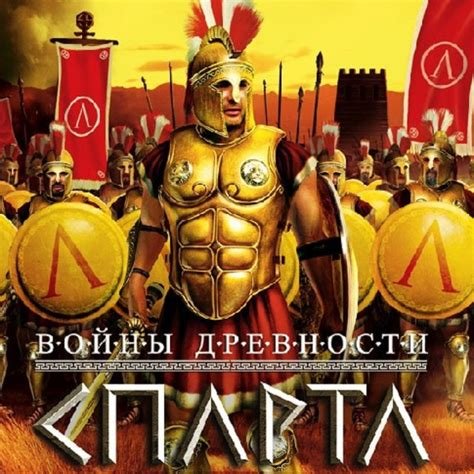
‘Vojny drevnosti: Sparta – Gold’ is a compilation that includes two real-time strategy games: ‘Ancient Wars: Sparta’ and ‘Great War Nations: The Spartans’. Set in the Eastern Mediterranean during the 5th century BC, the games focus on the conflicts between the Egyptians, Persians, and Spartans, featuring historical battles like Thermopylae and Plataea. Players engage in economic management, army building, and tactical combat across three distinct campaigns, each offering a unique perspective on the era’s wars.
Vojny drevnosti: Sparta – Gold Cracks & Fixes
Vojny drevnosti: Sparta – Gold Reviews & Reception
stopgame.ru (70/100): Знала ли горстка героев под предводительством царя Леонида, что их бесстрашный подвиг под Фермопилами останется в веках, став символом храбрости и воинского долга?
vgtimes.com (55/100): An isometric strategy game with elements of a historical game from the World Forge studio.
Vojny drevnosti: Sparta – Gold Cheats & Codes
PC
Edit the ‘local.ini’ file to add the following lines: g_cheats 1, gui_enable_menu_shortcuts 1, d_console 1. Then press [~] to open the console and enter the codes.
| Code | Effect |
|---|---|
| ch_fast_produce 1 | Fast production of units (not buildings). |
| ch_starvation_disable 1 | Disables starvation. |
| ch_add_item_to_curr_player | Gives the player a specified item (e.g., weapon). If no item is specified, all existing items are added. |
| ch_all_missions_available 1 | Unlocks all missions. |
| giveme_all | Gives the player food, wood, and gold. |
| giveme_food | Gives the player food. |
| giveme_wood | Gives the player wood. |
| giveme_gold | Gives the player gold. |
| r_fog_of_war 0 | Removes fog of war. |
PC (Definitive Edition)
Enter these cheat codes in the chat form by pressing ENTER.
| Code | Effect |
|---|---|
| ilovecheats | Enables cheats. |
| infinites | Infinite resources. |
| fastbattle | Instant production and research. |
| inmortals | Units and buildings become immortal. |
| mightheroes | All heroes get maximum level. |
| removeflags | Removes fog of war. |
| massacre | Killed units do not disappear. |
| richness | Adds 50K of all resources. |
| addflags | Restores fog of war. |
| slowbattle | Removes instant unit and building production. |
| unmortals | Removes immortality from units and buildings. |
| peace | Killed units disappear again. |
| makesfly | All units on the map are blown up due to an explosion. |
Vojny drevnosti: Sparta – Gold: A Comprehensive Retrospective
Introduction
Vojny drevnosti: Sparta – Gold (2009) is a compilation that bundles Ancient Wars: Sparta (2006) and Great War Nations: The Spartans (2007), offering a fascinating glimpse into the ambitions and limitations of mid-2000s real-time strategy (RTS) games. Developed by the Russian studio World Forge and published by Russobit-M, this collection represents a bold attempt to blend historical authenticity with RTS mechanics, albeit with mixed results. While the games within this compilation are not without their flaws, they remain a noteworthy artifact of their era, reflecting both the creative aspirations of their developers and the technological constraints of the time.
This review will dissect Vojny drevnosti: Sparta – Gold in exhaustive detail, exploring its development history, narrative depth, gameplay mechanics, artistic direction, and lasting legacy. By examining the game through multiple lenses—historical, technical, and cultural—we can better understand its place in the evolution of the RTS genre.
Development History & Context
The Birth of World Forge and the Vision for Ancient Wars: Sparta
World Forge, a Russian studio based in Voronezh, emerged in the mid-2000s with Ancient Wars: Sparta as its debut title. The game was announced in February 2005 under the working title Sparta: Ancient Wars, positioned as the first entry in a planned Ancient Wars franchise. The developers envisioned a series of historically grounded RTS games that would prioritize authenticity over fantasy, a stark contrast to contemporaries like Age of Mythology or Rise of Nations.
In an interview with IGN, producer Torsten Hess and IMC’s Ingo Horn emphasized the studio’s commitment to historical accuracy:
“The name Ancient Wars has been chosen to establish a brand for potential future RTS games like Sparta, but with different historical content. It is new for the genre of RTS games that actual events and historical facts will be the base for such a game. In the past, many games were set in such scenarios, but were freer in terms of storyline, characters, and units. With Sparta, we have put much effort into research about the time, and living and dying in those days.”
This dedication to historical fidelity was reflected in the game’s setting—the Eastern Mediterranean during the Greco-Persian Wars (485–479 BC)—and its inclusion of three playable factions: the Spartans, Persians, and Egyptians. Each faction was designed with unique units, buildings, and economic models, drawing from extensive research into ancient warfare.
Technological Constraints and the Ancient Wars Engine (AWE)
Ancient Wars: Sparta was built on the proprietary Ancient Wars Engine (AWE), a DirectX 9-based engine capable of rendering large-scale battles with dynamic lighting, self-shadowing, and physics simulations. The engine’s features included:
- Vertex shading and bump mapping for detailed unit models.
- Parallax scrolling and specular highlights to enhance environmental textures.
- A custom physics system that allowed for destructible environments, realistic projectile trajectories, and unit interactions (e.g., chariots knocking soldiers aside).
While ambitious, the AWE struggled with performance issues, particularly in large battles. The engine’s demand for resources often led to frame rate drops, even on high-end hardware of the era. This technical limitation underscored the challenges faced by smaller studios attempting to compete with industry giants like Creative Assembly (Total War series) or Relic Entertainment (Company of Heroes).
The Publishing Debacle: World Forge vs. Playlogic
The development of Ancient Wars: Sparta was marred by financial disputes between World Forge and its publisher, Playlogic. According to World Forge, Playlogic failed to provide agreed-upon funding at critical milestones, leading to a breach of contract. In June 2007, World Forge terminated its agreement with Playlogic, claiming that the rights to the game had reverted to them. Playlogic countered by filing a lawsuit, and the District Court of Amsterdam ultimately ruled in Playlogic’s favor, affirming their ownership of the game’s copyright.
This legal battle had significant repercussions:
– Delayed development: The dispute disrupted the studio’s plans for sequels and expansions.
– Reputation damage: The public feud tarnished both companies’ images, particularly in the eyes of potential investors and players.
– Fragmented distribution: While Playlogic retained rights in Western markets, Russobit-M handled distribution in Russia and the CIS, leading to regional disparities in availability and support.
Despite these setbacks, World Forge continued to develop RTS games using the AWE, releasing Fate of Hellas (2007), The Golden Horde (2008), and Age of Alexander (2009). However, none of these titles achieved the commercial success or critical acclaim necessary to sustain the studio long-term.
The Gaming Landscape of the Mid-2000s
Ancient Wars: Sparta entered a crowded RTS market dominated by established franchises:
– Total War series: Medieval II: Total War (2006) set a new standard for large-scale historical battles and strategic depth.
– Command & Conquer: Tiberium Wars (2007) showcased polished gameplay and cinematic storytelling.
– Supreme Commander: Forged Alliance (2007) introduced innovative mechanics like zoomable cameras and strategic resource management.
In this competitive environment, Ancient Wars: Sparta struggled to carve out a niche. Its emphasis on historical authenticity and tactical depth was overshadowed by its technical limitations and lack of innovation in core RTS mechanics.
Narrative & Thematic Deep Dive
The Three Campaigns: A Tapestry of Historical Fiction
Ancient Wars: Sparta features three independent campaigns, each offering a fictionalized retelling of key historical events:
-
The Egyptian Campaign (485–480 BC)
- Protagonist: Inaros II, a descendant of the last native Egyptian pharaoh, Psamtik III.
- Plot: Inaros leads a rebellion against Persian rule, seeking to liberate Egypt from the oppressive satrap Megabyzus. His journey is fueled by personal tragedy—the abduction of his lover, Meritaton—and a desire to restore Egyptian sovereignty.
- Key Events: The campaign culminates in the capture of Memphis and the death of Megabyzus, though it diverges from historical accuracy by compressing events that occurred decades apart.
-
The Persian Campaign (490–479 BC)
- Protagonist: Xerxes I, the Persian king determined to conquer Greece.
- Plot: Xerxes’ rise to power is facilitated by the exiled Spartan king Demaratus, who betrays his homeland in exchange for a promise of governance. The campaign follows Xerxes’ invasions of Egypt, India, and Greece, culminating in the Battles of Thermopylae and Plataea.
- Themes: The narrative explores the consequences of unchecked ambition, as Xerxes’ obsession with conquest leads to the exhaustion of his army and his eventual downfall.
-
The Spartan Campaign (480–479 BC)
- Protagonist: Leonidas I, the legendary king of Sparta.
- Plot: Leonidas’ campaign is framed as a redemption arc. Initially a warmonger like his father, Anaxandridas, Leonidas learns the value of diplomacy and unity after surviving a betrayal by Demaratus. The campaign’s climax—the Battle of Thermopylae—is portrayed as a sacrificial stand to inspire Greek unity.
- Themes: The narrative emphasizes the Spartan ideals of discipline, sacrifice, and honor, contrasting them with the Persian empire’s tyranny.
Character Depth and Dialogue
The game’s storytelling is hampered by weak voice acting and stilted dialogue. Critics universally panned the performances, with Eurogamer’s Rob Fahey describing them as “particularly poor” and “naively delivered.” The script’s attempt to blend historical gravitas with melodrama often falls flat, undermining the emotional weight of key moments.
However, the game’s characters are not without merit:
– Inaros: His personal vendetta against Megabyzus provides a compelling emotional core, though his development is rushed.
– Leonidas: The game’s portrayal of his internal conflict—balancing aggression with diplomacy—adds depth to his character, even if the execution is uneven.
– Xerxes: His descent into tyranny is a classic tragic arc, though the game’s linear mission design limits opportunities for moral ambiguity.
Themes: Freedom, Tyranny, and the Cost of War
Ancient Wars: Sparta grapples with several timeless themes:
1. The Struggle for Freedom: The Egyptian and Spartan campaigns frame their conflicts as fights against oppression, whether from Persian satraps or internal betrayal.
2. The Corrupting Influence of Power: Xerxes’ campaign illustrates how unchecked ambition leads to self-destruction, a theme echoed in historical accounts of his reign.
3. The Sacrifice of the Few for the Many: Leonidas’ stand at Thermopylae is portrayed as a necessary sacrifice to unite Greece, reinforcing the Spartan ethos of duty over survival.
While these themes are compelling, their execution is often undermined by the game’s linear mission design and underdeveloped characters. The campaigns feel more like a series of disconnected battles than a cohesive narrative, a common pitfall in RTS games of the era.
Gameplay Mechanics & Systems
Core Gameplay Loop: Economy and Combat
Ancient Wars: Sparta adheres to the classic RTS formula of resource gathering, base building, and army management. However, it introduces several unique mechanics that distinguish it from contemporaries:
-
Resource Management
- Gold, Wood, and Food: The three primary resources are gathered through gold mines, lumber camps, and farms/hunting, respectively.
- Food as a Limiting Factor: If food reserves deplete, units gradually lose health, adding a layer of strategic pressure.
- Worker Units: Each faction has unique workers (e.g., Helots for Sparta, slaves for Persia and Egypt), who are essential for construction, resource gathering, and even combat in emergencies.
-
Unit Customization
- Modular Equipment System: Units can be outfitted with primary weapons, secondary weapons, and shields, allowing for tailored loadouts. For example, a Spartan hoplite might wield a spear and shield for defense or a sword and bow for versatility.
- Looting Enemy Gear: Workers can scavenge weapons and armor from fallen enemies, providing a cost-effective way to upgrade units without research.
-
Combat Mechanics
- Stances and Formations: Units can adopt aggressive, defensive, or passive stances, as well as line, column, or free formations. These options add tactical depth but are often underutilized due to the game’s clunky AI.
- Hero Units: Each faction has unique heroes (e.g., Leonidas for Sparta, Xerxes for Persia) who possess special abilities and serve as mission-critical units. Losing a hero often results in mission failure.
- Support Units: Factions have access to mystical or tactical support units, such as Egyptian priests who can summon panthers or Persian healers who can place healing tents.
-
War Machines and Naval Combat
- Siege Engines: Catapults, battering rams, and siege towers are available, though their effectiveness is limited by the game’s small-scale battles.
- Naval Warfare: Ships can ram, board, or bombard enemies, with the ability to capture enemy vessels. However, naval combat is relegated to a handful of missions and lacks depth.
Mission Design and AI
The game’s missions follow a linear structure, with primary and secondary objectives. While secondary objectives offer optional rewards (e.g., additional troops or resources), they rarely impact the broader narrative. The mission design suffers from several issues:
– Repetitive Objectives: Most missions boil down to “build a base, amass an army, destroy the enemy,” with little variation.
– Poor AI: Enemy AI is predictable, often resorting to zerg rushes or passive defense. Allied AI is equally lackluster, frequently ignoring strategic priorities.
– Pacing Problems: The slow rate of resource accumulation and unit production leads to tedious early-game grinds, a criticism echoed by multiple reviewers.
Multiplayer and Replayability
Ancient Wars: Sparta supports multiplayer via LAN and online (using GameSpy), with modes for up to four players. However, the multiplayer experience is hampered by:
– Balancing Issues: Faction asymmetries (e.g., Persian access to war elephants vs. Spartan reliance on hoplites) create imbalances that favor certain playstyles.
– Lack of Community Support: The game’s niche appeal and technical issues limited its multiplayer longevity.
World-Building, Art & Sound
Visual Design: A Mixed Bag
The Ancient Wars Engine (AWE) delivers a visually inconsistent experience:
– Unit Models: Characters are detailed but suffer from stiff animations and low-resolution textures. The “muscle-bound” aesthetic of soldiers feels exaggerated, bordering on caricature.
– Environmental Design: Maps are functional but lack the grandeur of historical settings. The isometric camera restricts immersion, particularly in large battles.
– Physics and Destruction: The engine’s physics system allows for destructible buildings and dynamic unit interactions (e.g., chariots knocking soldiers aside), but these features are underutilized.
Critics were divided on the game’s visuals. While some praised the engine’s technical capabilities, others dismissed the art style as dated and uninspired. Eurogamer’s Rob Fahey summed it up as “a sub-Age of Empires affair,” highlighting the game’s failure to compete with contemporaries like Medieval II: Total War.
Sound Design and Music
The game’s audio design is equally uneven:
– Voice Acting: Universally criticized for its wooden delivery and poor localization. The Russian voice acting, in particular, suffers from mispronunciations and emotional flatness.
– Sound Effects: Combat sounds are serviceable but lack impact. The clashing of swords and the thud of arrows feel muted, undermining the game’s attempts at realism.
– Music: The orchestral score is one of the game’s few bright spots, evoking the epic scale of ancient warfare. However, the soundtrack is underutilized, with repetitive loops during missions.
Reception & Legacy
Critical Reception: A Flawed Gem
Ancient Wars: Sparta received “mixed or average” reviews, with a Metacritic score of 59/100. Critics praised its historical setting and unit customization but criticized its slow pacing, poor AI, and lack of innovation. Key takeaways from reviews include:
- GameSpot (6.3/10): Jason Ocampo praised the graphics but lamented the game’s derivativeness, calling it “very generic” and “indistinguishable from the rest of the genre.”
- IGN (5.8–6/10): Reviewers criticized the voice acting and slow resource accumulation, with Dan Adams noting that combat “devolves into simply massing units and attacking.”
- Eurogamer (4/10): Rob Fahey dismissed the game as “stuck in the past,” comparing it unfavorably to Medieval II: Total War and Supreme Commander.
Commercial Performance and Long-Term Impact
The game’s commercial performance was modest, with sales primarily concentrated in Russia and Eastern Europe. The legal disputes between World Forge and Playlogic further hindered its market penetration, particularly in Western territories.
Despite its flaws, Ancient Wars: Sparta left a minor but notable legacy:
– Influence on Later Titles: The game’s unit customization and looting mechanics influenced later RTS titles, though few adopted these features wholesale.
– Cult Following: The game developed a small but dedicated fanbase, particularly in Russia, where its historical setting resonated with players.
– Definitive Edition (2022): The 2022 Definitive Edition, developed by JOTASOFT STUDIOS, attempted to modernize the game with enhanced graphics, new factions, and improved AI. While well-received by fans, it remains a niche product.
Conclusion: A Noble Failure
Vojny drevnosti: Sparta – Gold is a fascinating case study in the challenges of developing historically grounded RTS games. While its ambitions—authentic settings, tactical depth, and narrative richness—are commendable, its execution is hampered by technical limitations, poor AI, and a lack of innovation in core mechanics.
Final Verdict: 6.5/10 – A Flawed but Ambitious Historical RTS
The compilation is best appreciated as a historical curiosity, offering a glimpse into the mid-2000s RTS landscape. For fans of ancient warfare or Russian game development, it holds a certain charm, but for mainstream audiences, it remains overshadowed by more polished contemporaries. Its true legacy lies not in its commercial success or critical acclaim, but in its representation of a studio’s bold vision—one that, despite its shortcomings, sought to bring history to life in ways few games of its era attempted.
In the pantheon of RTS games, Vojny drevnosti: Sparta – Gold is neither a classic nor a disaster. It is, instead, a testament to the challenges and rewards of ambition in game development—a noble failure that, in its own way, contributed to the evolution of the genre.