
- Release Year: 2001
- Platforms: Windows
- Publisher: Idigicon Limited
- Developer: Gary Thomlinson
- Genre: Compilation, Strategy, Tactics
- Game Mode: Single-player
- Average Score: 90/100
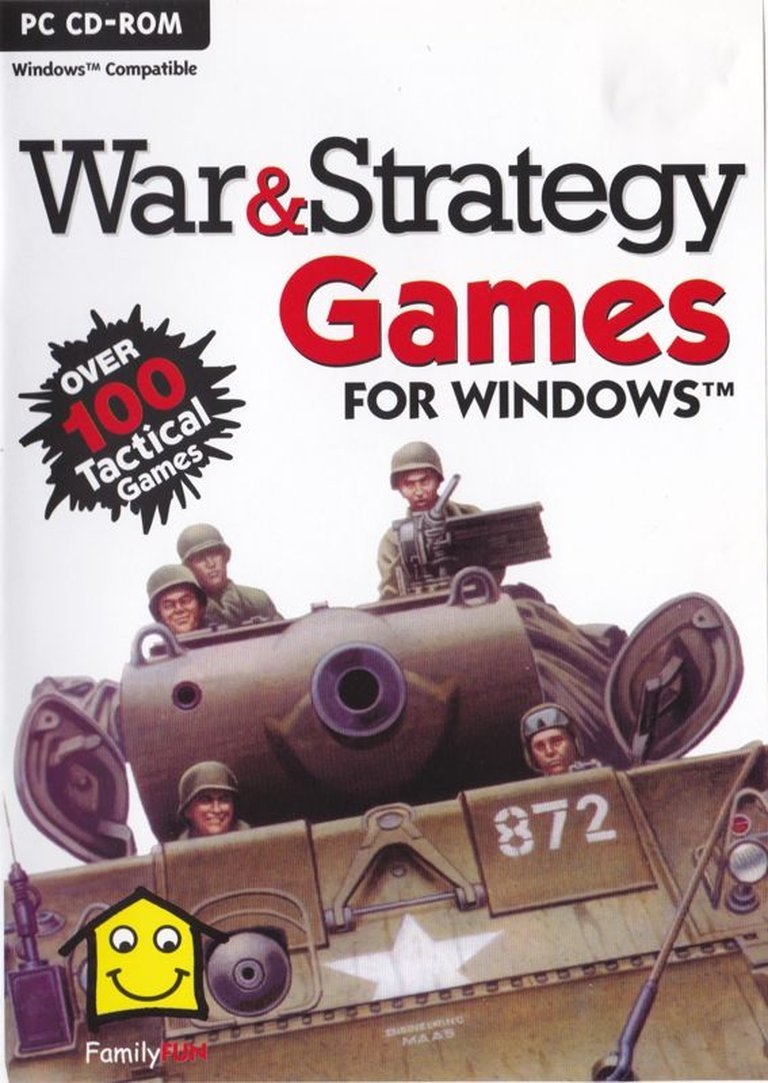
Description
War & Strategy Games For Windows is a compilation of freeware, shareware, and demo games released in 2001 by Idigicon Limited as part of their Family Fun series. The collection features a diverse array of strategy and tactical games, organized into ten distinct sections or ‘banks,’ each containing titles ranging from classic chess variants and turn-based battles to maze adventures and space exploration. With over 100 games included, the compilation offers a mix of genres, including war simulations, puzzle challenges, and abstract strategy, catering to fans of both casual and hardcore strategic gameplay.
War & Strategy Games For Windows Free Download
War & Strategy Games For Windows Reviews & Reception
metacritic.com (91/100): Fly 31 types of Russian, German and American planes. Engage in air-to-air and air-to-ground battles.
gg.deals (90/100): Sid Meier’s Civilization III Complete
War & Strategy Games For Windows Cheats & Codes
World War I (PC)
Press ~ to open the console. Step 1. Enter @Password(“Panzerklein”). Step 2. Input any of the following console commands and press enter.
| Code | Effect |
|---|---|
| @ChangeWarFog(0) | Remove Fog of War |
| @ChangeWarFog(1) | Enable Fog of War |
| @Win(0) | Auto Win |
State Of War And Warmonger Classic 2001 (PC)
Press Enter during the game and write any of the following texts.
| Code | Effect |
|---|---|
| Bomber | Give me bomber |
| Carryall | Give me carryall |
| Fighter | Give me fighter |
| Meteor storm | Give me meteor storm |
| Extra money | Give me money |
| Extra time | Give me one minute |
| Tripler | Give me tripler |
| Faster research | Speed up my research |
War & Strategy Games For Windows: A Comprehensive Retrospective
Introduction
In the annals of gaming history, few compilations capture the essence of an era quite like War & Strategy Games For Windows. Released in 2001 by Idigicon Limited, this anthology is a time capsule of early 2000s strategy gaming, bundling together a diverse array of freeware, shareware, and demo titles. While it may lack the polish of modern strategy games, its significance lies in its role as a curated snapshot of the genre’s evolution during a pivotal period. This review will dissect the compilation’s development, gameplay, and legacy, offering a nuanced perspective on its place in gaming history.
Development History & Context
The Studio and Vision
Idigicon Limited, the publisher behind War & Strategy Games For Windows, was a relatively obscure player in the gaming industry. The company’s Family Fun series aimed to provide accessible, budget-friendly collections of games for casual and enthusiast audiences alike. Gary Thomlinson, the sole credited developer, designed the GT Menu system that unified the compilation, ensuring a cohesive user experience despite the disparate nature of the included titles.
Technological Constraints
The early 2000s were a transitional period for PC gaming. Windows XP had just launched, and hardware capabilities were rapidly advancing, yet many developers still grappled with the limitations of earlier systems. War & Strategy Games For Windows reflects this dichotomy, featuring titles that range from rudimentary 2D games to more ambitious 3D experiments. The compilation’s CD-ROM format and modest system requirements made it accessible to a broad audience, though it also meant that many of the included games were constrained by the technological standards of their time.
The Gaming Landscape
The early 2000s were a golden age for strategy games. Titles like Age of Empires II, StarCraft, and Total War: Shogun had already cemented the genre’s popularity, while indie developers experimented with innovative mechanics and niche subgenres. War & Strategy Games For Windows arrived at a time when the internet was becoming a hub for game distribution, and shareware/freeware titles were gaining traction. The compilation served as a gateway for players to discover lesser-known gems alongside more established names.
Narrative & Thematic Deep Dive
The Absence of a Unified Narrative
Unlike traditional strategy games, War & Strategy Games For Windows lacks a central narrative or thematic throughline. Instead, it offers a smorgasbord of experiences, each with its own story (or lack thereof). The compilation’s strength lies in its diversity, spanning historical warfare, sci-fi conflicts, abstract puzzles, and even humorous or experimental titles.
Key Themes and Standout Titles
- Historical Warfare: Games like Medieval War and BattleStar draw inspiration from real-world conflicts, offering players a chance to engage with tactical combat and resource management in a historical context.
- Sci-Fi and Fantasy: Titles such as Space Empires 2 and Zombie Castle transport players to imaginative realms, blending strategy with elements of exploration and survival.
- Abstract and Puzzle Strategy: Games like GoMoku Narabe and The Towers of Hanoi challenge players with cerebral, rule-based gameplay, emphasizing logic and planning over brute force.
- Humor and Experimentation: The inclusion of quirky titles like Cow V: The Great Egg Quest and Hunt the Wumpus adds a lighthearted touch, showcasing the playful side of early 2000s indie development.
Dialogue and Character Depth
Given the compilation’s nature, character development and dialogue are inconsistent. Some titles, like Castle of the Winds Part 1W, feature rudimentary storytelling and NPC interactions, while others, such as 3D Maze and Dots, are purely mechanical. The lack of cohesive narrative depth is a trade-off for the compilation’s variety, but it also highlights the limitations of many early 2000s indie strategy games.
Gameplay Mechanics & Systems
Core Gameplay Loops
The gameplay mechanics in War & Strategy Games For Windows vary widely, but several common threads emerge:
– Turn-Based and Real-Time Strategy: The compilation includes both turn-based titles (e.g., Chess-It, Nine Men’s Morris) and real-time strategy games (e.g., BattleStar, Space Empires 2), catering to different player preferences.
– Resource Management: Many games, such as Oil Baron and Gold Hunt, task players with gathering and allocating resources to achieve victory.
– Tactical Combat: Titles like Ambush and Deadly Rooms of Death emphasize positional tactics and unit management, requiring players to think critically about battlefield dynamics.
Combat and Progression
Combat systems range from simplistic (e.g., Sea Battle) to moderately complex (e.g., Dogs of War). Progression is often tied to completing levels or achieving high scores, with little in the way of persistent upgrades or character development. The UI and controls are functional but dated, reflecting the design sensibilities of the early 2000s.
Innovative and Flawed Systems
- Innovation: The compilation’s greatest innovation is its sheer variety. Players can seamlessly transition from a chess match to a spacefaring adventure, making it a unique experience for strategy enthusiasts.
- Flaws: Many of the included games suffer from clunky controls, unclear objectives, or repetitive gameplay loops. The lack of tutorials or in-depth explanations can make some titles inaccessible to modern players.
World-Building, Art & Sound
Setting and Atmosphere
The worlds presented in War & Strategy Games For Windows are as diverse as the games themselves. Historical settings like Medieval War evoke a sense of grandeur and conflict, while sci-fi titles like Space Empires 2 offer a glimpse into futuristic warfare. The compilation’s abstract and puzzle games, such as Hex and Kyodai, provide a more cerebral experience, focusing on mechanics over immersion.
Visual Direction
The art style varies dramatically between titles, reflecting the different developers and genres represented. Some games, like Castle of the Winds Part 1W, feature detailed pixel art, while others, such as 3D Maze, rely on primitive 3D graphics. The visual inconsistency is a double-edged sword: it showcases the creativity of indie developers but also highlights the technical limitations of the era.
Sound Design
Sound design is similarly uneven. Some titles, like BattleStar, include basic sound effects and music to enhance the atmosphere, while others are entirely silent. The lack of cohesive audio design is a missed opportunity, but it’s understandable given the compilation’s budget and scope.
Reception & Legacy
Critical and Commercial Reception
War & Strategy Games For Windows received little critical attention upon release, likely due to its status as a budget compilation. However, it found a niche audience among strategy enthusiasts and indie game fans. The lone user rating on MobyGames—a perfect 5.0 out of 5—suggests that those who discovered the compilation found value in its eclectic mix of titles.
Evolution of Reputation
Over time, War & Strategy Games For Windows has faded into obscurity, overshadowed by more polished and ambitious strategy games. Yet, it remains a fascinating artifact for historians and retro gaming enthusiasts. Its inclusion of lesser-known titles has preserved games that might otherwise have been lost to time, making it a valuable resource for those interested in the evolution of the strategy genre.
Influence on Subsequent Games
While War & Strategy Games For Windows did not directly influence major strategy franchises, its spirit of experimentation and diversity can be seen in modern indie compilations and retro-inspired titles. Games like Space Empires 2 and Deadly Rooms of Death have since gained cult followings, demonstrating the enduring appeal of niche strategy experiences.
Conclusion
War & Strategy Games For Windows is a time capsule of early 2000s strategy gaming, offering a diverse and often uneven collection of titles that reflect the creativity and limitations of the era. While it lacks the polish and depth of modern strategy games, its historical significance and eclectic mix of experiences make it a fascinating artifact for retro gaming enthusiasts. For those willing to overlook its flaws, the compilation provides a unique glimpse into the evolution of the strategy genre, showcasing everything from historical warfare to abstract puzzles.
Final Verdict: A niche but valuable compilation for retro gaming historians and strategy enthusiasts. Its uneven quality and dated mechanics may deter casual players, but its diversity and historical significance make it a noteworthy piece of gaming history.
Score: 6.5/10 – A flawed but fascinating snapshot of early 2000s strategy gaming.