
- Release Year: 2014
- Platforms: Windows
- Publisher: United Independent Entertainment GmbH
- Developer: app2fun
- Genre: Simulation
- Perspective: Diagonal-down
- Game Mode: Single-player
- Gameplay: Forklift driving
Description
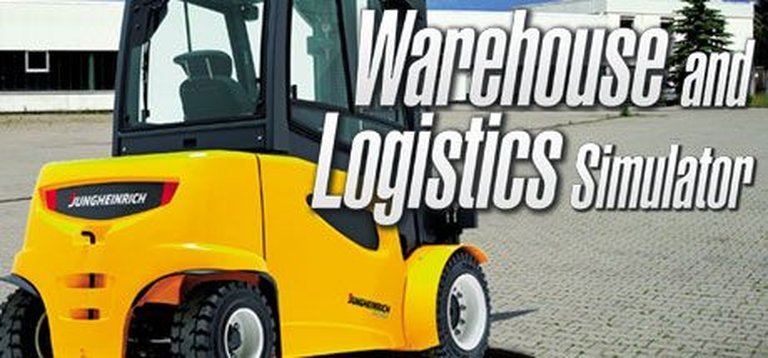
Warehouse and Logistics Simulator is a simulation game that puts players behind the wheel of an authentic Jungheinrich forklift, challenging them to manage cargo and operations across varied 3D environments such as warehouses, construction zones, ports, and supermarkets. With realistic physics, multiple quests, and different game modes, players strive for high scores and special bonuses while experiencing the intricacies of logistics and transport in a detailed, vehicular simulation.
Gameplay Videos
Where to Buy Warehouse and Logistics Simulator
Warehouse and Logistics Simulator: A Study in Mundane Mastery and Commercial Obscurity
Introduction: The Quiet Hum of the Forgotten Forklift
In the sprawling ecosystem of video games, where blockbuster narratives and photorealistic worlds command the spotlight, there exists a quiet, diesel-scented corner populated by the unsung heroes of digital labor: the simulation games. Among these, few titles embody the niche, the obscure, and the defiantly mundane with quite the same unassuming clarity as Warehouse and Logistics Simulator. Released in 2014 by the German studio app2fun and publisher United Independent Entertainment GmbH, this title is not a saga of heroic logistics commanders nor a dystopian tale of corporate warehousing. It is, instead, a brutally honest, unadorned digital fork-lift operating manual rendered in Unity. Its legacy is not one of critical acclaim or commercial blockbuster status, but of a curious artifact—a game that asks, “What if your job was the game?” and then, with a mixture of technical sincerity andAssets-store aesthetic, answers with a resounding, often clumsy, “Yes.” This review will argue that Warehouse and Logistics Simulator is a fascinating failure, a title that illuminates the democratizing promise and frequent pitfalls of the mid-2010s indie simulator boom, serving as a stark counterpoint to the more polished, fantasy-driven simulations that would follow.
Development History & Context: The Asset Store Assembly Line
To understand Warehouse and Logistics Simulator, one must first understand its creator, app2fun, and its publisher, United Independent Entertainment GmbH (UIG). As detailed in the MobyGames credits, app2fun was a small, likely sub-studio or collective within UIG’s broader ecosystem. UIG was a prolific German publisher specializing in a particular brand of no-frills, highly specific simulation games—the “Professional Farmer,” “Snowcat Simulator,” “Firefighters” series, and “Roadworks Simulator” all bear their mark. Their business model was one of volume and specificity: identify a real-world job or vehicle niche, license a brand or two for authenticity (here, the industrial forklift giant Jungheinrich), build a functional 3D environment using readily available tools, and release it at a low price point, often bundled.
The game was built in Unity, the engine that democratized 3D game development but also created a visible aesthetic homogeneity. The credits openly thank “other artists from the Unity3D Asset Store,” a revealing admission. This wasn’t a studio crafting every polygon from scratch; it was one assembling a game from prefabricated parts. The “Graphics” credit lists VIS-Games and Dexsoft, known asset store providers. The result is a game that looks instantly familiar to anyone who browsed the Unity Asset Store circa 2013: competent but generic low-poly 3D models, flat textures, and simple lighting. The technological constraint was not a lack of power but a budget and philosophy of utility over artistry. Released on February 25, 2014, for Windows, it arrived during the golden age of the “simulator” genre on Steam, riding the coattails of Euro Truck Simulator 2 and the burgeoning Farming Simulator series, but lacking their scope, polish, or passionate community foundation.
Narrative & Thematic Deep Dive: The Anti-Narrative of Pure Function
Warehouse and Logistics Simulator possesses a narrative in the same way a spreadsheet possesses a story. There is no plot, no characters, no dialogue, and no thematic exposition beyond the implicit philosophy of its design. The “story” is the quest list: “Move pallet from A to B.” “Stack boxes in the construction zone.” “Deliver goods to the port before the timer expires.”
Yet, this complete absence of traditional narrative is its most potent thematic statement. The game is a pure execution of function. It strips away all pretense of heroism, drama, or progression. You are not a hero rescuing a warehouse; you are a forklift driver. The “Highscore list” mentioned in the Steam blurb is the only semblance of meta-game narrative—a leaderboard for the fastest times, creating a silent, competitive spirit among anonymous players. The “special bonus” for the fastest drivers is the digital equivalent of a “Employee of the Month” plaque.
This approach engages with profound, if unintentional, themes of late-capitalist labor. It simulates work, not play in a conventional sense. The satisfaction is not derived from saving a princess or conquering a galaxy, but from the smooth, efficient completion of a repetitive task. The “realistic physics” (a key feature) means that a careless turn can send a stack of boxes tumbling, forcing you to clean up your mess—a digital iteration of workplace accountability. The variety of scenarios—warehouse, construction zone, port, supermarket—doesn’t tell a story of adventure, but of the logistics network itself. You are a single, interchangeable node in a vast, unseen machine. The game’s thesis is: The system is the story. Efficiency is the goal. You are the tool.
Gameplay Mechanics & Systems: The Grind of the Forklift
The core gameplay loop is deceptively simple and, in its best moments, hypnotically meditative.
1. Accept a Mission: From a menu, select a timed mission (e.g., “Move 10 crates from loading bay to storage”).
2. Spawn & Locate: Begin in your Jungheinrich forklift at a predetermined point. You must navigate the environment to find your cargo.
3. Load: Use the forklift’s forks (controlled by a separate key or button) to lift the cargo. This requires positioning, and the “realistic physics” means you must balance the load. A box perched too high or off-center will wobble and fall.
4. Transport: Drive carefully to the destination zone. Environments are cluttered with obstacles, other (static) vehicles, and narrow aisles. Speed is rewarded, but recklessness penalizes you with reset missions or time loss.
5. Unload: Manoeuvre the load into the designated drop-off area (often a marked zone on the ground or a shelf). Success is registered, and the mission progresses.
6. Repeat & Score: Complete all objectives before time runs out for a top score.
Innovations & Flaws:
* Authentic Control Scheme: The dual control of driving (WASD/analog) and lifting (separate keys/buttons) is the game’s core mechanic. It’s awkward at first, then becomes a rhythmic dance. This is its strongest simulation element.
* Physics as Punishment & Teacher: The physics model is both the game’s best feature and its greatest source of frustration. It makes cargo feel weighty and precarious. However, it can be overly sensitive, leading to “rage-quit” moments where a minor collision collapses an entire stack.
* Camera & View: The game offers a fully adjustable external camera, a necessity given the precision required. This breaks immersion slightly but is a pragmatic UI solution for a task requiring spatial awareness.
* Lack of Depth: There is no career progression beyond unlocking faster times. No new forklifts are earned (all are available from the start). No skill tree. No business management layer (buying better warehouses, hiring staff). It is a pure activity simulator, not a career simulator. This is a deliberate design choice that limits its appeal to a hardcore niche.
* Mission Repetition: The “huge variety of quests” mentioned in marketing quickly reveals itself as permutations on the same 2-3 templates. The different scenarios (port, supermarket) are largely cosmetic reskins of the same warehouse layout.
World-Building, Art & Sound: The Aesthetic of the Industrial Bland
The game’s presentation is a masterclass in utilitarian, low-budget 3D.
* Visual Direction: The environments are blocky, textures are blurry and repetitive, and lighting is flat. The glory of the game is in its Jungheinrich forklifts. These models are the clear focus, rendered with slightly more detail and featuring authentic branding and working lights/horns. They stand out as “premium” assets in a sea of generic crates and concrete textures. The “detailed 3D scenarios” are anything but; they are functional spaces with minimal environmental storytelling. A supermarket is a large empty room with shelves; a port has a crane or two. The diagonal-down perspective is a practical choice for readable gameplay, not an artistic one.
* Sound Design: The soundscape is sparse. The roar of the diesel engine (likely a generic loop), the beep of the reverse alarm, the clatter of crates—these are the only sounds. There is no ambient music, no radio chatter, no immersive diegetic soundscape of a bustling warehouse. The silence, broken only by your vehicle’s noises, reinforces the isolating, repetitive nature of the task.
* Contribution to Experience: The art and sound do not aim to immerse you in a living world. They aim to present a clean, unobtrusive simulation environment. You are meant to focus on the task, not the world. This succeeds in its limited goal but creates an aura of cheapness and anonymity that likely contributed to its poor reception. It feels less like a place and more like a test chamber.
Reception & Legacy: The Calculus of a Mostly Negative Score
Warehouse and Logistics Simulator arrived to a chorus of largely negative or indifferent reviews, a status it maintains over a decade later.
* Critical Reception: MobyGames shows a “n/a” Moby Score and only 16 collected copies, indicating near-total critical obscurity. No major publication reviewed it. The Kotaku article “I Really Wish Warehouse Simulator Was More Exciting” (Feb 2014) captures the consensus: it is appreciated for its concept but found wanting in execution and thrill. The Steam user reviews are damning: a “Mostly Negative” rating (37% positive from 289 total reviews, 42% from the last 99). Common complaints cite boring gameplay, poor performance despite low requirements, overly sensitive physics, buggy missions, and a lack of meaningful content.
* Commercial Performance: Sales figures are not public, but its persistent inclusion in massive bundles (“World of Simulators – 20 Games” for $22.82) is telling. It is a filler title, a cheap asset used to inflate bundle counts. Its current Steam price fluctuates between $1.19 and $5.99, far below its original $5.99. It is a discount-bin staple.
* Legacy & Influence: Its direct legacy is one of caution. It represents the floor of the niche simulator market. While titles like Farming Simulator or Euro Truck Simulator built passionate, mod-supporting communities with deep, iterative gameplay, Warehouse and Logistics Simulator remains a solitary, unmodded, shallow experience. It did not spawn clones or a sub-genre. Instead, it serves as a benchmark for what not to do in terms of content depth and polish. Its influence is purely as a data point: proof that a licensed vehicle and a functional simulator mechanic are insufficient without a compelling gameplay loop or sense of progression. The later, more positively received Truck & Logistics Simulator (2020) and Warehouse Simulator: Forklift Driver (2022) appear to have learned this lesson, offering more robust career modes and better presentation.
Conclusion: A Footnote in the Annals of Digital Labor
Warehouse and Logistics Simulator is not a good game by any conventional metric. It is repetitive, visually dated, mechanically shallow, and plagued by the kind of jank that breaks immersion. Its Steam review score is a testament to its failure to resonate with a broad audience.
Yet, as a historical artifact, it is intensely fascinating. It is a pure, unadulterated specimen of the low-budget, asset-store, hyper-specific European simulator from the early 2010s. It documents a moment where Unity made development accessible but also formulaic, where a real-world job title could be directly translated into a Steam product with minimal imagination. It asks the provocative question: “Can the pure simulation of a mundane task be engaging?” and answers, “Sometimes, for about 10 minutes, until the limitations of the budget and design become painfully clear.”
Its place in video game history is that of a curio, a warning, and a mirror. It is a curio for those who study the vast, messy catalog of Steam’s early indie explosion. It is a warning about the perils of confusing “simulation” (accurate mechanics) with “game” (engaging gameplay loops and progression). And it is a mirror reflecting our own often-romanticized view of logistics and manual labor, showing it stripped of all glamour, leaving only the quiet, repetitive, and physically demanding hum of the engine and the weight of the load. For the dedicated few who find a zen state in its clumsy physics, it is a secret, solitary experience. For the rest, it is a $1.19 lesson in the art of the possible—and the perils of aiming only for functional realism.