
- Release Year: 2019
- Platforms: Nintendo Switch, PlayStation 4, Windows Apps, Windows, Xbox One
- Publisher: Chucklefish Ltd.
- Developer: Chucklefish Ltd.
- Genre: Strategy, Tactics
- Perspective: Diagonal-down
- Game Mode: Co-op, Online PVP, Single-player
- Gameplay: 2D scrolling, Point and select, Turn-based strategy
- Setting: Fantasy
- Average Score: 83/100
Description
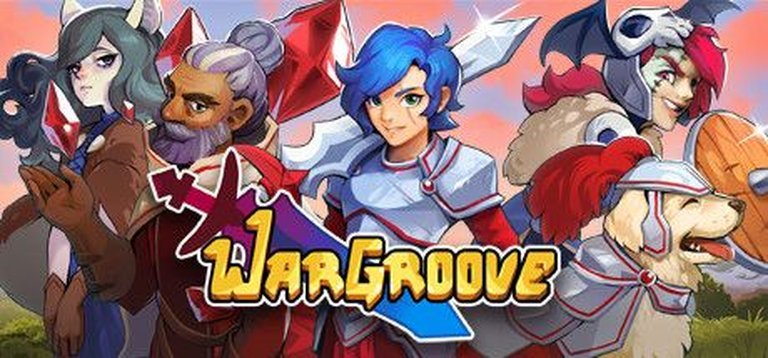
Wargroove is a turn‑based tactical strategy game set in a vibrant fantasy realm where players command pixel‑art armies across 2D scrolling battlefields, battling for control of the kingdom through a single‑player campaign and online or split‑screen multiplayer modes.
Gameplay Videos
Where to Buy Wargroove
PC
Wargroove Patches & Updates
Wargroove Mods
Wargroove Guides & Walkthroughs
Wargroove Reviews & Reception
metacritic.com (82/100): Wargroove is one of the most charming, polished, and enjoyable turn-based strategy games ever made.
opencritic.com (84/100): Wargroove’s brain-teasing tactics and impressive level editor make it the Advance Wars successor fans have been waiting for.
steambase.io (83/100): Very Positive
ign.com (85/100): Wargroove’s brain‑teasing tactics and impressive level editor make it the Advance Wars successor fans have been waiting for.
monstercritic.com (81/100): Critics have mixed opinions on Wargroove’s story. Some praised its charming characters and engaging narrative, while others found it lacking in depth and originality.
Wargroove Cheats & Codes
PC (PLITCH)
| Code | Effect |
|---|---|
| +100 Gold | Adds 100 gold |
| Reset gold to 0 | Resets gold to zero |
| +500 Gold | Adds 500 gold |
| +1,000 Gold | Adds 1000 gold |
| -100 Gold (for enemy on enemy turn) | Removes 100 gold from enemy on enemy turn |
| Set Enemy Gold to 0 (on enemy turn) | Sets enemy gold to zero on enemy turn |
| +10 Health (mouse-over unit) | Increases unit health by 10 |
| -10 Health (mouse-over unit) | Decreases unit health by 10 |
| Groove: +10 (mouse-over unit) | Increases groove by 10 |
| Groove: -10 (mouse-over unit) | Decreases groove by 10 |
General (CheatsLips)
| Code | Effect |
|---|---|
| 9999 Gold | Sets gold to 9999 |
| 9999 Gold Co-op Team | Sets gold to 9999 for co-op team |
| Select Unit/Building to Recover Health (ON) | Enables health recovery for selected unit/building |
| Select Unit/Building to Recover Health (OFF) | Disables health recovery for selected unit/building |
| Select Unit/Building to recover Health (Enable) | Enables health recovery for selected unit/building |
| Select Unit/Building to recover Health (Disable) | Disables health recovery for selected unit/building |
Wargroove: Review
Introduction
The first time a pixel‑art battlefield flickered onto a modern console it felt like a love‑letter to a long‑forgotten era of handheld strategy. Wargroove—released on February 1 2019 for Windows, Switch, Xbox One and later PS4—delivers that nostalgia while daring to expand the formula. In a genre that has been largely dormant since the last Advance Wars on the Game Boy Advance, Chucklefish’s turn‑based tactics gem asks a simple question: can an indie studio revive the beloved mechanics of a classic and still feel fresh? The answer, as this exhaustive review will argue, is a resounding yes—with a few modest blemishes that never eclipse its triumphs.
Development History & Context
Studio & Vision
Chucklefish, best known for publishing Stardew Valley and creating the sandbox Starbound, turned its internal design talent toward a game “no one else wanted to make.” Lead designer Finn Brice and lead programmer Rodrigo Braz Monteiro assembled a 196‑person team (166 developers, 30 thanks) whose mission was to fill the void left by the dormant Advance Wars series. As Brice put it to Polygon, “we set out to make a game we wanted to play, because there wasn’t a modern title that satisfied that desire.”
Technological Landscape
Developed on a custom engine written in Lua, Wargroove leveraged high‑resolution pixel art, cross‑platform networking (PC ↔ Switch ↔ Xbox One), and a robust map editor that could be compiled for both desktop and console builds. The decision to keep the visual style 2‑D scrolling and diagonal‑down perspective honored the handheld heritage while allowing the game to run smoothly on the Switch’s modest hardware.
Market Context
By 2019, the turn‑based tactics market was dominated by Fire Emblem (Nintendo) and a handful of indie titles (e.g., Into the Breach). Fans of Advance Wars had been left with a decade‑long wait, and the community’s yearning was palpable on forums and Reddit. Chucklefish’s announcement in early 2017 sparked immediate buzz, positioning Wargroove as the spiritual successor the genre desperately needed.
Narrative & Thematic Deep Dive
Plot Overview
Set on the continent of Aurania, the world is divided among four factions: the peaceful Cherrystone Kingdom, the necromantic Felheim, the plant‑like Floran Lands, and the technologically advanced Heavensong Empire. The catalyst is the assassination of King Mercival II by the vampire Sigrid. His daughter Mercia ascends the throne barely aware of the looming calamity: an undead on led by Valder wielding the Fell Gauntlet, and the ancient weapon Requiem sealed centuries ago.
Mercia’s journey—spanning hostile terrain, uneasy alliances, and betrayals—culminates in a volcanic showdown where she confronts Sigrid, learns the true nature of the Cherryblade (the key to Requiem), and ultimately destroys the cursed weapon with the aid of former enemies. A post‑credits mission unlocks a “Dark Mercia” variant, adding a bittersweet epilogue to the story.
Themes & Character Dynamics
Wargroove explores classic fantasy tropes—kingdoms at war, undead plagues, and ancient artifacts—yet it injects a surprisingly human element through its commanders:
- Mercia embodies reluctant leadership, growth from naïveté to decisive queen.
- Valder, the fallen lord, illustrates redemption by switching sides once the true villain is revealed.
- Sigrid is the manipulative mastermind, a foil who exploits the war’s chaos for personal power.
The underlying theme is the perils of misunderstanding—the Great Dissonance that once destroyed Aurania is echoed in Mercia’s early misinterpretations of Felheim and Heavensong, leading to unnecessary bloodshed. The narrative repeatedly asks whether trust can be rebuilt after betrayal, a motif reinforced by the game’s cooperative modes where players must actually work together.
Writing & Localization
The writing team, led by Abi Cooke Hunt and Brice, produced roughly 60 000 words, each line iterated at least seven times. The dialogue is intentionally concise, allowing the pixel‑art cutscenes to convey emotion through animation and musical cues. Localization into nine additional languages was overseen by partner Shloc, ensuring that humor and cultural references survived translation—a testament to Chucklefish’s commitment to a global audience.
Gameplay Mechanics & Systems
Core Loop
At its heart, Wargroove is a grid‑based, turn‑based tactics game. Players control a Commander (a hero unit with a unique “Groove” ability) and a roster of units ranging from infantry to siege engines. Each turn consists of:
- Movement – units traverse terrain (plains, forests, water) respecting movement costs.
- Combat – a rock‑paper‑scissors triangle of unit types (infantry, cavalry, artillery) and terrain modifiers (e.g., forests grant defense).
- Groove Activation – commanders can charge a “Groove” meter and unleash a powerful ability (heals, buffs, or damages).
Commander System
The fifteen commanders each have distinct Groove effects, adding asymmetry to matches. For example, Nuru (Floran) can summon a wolf pack, while Ryota (Heavensong) performs a blade‑dash that damages enemies in a line. This system injects “heroic” moments absent from classic Advance Wars, encouraging players to build strategies around commander timing.
Unit Diversity & Balance
Units are meticulously designed:
- Spearmen – cheap, anti‑cavalry, cost adjusted from 150→250 gold in later patches to curb overuse.
- Dogs – fast, low‑damage, cost reduced from 200→150 gold (2.0.2) to make them viable flankers.
- Thieves & Riflemen (added in the Double Trouble DLC) introduce stealth and ranged infantry, respectively.
The game employs a critical hit system that adds a ±5 % damage variance, keeping battles unpredictable without sacrificing fairness.
UI & Accessibility
A point‑and‑select interface works equally well with mouse, keyboard, or gamepad. The Effectiveness Chart (re‑worked in 1.2.0) displays unit versus unit damage clearly, while checkpoint and difficulty presets (Story, Easy, Medium, Hard, Custom) make the campaign approachable for newcomers yet challenging for veterans.
Multiplayer & Social Tools
Wargroove supports:
- Local split‑screen (up to 4 players).
- Online matches (2‑4 players) with cross‑play between PC, Switch, and Xbox One.
- Co‑op story mode (added in Double Trouble).
- Custom map & campaign editor – a Lua‑based scripting system lets creators design terrain, triggers, and cutscenes, then share them via the in‑game workshop.
These tools have fostered a thriving community, with thousands of user‑generated maps extending the game’s lifespan far beyond its launch content.
Flaws & Missed Opportunities
Critics have noted a few imperfections:
- Lack of mid‑match save – in the base campaign, players must quit and resume later, making long missions feel tedious.
- No undo function – a common request among tactical purists, especially on higher difficulties.
- Limited commander depth – while Grooves are fun, some reviewers (4Players.de) felt the heroes’ personalities were “bland” compared to those in Fire Emblem.
These issues never cripple the experience but highlight areas where future updates (or the sequel) could improve.
World‑Building, Art & Sound
Visual Direction
The art team, led by Lu Nascimento (original art style) and Lili Ibrahim (art director), crafted a high‑resolution pixel art aesthetic that feels both retro and modern. Each faction’s visual identity is distinct:
- Cherrystone – bright, pastel‑tinted castles and rolling plains.
- Felheim – gothic, necrotic tombs with swirling undead fog.
- Floran – lush, moss‑covered Gloomwoods with animated plant‑like units.
- Heavensong – steampunk‑ish naval vessels and airy sky‑forts.
Animations are remarkably fluid—hundreds of frames per unit—giving battles a kinetic feel rarely seen in 2‑D tactics games.
Audio & Music
Composer Phonetic Hero (and later the “Outlaw” tracks) supplied a soundtrack that blends orchestral motifs with chiptune elements, reinforcing the fantasy setting while nodding to the series’ handheld roots. Sound effects (e.g., clashing swords, magical bursts) are crisp and spatially balanced, aiding players in recognizing combat cues.
Atmosphere & Immersion
The combination of visual polish, dynamic lighting (e.g., day/night cycles affecting fog of war), and responsive audio creates an atmosphere where each turn feels weighty. Even the cut‑scenes, staged like tiny plays, convey narrative beats without breaking gameplay flow.
Reception & Legacy
Critical Consensus
Wargroove garnered an 84 % Metacritic score (PC) and average critic rating of 84 % across 27 reviews. Highlights include:
- eShopper (Switch) – 100 % – “damn near perfect spiritual successor.”
- SwitchJoy – 95 % – “the Switch’s first tentpole release of 2019.”
- IGN – 85 % – praised depth and level editor.
- Nintendo Life – 90 % – lauded replayability and presentation.
Common praise focused on strategic depth, robust editor, and charming pixel art. Criticisms centered on lack of originality (Edge, 60 %) and missing undo functionality (4Players.de, 82 %).
Commercial Performance
The game recouped its development cost within three days of launch, a rare feat for an indie title. Sales figures (Steam, Switch eShop, Xbox Store) have never been publicly disclosed, but the sustained community activity—especially map‑sharing—suggests a healthy long‑tail.
Awards & Nominations
- 2018 Game Critics Awards – Best Strategy Game (Nominated)
- 2019 Independent Game Developers’ Association – Best Game by a Small Studio (Winner)
- 2019 The Game Awards – Best Strategy Game (Nominated)
- 2020 D.I.C.E. Awards – Online Game of the Year (Nominated)
These accolades cement Wargroove as a benchmark for indie strategy design.
Influence & Sequel
The game’s map editor inspired a wave of community‑driven content, influencing titles such as Into the Breach (which later added a level editor) and encouraging other indie developers to prioritize user‑generated content. Its spiritual successor, Wargroove 2, launched in October 2023, building on the original’s mechanics while adding refined graphics and expanded multiplayer.
Conclusion
Wargroove succeeds where many indie homages falter: it honors its lineage while adding meaningful innovations. Its tactical core is solid, its commanders’ Grooves inject fresh strategic layers, and its map editor creates an almost infinite sandbox for creativity. The story, while not groundbreaking, provides enough emotional stakes to keep the campaign engaging, and the pixel‑art world feels lovingly crafted. Minor shortcomings—no mid‑match saves, lack of an undo system, and occasional balance quirks—are outweighed by its polish, replayability, and community impact.
Verdict: Wargroove is a must‑play for fans of turn‑based tactics and a benchmark for indie developers aiming to revive classic genres. It occupies a distinguished place in video‑game history as the definitive spiritual successor to Advance Wars, and its legacy endures through a vibrant modding community and a sequel that carries its torch forward.