
- Release Year: 2011
- Platforms: Windows
- Publisher: Meridian4, Inc.
- Developer: Octane Games Ltd.
- Genre: Action, Driving, Racing
- Perspective: Top-down
- Game Mode: Single-player
- Gameplay: Boss battles, Collectibles, Shooting, Upgrades, Vehicular combat, Wave defense
- Setting: Post-apocalyptic
- Average Score: 55/100
Description
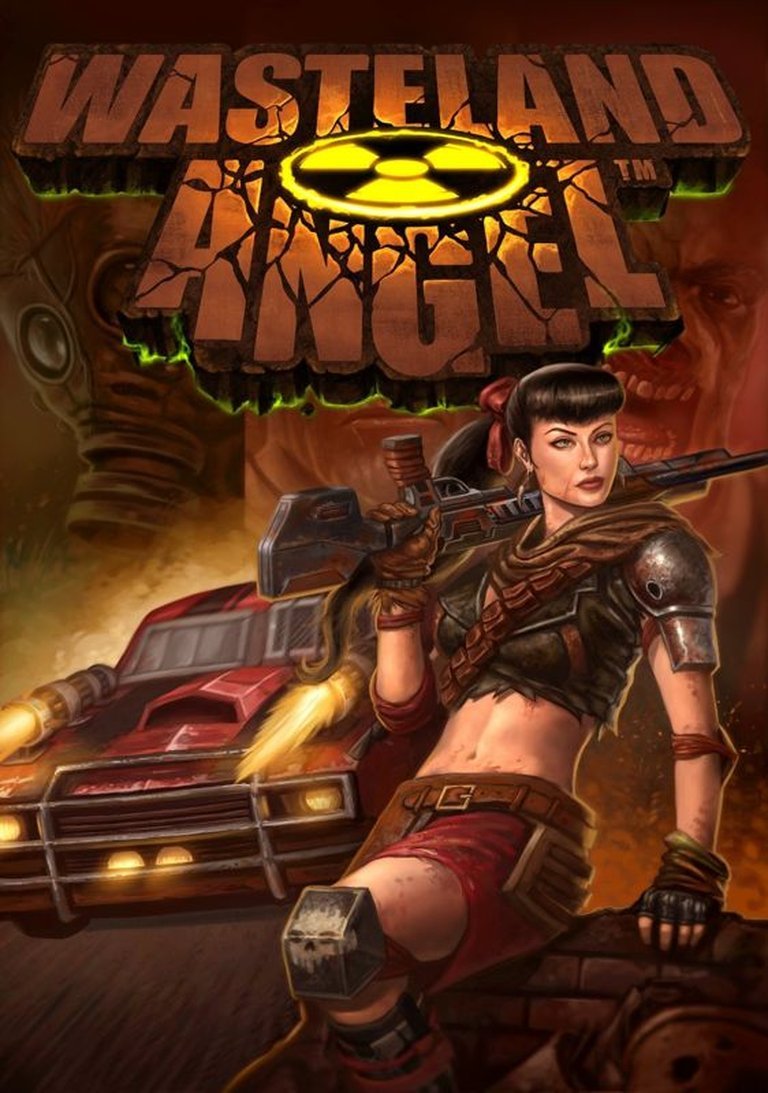
Wasteland Angel is a top-down vehicular shooter set in a post-apocalyptic world after a fictional World War III. Players control Angel, who uses an armored car to defend six towns across the United States from enemy threats like gangers, renegades, and mutants through wave-based combat, special weapons, and upgrade mechanics across day, night, boss, and bonus stages.
Gameplay Videos
Where to Buy Wasteland Angel
PC
Wasteland Angel Guides & Walkthroughs
Wasteland Angel Reviews & Reception
metacritic.com (60/100): Wasteland Angel won’t blow anyone away and you’ll likely just feel like you’re just going through the motions on an autopilot and never really engaged in all the action and chaos that ensues.
ign.com (50/100): A budget-friendly blast from the past that runs out of gas.
Wasteland Angel: A Critical Appraisal of a Forgotten Vehicular Odyssey
Introduction: A Honey Badger’s Promise
In the crowded digital storefronts of 2011, one title promised a very specific, almost anachronistic thrill: Wasteland Angel. Marketed with the swagger of a viral “honey badger” meme, this Finnish indie project from Octane Games offered a potent cocktail of genres—top-down vehicular combat, wave-based survival, and post-apocalyptic heroism—all wrapped in the diminutive package of a $4.99 download. On paper, it was a love letter to arcade shooters of yore, featuring a trash-talking heroine, an armored muscle car named Gypsy, and hordes of wasteland scum to mow down. Yet, a decade after its September 2011 release, Wasteland Angel remains a curious footnote: a game with a fiercely dedicated niche following that largely failed to capture mainstream attention or critical acclaim. This review will argue that Wasteland Angel is a quintessential “almost” title—a game whose elegant core design and charming ambition are perpetually at war with its repetitive structure, technical limitations, and criminally short campaign. It is neither a forgotten masterpiece nor a worthless relic, but a fascinating case study in constrained development, where flashes of genius flicker against a backdrop of unfinished potential.
Development History & Context: The Finnish Factory Floor
Wasteland Angel was the inaugural project under the Octane Games brand, a subsidiary of the established Finnish mobile and casual game developer Nitro Games. Formed in the spring of 2011, Octane was born from a team that had just shipped the arcade shooter Woody Two-Legs: Attack of the Zombie Pirates. This context is crucial: the studio was not a scrappy startup but a focused subsidiary leveraging existing talent and technology for a quick, low-budget PC release. The development cycle was brisk, announced in May 2011 for a summer release and launching on September 1st—a timeline suggesting a project built from pre-existing prototypes or engine work.
Technologically, the game was built using the Havok Vision Engine (also known as Vulpine Vision) for rendering and PhysX for physics. These were capable but not cutting-edge middleware tools in 2011, indicative of a budget-conscious approach. The sound was handled via FMOD, a standard for interactive audio. The team’s stated ambition was multiplatform; CEO Jussi Tähtinen hinted at ideal fits for Xbox 360 and PlayStation 3, though no concrete plans materialized—a common tale for small PC-focused indies eyeing console expansion. Notably, plans for downloadable content were announced pre-launch but never came to fruition.
The 2011 PC indie landscape was booming, with titles like Super Hexagon, Fez, and The Binding of Isaac redefining what a small team could achieve. Wasteland Angel entered a crowded field of digital distribution (Steam, Impulse, GamersGate, Direct2Drive, Amazon) but stood apart for its specific genre mashup. It wasn’t a pure twin-stick shooter, nor a pure driving game, but an uneasy hybrid—a design gamble that would become central to its polarized reception.
Narrative & Thematic Deep Dive: The Deliverer and the Crack
The narrative of Wasteland Angel is delivered through voiced, animated comic panels—a stylistic choice that immediately sets a tone of pulp serial storytelling. The premise is classic post-apocalyptic fare: a fictional World War III has decimated the globe, leaving survivors to fend off three threats: Gangers (criminal gangs), Renegades (militia remnants), and Mutants (radiation-scarred horrors). The protagonist, Angel, is a Raven-Haired, ivory-skinned action heroine with a “why the hell not” attitude, traversing the wastes in her armored 1969 Ford Mustang, Gypsy.
Her explicit mission is twofold: protect settlements from raids and search for her lost friend, Ekx. The plot progresses through six towns (Core, Coalhaven, New Dallas, Highwall, Badlands Survivor Camp, and the climactic New York), each serving as a level hub. The story’s primary narrative arc follows Angel’s growing connection to Ekx and a mysterious book he entrusts to her. This book reframes the apocalypse: while everyone believes it was nuclear war, a mystic in Highwall propagates the theory that the world was destroyed by a “crack in the universe”—a cosmic, almost Lovecraftian event. Ekx, the mystic claims, believes Angel is “the Deliverer,” a prophesied figure tied to this book.
This is where the narrative reveals its modest but intriguing thematic ambition. It subtly moves from a standard “survivor vs. raider” plot into cosmic horror territory. The “crack in the universe” suggests a reality-warping catastrophe beyond human comprehension, a secret known only to fringe mystics and the enigmatic Ekx. Angel’s skepticism (“I ain’t fallin’ for this occult shit”) grounds her as a pragmatist, but the game ends on a cliffhanger as she heads to a flooded New York to uncover the book’s secrets. The theme, therefore, is one of hidden truth and reluctant destiny. Angel may be a classic action hero, but she is being drafted into a mythic role she doesn’t understand. The game’s short length means this thread is tantalizingly underdeveloped, leaving a narrative seed that was never meant to be watered. It’s a smart, if brief, twist on post-apocalyptic lore—suggesting the old world died not by human hands, but by something fundamentally wrong with reality itself.
Gameplay Mechanics & Systems: The Frantic, Flawed Heart
The core gameplay of Wasteland Angel is a top-down, twin-stick-inspired shooter with a critical twist: aiming is tied to vehicle orientation. Players control Gypsy with WASD (or a controller’s left stick) for movement and the mouse (or right stick) for aiming the fixed, forward-mounted machine guns. This creates a unique, tank-like control scheme where positioning is paramount. You must strap the enemy in your sights by steering, a design that prioritizes tactical maneuvering over pure reflexes.
The Core Loop: Each of the six towns contains four sequential stage types:
1. Day Level: Defend 1-2 towns from waves. Slavers drive directly toward civilians to capture them; Killers target Angel; Duals can do either. Civilians must be rescued by driving over them before Slavers escape.
2. Boss Level: A single, massive vehicle (e.g., a flamethrower-equipped steamroller, a rocket-spewing tank) with a mandatory strategy exploit. The steamroller is immune to guns, requiring napalm drops; the tank is only vulnerable to mines. This introduces a puzzle-like element amidst the chaos.
3. Night Level: Functionally identical to Day but with a darker palette and presumably tougher enemies.
4. Bonus Level: A drastic perspective shift to first-person from the driver’s seat. This mode is widely criticized as jarring. The tracks are not designed for this view, leading to disorientation, and the gameplay reduces to a simplistic on-rails shooter segment.
Progression & Systems:
* Weapon Upgrades: A linear chart. Starting with twin machine guns, upgrades increase fire rate, add a roof-mounted Gatling gun, then transform the main guns into rocket launchers, and finally into homing missile launchers (the “Macross Missile Massacre” end-state). Pickups are random from destroyed enemies.
* Special Weapons (“Super Weapons”): Limited-use pickups including Napalm (a trail of fire), Land Mines (a line of explosives), EMP (screen-wide stun), Nuke (screen wipe), Sentry Guns, and Spike Strips (which only affect enemies). These are key to boss fights and managing overwhelming waves.
* Survival: Armor and health are separate pickups. Between waves, players can recharge armor/health in designated zones.
* Difficulty & Scoring: Four difficulty settings. Online leaderboards track high scores. A star rating system (implied by “Savior of [Town]” achievements) grades performance, likely based on civilian survival and speed.
Critical Analysis: The gameplay is a study in repetition and escalation. The 24 total levels (6 towns x 4 stages) follow a rigid formula. The core satisfaction comes from the power fantasy: starting “naked” each level, scavenging up to a missile-spewing apex, and unleashing订单 screen-clearing specials. The boss fight gimmicks are a highlight, breaking the monotony with required strategic thinking. However, the repetitive wave structure, the * jarring first-person bonus levels, and the *lack of any persistent progression (you reset each level) severely limit long-term engagement. The driving physics are also a point of contention; reviewers like Gaming Nexus’s Travis Huinker called them “poor,” while Shack News’s Jeff Mattas found them suitable for “frantic, arcade-style action.” The truth likely lies in the middle: they are deliberately arcadey and floaty, but the fixed aiming can feel imprecise during hectic moments, leading to frustration.
World-Building, Art & Sound: A Serviceable Wasteland
The game’s presentation is firmly in the low-to-mid-budget 2011 PC indie aesthetic.
- Visuals & Art Direction: The world is rendered in a low-poly, top-down isometric style using the Havok Vision Engine. Environments are sparse: dusty roads, cracked earth, a few destroyed buildings, and defensive barricades around towns. The color palette is muted browns, oranges, and grays, reinforcing the desolation. The enemy vehicle designs are the standout: hulking, ramshackle contraptions (monster trucks, tractors, converted buses) that visually communicate the “scrap-metal warlord” faction they belong to. Angel’s Gypsy is a sleek, red ’69 Mustang—a clear cool car archetype that pops against the grimy backdrop. Character portraits in comic cutscenes are stylized and expressive, giving Angel a distinct personality. However, the environmental detail is minimal, and the limited draw distance and simplistic textures can make levels feel small and claustrophobic.
- Sound Design & Music: The soundscape is functional. Gunfire is satisfyingly chunky, explosions are loud, and the “ping” of hitting enemies (noted by some reviewers) provides clear auditory feedback. The music is a driving, rock-inspired score with a strong rhythm section, appropriate for the high-octane gameplay but not particularly memorable. Voice acting in the comic sequences is cheesy but enthusiastic, fitting the pulp tone. Angel’s lines are delivered with a gruff, sarcastic charm that sells her “badass” persona.
- Atmosphere & Cohesion: The game successfully creates a consistent, arcade-y tone. It never aims for the grim, oppressive atmosphere of Fallout or Metro. Instead, it feels like a playable action movie from the 1980s—all heightened stakes, one-liners, and explosive set pieces. The switch to first-person in bonus levels deliberately breaks this tone, attempting a “you are there” intensity but failing due to poor map design for that perspective. The world-building is delivered entirely through environmental storytelling (the junk-pile vehicles, the terrified civilians) and the comic panels, leaving specifics of the “crack in the universe” to the player’s imagination.
Reception & Legacy: A Split Verdict in the Wasteland
Wasteland Angel’s launch reception was mixed to average, a consensus that has barely shifted over a decade.
- Critical Scores: It holds a 55% on GameRankings (based on the few reviews aggregated). IGN’s Gord Goble gave it a 5/10, citing its brevity and lack of lasting appeal as fatal flaws: “It’s over before you know it.” Gaming Nexus (D-) was harsher, condemning poor driving physics and “a lack of both value and innovative gameplay.” Conversely, Gamers Daily News (7/10) and Shack News praised its fun factor and tight controls. The Metacritic user score hovers around 5.1/10 from 31 ratings, while Steam user reviews (317 total) are “Mixed” (59% positive), with a split roughly 186 positive to 131 negative.
- Common Criticisms: The near-universal negatives are:
- Extreme Lack of Content: The entire game can be completed in 3-4 hours. With no multiplayer, no post-game content beyond score-chasing, and no DLC, its value proposition is weak even at $4.99.
- Repetitive Gameplay: The wave-defend formula, while satisfying in short bursts, becomes exhaustingly samey across 24 nearly identical levels.
- Jarring Bonus Levels: The first-person sections are almost universally panned as a failed experiment.
- Inconsistent Controls: The driving/physics model divides opinion, but many find it imprecise.
- Common Praises: Its defenders highlight:
- Pure, Unadulterated Fun: For some, the simple joy of driving a powerful car and blowing up everything in sight is timeless.
- Satisfying Progression: The weapon upgrade path to homing missiles is a clear power fantasy payoff.
- Boss Fight Design: The strategic, puzzle-like requirements are a bright spot.
- Charm & Personality: Angel’s attitude, the comic cutscenes, and the overall “dumb fun” ethos win over players willing to forgive its flaws.
- Legacy & Influence: Wasteland Angel has no measurable influence on the industry. It was not a breakout hit, nor did it spawn clones. It exists in a niche: the budget, top-down vehicular shooter. Its closest relatives are obscure titles like Bandits: Phoenix Rising or early Crimsonland. More than anything, it serves as a cautionary tale for small teams: a solid core mechanic is not enough without substance, variety, and polish. It is occasionally cited in “hidden gem” or “so bad it’s good” lists, but its true legacy is as a forgotten artifact of the 2011 indie boom—a game that tried to synthesize Twisted Metal, Smash TV, and Mad Max into a single, $5 package, and succeeded just enough to be interesting but not enough to be essential.
Conclusion: The Salvageable Wreck
Wasteland Angel is a game of profound contradictions. It features a fiercely independent female protagonist in a genre often dominated by male leads, yet her story is a skeletal frame for mindless action. It boasts a clever weapon progression system that culminates in glorious missile spam, yet forces players to endure the same wave-based gauntlet 24 times. It dares to shift perspectives to first-person for bonus stages, an audacious design choice that spectacularly misses the mark. It was built by a competent Finnish team with clear arcade roots, yet it feels rushed and thin.
Ultimately, Wasteland Angel cannot be recommended as a must-play historical artifact. Its technical shortcomings, repetitive design, and fleeting runtime outweigh its moments of chaotic fun. However, within the vast graveyard of Steam’s budget bin, it holds a peculiar honor. For $4.99 on a deep sale, it provides exactly what it promises: a few hours of undemanding, explosive top-down driving and shooting. It is the video game equivalent of a B-movie you stumble upon at 2 AM—flawed, silly, and utterly disposable, yet leaving a faint, warm impression of its audacity. In the canon of post-apocalyptic games, it is not a landmark. But in the specific taxonomy of “vehicular mayhem with a heart of pulp,” it remains a curious, somewhat endearing, and utterly forgotten specimen—a wasteland dweller that found a tiny patch of irradiated soil to call its own, and little more.