
- Release Year: 2016
- Platforms: PlayStation 4, Stadia, Windows, Xbox One
- Publisher: Ubisoft Entertainment SA, Ubisoft, Inc.
- Developer: Ubisoft Entertainment Inc.
- Genre: Action, Driving, Racing
- Perspective: Behind view
- Game Mode: Online Co-op, Online PVP, Single-player
- Gameplay: Driving, Drone usage, Hacking, Open World, Parkour, Puzzle, Sandbox, Shooter, Stealth
- Setting: Cyberpunk, dark sci-fi, Marin, North America, Oakland, San Francisco, Silicon Valley
- Average Score: 82/100
Description
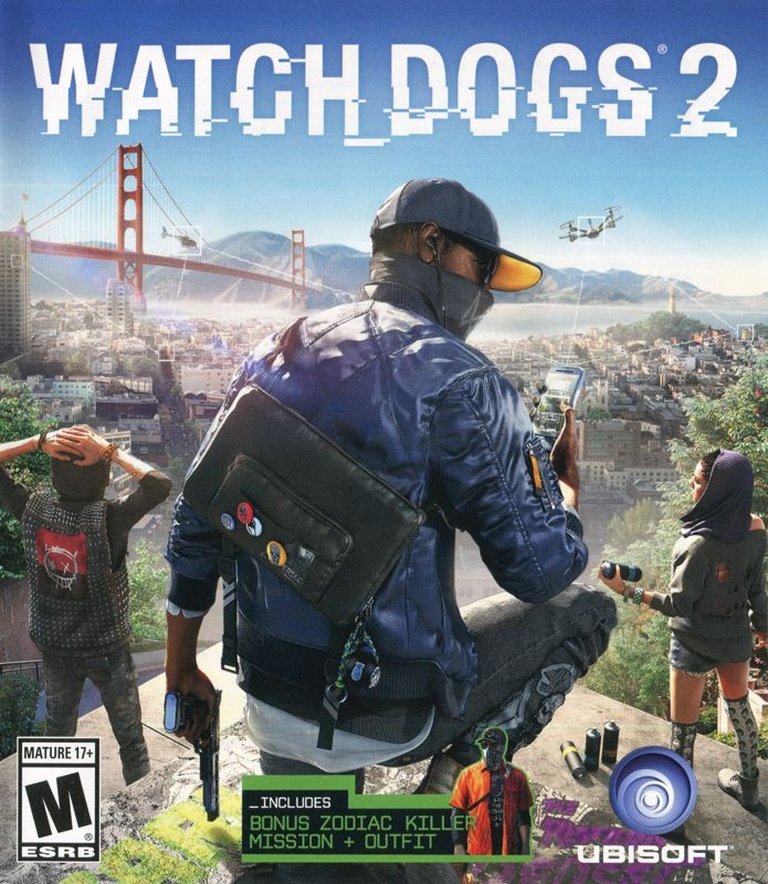
Watch Dogs 2 is an open-world action-adventure game set in the sprawling regions of San Francisco, Oakland, Marin, and Silicon Valley, where players assume the role of Marcus Holloway, a skilled hacker joining the collective Dedsec. The narrative follows the group’s mission to dismantle ctOS 2.0, an invasive operating system developed by Blume that controls and monitors citizens through technological surveillance. With a lighter, more humorous tone than its predecessor, the game emphasizes stealth, hacking via Marcus’s smartphone, and creative problem-solving—using drones to scout locations, manipulate traffic, disable security, or hijack vehicles. The expansive world supports diverse playstyles through skill upgrades (Aggressor, Ghost, Trickster), vehicle customization, and seamless multiplayer for cooperative missions or player invasions.
Gameplay Videos
Where to Buy Watch Dogs 2
PC
Watch Dogs 2 Free Download
Watch Dogs 2 Cracks & Fixes
Watch Dogs 2 Patches & Updates
Watch Dogs 2 Mods
Watch Dogs 2 Guides & Walkthroughs
Watch Dogs 2 Reviews & Reception
metacritic.com (82/100): Watch Dogs 2 is what a sequel should be in every sense. A bigger, better, bolder take on what the first entry only treads.
ign.com : This is a significant improvement over the original Watch Dogs in nearly every way.
forbes.com : Watch Dogs 2 won me over. It’s not going to topple GTA any time soon, but it’s an open world game that does its own thing, and has finally captured the correct balance of tone and gameplay to make this concept work.
imdb.com : I loved ‘Watch Dogs’ 2 (2016). That said, this game offered for me even more then i expected.
opencritic.com (82/100): Watch Dogs 2 offers loads of entertainment in a playground-like rendition of San Francisco that rises above the first game’s soggy, downtrodden atmosphere.
Watch Dogs 2 Cheats & Codes
PlayStation 4
Enter the cheat by pressing R3 and holding it until the focus bar is empty.
| Code | Effect |
|---|---|
| Press R3 and hold | Infinite focus |
Xbox One
Enter the cheat by pressing the button sequence Down, Right, Up, then order any car, pull out the silenced pistol, and shoot two tires.
| Code | Effect |
|---|---|
| Down + Right + Up | Become a Vigilante |
Watch Dogs 2: Review
Introduction
The original Watch Dogs (2014) was a fascinating but flawed experiment—a cyberpunk revenge thriller marred by a dissonant tone, unlikeable protagonist, and technical stumbles. Its commercial success, however, ensured a sequel arrived remarkably swiftly, just two and a half years later. Watch Dogs 2 (2016) marked a radical departure: from Chicago’s rain-soaked grit, it shifted to the sun-drenched, tech-obsessed Bay Area, trading Aiden Pearce’s grim vengeance for Marcus Holloway’s vibrant, satirical hacktivism. This review argues that while Watch Dogs 2 brilliantly refines its predecessor’s core mechanics and injects much-needed personality, it falters in narrative cohesion and technical polish. Yet, its infectious energy and sheer creativity cement it as a high-water mark for Ubisoft’s open-world design—a game that dared to be fun when its predecessor dared only to be grim.
Development History & Context
Ubisoft Montreal spearheaded development, collaborating with Toronto, Paris, Bucharest, Kyiv, and Reflections (the latter overhauling driving mechanics to address fan complaints). The team’s mandate was clear: listen to feedback. Critics and players had lambasted the first game’s “polarizing” driving, unlikeable Aiden Pearce, and shallow hacking loop. Watch Dogs 2 doubled down on these critiques, prioritizing fluid traversal, a charismatic new hero, and deeper environmental interaction.
Technologically, it was built for PS4 and Xbox One from the outset, avoiding the cross-gen compromises that plagued its predecessor and promising no graphical downgrade. The setting was meticulously researched through real-world scouting trips to California, though liberties were taken for gameplay. Ubisoft even consulted real hackers (including security advisor David Maynor) to validate mechanics and jargon, blending authentic tech culture with Hollywood flair. The result was a game positioned as a “believable” playground where hacking felt both powerful and accessible.
Narrative & Thematic Deep Dive
Watch Dogs 2’s narrative follows Marcus Holloway, a young Oakland hacker framed by ctOS 2.0’s flawed profiling. After erasing his digital footprint in a Blume server farm, he joins DedSec—a ragtag collective including the tech-savvy Sitara, the masked, emoji-spouting Wrench, the anxious Josh, and the ill-fated Horatio. Their mission: expose Blume’s corruption via viral “follower” campaigns, culminating in a takedown of CEO Dušan Nemec’s Bellwether data-manipulation program.
The tone is a jarring 180° from the first game: dark cyberpunk gives way to lighthearted satire. DedSec skewers Silicon Valley (Nudle, Tidis), tech-bro culture, and even Ubisoft itself in a meta side mission. Yet this shift backfires. The dialogue over-relies on profanity and forced “hip” slang, making characters like Wrench feel like caricatures. The episodic structure—missions often feel disconnected—undermines narrative urgency. While themes of mass surveillance (echoed in real-world events like Project Chanology) and data privacy resonate, the story never transcends “serviceable,” prioritizing set-piece spectacle over emotional depth. Marcus’ moral code—non-lethal by default—clashes with the game’s violent gameplay, creating tonal whiplash.
Gameplay Mechanics & Systems
Watch Dogs 2 shines where its predecessor stumbled. Hacking is no longer a gimmick but the game’s lifeblood. Marcus’s smartphone manipulates traffic lights, vehicles, security systems, and even civilians, with contextual options (distract, shutdown, trigger) enabling creative problem-solving. The new NetHack system highlights hackable objects through walls, replacing the clunky mini-games of the first game.
Stealth is now genuinely viable, thanks to non-lethal weapons (taser, pepper spray) and the ability to lure rival gangs or police into conflict. However, bodies can’t be moved, and stunned enemies wake quickly, punishing sloppy play. Driving is a revelation—twitchy yet precise, with drift-friendly mechanics and responsive controls.
Drones revolutionize traversal: the Quadcopter scouts vertically, while the Jumper accesses vents and confined spaces. Parkour is smoother, enabling fluid traversal between rooftops. The upgrade system (Aggressor, Ghost, Trickster) tailors playstyles, though combat remains serviceable at best—cover mechanics are solid, but the removal of Focus Mode (time-slowing) and weak auto-aim hampers firefights.
Multiplayer is seamlessly integrated. Co-op missions tense and rewarding, while competitive modes like Hacking Invasion (cat-and-mouse stealth) and Bounty Hunter (call hunters upon causing chaos) exploit the hacking sandbox brilliantly. However, launch-day server issues marred the experience, though patches improved stability.
World-Building, Art & Sound
The Bay Area is a triumph of environmental storytelling. San Francisco, Oakland, Silicon Valley, and Marin County are condensed but recognizable, packed with landmarks (Golden Gate Bridge, Coit Tower) and district-specific aesthetics. Unlike the first game’s oppressive Chicago, this world is vibrant and colorful, though emptier than reality—a necessary compromise for gameplay density.
Art direction blends retro-futurism with real-world satire. Blume’s sleek, sterile HQ contrasts with the grime of Oakland, while DedSec’s hideout (the Lenni Hacker Cave) is a neon-drenched haven of glitch art. Performance hampers the vision—frame rate dips and texture pop-in plague all versions, patched post-launch but never eradicated.
Sound design elevates the experience. Hudson Mohawke’s soundtrack is a masterclass in electronic/hip-hop fusion, pulsating with energy. Licensed tracks (e.g., Oliver Heldens’ “Good Life”) reinforce the youthful tone, while voice acting (especially Wrench’s modulated inflections) brings DedSec to life. Yet, repetitive NPC chatter and awkwardly localized radio hosts break immersion.
Reception & Legacy
Watch Dogs 2 received “generally favorable” reviews (82% Metacritic). Critics lauded its protagonist, setting, and gameplay depth—IGN called it “an impressive evolution,” while Polygon praised its “cleverly designed” world. Complaints centered on a flimsy story and technical issues. Commercially, it underperformed initially (80% lower UK debut sales than the first game) but found legs, selling over 10 million copies by 2020.
Its legacy is twofold. It revitalized the franchise, proving that Watch Dogs could be fun without sacrificing its core themes. The DedSec characters and satirical tone became franchise staples, directly influencing Legion’s global hacktivist narrative. Multiplayer innovations like seamless co-op and Bounty Hunter set precedents for future Ubisoft titles. Yet, its fragmented story and technical debt highlight Ubisoft’s struggle to balance ambition with polish.
Conclusion
Watch Dogs 2 is a flawed gem. It corrects nearly every misstep of its predecessor—refining hacking, injecting charm, and delivering a world that begs to be explored—yet stumbles in narrative cohesion and technical execution. Marcus Holloway’s journey from victim to hacktivist is far more compelling than Aiden’s grim revenge, and the Bay Area’s vibrant sandbox remains one of Ubisoft’s finest open worlds. While it may lack the gravitas of The Division or the polish of Horizon: Zero Dawn, its creativity and joy are undeniable. In the end, Watch Dogs 2 is less a perfect sequel and more a bold reimagining—a game that dared to ask, “What if hacking was actually fun?” It succeeded, leaving an indelible mark on the series and proving that even in a crowded open-world landscape, a little DedSec rebellion goes a long way.